
dessert
Where to Stay in Vienna for First-Time Visitors: Which Neighborhoods Are Best?
Planning a trip to Austria and now wondering where to stay in Vienna for first-time visitors? You’re not alone. Vienna may look compact on the map, but figuring out where to stay in Vienna for first-time visitors can feel a little overwhelming once you realize the city is divided into 23 different districts, each with its own personality 🤯
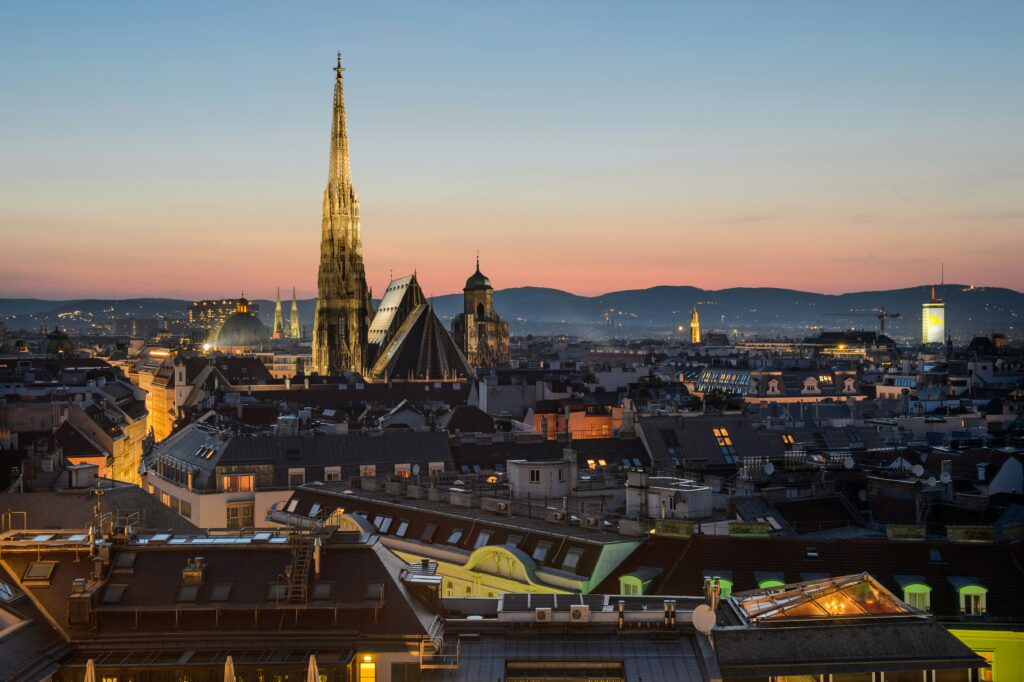
Austria’s capital is known for a lot of things. It’s Europe’s classical music epicenter, having given the world Mozart, Beethoven, and a long list of other composers. The city is packed with grand Habsburg-era architecture, elegant coffee houses, and landmarks like St. Stephen’s Cathedral rising over the historic center. And of course, there’s the food. You really haven’t experienced Vienna until you’ve sat down for a proper schnitzel with a cold local beer.
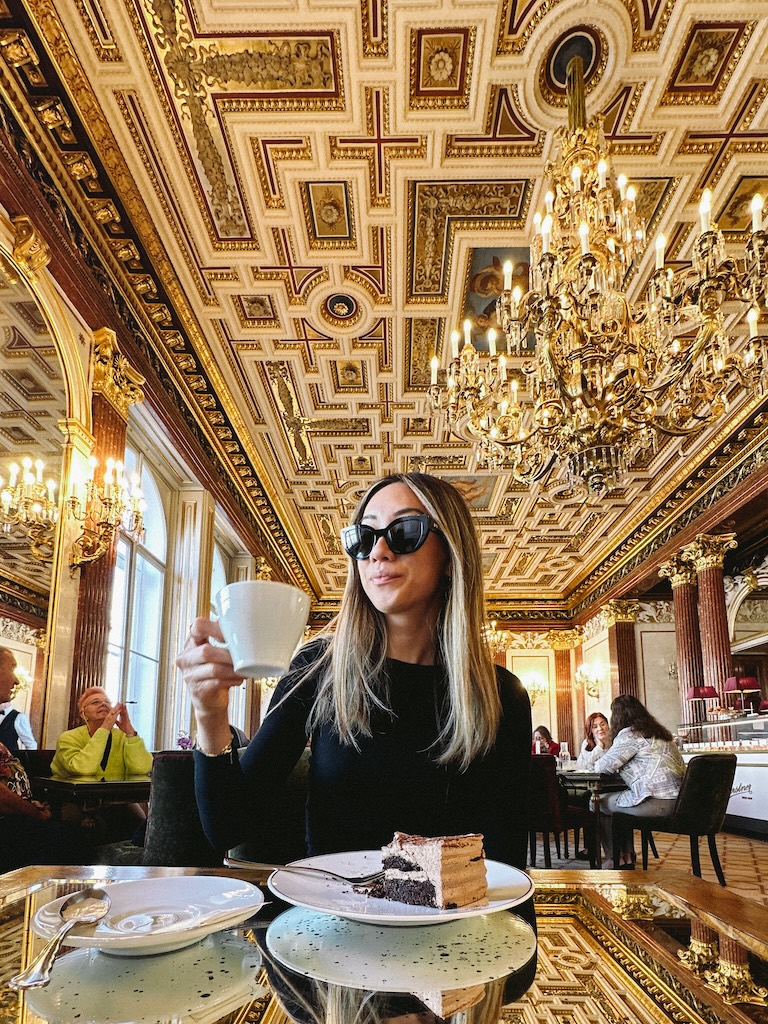
FYI: beyond schnitzel, Vienna’s dessert scene is elite. I rounded up all my favorites in myBeginner’s Guide to Must-Try Dessert Spots in Vienna 🍰
So the biiiiiig question becomes: do you stay right in the historic center surrounded by imperial palaces and famous sights, or book somewhere slightly outside the crowds with more local neighborhoods, parks, and boutique hotels?
The good news is that Vienna is very compact and easy to navigate. But choosing the right district still matters.
In this guide, I’ll break down where to stay in Vienna for first-time visitors, including the pros and cons of the best districts and the top hotels in each area so you can pick the neighborhood that fits your travel style best. So let’s get into it 👇
Read more on Vienna 🇦🇹
- A First Timer’s Guide to the Best 2 Day Vienna Itinerary
- Beginner’s Guide to Must-Try Dessert Spots in Vienna
- How to Plan the Perfect Vienna to Bratislava Day Trip
- The Hoxton Vienna Review: A Look Inside Vienna’s Coolest Hotel
This site contains affiliate links, which means I may earn a small commission if you make a purchase through them (which will likely go towards overpriced airport wine or buying my dog more unnecessary toys). However, none of that impacts the integrity of my reviews. All thoughts and opinions are my own.
Vienna at A Glance: The Best Vienna Hotels
Short on time? Here are my top picks for the best boutique hotels in Vienna, Austria:
- The Hoxton Vienna (3rd District – Landstraße) — This is where we stayed and I loved it. A sleek and stylish hotel with a laid-back vibe, The Hoxton combines classic Viennese design with modern touches, offering spacious rooms and a trendy rooftop bar. Click here for my full hotel review on The Hoxton!
- 25hours Hotel at MuseumsQuartier (7th District – Neubau) – A funky, design-forward hotel with quirky details and playful art, perfect for travelers looking for a creative and affordable stay in the heart of the city. I’ve stayed at the one in Copenhagen before and loved the vibes!
- Hotel Stefanie (2nd District – Leopoldstadt) – One of Vienna’s oldest hotels, blending historic charm with modern comfort, ideal for travelers who appreciate tradition and a central yet quieter location.
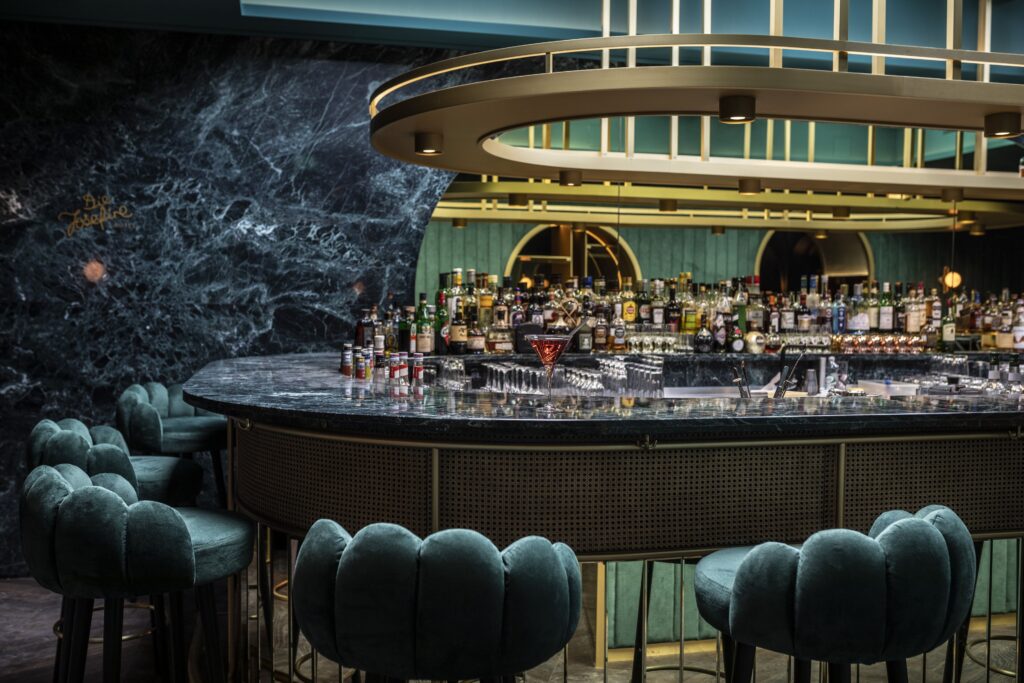
- Hotel Josefine (6th District – Mariahilf) – A glamorous, vintage-inspired hotel with Art Deco flair (my faaaav) and moody interiors, ideal for travelers seeking a romantic and design-driven stay.
- Buxbaum Beletage Design & Boutique Hotel (1st District – Innere Stadt) – A charming boutique hotel with elegant, design-forward interiors and a cozy atmosphere, perfect for those wanting a stylish stay near Vienna’s historic center.
- SO/ Vienna (2nd District – Leopoldstadt) – A sleek, high-design luxury hotel with bold interiors and panoramic city views, perfect for travelers seeking a modern, upscale stay. We had dinner here and it was epic!
- InterContinental Vienna by IHG (3rd District – Landstraße) – A classic luxury hotel offering spacious rooms, traditional elegance, and full-service amenities, ideal for travelers seeking a dependable, high-end stay near the city center.
- Rosewood Vienna (1st District – Innere Stadt) – Ultra-luxury at its finest, Rosewood Vienna offers impeccable service, sophisticated design, and a prime central location, perfect for travelers seeking a truly elevated and indulgent stay.
Not sure how long you actually need in the city? I break it all down in my A First Timer’s Guide to the Best 2 Day Vienna Itinerary, including how to maximize a short trip!
Quick Snapshot of Vienna Neighborhoods & Areas To Stay
FYI: Each neighborhood in Vienna has a slightly different personality, and where you stay can shape your entire trip. You could be waking up in the middle of the historic center surrounded by imperial palaces and grand coffee houses, or staying somewhere a little quieter with more parks, local cafés, and lower hotel prices.
The good news is that Vienna is very compact and easy to get around, so even if you don’t stay right in the historic center, most places are still within easy reach by foot, tram, or the U-Bahn! I’m pretty sure I clocked like 30,000 steps everyday even in the heart of winter!
On my most recent trip, I personally stayed at The Hoxton Vienna, which sits in the Landstrasse (3rd District). Some of you might know that if there’s ever an option for a Hoxton hotel, I’m going to be booking it because I’m obsessed with their mid-century modern design and quality of service.
Hoxton hotels are always the perfect balance of retro-modern design, boutique flair, and consistently great service, all without breaking the bank. No like I seriously almost bought the exact same floral wallpaper for my accent wall to match The Hoxton Paris.
I also really liked the location of The Hoxton Vienna because it felt a bit calmer than the historic center but was still incredibly convenient for exploring the city. It ended up being perfectly located near the main train connections for our day trip to Bratislava, which made the morning train super easy.
If you’re thinking about doing the same, I share exactly how to plan it in my guide: How to Plan the Perfect Vienna to Bratislava Day Trip.
But before we get into the specific neighborhoods and hotels, it helps to understand the main areas travelers usually consider when deciding where to stay in Vienna:
Innere Stadt (1st District): Vienna’s historic heart and home to the city’s biggest attractions like St. Stephen’s Cathedral and Hofburg Palace. It’s the most central and convenient place to stay, but also the most expensive.
Leopoldstadt (2nd District): Just across the Danube from the city center, this district offers more green space, family-friendly attractions like the Prater amusement park, and generally lower prices than the 1st District.
Neubau (7th District): Vienna’s hip, artsy neighborhood known for MuseumsQuartier, boutique shops, cafés, and nightlife. It’s perfect for creative travelers who want a more local, bohemian feel while still staying close to the center.
Landstrasse (3rd District): A quieter, more residential area that still sits close to the main attractions. It’s a great compromise if you want lower hotel prices and fewer crowds while staying well connected to the city center.
And if you’re trying to map neighborhoods to your daily plans, my A First Timer’s Guide to the Best 2 Day Vienna Itinerary walks through exactly how to structure each day based on location.
Where to Stay in Vienna: Innere Stadt (Vienna 1st District)
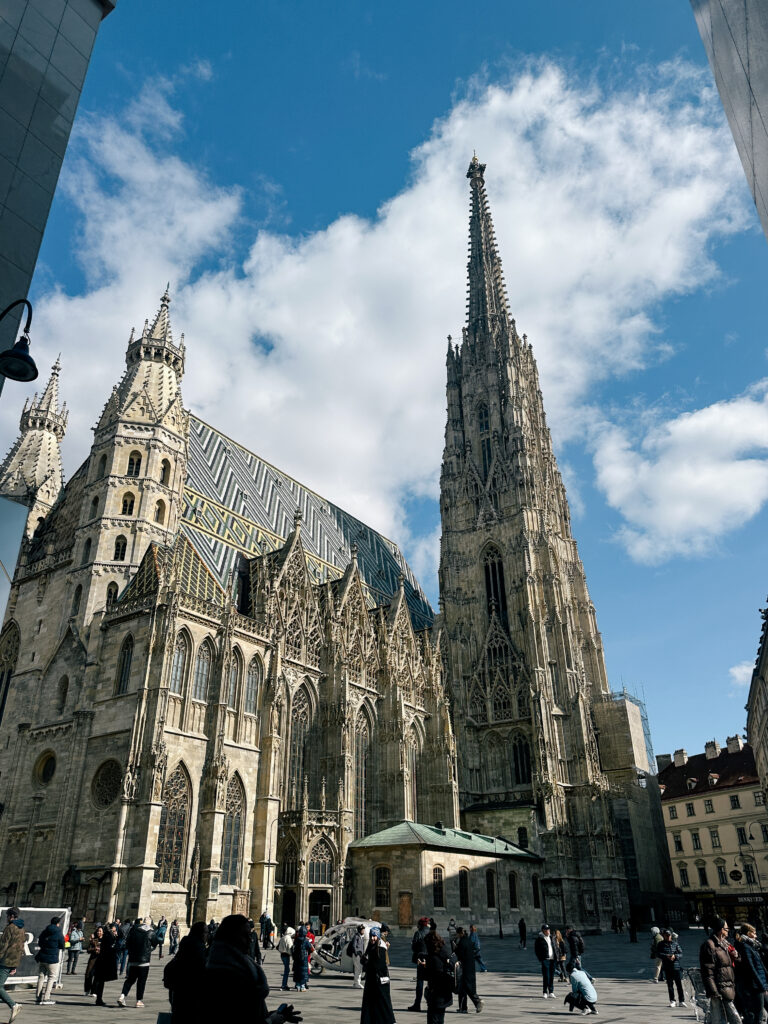
For first time visitors to Vienna, Innere Stadt makes the most sense, as it’s the city’s historic heart and home to key attractions such as the Hofburg Palace and St Stephen’s Cathedral.
This is also where you’ll likely spend most of your time sightseeing, especially if you’re following a classic travel guide like my A First Timer’s Guide to the Best 2 Day Vienna Itinerary.
It’s not just the big hitters that make this such an attractive district either. This central part of Vienna is home to all manner of Baroque churches, grand museums, elegant shopping streets, and traditional coffee houses.
Just a headsup that hotels in the 1st District are typically more expensive, but you’re right in the middle of everything, which means less time commuting and more time actually enjoying Vienna
And if you’re looking for a luxury stay in Vienna, you’ll be happy to know that many of the city’s top luxury hotels are located right in Innere Stadt.
Visiting Vienna for the Christmas markets and not sure where to stay in Vienna? The 1st District is the best place to be. You’ll be within walking distance of the Christkindlmarkt at Rathausplatz, the Stephansplatz market, and the Spittelberg Market, which makes market hopping very easy.
Top Hotel Recommendations near Innere Stadt (Vienna 1st District)
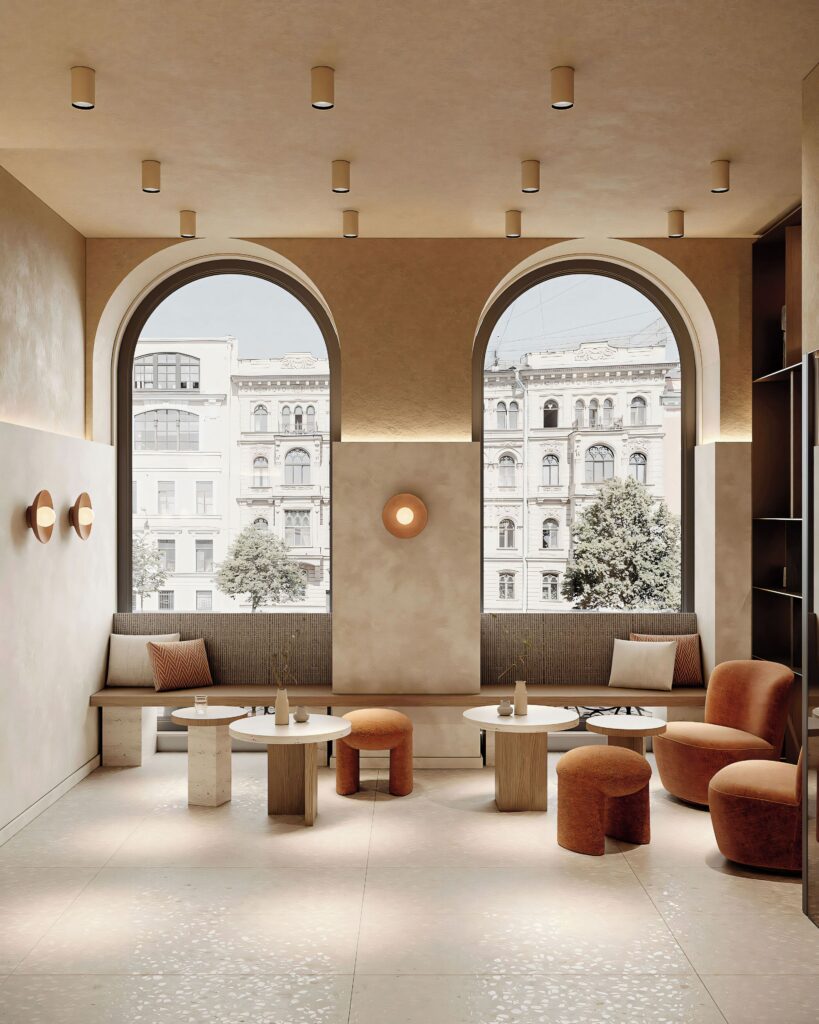
- Motel One Wien-Staatsoper (Innere Stadt) – A sleek, budget-friendly design hotel known for its stylish interiors and consistent quality, perfect for travelers figuring out where to stay in Vienna who want a modern stay without breaking the bank.
- Elegance Studios Wien (Innere Stadt) – Simple and affordable studio-style accommodations offering comfort and convenience, ideal for longer stays or travelers looking for a no-frills base to explore the city, especially when deciding where to stay in Vienna for first-time visitors.
- House of Ble (Innere Stadt) – A trendy, boutique-style stay (v on brand for Discover Over There) with minimalist design and a cool, local vibe, great for younger travelers or creatives wanting something a little different from traditional hotels when choosing where to stay in Vienna.
- Buxbaum Beletage Design & Boutique Hotel (Innere Stadt) – A charming boutique hotel with elegant, design-forward interiors and a cozy atmosphere, perfect for those wanting a stylish stay near Vienna’s historic center and deciding where to stay in Vienna for first-time visitors.
- Hotel Grand Ferdinand Vienna (Innere Stadt) – A polished, mid-range hotel on the Ringstrasse offering classic Viennese style with modern comforts, ideal for travelers thinking about where to stay in Vienna who want location and reliability without going full luxury.
- Hotel Topazz & Lamée (Innere Stadt) – A unique design hotel known for its iconic oval windows and rooftop bar, offering a boutique luxury experience in the heart of Vienna’s city center, perfect for those choosing where to stay in Vienna for first-time visitors.
- Miiro Palais Rudolf (Innere Stadt) – A refined boutique hotel blending historic architecture with modern, understated elegance, perfect for travelers looking for a quieter, upscale stay with character when deciding where to stay in Vienna.
- The Leo Grand (Innere Stadt) – A whimsical yet luxurious boutique hotel with bold design and artistic flair, ideal for those wanting a memorable, high-end stay steps from Vienna’s main attractions when considering where to stay in Vienna for first-time visitors.
- Rosewood Vienna (Innere Stadt) – Ultra-luxury at its finest, Rosewood Vienna offers impeccable service, sophisticated design, and a prime central location, perfect for travelers deciding where to stay in Vienna who are seeking a truly elevated and indulgent stay.
Top Things to do in Innere Stadt (Vienna 1st District)
Where there’s a gigantic cathedral, there’s normally a tower to climb and St Stephen’s is no different. It’s 343 steps (you can count them) to the top of the cathedral for panoramic views over the Austrian capital. It’s narrow and winding and not wheelchair accessible unfortunately, turns out medieval Austrians weren’t very inclusive.
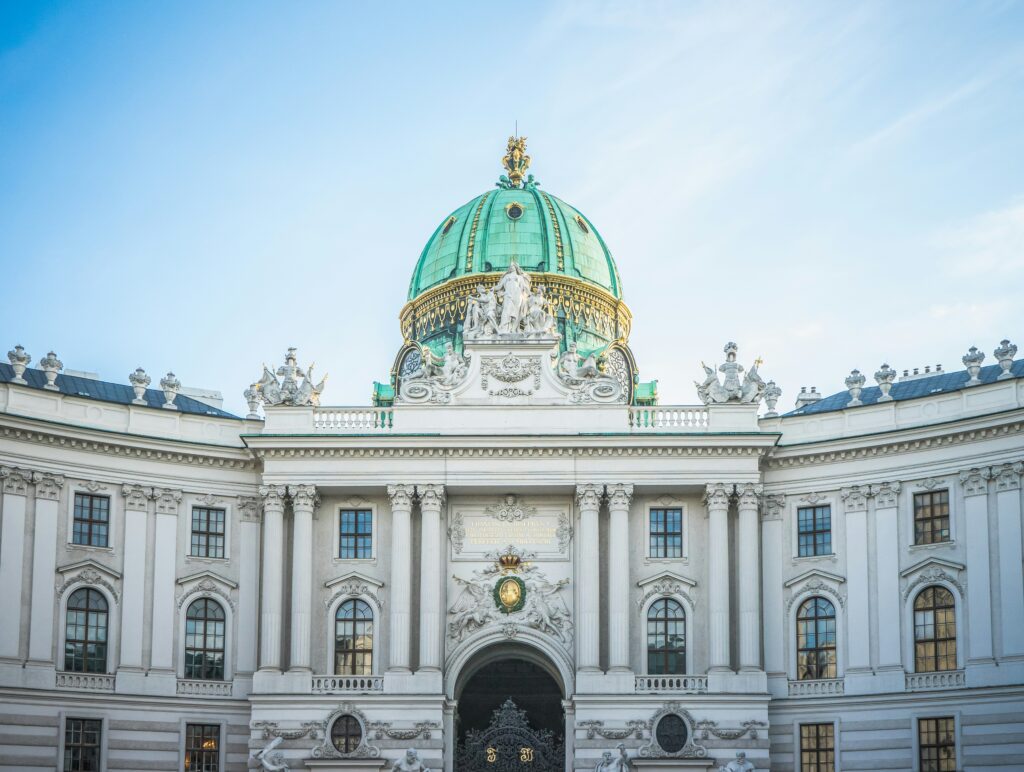
Hofburg Palace is the other unmissable highlight of the Innere Stadt: former home of the powerful (and inbred) Habsburgs, it remains the President’s official residence today and parts are open to the public, including several museums and the Spanish Riding School, where performances are often put on.
If you’re wondering how to group these sights efficiently, I mapped out the exact flow in my A First Timer’s Guide to the Best 2 Day Vienna Itinerary so you’re not zig-zagging across the city.
Where to Stay in Vienna: Leopoldstadt (Vienna 2nd District)
Bigger, greener and less busy than District 1 but still central enough to enjoy the city’s main attractions, Leopoldstadt is located across the Danube from the 1st District and is arguably the best neighborhood in Vienna if you’re looking to avoid the high prices and large crowds of the city center.
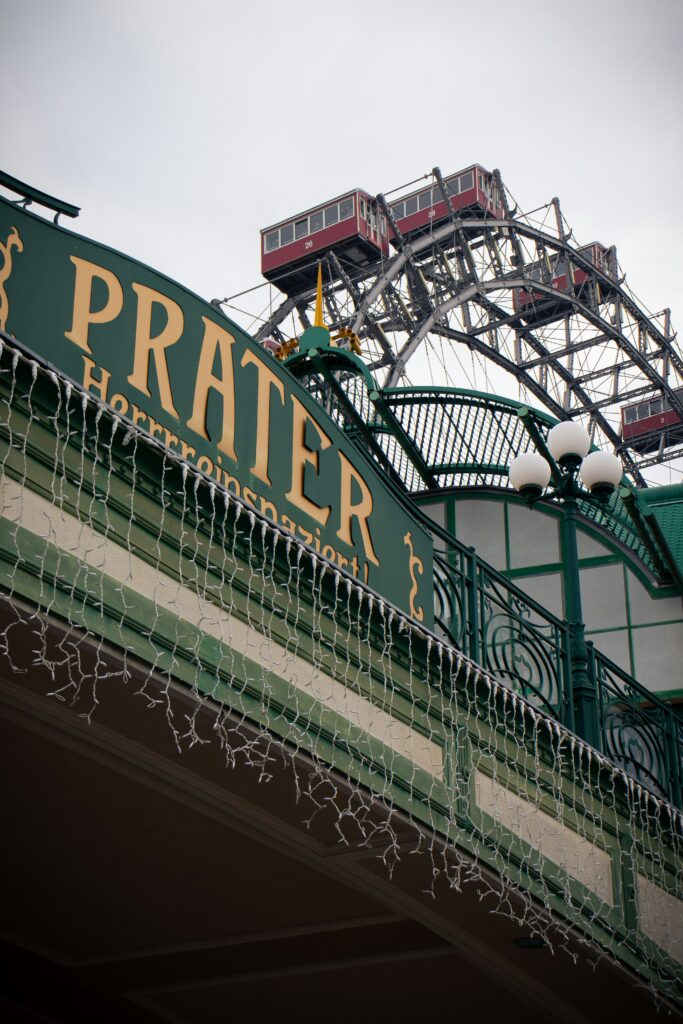
Ideal for families, it’s home to kid-friendly attractions like the Prater amusement park and its historic Wiener Riesenrad Ferris Wheel, whilst the large green parks and riverside walks can also be attractive for anyone who’s been there, done that with the city center and the tourist attractions and is looking for a more laid back second or third visit to Vienna.
Large swathes of the 2nd District are residential, which means the transport connections to the Innere Stadt are great if you don’t like the walk.
Vienna also has an excellent tram network, which I always think is the mark of a sophisticated city.
Top Hotel Recommendations near Leopoldstadt (Vienna 2nd District)
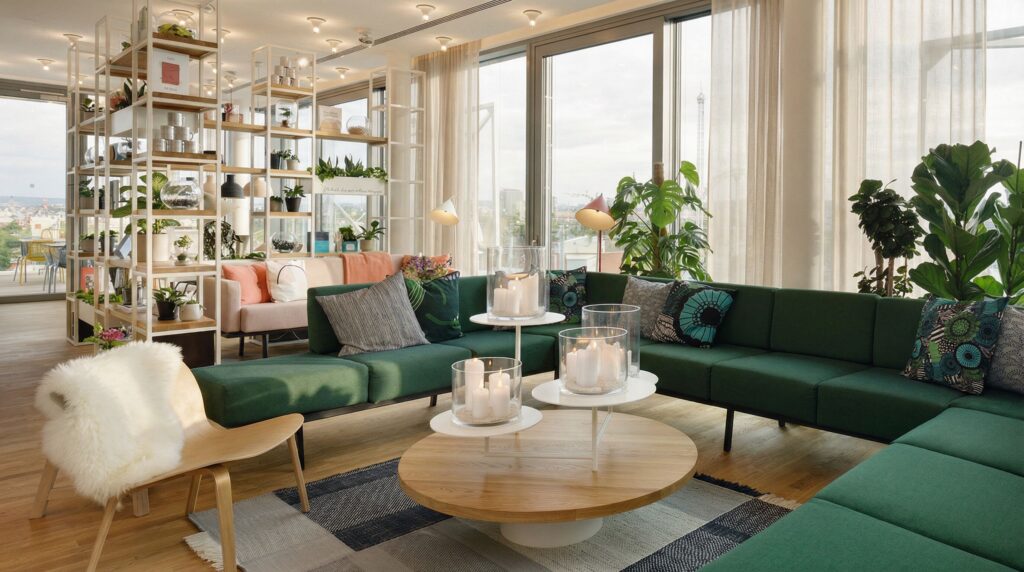
- Hotel Kunsthof (Leopoldstadt) – A quirky, art-filled budget hotel with colorful interiors and a laid-back vibe, perfect for travelers looking for an affordable stay with personality just outside the city center when deciding where to stay in Vienna.
- The Social Hub Vienna (Leopoldstadt) – A modern, community-driven hotel with co-working spaces and stylish rooms, ideal for digital nomads or younger travelers who want a social and flexible stay when deciding where to stay in Vienna for first-time visitors.
- Superbude Wien Prater (Leopoldstadt) – A fun, design-forward hotel with playful interiors and a casual atmosphere, great for travelers who want something trendy and different near the Prater when choosing where to stay in Vienna.
- Austria Classic Hotel Wien (Leopoldstadt) – A reliable, family-run hotel offering comfortable rooms and traditional charm, perfect for those looking for a straightforward and well-located stay when deciding where to stay in Vienna for first-time visitors.
- Zoku Vienna (Leopoldstadt) – A stylish apartment-style hotel designed for longer stays, featuring smart layouts and co-working spaces, ideal for remote workers or travelers wanting extra space and flexibility when thinking about where to stay in Vienna.
- Der Wilhelmshof (Leopoldstadt) – A colorful boutique hotel with individually designed rooms and a warm, artistic feel, perfect for travelers seeking a unique and comfortable stay with a personal touch when deciding where to stay in Vienna for first-time visitors.
- Hotel Stefanie (Leopoldstadt) – One of Vienna’s oldest hotels, blending historic charm with modern comfort, ideal for travelers who appreciate tradition and a central yet quieter location when deciding where to stay in Vienna.
- Novotel Wien City (Leopoldstadt) – A polished, mid-range hotel with modern amenities and spacious rooms, perfect for families or business travelers looking for comfort and convenience near the city center when deciding where to stay in Vienna for first-time visitors.
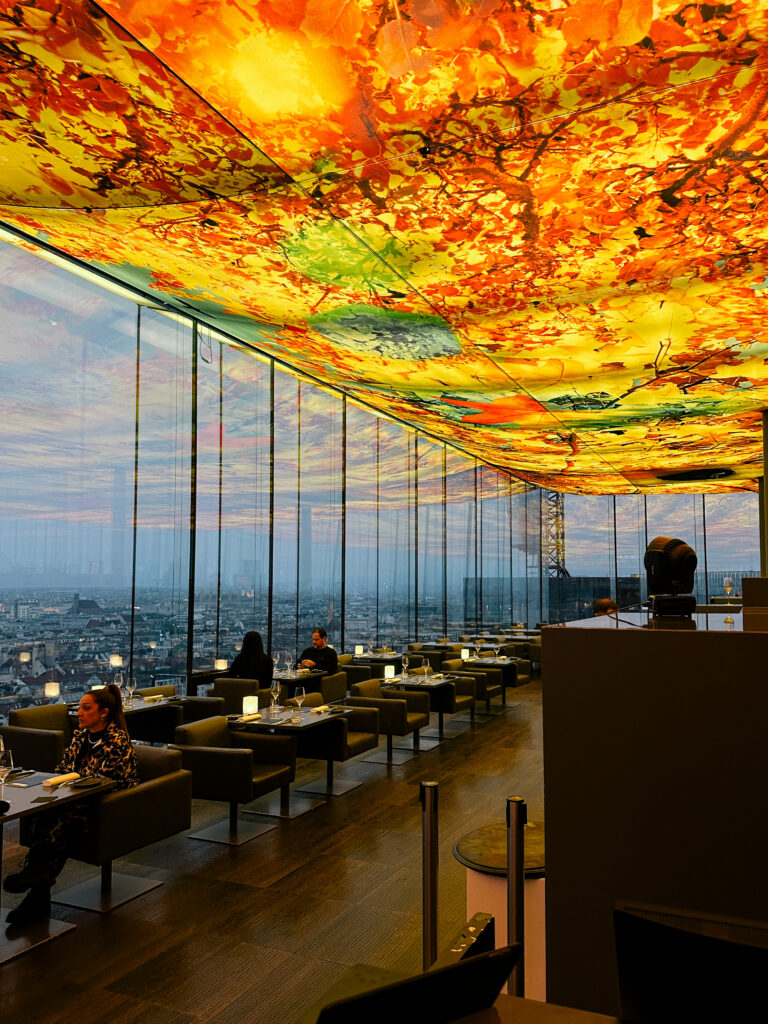
- SO/ Vienna (Leopoldstadt) – A sleek, high-design luxury hotel with bold interiors and panoramic city views, perfect for travelers seeking a modern, upscale stay when choosing where to stay in Vienna. a vibrant rooftop bar experience.
Top Things to do in Leopoldstadt (Vienna 2nd District)
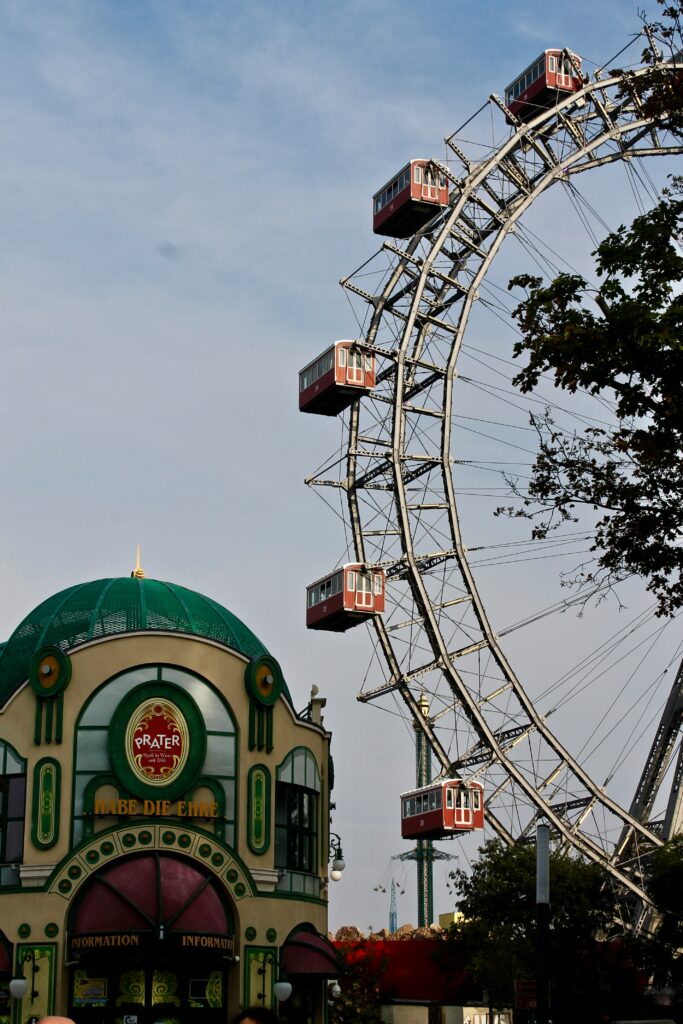
If you’re exploring Vienna with children then the Prater amusement park is a great place to spend a few hours – entrance is free, though you will need to pay for the rides.
For those traveling without children and looking to explore, Danube Island in the middle of the river is well connected by bridges and public transport and is a lovely place for riverside walks or a summer picnic.
Where to Stay in Vienna: Neubau (Vienna 7th District)
Neubau is Vienna’s hip, artsy quarter, yet it’s still located in the city center, adjacent to Innere Stadt. At its core is the MuseumsQuartier – a complex of contemporary art museums, design spaces, and cafés.
It’s also a stop I recommend carving out time for in my A First Timer’s Guide to the Best 2 Day Vienna Itinerary, especially if you’re into museums and design.
It’s a great base for return visitors to Vienna looking to see a different side to the city, and especially for those interested in art.
Neubau is also home to the city’s longest shopping street which offers a great mix of big brands and some of Vienna’s best boutique shops, as well as being home to bougee coffee houses and impressive street art.
This all adds to the bohemian vibe of the place.
After dark, Neubau is one of the best places in Vienna for nightlife, with plenty of late night bars and clubs adding to the 7th District’s appeal for younger people.
You won’t find large chain hotels here, the accommodation on offer tends to be more boutique, with small, independent hotels dominating.
Top Hotel Recommendations near Neubau (Vienna 7th District)
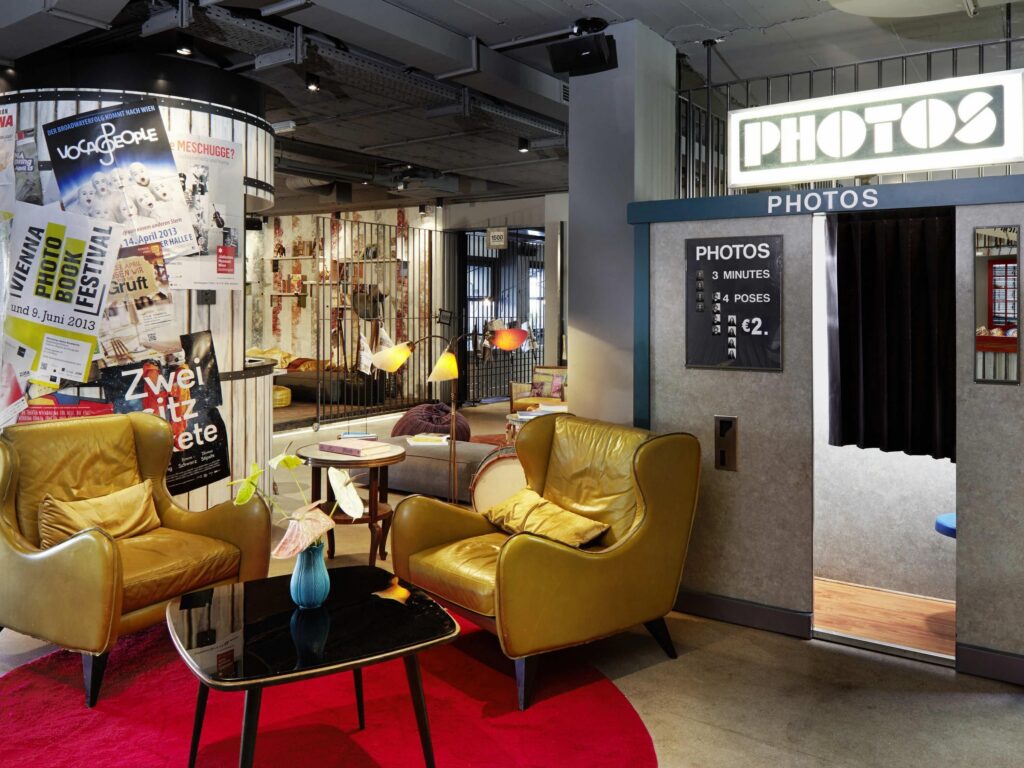
- The Weekend Hotel (Neubau) – A simple, budget-friendly hotel with clean, comfortable rooms and a no-frills approach, perfect for travelers looking for an affordable base in a central location when deciding where to stay in Vienna.
- Boutiquehotel Stadthalle by Cocoon (Neubau) – An eco-friendly boutique hotel with cozy, modern rooms and a relaxed atmosphere, ideal for travelers who value sustainability and a quieter stay when deciding where to stay in Vienna for first-time visitors.
- The Companion Vienna (Neubau) – A stylish, apartment-style stay with contemporary design and flexible layouts, perfect for longer stays or travelers who want a more residential feel when choosing where to stay in Vienna.
- HENRI Hotel Wien (Neubau) – A charming boutique hotel with vintage-inspired décor and a homey atmosphere, ideal for travelers looking for character and comfort in a laid-back neighborhood when deciding where to stay in Vienna for first-time visitors.
- Hotel Gilbert (Neubau) – A modern, design-forward hotel with clean lines and a calm aesthetic, perfect for travelers who want a polished stay near Vienna’s MuseumsQuartier when thinking about where to stay in Vienna.
- Miiro Spittelberg (Neubau) – A refined boutique hotel blending historic charm with modern design, perfect for travelers looking for a quieter, upscale stay in one of Vienna’s most creative neighborhoods when choosing where to stay in Vienna for first-time visitors.
- 25hours Hotel Vienna at MuseumsQuartier (Neubau) – A funky, design-forward hotel with quirky details and playful art, perfect for travelers looking for a creative and lively stay near the city’s top museums when deciding where to stay in Vienna.
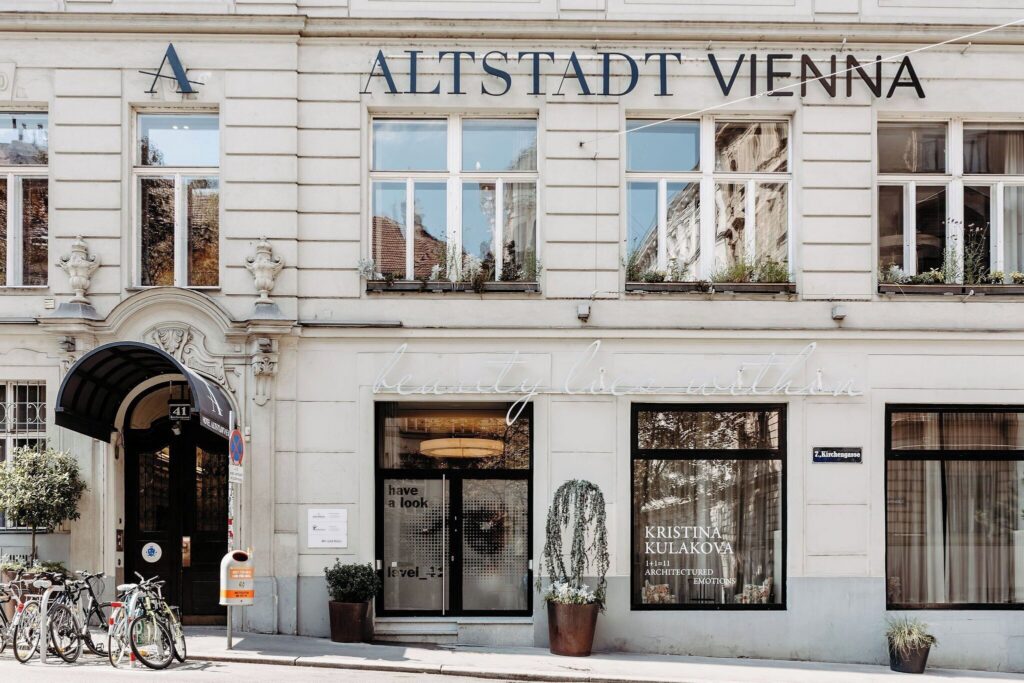
- Altstadt Vienna, an SLH Hotel (Neubau) – A luxury boutique hotel filled with art and personality, offering individually styled rooms and exceptional service, perfect for travelers seeking a unique and high-end stay in Vienna when deciding where to stay in Vienna for first-time visitors.
Top Things to do in Neubau (Vienna 7th District)
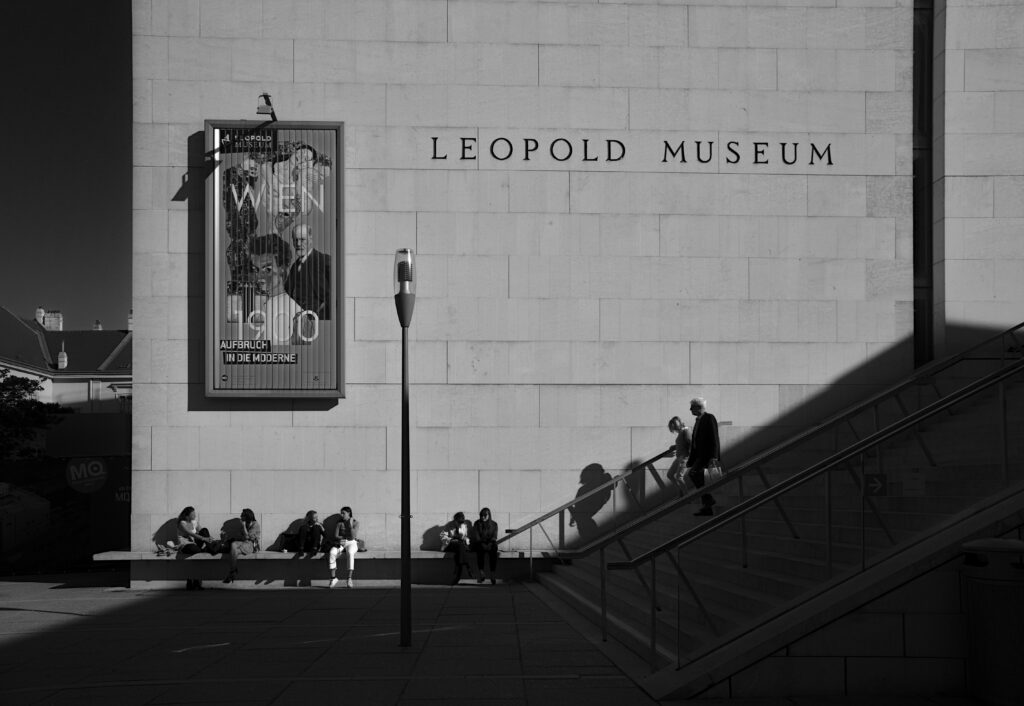
As well as shopping and browsing the 7th District’s cultural highlights like the Leopold Musuem and MuseumsQuartier, those looking for a dose of culture could catch a show at Neubau’s Volkstheater. Founded in 1889, it’s widely considered one of Vienna’s best and most important venues.
Where to Stay in Vienna: Landstrasse (Vienna 3rd District)
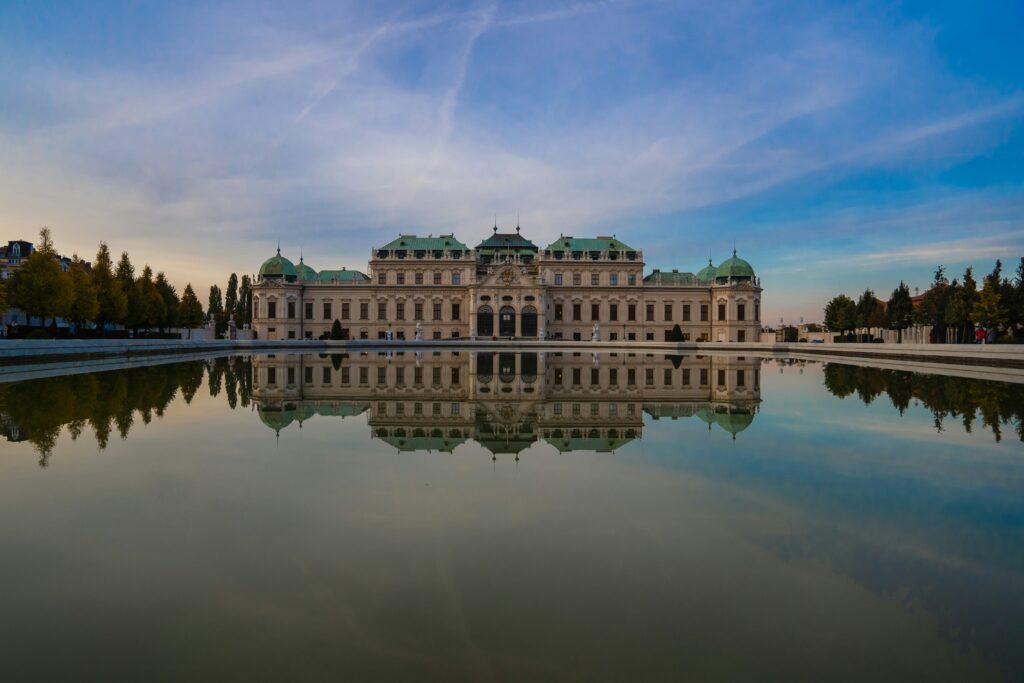
If you’re looking for a quieter stay in Vienna but still want to be close to the action, then the 3rd District offers a nice blend of grand landmarks with quiet, residential streets, all still well connected to the 1st District.
As I mentioned earlier, this is the district that I stayed in. At first I was worried about being too far from the action but it wasn’t an issue at all. I was pleasantly surprised to be next to Stadtpark and a bunch of really good coffee shops!
Landstrasse is home to the Belvedere Palace, where Gustav Klimt’s The Kiss is displayed, as well as the quirky Hundertwasserhaus.
Accommodation is generally cheaper than the other central districts in Vienna and you’re likely to find this part of the city quieter and relatively tourist-free.
It’s one of the best Vienna city districts for families, older visitors or anyone who wants to remain in reach of the Innere Stadt without being in amongst it.
Top Hotel Recommendations near Landstrasse (Vienna 3rd District)
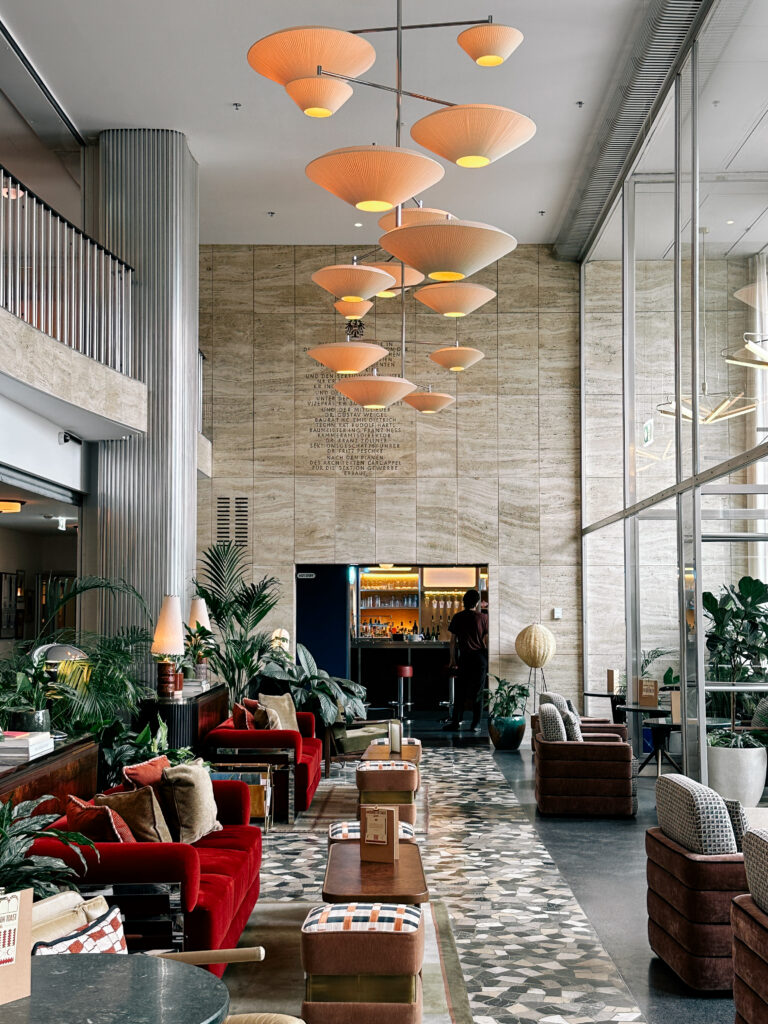
- ibis budget Wien Sankt Marx (Landstraße) – A no-frills, budget-friendly hotel offering simple, modern rooms and reliable comfort, perfect for travelers looking for an affordable stay with easy access to public transport when deciding where to stay in Vienna.
- KSV Hotel Wien (Landstraße) – A straightforward, functional hotel with basic amenities and a convenient location, ideal for travelers who prioritize value and practicality over design when deciding where to stay in Vienna for first-time visitors.
- Ruby Sofie Hotel Vienna (Landstraße) – A stylish, design-forward hotel set in a former concert hall, offering a trendy yet relaxed vibe, ideal for travelers who want boutique style at a mid-range price point when choosing where to stay in Vienna.
- Austria Trend Hotel Savoyen Vienna (Landstraße) – A polished, mid-range hotel with spacious rooms and modern amenities, perfect for travelers seeking comfort and convenience near Belvedere Palace when deciding where to stay in Vienna for first-time visitors.
- Imperial Riding School, Autograph Collection (Landstraße) – A refined hotel set in a historic former military riding school, blending classic architecture with contemporary design, ideal for travelers wanting a unique and upscale stay when thinking about where to stay in Vienna.
- The Hoxton Vienna (Landstraße) – Head to my other blog post for a full review of The Hoxton Vienna. A trendy, design-led hotel with bold interiors, lively social spaces, and a strong food and drink scene, perfect for travelers looking for a stylish and energetic stay when deciding where to stay in Vienna for first-time visitors.
- InterContinental Vienna by IHG (Landstraße) – A classic luxury hotel offering spacious rooms, traditional elegance, and full-service amenities, ideal for travelers seeking a dependable, high-end stay near the city center when deciding where to stay in Vienna.
Top Things to do in Landstrasse (Vienna 3rd District)
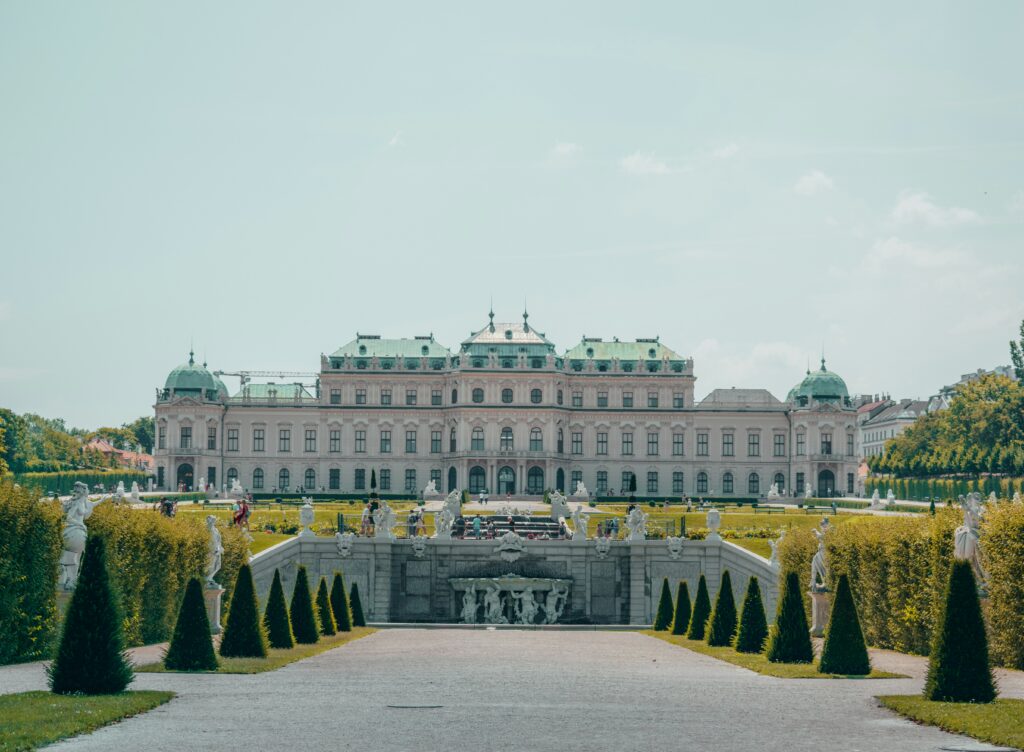
Landstrasse may feel quieter than the historic center, but it’s home to some of Vienna’s most unique cultural highlights.
The standout is the colorful Hundertwasserhaus, one of the city’s most photographed buildings, known for its bold, unconventional design and tree-lined façade.
Just a short walk away, Belvedere Palace is another must-see, where you can admire Gustav Klimt’s The Kiss inside a stunning Baroque setting.
It’s an easy district to explore at a slower pace, with a mix of iconic landmarks and more local, residential charm.
Other Vienna Districts Worth Considering
There are a few more of Vienna’s city districts to consider.
The 4th District of Wieden is home to the impressive Baroque KarlsKirche (St Charles’s Church) and the Naschmarkt, Vienna’s largest open-air market.
The 6th District, Mariahilf, is one of the best places to shop in the city, especially along its shopping street, Mariahilfer Strasse.
My favorite boutique hotels in this district are Hotel MOTTO (Mariahilf) and Hotel Josefine (Mariahilf) – both stylish but with very different vibes.
Hotel MOTTO is a trendy, Parisian-inspired stay with chic interiors and a lively rooftop restaurant, perfect if you want a bit of energy and a great dining scene. Just around the corner, Hotel Josefine leans more romantic and moody, with vintage Art Deco details and a design-forward feel that’s ideal for a slower, more atmospheric stay.
The tiny Josefstadt (8th District) is the city’s smallest district, tucked next to Innere Stadt and renowned for its theaters.
My favorite hotels in this district are Hotel Rathaus Wein & Design (Josefstadt) and The Levante Parliament, A Design Hotel (Josefstadt).
Hotel Rathaus Wein & Design offers a uniquely Viennese experience, with each room curated by local winemakers, making it a memorable stay for anyone interested in Austrian wine and design. While The Levante Parliament leans more sleek and contemporary, with minimalist interiors and an outdoor courtyard that’s perfect if you want a calm, modern stay in a quieter but still central area.
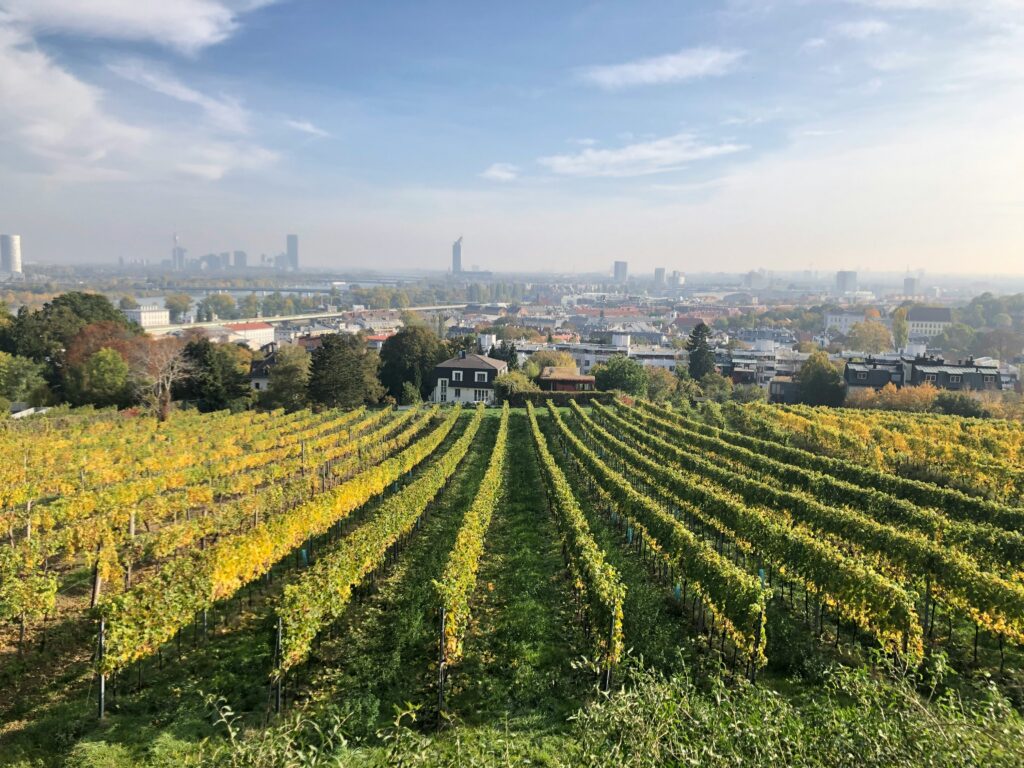
And finally, for a more peaceful stay in the city, the 19th District of Dobling is renowned for its vineyards and laid back atmosphere, whilst still being well connected to the city center.
Where I Stayed in Vienna as a First-Time Visitor
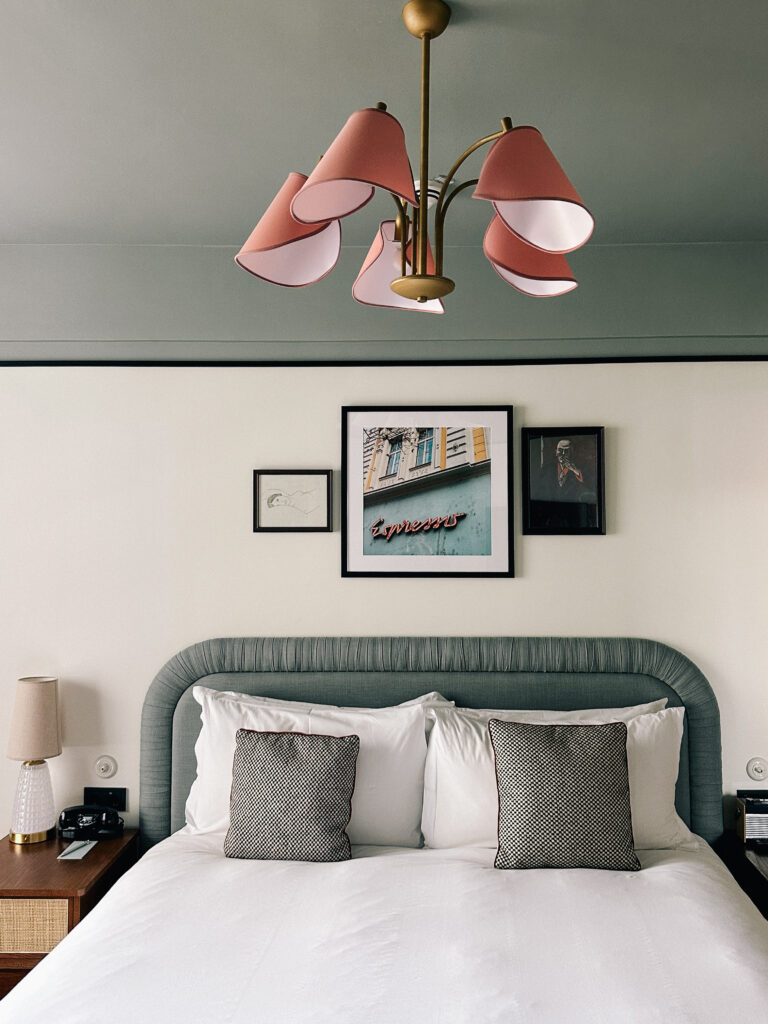
I mentioned earlier that I stayed at The Hoxton Vienna in the Landstrasse (3rd District), and it ended up being the perfect base for exploring the city.
The Hoxton blends classic Viennese design with modern boutique touches, with stylish rooms, multiple dining spots, and even a rooftop pool overlooking the city. Sadly I visited during winter so it was far from pool weather but I was still able to grab a coffee and head to the roof for some epic views.
What I loved most was the location. Landstrasse sits just outside the historic center, so it felt quieter than the busy Old Town while still being super well connected to the main sights and public transport. It made getting around Vienna incredibly easy, whether we were heading to museums, cafés, or catching the train for our day trip to Bratislava.
If you’re curious what the rooms, restaurants, and food on property are like, and whether the hotel is actually worth the price, I share the full experience in my detailed guide – The Hoxton Vienna Review: A Look Inside Vienna’s Coolest Hotel
Where to Stay in Vienna With Family
Vienna is safe and compact, and it rarely gets overbearingly busy unless you’re in town for specific events such as Christmas markets.
But there is a clear winner when it comes to deciding where to stay in Vienna with family.
The 2nd District, Leopoldstadt, is the best district to stay in Vienna with family.
The Prater amusement park is a top family attraction in the city, and there’s loads of green space for picnics and running around. You’re still close enough to reach the city center for sightseeing and there’s great transport links to the rest of the city too.
Prices are lower than the Innere Stadt (although still not that cheap), making Leopoldstadt the standout option for families visiting Vienna.
Landstrasse is also a good option and there’s really nothing wrong with staying in the 1st District, as long as you’re prepared to pay for it.
Where Not To Stay in Vienna
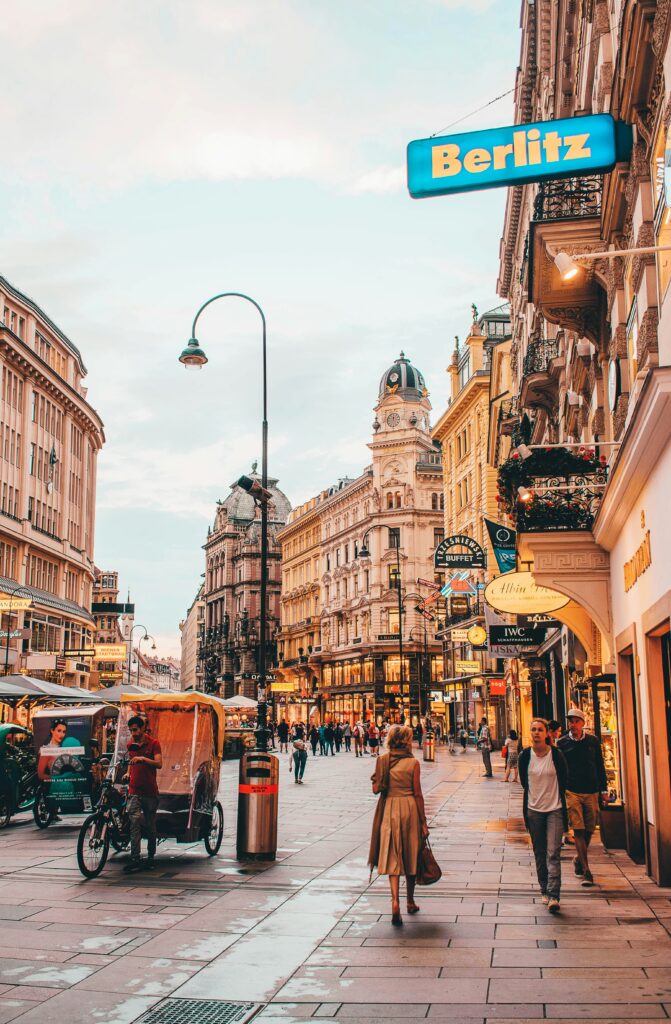
Vienna’s 23 districts stretch out from the center of the city, and the further districts like Floridsdorf (21st District) and Donaustadt (22nd District) really don’t offer much to tourists: they’re mainly residential and commuting times to the city center make any savings on accommodation not worth the money unless you REALLY like the U-Bahn.
You’ll also want to avoid areas around the Gurtel, the city’s ring road, which tend to be a bit more rundown, busy and loud with traffic noise, though I wouldn’t go as far as to say these places are unsafe.
Ring road areas can be useful if you’re in Vienna for business or just passing through, with the ring road offering quick routes out of the city and to the airport.
Again, unless you’re in the city for work, I’d avoid Favoriten (10th District).
This is Vienna’s business hub and it’s pretty soulless and much more set up for commuters than tourists. It is, however, home to the Wien Hauptbahnhof, the city’s main train station.
Any train-trippers out there, do me a favor and book your hotel somewhere else, it’s worth the tired commute after your train to stay somewhere nicer, trust me.
Where to Stay in Vienna for First-Time Visitors: Final Thoughts
Choosing where to stay in Vienna is actually a lot more straightforward than it might seem at first glance. Compared to other major European cities, figuring out where to stay in Vienna doesn’t require overthinking every neighborhood or second-guessing your decision.
Vienna’s main attractions are all pretty centrally located, which means most of the best options for where to stay in Vienna are naturally clustered near the city center. Translation: no matter where you book (within reason), you’re likely not too far from the action.
One of the reasons I find where to stay in Vienna so approachable is how safe and easy the city feels overall. Because of that, your decision usually comes down to your budget and travel style rather than worrying about “good vs bad” areas.
If it’s your first time visiting, the Innere Stadt (1st district) is hands down the most convenient option for where to stay in Vienna. You’ll be right in the middle of everything, with major sights, cafés, and historic streets just steps away. It’s definitely the most premium area, but for many travelers, the time saved getting around is worth it.
If you’re looking for a bit more value while still staying well-connected, there are some great alternatives for where to stay in Vienna just outside the center. Districts like the 2nd, 3rd, 7th, and 8th strike a really nice balance between price, location, and local feel without sacrificing convenience.
- Neubau (7th district) is perfect if you’re into design-forward hotels, creative energy, and a slightly trendier vibe.
- Landstraße (3rd district) offers a more relaxed, cultural feel while still being close to the center.
- Leopoldstadt (2nd district) is a great pick for families, thanks to its green spaces and more laid-back atmosphere.
And if you have an extra day, I highly recommend squeezing in my How to Plan the Perfect Vienna to Bratislava Day Trip since it’s one of the easiest international day trips you can do.
Personally, when thinking about where to stay in Vienna, I’d stick to these central and near-central districts. It keeps everything easy, walkable, and well-connected, which is exactly what you want when exploring a city like Vienna.
Where did you end up staying in Vienna? Let me know in the comments below!
Visiting other parts of Austria?
Check out my other travel guides on Austria here.
Visiting other parts of Europe?
Check out my other travel guides on Europe here.
Looking for travel inspiration to somewhere else?
Check out all my international travel guides here!
Planning a trip to Austria and now wondering where to stay in Vienna for first-time visitors? You’re not alone. Vienna may look compact on the map, but figuring out where to stay in Vienna for first-time visitors can feel a little overwhelming once you realize the city is divided into 23 different districts, each with its own personality 🤯
Austria’s capital is known for a lot of things. It’s Europe’s classical music epicenter, having given the world Mozart, Beethoven, and a long list of other composers. The city is packed with grand Habsburg-era architecture, elegant coffee houses, and landmarks like St. Stephen’s Cathedral rising over the historic center. And of course, there’s the food. You really haven’t experienced Vienna until you’ve sat down for a proper schnitzel with a cold local beer.
FYI: beyond schnitzel, Vienna’s dessert scene is elite. I rounded up all my favorites in myBeginner’s Guide to Must-Try Dessert Spots in Vienna 🍰
So the biiiiiig question becomes: do you stay right in the historic center surrounded by imperial palaces and famous sights, or book somewhere slightly outside the crowds with more local neighborhoods, parks, and boutique hotels?
The good news is that Vienna is very compact and easy to navigate. But choosing the right district still matters.
In this guide, I’ll break down where to stay in Vienna for first-time visitors, including the pros and cons of the best districts and the top hotels in each area so you can pick the neighborhood that fits your travel style best. So let’s get into it 👇
Read more on Vienna 🇦🇹
- A First Timer’s Guide to the Best 2 Day Vienna Itinerary
- Beginner’s Guide to Must-Try Dessert Spots in Vienna
- How to Plan the Perfect Vienna to Bratislava Day Trip
- The Hoxton Vienna Review: A Look Inside Vienna’s Coolest Hotel
This site contains affiliate links, which means I may earn a small commission if you make a purchase through them (which will likely go towards overpriced airport wine or buying my dog more unnecessary toys). However, none of that impacts the integrity of my reviews. All thoughts and opinions are my own.
Vienna at A Glance: The Best Vienna Hotels
Short on time? Here are my top picks for the best boutique hotels in Vienna, Austria:
- The Hoxton Vienna (3rd District – Landstraße) — This is where we stayed and I loved it. A sleek and stylish hotel with a laid-back vibe, The Hoxton combines classic Viennese design with modern touches, offering spacious rooms and a trendy rooftop bar. Click here for my full hotel review on The Hoxton!
- 25hours Hotel at MuseumsQuartier (7th District – Neubau) – A funky, design-forward hotel with quirky details and playful art, perfect for travelers looking for a creative and affordable stay in the heart of the city. I’ve stayed at the one in Copenhagen before and loved the vibes!
- Hotel Stefanie (2nd District – Leopoldstadt) – One of Vienna’s oldest hotels, blending historic charm with modern comfort, ideal for travelers who appreciate tradition and a central yet quieter location.
- Hotel Josefine (6th District – Mariahilf) – A glamorous, vintage-inspired hotel with Art Deco flair (my faaaav) and moody interiors, ideal for travelers seeking a romantic and design-driven stay.
- Buxbaum Beletage Design & Boutique Hotel (1st District – Innere Stadt) – A charming boutique hotel with elegant, design-forward interiors and a cozy atmosphere, perfect for those wanting a stylish stay near Vienna’s historic center.
- SO/ Vienna (2nd District – Leopoldstadt) – A sleek, high-design luxury hotel with bold interiors and panoramic city views, perfect for travelers seeking a modern, upscale stay. We had dinner here and it was epic!
- InterContinental Vienna by IHG (3rd District – Landstraße) – A classic luxury hotel offering spacious rooms, traditional elegance, and full-service amenities, ideal for travelers seeking a dependable, high-end stay near the city center.
- Rosewood Vienna (1st District – Innere Stadt) – Ultra-luxury at its finest, Rosewood Vienna offers impeccable service, sophisticated design, and a prime central location, perfect for travelers seeking a truly elevated and indulgent stay.
Not sure how long you actually need in the city? I break it all down in my A First Timer’s Guide to the Best 2 Day Vienna Itinerary, including how to maximize a short trip!
Quick Snapshot of Vienna Neighborhoods & Areas To Stay
FYI: Each neighborhood in Vienna has a slightly different personality, and where you stay can shape your entire trip. You could be waking up in the middle of the historic center surrounded by imperial palaces and grand coffee houses, or staying somewhere a little quieter with more parks, local cafés, and lower hotel prices.
The good news is that Vienna is very compact and easy to get around, so even if you don’t stay right in the historic center, most places are still within easy reach by foot, tram, or the U-Bahn! I’m pretty sure I clocked like 30,000 steps everyday even in the heart of winter!
On my most recent trip, I personally stayed at The Hoxton Vienna, which sits in the Landstrasse (3rd District). Some of you might know that if there’s ever an option for a Hoxton hotel, I’m going to be booking it because I’m obsessed with their mid-century modern design and quality of service.
Hoxton hotels are always the perfect balance of retro-modern design, boutique flair, and consistently great service, all without breaking the bank. No like I seriously almost bought the exact same floral wallpaper for my accent wall to match The Hoxton Paris.
I also really liked the location of The Hoxton Vienna because it felt a bit calmer than the historic center but was still incredibly convenient for exploring the city. It ended up being perfectly located near the main train connections for our day trip to Bratislava, which made the morning train super easy.
If you’re thinking about doing the same, I share exactly how to plan it in my guide: How to Plan the Perfect Vienna to Bratislava Day Trip.
But before we get into the specific neighborhoods and hotels, it helps to understand the main areas travelers usually consider when deciding where to stay in Vienna:
Innere Stadt (1st District): Vienna’s historic heart and home to the city’s biggest attractions like St. Stephen’s Cathedral and Hofburg Palace. It’s the most central and convenient place to stay, but also the most expensive.
Leopoldstadt (2nd District): Just across the Danube from the city center, this district offers more green space, family-friendly attractions like the Prater amusement park, and generally lower prices than the 1st District.
Neubau (7th District): Vienna’s hip, artsy neighborhood known for MuseumsQuartier, boutique shops, cafés, and nightlife. It’s perfect for creative travelers who want a more local, bohemian feel while still staying close to the center.
Landstrasse (3rd District): A quieter, more residential area that still sits close to the main attractions. It’s a great compromise if you want lower hotel prices and fewer crowds while staying well connected to the city center.
And if you’re trying to map neighborhoods to your daily plans, my A First Timer’s Guide to the Best 2 Day Vienna Itinerary walks through exactly how to structure each day based on location.
Where to Stay in Vienna: Innere Stadt (Vienna 1st District)
For first time visitors to Vienna, Innere Stadt makes the most sense, as it’s the city’s historic heart and home to key attractions such as the Hofburg Palace and St Stephen’s Cathedral.
This is also where you’ll likely spend most of your time sightseeing, especially if you’re following a classic travel guide like my A First Timer’s Guide to the Best 2 Day Vienna Itinerary.
It’s not just the big hitters that make this such an attractive district either. This central part of Vienna is home to all manner of Baroque churches, grand museums, elegant shopping streets, and traditional coffee houses.
Just a headsup that hotels in the 1st District are typically more expensive, but you’re right in the middle of everything, which means less time commuting and more time actually enjoying Vienna
And if you’re looking for a luxury stay in Vienna, you’ll be happy to know that many of the city’s top luxury hotels are located right in Innere Stadt.
Visiting Vienna for the Christmas markets and not sure where to stay in Vienna? The 1st District is the best place to be. You’ll be within walking distance of the Christkindlmarkt at Rathausplatz, the Stephansplatz market, and the Spittelberg Market, which makes market hopping very easy.
Top Hotel Recommendations near Innere Stadt (Vienna 1st District)
- Motel One Wien-Staatsoper (Innere Stadt) – A sleek, budget-friendly design hotel known for its stylish interiors and consistent quality, perfect for travelers figuring out where to stay in Vienna who want a modern stay without breaking the bank.
- Elegance Studios Wien (Innere Stadt) – Simple and affordable studio-style accommodations offering comfort and convenience, ideal for longer stays or travelers looking for a no-frills base to explore the city, especially when deciding where to stay in Vienna for first-time visitors.
- House of Ble (Innere Stadt) – A trendy, boutique-style stay (v on brand for Discover Over There) with minimalist design and a cool, local vibe, great for younger travelers or creatives wanting something a little different from traditional hotels when choosing where to stay in Vienna.
- Buxbaum Beletage Design & Boutique Hotel (Innere Stadt) – A charming boutique hotel with elegant, design-forward interiors and a cozy atmosphere, perfect for those wanting a stylish stay near Vienna’s historic center and deciding where to stay in Vienna for first-time visitors.
- Hotel Grand Ferdinand Vienna (Innere Stadt) – A polished, mid-range hotel on the Ringstrasse offering classic Viennese style with modern comforts, ideal for travelers thinking about where to stay in Vienna who want location and reliability without going full luxury.
- Hotel Topazz & Lamée (Innere Stadt) – A unique design hotel known for its iconic oval windows and rooftop bar, offering a boutique luxury experience in the heart of Vienna’s city center, perfect for those choosing where to stay in Vienna for first-time visitors.
- Miiro Palais Rudolf (Innere Stadt) – A refined boutique hotel blending historic architecture with modern, understated elegance, perfect for travelers looking for a quieter, upscale stay with character when deciding where to stay in Vienna.
- The Leo Grand (Innere Stadt) – A whimsical yet luxurious boutique hotel with bold design and artistic flair, ideal for those wanting a memorable, high-end stay steps from Vienna’s main attractions when considering where to stay in Vienna for first-time visitors.
- Rosewood Vienna (Innere Stadt) – Ultra-luxury at its finest, Rosewood Vienna offers impeccable service, sophisticated design, and a prime central location, perfect for travelers deciding where to stay in Vienna who are seeking a truly elevated and indulgent stay.
Top Things to do in Innere Stadt (Vienna 1st District)
Where there’s a gigantic cathedral, there’s normally a tower to climb and St Stephen’s is no different. It’s 343 steps (you can count them) to the top of the cathedral for panoramic views over the Austrian capital. It’s narrow and winding and not wheelchair accessible unfortunately, turns out medieval Austrians weren’t very inclusive.
Hofburg Palace is the other unmissable highlight of the Innere Stadt: former home of the powerful (and inbred) Habsburgs, it remains the President’s official residence today and parts are open to the public, including several museums and the Spanish Riding School, where performances are often put on.
If you’re wondering how to group these sights efficiently, I mapped out the exact flow in my A First Timer’s Guide to the Best 2 Day Vienna Itinerary so you’re not zig-zagging across the city.
Where to Stay in Vienna: Leopoldstadt (Vienna 2nd District)
Bigger, greener and less busy than District 1 but still central enough to enjoy the city’s main attractions, Leopoldstadt is located across the Danube from the 1st District and is arguably the best neighborhood in Vienna if you’re looking to avoid the high prices and large crowds of the city center.
Ideal for families, it’s home to kid-friendly attractions like the Prater amusement park and its historic Wiener Riesenrad Ferris Wheel, whilst the large green parks and riverside walks can also be attractive for anyone who’s been there, done that with the city center and the tourist attractions and is looking for a more laid back second or third visit to Vienna.
Large swathes of the 2nd District are residential, which means the transport connections to the Innere Stadt are great if you don’t like the walk.
Vienna also has an excellent tram network, which I always think is the mark of a sophisticated city.
Top Hotel Recommendations near Leopoldstadt (Vienna 2nd District)
- Hotel Kunsthof (Leopoldstadt) – A quirky, art-filled budget hotel with colorful interiors and a laid-back vibe, perfect for travelers looking for an affordable stay with personality just outside the city center when deciding where to stay in Vienna.
- The Social Hub Vienna (Leopoldstadt) – A modern, community-driven hotel with co-working spaces and stylish rooms, ideal for digital nomads or younger travelers who want a social and flexible stay when deciding where to stay in Vienna for first-time visitors.
- Superbude Wien Prater (Leopoldstadt) – A fun, design-forward hotel with playful interiors and a casual atmosphere, great for travelers who want something trendy and different near the Prater when choosing where to stay in Vienna.
- Austria Classic Hotel Wien (Leopoldstadt) – A reliable, family-run hotel offering comfortable rooms and traditional charm, perfect for those looking for a straightforward and well-located stay when deciding where to stay in Vienna for first-time visitors.
- Zoku Vienna (Leopoldstadt) – A stylish apartment-style hotel designed for longer stays, featuring smart layouts and co-working spaces, ideal for remote workers or travelers wanting extra space and flexibility when thinking about where to stay in Vienna.
- Der Wilhelmshof (Leopoldstadt) – A colorful boutique hotel with individually designed rooms and a warm, artistic feel, perfect for travelers seeking a unique and comfortable stay with a personal touch when deciding where to stay in Vienna for first-time visitors.
- Hotel Stefanie (Leopoldstadt) – One of Vienna’s oldest hotels, blending historic charm with modern comfort, ideal for travelers who appreciate tradition and a central yet quieter location when deciding where to stay in Vienna.
- Novotel Wien City (Leopoldstadt) – A polished, mid-range hotel with modern amenities and spacious rooms, perfect for families or business travelers looking for comfort and convenience near the city center when deciding where to stay in Vienna for first-time visitors.
- SO/ Vienna (Leopoldstadt) – A sleek, high-design luxury hotel with bold interiors and panoramic city views, perfect for travelers seeking a modern, upscale stay when choosing where to stay in Vienna. a vibrant rooftop bar experience.
Top Things to do in Leopoldstadt (Vienna 2nd District)
If you’re exploring Vienna with children then the Prater amusement park is a great place to spend a few hours – entrance is free, though you will need to pay for the rides.
For those traveling without children and looking to explore, Danube Island in the middle of the river is well connected by bridges and public transport and is a lovely place for riverside walks or a summer picnic.
Where to Stay in Vienna: Neubau (Vienna 7th District)
Neubau is Vienna’s hip, artsy quarter, yet it’s still located in the city center, adjacent to Innere Stadt. At its core is the MuseumsQuartier – a complex of contemporary art museums, design spaces, and cafés.
It’s also a stop I recommend carving out time for in my A First Timer’s Guide to the Best 2 Day Vienna Itinerary, especially if you’re into museums and design.
It’s a great base for return visitors to Vienna looking to see a different side to the city, and especially for those interested in art.
Neubau is also home to the city’s longest shopping street which offers a great mix of big brands and some of Vienna’s best boutique shops, as well as being home to bougee coffee houses and impressive street art.
This all adds to the bohemian vibe of the place.
After dark, Neubau is one of the best places in Vienna for nightlife, with plenty of late night bars and clubs adding to the 7th District’s appeal for younger people.
You won’t find large chain hotels here, the accommodation on offer tends to be more boutique, with small, independent hotels dominating.
Top Hotel Recommendations near Neubau (Vienna 7th District)
- The Weekend Hotel (Neubau) – A simple, budget-friendly hotel with clean, comfortable rooms and a no-frills approach, perfect for travelers looking for an affordable base in a central location when deciding where to stay in Vienna.
- Boutiquehotel Stadthalle by Cocoon (Neubau) – An eco-friendly boutique hotel with cozy, modern rooms and a relaxed atmosphere, ideal for travelers who value sustainability and a quieter stay when deciding where to stay in Vienna for first-time visitors.
- The Companion Vienna (Neubau) – A stylish, apartment-style stay with contemporary design and flexible layouts, perfect for longer stays or travelers who want a more residential feel when choosing where to stay in Vienna.
- HENRI Hotel Wien (Neubau) – A charming boutique hotel with vintage-inspired décor and a homey atmosphere, ideal for travelers looking for character and comfort in a laid-back neighborhood when deciding where to stay in Vienna for first-time visitors.
- Hotel Gilbert (Neubau) – A modern, design-forward hotel with clean lines and a calm aesthetic, perfect for travelers who want a polished stay near Vienna’s MuseumsQuartier when thinking about where to stay in Vienna.
- Miiro Spittelberg (Neubau) – A refined boutique hotel blending historic charm with modern design, perfect for travelers looking for a quieter, upscale stay in one of Vienna’s most creative neighborhoods when choosing where to stay in Vienna for first-time visitors.
- 25hours Hotel Vienna at MuseumsQuartier (Neubau) – A funky, design-forward hotel with quirky details and playful art, perfect for travelers looking for a creative and lively stay near the city’s top museums when deciding where to stay in Vienna.
- Altstadt Vienna, an SLH Hotel (Neubau) – A luxury boutique hotel filled with art and personality, offering individually styled rooms and exceptional service, perfect for travelers seeking a unique and high-end stay in Vienna when deciding where to stay in Vienna for first-time visitors.
Top Things to do in Neubau (Vienna 7th District)
As well as shopping and browsing the 7th District’s cultural highlights like the Leopold Musuem and MuseumsQuartier, those looking for a dose of culture could catch a show at Neubau’s Volkstheater. Founded in 1889, it’s widely considered one of Vienna’s best and most important venues.
Where to Stay in Vienna: Landstrasse (Vienna 3rd District)
If you’re looking for a quieter stay in Vienna but still want to be close to the action, then the 3rd District offers a nice blend of grand landmarks with quiet, residential streets, all still well connected to the 1st District.
As I mentioned earlier, this is the district that I stayed in. At first I was worried about being too far from the action but it wasn’t an issue at all. I was pleasantly surprised to be next to Stadtpark and a bunch of really good coffee shops!
Landstrasse is home to the Belvedere Palace, where Gustav Klimt’s The Kiss is displayed, as well as the quirky Hundertwasserhaus.
Accommodation is generally cheaper than the other central districts in Vienna and you’re likely to find this part of the city quieter and relatively tourist-free.
It’s one of the best Vienna city districts for families, older visitors or anyone who wants to remain in reach of the Innere Stadt without being in amongst it.
Top Hotel Recommendations near Landstrasse (Vienna 3rd District)
- ibis budget Wien Sankt Marx (Landstraße) – A no-frills, budget-friendly hotel offering simple, modern rooms and reliable comfort, perfect for travelers looking for an affordable stay with easy access to public transport when deciding where to stay in Vienna.
- KSV Hotel Wien (Landstraße) – A straightforward, functional hotel with basic amenities and a convenient location, ideal for travelers who prioritize value and practicality over design when deciding where to stay in Vienna for first-time visitors.
- Ruby Sofie Hotel Vienna (Landstraße) – A stylish, design-forward hotel set in a former concert hall, offering a trendy yet relaxed vibe, ideal for travelers who want boutique style at a mid-range price point when choosing where to stay in Vienna.
- Austria Trend Hotel Savoyen Vienna (Landstraße) – A polished, mid-range hotel with spacious rooms and modern amenities, perfect for travelers seeking comfort and convenience near Belvedere Palace when deciding where to stay in Vienna for first-time visitors.
- Imperial Riding School, Autograph Collection (Landstraße) – A refined hotel set in a historic former military riding school, blending classic architecture with contemporary design, ideal for travelers wanting a unique and upscale stay when thinking about where to stay in Vienna.
- The Hoxton Vienna (Landstraße) – Head to my other blog post for a full review of The Hoxton Vienna. A trendy, design-led hotel with bold interiors, lively social spaces, and a strong food and drink scene, perfect for travelers looking for a stylish and energetic stay when deciding where to stay in Vienna for first-time visitors.
- InterContinental Vienna by IHG (Landstraße) – A classic luxury hotel offering spacious rooms, traditional elegance, and full-service amenities, ideal for travelers seeking a dependable, high-end stay near the city center when deciding where to stay in Vienna.
Top Things to do in Landstrasse (Vienna 3rd District)
Landstrasse may feel quieter than the historic center, but it’s home to some of Vienna’s most unique cultural highlights.
The standout is the colorful Hundertwasserhaus, one of the city’s most photographed buildings, known for its bold, unconventional design and tree-lined façade.
Just a short walk away, Belvedere Palace is another must-see, where you can admire Gustav Klimt’s The Kiss inside a stunning Baroque setting.
It’s an easy district to explore at a slower pace, with a mix of iconic landmarks and more local, residential charm.
Other Vienna Districts Worth Considering
There are a few more of Vienna’s city districts to consider.
The 4th District of Wieden is home to the impressive Baroque KarlsKirche (St Charles’s Church) and the Naschmarkt, Vienna’s largest open-air market.
The 6th District, Mariahilf, is one of the best places to shop in the city, especially along its shopping street, Mariahilfer Strasse.
My favorite boutique hotels in this district are Hotel MOTTO (Mariahilf) and Hotel Josefine (Mariahilf) – both stylish but with very different vibes.
Hotel MOTTO is a trendy, Parisian-inspired stay with chic interiors and a lively rooftop restaurant, perfect if you want a bit of energy and a great dining scene. Just around the corner, Hotel Josefine leans more romantic and moody, with vintage Art Deco details and a design-forward feel that’s ideal for a slower, more atmospheric stay.
The tiny Josefstadt (8th District) is the city’s smallest district, tucked next to Innere Stadt and renowned for its theaters.
My favorite hotels in this district are Hotel Rathaus Wein & Design (Josefstadt) and The Levante Parliament, A Design Hotel (Josefstadt).
Hotel Rathaus Wein & Design offers a uniquely Viennese experience, with each room curated by local winemakers, making it a memorable stay for anyone interested in Austrian wine and design. While The Levante Parliament leans more sleek and contemporary, with minimalist interiors and an outdoor courtyard that’s perfect if you want a calm, modern stay in a quieter but still central area.
And finally, for a more peaceful stay in the city, the 19th District of Dobling is renowned for its vineyards and laid back atmosphere, whilst still being well connected to the city center.
Where I Stayed in Vienna as a First-Time Visitor
I mentioned earlier that I stayed at The Hoxton Vienna in the Landstrasse (3rd District), and it ended up being the perfect base for exploring the city.
The Hoxton blends classic Viennese design with modern boutique touches, with stylish rooms, multiple dining spots, and even a rooftop pool overlooking the city. Sadly I visited during winter so it was far from pool weather but I was still able to grab a coffee and head to the roof for some epic views.
What I loved most was the location. Landstrasse sits just outside the historic center, so it felt quieter than the busy Old Town while still being super well connected to the main sights and public transport. It made getting around Vienna incredibly easy, whether we were heading to museums, cafés, or catching the train for our day trip to Bratislava.
If you’re curious what the rooms, restaurants, and food on property are like, and whether the hotel is actually worth the price, I share the full experience in my detailed guide – The Hoxton Vienna Review: A Look Inside Vienna’s Coolest Hotel
Where to Stay in Vienna With Family
Vienna is safe and compact, and it rarely gets overbearingly busy unless you’re in town for specific events such as Christmas markets.
But there is a clear winner when it comes to deciding where to stay in Vienna with family.
The 2nd District, Leopoldstadt, is the best district to stay in Vienna with family.
The Prater amusement park is a top family attraction in the city, and there’s loads of green space for picnics and running around. You’re still close enough to reach the city center for sightseeing and there’s great transport links to the rest of the city too.
Prices are lower than the Innere Stadt (although still not that cheap), making Leopoldstadt the standout option for families visiting Vienna.
Landstrasse is also a good option and there’s really nothing wrong with staying in the 1st District, as long as you’re prepared to pay for it.
Where Not To Stay in Vienna
Vienna’s 23 districts stretch out from the center of the city, and the further districts like Floridsdorf (21st District) and Donaustadt (22nd District) really don’t offer much to tourists: they’re mainly residential and commuting times to the city center make any savings on accommodation not worth the money unless you REALLY like the U-Bahn.
You’ll also want to avoid areas around the Gurtel, the city’s ring road, which tend to be a bit more rundown, busy and loud with traffic noise, though I wouldn’t go as far as to say these places are unsafe.
Ring road areas can be useful if you’re in Vienna for business or just passing through, with the ring road offering quick routes out of the city and to the airport.
Again, unless you’re in the city for work, I’d avoid Favoriten (10th District).
This is Vienna’s business hub and it’s pretty soulless and much more set up for commuters than tourists. It is, however, home to the Wien Hauptbahnhof, the city’s main train station.
Any train-trippers out there, do me a favor and book your hotel somewhere else, it’s worth the tired commute after your train to stay somewhere nicer, trust me.
Where to Stay in Vienna for First-Time Visitors: Final Thoughts
Choosing where to stay in Vienna is actually a lot more straightforward than it might seem at first glance. Compared to other major European cities, figuring out where to stay in Vienna doesn’t require overthinking every neighborhood or second-guessing your decision.
Vienna’s main attractions are all pretty centrally located, which means most of the best options for where to stay in Vienna are naturally clustered near the city center. Translation: no matter where you book (within reason), you’re likely not too far from the action.
One of the reasons I find where to stay in Vienna so approachable is how safe and easy the city feels overall. Because of that, your decision usually comes down to your budget and travel style rather than worrying about “good vs bad” areas.
If it’s your first time visiting, the Innere Stadt (1st district) is hands down the most convenient option for where to stay in Vienna. You’ll be right in the middle of everything, with major sights, cafés, and historic streets just steps away. It’s definitely the most premium area, but for many travelers, the time saved getting around is worth it.
If you’re looking for a bit more value while still staying well-connected, there are some great alternatives for where to stay in Vienna just outside the center. Districts like the 2nd, 3rd, 7th, and 8th strike a really nice balance between price, location, and local feel without sacrificing convenience.
- Neubau (7th district) is perfect if you’re into design-forward hotels, creative energy, and a slightly trendier vibe.
- Landstraße (3rd district) offers a more relaxed, cultural feel while still being close to the center.
- Leopoldstadt (2nd district) is a great pick for families, thanks to its green spaces and more laid-back atmosphere.
And if you have an extra day, I highly recommend squeezing in my How to Plan the Perfect Vienna to Bratislava Day Trip since it’s one of the easiest international day trips you can do.
Personally, when thinking about where to stay in Vienna, I’d stick to these central and near-central districts. It keeps everything easy, walkable, and well-connected, which is exactly what you want when exploring a city like Vienna.
Where did you end up staying in Vienna? Let me know in the comments below!
Visiting other parts of Austria?
Check out my other travel guides on Austria here.
Visiting other parts of Europe?
Check out my other travel guides on Europe here.
Looking for travel inspiration to somewhere else?
Check out all my international travel guides here!







PLEASE COMMENT BELOW