dessert
The Perfect 7-Day Zanzibar Itinerary (2026 Travel Guide)
Last updated on April 24th, 2026 at 01:29 am
Planning a trip to Zanzibar but not sure how many days you actually need or what there is to do besides sit on a beach? I wondered the exact same thing before going. After traveling to Zanzibar with my best girlfriends, I put together this complete 7 day Zanzibar itinerary so you can plan your own trip without spending hours trying to piece everything together.
If you’re traveling from outside of Africa, Zanzibar is definitely a bit of a journey. It took us almost 30 hours to get there, which sounds slightly insane when I say it out loud, but I would do it again in a heartbeat!
Zanzibar is honestly one of the dreamiest beach destinations I’ve ever been to, especially if you’re visiting after a safari in the Serengeti or Masai Mara. After a few dusty days in the bush, nothing feels better than trading your hiking boots for sandy toes and ocean views.
In this guide, I’m going to help you plan your own 7 day Zanzibar itinerary, including how many days to stay, how to get there, the best time to visit Zanzibar, where to stay, and all the best things to do while you’re there. So grab a coffee, stop opening 37 different travel blogs, and let’s plan your Zanzibar trip👇

This site contains affiliate links, which means I may earn a small commission if you make a purchase through them (which will likely go towards overpriced airport wine or buying my dog more unnecessary toys). However, none of that impacts the integrity of my reviews. All thoughts and opinions are my own.
The Best 7-Day Zanzibar Itinerary at a Glance
Short on time? Here are my top picks for hotels, activities, and logistics to bookmark before you start planning your 7-day Zanzibar itinerary:
- Mvuvi Boutique Hotel Zanzibar (Kiwengwa) – A charming beachfront escape with rustic-chic bungalows and a laid-back vibe, ideal for travelers seeking a peaceful and intimate stay steps from the Indian Ocean.
- Aluna Paje (Paje) – A relaxed and modern guesthouse surrounded by palm trees, offering clean, minimalist rooms and a peaceful vibe, ideal for those looking to unwind near the beach without breaking the bank.
- Upendo House Hotel (Stone Town) – Stylish and intimate, this boutique hotel blends local charm with modern design, perfect for design lovers wanting a cozy hideaway in the middle of historic Stone Town.
- The Zanzibari (Nungwi) – A quiet boutique escape just outside the bustle of Nungwi, with lush gardens, coastal views, and a laid-back vibe, ideal for couples or anyone wanting a bit more seclusion without being too far from the action.
- Safira Blu Luxury Resort and Villas (Nungwi) – A stylish, upscale retreat with private villas, ocean views, and lush tropical gardens, perfect for those craving a luxurious and secluded getaway on Zanzibar’s northeast coast.
🗓️ Quick summary: The perfect 7-day Zanzibar itinerary
- Day 1 – Arrive & Explore Stone Town: Wander the UNESCO-listed Stone Town, visit the Palace Museum, and watch the sunset from the waterfront
- Day 2 – Prison Island, Spice Plantation & Sunset Dhow Cruise: See giant tortoises at Prison Island, tour a spice farm, and end the day on a traditional dhow
- Day 3 – Jozani Forest, The Rock Restaurant & Paje: Spot red colobus monkeys in Jozani Forest, lunch at The Rock, then head to the beach at Paje
- Day 4 – Kitesurfing, Tidepooling & a Beach Day in Paje: Try kitesurfing (or watch!), explore the tidal pools, and soak up the sun on Paje Beach
- Day 5 – The Blue Safari on Menai Bay: Full-day boat trip to snorkel, swim with dolphins, and explore sandbanks in Menai Bay
- Day 6 – Head North to Nungwi & Kendwa: Relocate to the north coast, relax on Nungwi Beach, and enjoy a stunning Indian Ocean sunset
- Day 7 – Snorkeling at Mnemba Atoll & Departure: Morning snorkel at Mnemba Atoll with sea turtles and tropical fish before heading home
How Many Days Do You Need in Zanzibar?

How long to spend in Zanzibar really depends on the purpose of your visit. If you’re purely after a beach break, then anything from 3 days to 5 is plenty of time to kick back and relax, whether it’s at a top Zanzibar all-inclusive resort or one of the island’s numerous other top hotels.
For a deeper dive into the culture and attractions of Zanzibar, whilst also leaving plenty of time for the beach, a 7-day Zanzibar itinerary gives you enough time to fully explore Unguja and the archipelago’s smaller islands. You wouldn’t want to spend any longer on your trip to Zanzibar, as there isn’t loads to keep you occupied outside of Stone Town and away from the golden sands and turquoise waters of the beach.
What Is the Best Time to Visit Zanzibar?

There’s not really any such thing as spring, summer, fall and winter in Zanzibar. Instead, the seasons are split into wet and dry, and you probably don’t need me to tell you what each involves. Here’s a little more information about visiting throughout the year, the overall best time to go to Zanzibar, and my personal recommended month for you to plan your Zanzibar travel itinerary.
Visiting Zanzibar during dry season
Characterized by long days of sun, low humidity, high temperatures of 25°C to 29°C (77°F to 84°F) and almost non-existent rainfall, the dry season is the peak time to visit Zanzibar. Perfect for a beach break and for exploring the archipelago’s natural wonders, this period is when the vast majority of travelers head to Zanzibar. This brings its own problems of course, with higher prices and bigger crowds, but there’s a reason for it.
The dry season can be split into two, with a short rainy season in November (more on that in a sec). June to October sees slightly cooler temperatures, but it’s the best time for a safari on mainland Tanzania, with the incredible Great Migration in full swing. So for a safari and beach combination trip, this is the time to be traveling. Meanwhile, December to March is when Zanzibar is at its hottest, with temperatures soaring. This coincides with the middle of winter in the Northern hemisphere, tempting many travelers to Zanzibar’s warmer climes.
Visiting Zanzibar during rainy season
I feel like calling it “rainy season” isn’t very accurate as it doesn’t actually rain for longer than like 30 minutes at a time here. The “long rains” of April to May also bring high humidity to Zanzibar. This is the season that brings life and much needed water to the archipelago, but its less than ideal for visitors. If there is a plus to visiting at this time of year, it’s that there will be far fewer tourists and prices will be much much lower. But again, it’s also worth noting that it rarely rains for hours and hours at a time. The Zanzibari rain tends to fall in intense bursts, with spells of sunshine in between.
November is an odd month, as the rains return in the middle of the dry season, albeit with less intensity than during the long rainy season. It’s still going to be warm, and the rain rarely disrupts an entire day.
The best month to visit: July
Nothing like spending the 4th of July overseas in America am I right?? Haha yes that’s what I did but it was because I was maximizing my PTO per usual.
Coinciding with the peak of the Great Migration inland, July is easily the best month for a Tanzania safari and Zanzibar beach break combo. The temperatures are warm, skies clear and ocean conditions ideal for swimming and snorkeling. The slightly cooler temperatures are perfect for exploring Stone Town, whilst still plenty enjoyable enough for you to work on your tan.
How Do You Get to Zanzibar?

Although it’s an archipelago more than ~20 miles (35km) off the coast of the African mainland, Zanzibar isn’t thaaaat difficult to get to. You’ve got two main options:
Getting to Zanzibar by air
Zanzibar’s Abeid Amani Karume International Airport (ZNZ) is located on the main island of Unguja, just a few kilometers south of Stone Town. It’s well served by big international airlines including Qatar Airways, Ethiopian Airlines, Turkish Airlines and KLM, although direct flights are hard to come by – Doha, Addis Ababa, Amsterdam, Nairobi and Cairo are all common stopovers. Regional African airlines also make it easy to reach Zanzibar from Nairobi, Johannesburg and elsewhere.
If you’re spending the first part of your Tanzania trip spotting lions and rhinos in the Serengeti, then you’ll be glad to know that travel to Zanzibar is also possible via domestic airlines including Precision Air, Air Tanzania and ZanAir, with flights from Dar es Salaam, Kilimanjaro and the safari hotspot of Arusha.
Ps. You might want to get your yellow fever shot as a precaution. The mosquitoes aren’t bad on the island but it’s apparently a requirement in order to get your visa to Tanzania. Which is kinda ironic because no one ever checked for my vaccine but it’s probably still smart to get before leaving the states (or wherever you’re from).
Getting to Zanzibar by ferry
If you’re already in mainland Tanzania then booking a ferry to Zanzibar can be cheaper, greener and more time-efficient. Ferries depart from Dar es Salaam daily, with a journey time of approximately 2 hours. Kilimanjaro Fast Ferries is one suggested operator, with ships arriving at the port in Stone Town.
In retrospect, I actually kind of wish we took the ferry instead because then we could’ve spent more time in Tanzania but oh well.
How Do You Get Around Zanzibar?
Once you have landed, figuring out how to get from A to B is the next step. Zanzibar is a relatively small island – the main island of Unguja is about 90km long and 30km wide – but the roads vary in quality and public transport can be slow. Here is a breakdown of your options.
Dala-dalas (local minibuses)
The local minibuses known as dala-dalas are the cheapest way to get around, connecting Stone Town with most major villages and beach areas. Fares are minimal (usually a few hundred Tanzanian shillings), but they run on their own schedule, get crowded, and journeys can take a long time. Great for budget travelers with flexibility – less ideal if you are trying to make a reservation.
Taxis & Bolt
Taxis are widely available in Stone Town and can be negotiated for day trips or transfers across the island. Always agree on the price before you get in. The Bolt app (similar to Uber) operates in Zanzibar and offers more transparent, metered pricing – worth downloading before you arrive.
Car & scooter hire
Renting a car (from around $40-60 per day) or a scooter ($15-25 per day) gives you the most freedom to explore at your own pace, especially for day trips to Jozani Forest, the south coast, or moving between beach areas. Roads can be rough in places, driving is on the left, and an international driving permit is technically required. Note that Stone Town itself is too narrow for cars.
Organised tours & private transfers
For day trips with multiple stops – like combining Jozani Forest and The Rock, or a Blue Safari – booking an organised tour is often the most efficient option, since transport is included. Your hotel can usually arrange private transfers to other parts of the island for a fixed fee.
Boat transfers
If you are island-hopping to Pemba Island, Mafia Island, or the smaller sandbar islets, speedboat and dhow transfers are available. Most are arranged through local operators or your accommodation.
Where Should You Stay in Zanzibar?

Choosing where to base yourself is one of the most important decisions in any 7-day Zanzibar itinerary, since the island is long enough that it takes real time to travel between areas. Zanzibar might be small, but figuring out where to stay can feel overwhelming, especially for a first-timer. But don’t worry, there’s tons of options on this small but mighty island.
If you’re big on history and want to be in the middle of the action, Stone Town is your spot. It’s full of winding alleys, lively markets, and serious old-world charm. Just know that most of the white sand beaches aren’t located in this area.
Want postcard-worthy beaches and a bit of nightlife? Head up north to Nungwi or Kendwa, where the sand’s white, the water’s pefect, and the vibes range from chill to party-ready. We spent our last few nights in Nungwi and absolutely loved it.
For something a little more offbeat, Paje on the southeast coast is a kitesurfer’s dream with a fun, backpacker feel. And if your ideal vacation involves a boutique resort, zero crowds, and the sound of the ocean basically whispering you to sleep, check out Matemwe or Kiwengwa on the east coast. Each area has its own vibe. (This is where my girlfriends and I first stayed when we got onto the island. It was so relaxing and there were barely any crowds).
But seriously, there’s no wrong choice. Just depends on what kind of trip you’re after. So keep reading for a list of the best hotels in Zanzibar based on each location to help you plan your perfect Zanzibar itinerary 👇

Stone Town
Stone Town is the historic heart of Zanzibar City, is a vibrant maze of narrow alleys, carved wooden doors, and rich Swahili culture. Perfect for travelers who don’t mind being away from the beaches and want to be fully immersed in history and culture!
Top hotel recommendations for Stone Town
- Maru Maru Hotel (Stone Town) – A budget-friendly hotel right in the heart of Stone Town, offering a rooftop terrace with panoramic views and a convenient base for exploring Zanzibar’s cultural and historical sights.
- Upendo House Hotel (Stone Town) – Stylish and intimate, this boutique hotel blends local charm with modern design, perfect for design lovers wanting a cozy hideaway in the middle of historic Stone Town.
- Hotel Verde Zanzibar – Azam Luxury Resort & Spa (Stone Town) – A 5-star eco-friendly resort just outside Stone Town, known as Zanzibar’s greenest hotel, offering spacious rooms with ocean or mangrove views, a full-service spa, waterpark and marina—all set amid lush gardens with top-notch service
- Park Hyatt Zanzibar (Stone Town) – Sophisticated and serene, Park Hyatt delivers luxury right on the waterfront with spacious rooms and an infinity pool, ideal for travelers who want five-star comfort and stunning ocean views.
Nungwi / Kendwa (north Zanzibar)
Nungwi and Kendwa, located on Zanzibar’s northern tip, are known for their stunning white-sand beaches, crystal-clear waters, and lively yet laid-back vibe 🍹
Top hotel recommendations for Nungwi / Kendwa
- Safira Blu Luxury Resort and Villas (Kigomani) – Where we stayed!!! An elegant, high-end escape featuring private villas, sweeping ocean views, and serene tropical gardens—ideal for travelers seeking a secluded and indulgent stay on Zanzibar’s northeastern shores.
- Z Hotel and Z2 Hotel (Nungwi) – Trendy and modern sister hotels in the heart of Nungwi, offering sleek rooms, oceanfront dining, and a buzzy atmosphere—great for first-timers who want to be steps from the beach and nightlife.
- The Zanzibari (Nungwi) – A quiet boutique escape just outside the bustle of Nungwi, with lush gardens, coastal views, and a laid-back vibe, ideal for couples or anyone wanting a bit more seclusion without being too far from the action.
- Hotel Riu Jambo (Nungwi) – A large all-inclusive resort with spacious rooms, multiple pools, and sunset views, perfect for families or groups who want convenience, amenities, and a vibrant beachfront location.
- Kendwa Rocks Beach Hotel (Kendwa) – A lively beachfront resort known for its wide sandy beach, laid-back vibe, and legendary full moon parties—great for travelers looking to mix relaxation with a bit of fun.
Want the full scoop? Check out my full review of my unforgettable stay at Safira Blu Luxury Resort & Villas in Zanzibar!
Matemwe / Kiwengwa (east Zanzibar)
Matemwe and Kiwengwa on Zanzibar’s east coast offer a quieter escape with palm-fringed beaches, turquoise tides, and a more relaxed, local feel. We stayed at Mvuvi Boutique Resort for the first few nights in Zanzibar and loved the calmness of the whole area.
Top hotel recommendations for Matemwe / Kiwengwa
- Mvuvi Boutique Resort (Kiwengwa) – A cozy, beachfront resort with thatched-roof bungalows and a warm, intimate vibe, perfect for travelers looking to unwind in a peaceful setting with a touch of rustic charm.
- Meliá Zanzibar (Kiwengwa) – A polished, all-inclusive resort set on a private beach, offering upscale rooms, a world-class spa, and multiple dining options—ideal for those wanting luxury, convenience, and tropical relaxation all in one place.
- Jafferi Beach Retreat (Matemwe) – A peaceful, family-run hideaway with rustic bungalows and direct beach access, great for travelers looking to unplug and enjoy the slower side of Zanzibar.
Paje (southeast Zanzibar)
Paje, on Zanzibar’s southeast coast, is a favorite for kitesurfers and backpackers alike, blending laid-back beach vibes with a youthful energy and vibrant local culture.
Top hotel recommendations for Paje
- Paje by Night (Paje) – A budget-friendly boutique stay with colorful bungalows, a lively social scene, and easy access to the beach, perfect for backpackers and kitesurfers looking for a fun, affordable base.
- Maisha Matamu Boutique (Jambiani) – A stylish and intimate retreat with boho-chic decor, oceanfront views, and personalized service—great for travelers wanting a laid-back, design-forward escape.
- Aluna Paje (Paje) – A relaxed and modern guesthouse surrounded by palm trees, offering clean, minimalist rooms and a peaceful vibe, ideal for those looking to unwind near the beach without breaking the bank.
- Zanzibar White Sand Luxury Villas and Spa (Paje) – A five-star eco-luxury resort with private villas, a serene spa, and lush tropical gardens, perfect for travelers seeking high-end comfort and seclusion on Zanzibar’s southeast coast.
What Are the Best All-Inclusive Resorts in Zanzibar?

I’m not gonna pretend like all-inclusives are my thing, buuuuuuut Zanzibar is a really popular destination for all-inclusive vacations. (I’m a somewhat picky eater so the food just doesn’t do it for me).
But Zanzibar has the weather, the beaches and the cuisine for it, so I can’t argue with that. Some of the top Zanzibar all-inclusive resorts include:
- The Mora Zanzibar (Matemwe) – A sleek and stylish beachfront retreat with contemporary design, private pools, and serene ocean views, ideal for travelers seeking laid-back luxury on Zanzibar’s quieter east coast.
- TUI Blue Bahari Zanzibar (Kiwengwa) – A large, all-inclusive resort with swaying palms, multiple dining options, and a mix of Swahili architecture and modern comforts, great for couples and families looking for a hassle-free beach escape.
- Hotel Riu Palace Zanzibar (Nungwi) – An upscale, adults-only resort with spacious suites, a gorgeous infinity pool, and direct beach access, perfect for those wanting a romantic getaway on Zanzibar’s lively northern shore.
- The Palms Zanzibar (Bwejuu) – An intimate, all-villa resort offering personalized service, private beachfronts, and elegant décor, designed for honeymooners or anyone craving total privacy and indulgence.
I totally get the appeal, all you can eat and drink in a literal tropical paradise 🌴
I usually stay away from these types of hotels (except Safira Blu obviously) but if you’re coming from the states, it could be a good option as they also take care of a lot of the transportation for you.
What Are the Best Things to Do in Zanzibar?

I seriously don’t even know how wanting to visit Zanzibar popped into my head. But good thing it did because I just knew there’d be so much to do and see on this tiny island in Africa! Here are all the activities and attractions I recommend building into your 7-day Zanzibar itinerary.
I think I was also trying to optimize for closeness from Kenya after a safari that I ended up missing due to visa issues 🥴
Many people come to Zanzibar for the beaches and the beaches alone, with some of the world’s best found on the archipelago. But Zanzibar is also a watersports capital of the world, home to all sorts of amazing wildlife, and Stone Town is a cultural melting pot, well worth exploring.
Here are some of the best things to do and places to visit in Zanzibar during your vacation!
Explore Stone Town

Stone Town is the official name for the historic center of Zanzibar City, the capital and largest settlement in the archipelago, on the main island. A UNESCO World Heritage Site, Stone Town has a long history as a trading port and old slave market – this has led to a dynamic mix of cultures and influences.
I was amazed to see what a mix it was, with elements of British, Indian, Persian, Swahili and Arabic cultures in the buildings, restaurants, clothes and general feel of the town. You walk down one street that wouldn’t look out of place in an English village, with historic churches. Then you turn a corner and could be wandering through Amman or Beirut, with aromatic spice markets and ancient mosques dating back hundreds of years.
You can take guided tours of Stone Town, or just throw yourself in like I did, getting lost down narrow alleys and using imposing minarets to guide yourself back out of the warren. Zanzibar has an interesting history as an old slave market and slave trading port too, which although traumatic, is a really interesting thing to learn about as you explore.
See the giant tortoises of Prison Island

Giant turtles, free lunch, and a beautiful sandbank?! Sign me up!
You know I love nothing more than a good day trip, especially if you’re visiting anywhere for the first time. (Fast travel is usually how I roll).
Giant tortoises are not native to Zanzibar. However, the Aldabra giant tortoise is native to the Seychelles, an African island nation about 1,800 kilometers east of Zanzibar. This tortoise was very nearly lost to the world, hunted to extinction for meat on many of the Seychelles islands
Luckily, thanks to conservation efforts there are now more than 100,000 Aldabra giant tortoises. And approximately 100 of them live in Zanzibar, descendants of four tortoises gifted to the islands by the Governor of the Seychelles in the 18th century.
These tortoises roam safely on Prison Island, one of the main Zanzibar tourist attractions, which is located about 30 minutes from Stone Town. There’s more dark history to uncover here too, it’s named Prison Island as it was once used as a tough prison for misbehaving slaves.
Ps. I use the GetYourGuide app to buy most of my tickets when traveling (v similar to Viator).
Take a dhow cruise at sunset

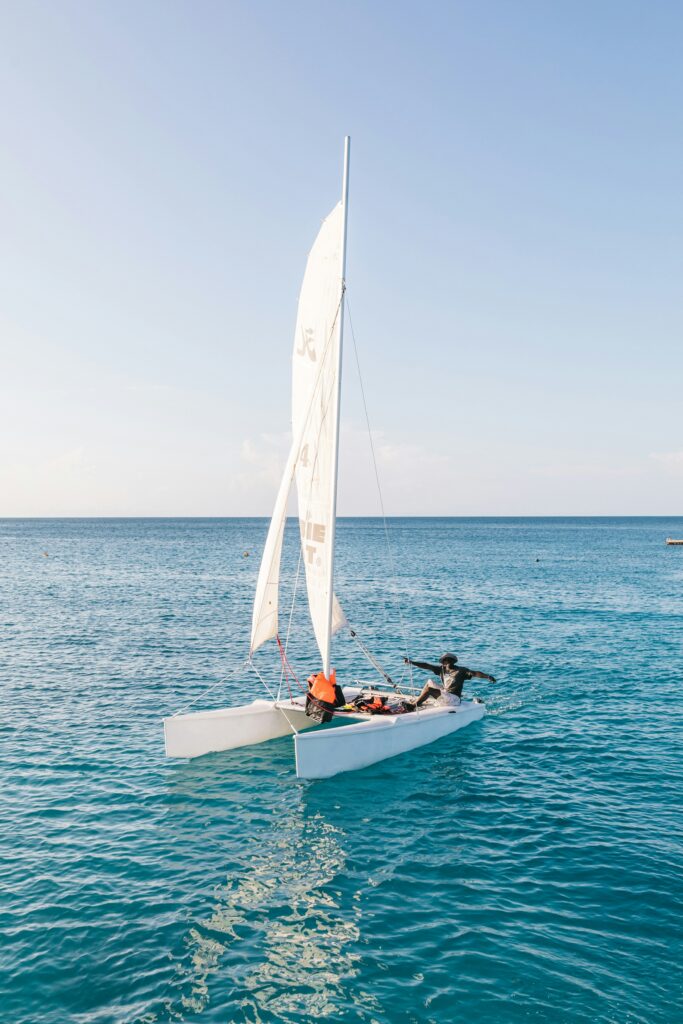
A dhow is a traditional Arabic sailing boat with a triangular sail, and they are absolutely everywhere in Zanzibar. The boats have an engine, but this is only used to take you about a kilometer out to sea, when it is switched off and the sail unfurled.
You can then spend some time floating peacefully in the Indian Ocean.

Sunset is by far the most popular (and romantic) time for one of these Zanzibar dhow cruises, but there are many operators all over the archipelago who offer the experience.
Visit a spice plantation

Zanzibar’s nickname is “Spice Island”, and it is one of Africa and the world’s most important exporters of spices including cloves, cinnamon, vanilla, pepper and nutmeg. These spices are all grown on huge plantations in the rural parts of the archipelago, and many of these are open to visitors for guided tours.
You can learn more about how each spice is grown and what it is used for, as well as being able to buy high quality local spices to take home with you. Just an FYI, US Customs should let you bring through dried spices, just avoid anything like fruit seeds and leaves, I’d hate for you to get them taken off you!
Explore Jozani Forest

Unfortunately, there’s not too much nature left on land in Zanzibar. Like many small islands, humanity has taken over and nature has been moved out of the way. Luckily, Jozani Forest has been protected, largely because it is the only place in the world where you can find Zanzibar red colobus monkeys.
This exciting Zanzibar safari opportunity makes the forest one of the best places to visit in Zanzibar. Extinct in most of the northern half of the island, around 6,000 monkeys survive in the southern half of the island, many of them taking refuge in Jozani Forest, in the south-east of the main island.
The forest is easily reached from the main tourist areas and sightings of the monkeys are all but guaranteed if you take a walk along one of the marked forest trails as part of your Zanzibar itinerary.
You can book a local guide here too, who will not only point out the monkeys, but also the various medicinal plants which grow naturally in the forest.
Ps. I use the GetYourGuide app to buy most of my tickets when traveling (v similar to Viator).
Spot marine life on a scuba dive

While Zanzibar’s land area may be naturally depleted, the archipelago’s waters are rich in marine life. Snorkeling is one way to enjoy this rich biodiversity, but for a deeper dive, visit one of the more than 30 dive sites around Zanzibar for a scuba dive.
Courses and tours can be booked by anyone, beginner or expert. Coral reefs teem with tropical fish, like angelfish and parrotfish, which use their tough beaks to feed on coral. Octopus hide out on the reefs too, while endangered sea turtles can be seen around Nungwi and Mnemba.
Most incredibly of all, the world’s largest fish, the whale shark, can be seen around Zanzibar during its migration season.
Although whale sharks can be spotted in Zanzibar, for the best chances to see them, you actually want to take the ferry to Dar es Salaam and then head south down the coast to Nyamisati, a small port with a daily connection to Mafia Island.
Mafia Island is a whale shark hotspot, and the best time to spot these incredible animals is from October through March. During this time, whale sharks can be seen close to the surface, feeding on plankton. Maybe consider a night or two here as part of your Zanzibar itinerary, if swimming with whale sharks is something you’d like to do!
Visit Zanzibar Butterfly Center

Another wildlife initiative and one of the more popular Zanzibar tourist attractions is the Zanzibar Butterfly Center, located near to Jozani Forest.
This collective is operated by around 40 local farmers, who breed native butterfly species to release into Zanzibar. The benefits of this are three-fold; they boost wildlife populations and provide an additional income to the farmers, as visitors to the Butterfly Center pay a small fee (around USD $6).
The butterflies also help with pollination, boosting the crop yields of the farmers.
Have a go at kitesurfing

Shallow waters and consistent winds mean that Zanzibar is one of the world’s top kitesurfing spots.
And for anyone who’s never given it a go, a trip to Zanzibar offers a great opportunity. The south-east of the main island is the best place to try it, especially the beaches at Panje, Dongwe and Jambiani. You can rent equipment and take lessons at all of these beaches and many more
Go tidepooling on the beaches

Tidepooling in Zanzibar is a popular activity during low tide, when the ocean’s floor is exposed, revealing coral formations and sandy tidal flats. Tide pools are home to many small sea creatures, including starfish, anemones, and minnows
Book the Blue Safari

One of the most popularly booked excursions on Zanzibar is the Blue Safari. The operators will pick you up from your accommodation, wherever that is on the island and take you the Menai Bay Conservation Area, home to isolated sandbanks and crystal clear water.
You’ll board a dhow and spend the day exploring the area, with guided snorkeling, the chance to spot dolphins, relax on the powdered sand of the sandbanks, swim in hidden lagoons and tuck into a mouthwatering Swahili barbecue.
Packaged tours like this are a great way to see a different side to Zanzibar, and to enjoy the archipelago’s incredible marine diversity.
Another activity people love is the Mnemba boat trip and dolphin snorkel from Kendwa!! After this trip to Zanzibar, you’ll basically be an expert of the ocean!
What Are the Best Beaches in Zanzibar?

If you’re heading to Zanzibar for sun, sea and sand, then I can’t blame you. I thought the archipelago had some of the most beautiful beaches I had ever set foot on. Here are some of the top beaches to visit as part of your Zanzibar travel itinerary.
Kendwa Beach

Located on the north-west coast of the main island, Kendwa Beach is a rare species in Zanzibar in that it offers much calmer waters than some of the beaches further south.
This is less attractive for watersports but ideal for swimming, snorkeling and scuba diving, and for visiting with younger children. Kendwa is generally quieter than some of the beaches further south, and the sunset here is unreal too.
Nakupenda Beach

If you’re staying in Stone Town and not looking to travel too far, then this could be the beach for you.
Another of the best beaches in Zanzibar, Nakupenda is accessed by a 15-minute boat ride from Stone Town and is geographically the closest beach to the island’s capital. It’s not really a beach at all, but a sandbank known for its stunning white sand and coral reefs – this makes it one of the island’s top snorkeling destinations. It can get extremely busy in high season, so try to head over early if you can.
Nungwi Beach

If it’s a party atmosphere and decent nightlife you’re after, then Nungwi is the pick of Zanzibar’s beaches. Some of the top hotels in Zanzibar are located here, as are plenty of the best restaurants and bars. It’s got a great position for sunset and there’s a more remote stretch of beach to the north which can offer solace amongst the lively atmosphere.
Paje Beach

The choppier waters of Paje Beach along Zanzibar’s east coast make it one of the best beaches in Zanzibar for water sports, particularly kite surfing and wind surfing.
There’s plenty of marine life here too, making it a good beach for scuba diving, and there’s culture to be found in the adjacent village of Paje, which is a little more off the tourist trail and a bit less crowded than other parts of the archipelago.
What Is the Food Like in Zanzibar?

As I’ve already mentioned, Zanzibar is a fascinating blend of African, European, Arabic and Indian cultures and influences, and the Zanzibar food is no different. Dishes are packed with flavor and, of course, spices. Cloves, cinnamon, nutmeg, cardamon and other spices that grow well here are cheap, readily available and used generously in cooking.
In Stone Town and other larger settlements, street food is an important part of life, particularly at markets like the Forodhani Gardens Night Market. Zanzibar pizza is a popular dish, a sweet or savory stuffed pancake that is usually filled with mincemeat and vegetables, although can be filled with chocolate or other sweets to make a delicious dessert.
Another Stone Town specialty is Urojo soup, a spicy mix of chutney, mango, chilies and garlic, served with chunks of potato and bhajis. More familiar Zanzibar food and snacks found at street food vendors include samosas and kebabs, whilst biryani is a popular dish too.
Like any island, Zanzibar is heavily reliant on seafood, with fresh fish and other seafood available in all good restaurants. Lobster, prawns, octopus and snapper fish are all commonly found on menus across the archipelago, often grilled on an open fire or served up in curries, particularly coconut based curries.

That African staple food, ugali is never far away either. Made from ground corn, this thick porridge-like dish is an original Kenyan foodstuff that has spread around the continent thanks to its simplicity, cheapness and availability. It’s served alongside curries, stews, vegetables and fish, and can be hard to escape on Zanzibar!
When it comes to dessert, fresh, locally grown pineapple, passionfruit and mango offer a refreshing taste, so much better than the pesticide-ridden, imported fruit you find back home. For something sweeter, mandazi is a sort of donut, spiced of course. And all good meals are washed down with a glass of sugarcane juice, or a cup of spiced tea.
The Rock at Pingwe Beach

The Rock is a unique restaurant located on Zanzibar’s southeastern shore, off the coast of the small settlement of Pingwe. It’s an Italian restaurant that leans heavily on its Zanzibari roots, and uses only the finest local ingredients.
However, the food is actually of secondary importance at this unique restaurant. As the name suggests, the restaurant is built onto a large rock that juts out of the ocean, a few meters from the shoreline. At low tide, you can walk across the sand to reach it, whilst a small boat carries guests to and from the restaurant when the tide is high.
It’s a completely unique dining experience on Zanzibar. In fact, it’s so unique that it books up weeks in advance, and as you can imagine, it’s quite tight for space. So check out their website and book your reservation before you travel if you’d like to visit as part of your Zanzibar itinerary.
Don’t want to deal with the logistics? I feel that. If that sounds like you, then I actually recommend booking this complete 8 hour package which includes a visit to see the monkeys at Jozani forest, a swim inside Kuza Cave, AND lunch reservations at the Rock. I think this package is absolutely fantastic value for money and you don’t have to deal with transportation around the island. This is definitely a great option for those short on time!!
Your Complete 7-Day Zanzibar Itinerary
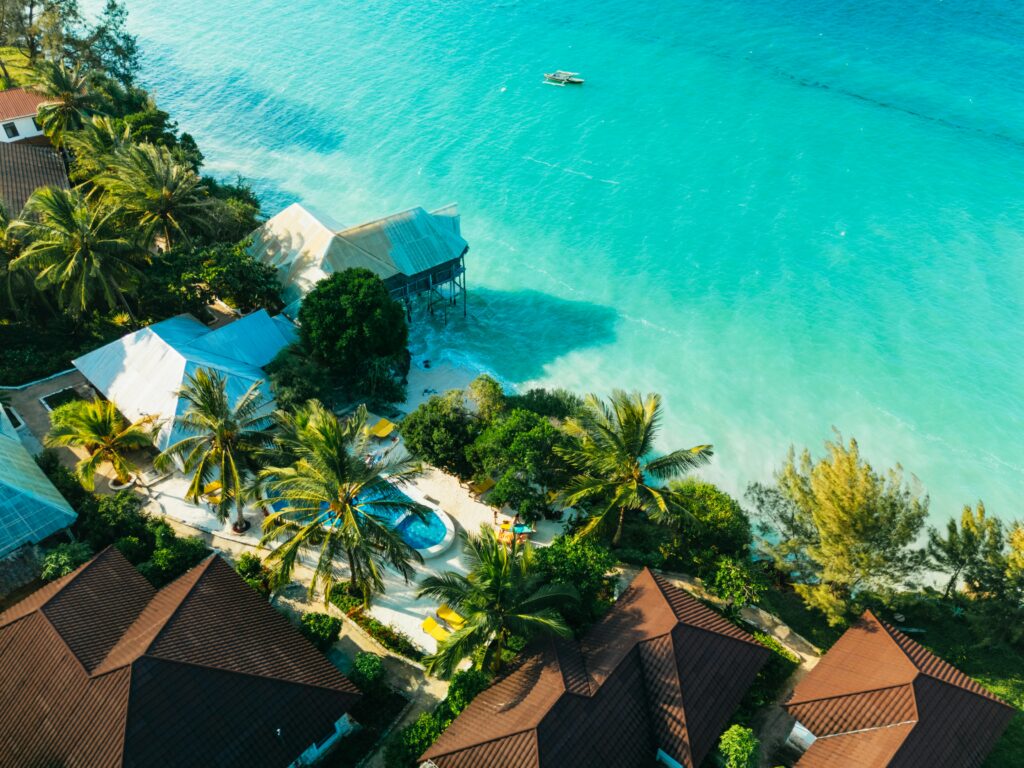
Now that you know the highlights, here is exactly how I would structure a week on the island. This 7-day Zanzibar itinerary is designed as a logical flow – starting in Stone Town to absorb the culture, moving east to unwind, and finishing up north in Nungwi for the best beaches and sunsets. It is flexible enough to adapt to your pace, but hits everything worth seeing.
Day 1 – Arrive & explore Stone Town
After landing at Abeid Amani Karume International Airport, check into your Stone Town hotel and shake off the travel dust. Stone Town is best explored on foot – its narrow, winding alleys are genuinely impossible to navigate by car, and that is part of the charm.
Morning/Afternoon: Drop your bags and head straight into the medina. Take a guided tour of Stone Town or throw yourself in like I did – wander through the old slave market (now the site of the Anglican Cathedral), admire the intricately carved wooden doorways, and duck into the Darajani Market for a sensory overload of spices, fish, and fresh produce. The House of Wonders and the Old Fort are both worth a look from the outside.
Evening: Head to Forodhani Gardens Night Market on the waterfront for your first taste of Zanzibar street food – Zanzibar pizza, grilled seafood, sugarcane juice, and Urojo soup are all must-tries. Watch the dhow boats drift past as the sun goes down.
Where to stay: Stone Town – Upendo House Hotel or a similar boutique property in the old town puts you right in the middle of the action.
Day 2 – Prison Island, spice plantation tour & sunset dhow cruise
Morning: Take a short boat ride (around 30 minutes from Stone Town) out to Prison Island to meet the famous Aldabra giant tortoises. Around 100 of these magnificent creatures roam freely here – some are over 100 years old. The island also has a bit of dark history as a former slave holding facility, which your guide will walk you through.
Afternoon: Book a half-day spice plantation tour – these can be arranged through your hotel or GetYourGuide. You will learn about Zanzibar’s most famous export (cloves), plus cinnamon, vanilla, nutmeg, and cardamom growing in their natural habitat. You can buy fresh spices to take home.
Evening: End the day with a classic sunset dhow cruise. The traditional Arabic sailing boats depart from Stone Town’s seafront, and the golden-hour views over the Indian Ocean are genuinely stunning. Most cruises include a drink on board.
Day 3 – Jozani Forest, The Rock Restaurant & Paje
Today, hire a car or book a guided tour to head south. This is the best way to see the rural heart of Zanzibar in one day.
Morning: Head to Jozani Forest, the only place on Earth where you can see the Zanzibar red colobus monkey in the wild. Around 6,000 of these critically endangered primates live in the southern half of the island. Sightings are virtually guaranteed on the marked forest trails, and a local guide (around $5-10) will point out the medicinal plants growing alongside the paths too.
Afternoon: Drive the short distance to Pingwe Beach for lunch at The Rock – the iconic restaurant built on a large rock jutting out of the Indian Ocean. Book well in advance as it fills up weeks ahead. The Italian-Zanzibari menu is excellent, but the setting is what you will really remember.
Evening: Continue southeast to Paje Beach to watch the kitesurfers and enjoy a sundowner at one of the laid-back beach bars before settling in for the night.
Where to stay: Paje – Aluna Paje is a great choice for a relaxed, affordable base.
Day 4 – Kitesurfing, tidepooling & a beach day in Paje
Morning: If you have always wanted to try kitesurfing, Paje is the place to do it. The shallow lagoon, consistent southeast trade winds, and warm water make it one of the best beginner spots in the world. Multiple schools offer half-day and full-day lessons – you can book a lesson through GetYourGuide before you arrive.
Afternoon: At low tide, the reef at Paje exposes fascinating tidal pools teeming with starfish, sea urchins, and small fish – perfect for a slow, exploratory wander. If the tide is in, this is your beach day: soft white sand, turquoise water, and barely a crowd.
Evening: Paje has a relaxed backpacker vibe with great beach bars and fire shows most nights. Grab dinner at one of the local restaurants and enjoy the atmosphere.
Day 5 – The Blue Safari: a full day on Menai Bay
Today is for the ocean. Book the full-day Blue Safari excursion – operators pick you up from your accommodation and take you to the Menai Bay Conservation Area, one of Zanzibar’s most biodiverse marine zones.
You will board a traditional dhow and spend the day snorkeling over coral reefs, spotting dolphins in the wild, relaxing on pristine sandbanks, swimming in hidden lagoons, and tucking into a freshly cooked Swahili barbecue on the water. This is a full-day excursion and one of the absolute highlights of any Zanzibar itinerary – do not skip it.
Travel tip: If seeing whale sharks is on your bucket list, consider an extension to Mafia Island. The best season for whale shark sightings is October through March.
Day 6 – Head north to Nungwi & Kendwa
Morning: Check out and make your way north to Nungwi or Kendwa (they are right next to each other). The drive from Paje takes about 1.5 to 2 hours – hire a car, take a shared dala-dala, or arrange a transfer through your hotel.
Afternoon: Kendwa Beach is one of Zanzibar’s most beautiful. Calm, clear water, white sand, and far fewer crowds than Nungwi make it ideal for a long afternoon swim. It is also one of the few beaches on the island where you can swim at any tide.
Evening: Nungwi is the liveliest spot on Zanzibar’s north coast. The full moon parties at Kendwa Rocks beach bar are legendary. Sunset from the western tip of the island is exceptional – settle in with a cocktail and watch the sky turn pink over the Indian Ocean.
Where to stay: Nungwi or Kendwa – The Zanzibari or Safira Blu Luxury Resort are both excellent options.
Day 7 – Snorkeling at Mnemba Atoll & departure
Morning: Make the most of your last day with a snorkeling trip to Mnemba Atoll – a small, protected coral island just off the northeast coast that is home to one of the best reef systems in the Indian Ocean. Expect sea turtles, reef sharks, octopus, and more tropical fish than you can count. Most operators run half-day trips from Nungwi or Matemwe.
Afternoon: Back on the beach for one last swim and a long lunch. Pick up any last-minute spices, batik fabric, or crafts from local vendors before your transfer to the airport.
Pro tip: If your flight is in the evening or the next day, consider stopping at the Zanzibar Butterfly Center near Jozani on your way back south. It is a fascinating 45-minute stop and supports local farmers directly.
Frequently Asked Questions About Zanzibar
How many days do you need in Zanzibar?
For a well-rounded trip that covers Stone Town, a beach area, and the main activities (spice tour, Jozani Forest, dhow cruise), 7 days is the ideal amount of time. If you are purely after a beach break, 4 to 5 days is plenty. If you want to visit multiple beach areas or squeeze in a day trip to Mafia Island or Pemba, 10 days gives you more breathing room.
Is Zanzibar safe for tourists?
Zanzibar is generally considered safe for tourists. Petty theft can occur in Stone Town, particularly around the port and market areas, so keep valuables secure and stay aware of your surroundings at night. The beach areas are very relaxed and low-crime. Stone Town is a predominantly Muslim area, so women should carry a scarf to cover shoulders and knees when away from the beach, as a mark of respect for local culture.
Do you need a visa to visit Zanzibar?
Zanzibar is part of Tanzania, so you will need a Tanzanian visa. Most nationalities can obtain a tourist visa on arrival at the airport, or apply in advance through the Tanzania e-Visa portal (eservices.immigration.go.tz). The standard tourist visa costs $50 USD and is valid for 90 days. Always check the latest entry requirements with your country’s foreign affairs department before you travel, as regulations change.
What is the best area to stay in Zanzibar?
It depends on what you are after. Stone Town is best for culture and history. Nungwi and Kendwa (north) offer the best beaches, nightlife, and year-round swimming. Matemwe and Kiwengwa (east) are quieter and ideal for couples seeking a more secluded boutique resort experience. Paje (southeast) is the go-to for kitesurfers and budget travelers.
How much does a trip to Zanzibar cost?
Zanzibar suits a range of budgets. Budget travelers staying in guesthouses and eating local food can get by on around $50-70 per day. Mid-range travelers using boutique hotels and booking a couple of tours should expect $150-250 per day. Luxury all-inclusive resorts and private villas run from $400 upwards. Key costs to factor in: Jozani Forest entry (around $12), a spice tour ($20-30), a sunset dhow cruise ($30-50), and the Blue Safari ($70-100+).
What is the best time of year to visit Zanzibar?
The best time to visit Zanzibar is during the dry season – June to October and December to mid-March – when you can expect clear skies, warm temperatures of 25-29 degrees Celsius (77-84 degrees Fahrenheit), and calm Indian Ocean conditions. July is the single best month, coinciding with the peak of the Great Migration on mainland Tanzania if you are planning a safari and beach combo. Avoid April and May, which are the heart of the long rainy season.
Final Thoughts on Planning Your Zanzibar Trip

For a small, easily forgotten cluster of islands off the coast of Africa, Zanzibar really packs a punch. Its location means it’s absolutely ideal for those looking to relax after an incredible but tiring safari vacation, and its reliable weather means that you are guaranteed sun and warm temperatures virtually all year round.
The archipelago is absolutely teeming with marine life, making it an ideal destination for diving, swimming and snorkeling, whilst Stone Town offers a healthy dose of history and culture, even if some of that history is somewhat uncomfortable.
I think a 7-day Zanzibar itinerary is the sweet spot – long enough to cover Stone Town, the beaches, and a few day trips, without feeling rushed. If you’re just looking for a few days of R&R then 4 or 5 days is also plenty.
Make sure to throw yourself into the archipelago’s amazing street food, try your hand at watersports like kite surfing, and enjoy plenty of leisure time on some of the world’s best beaches – you won’t regret it!
Have you used this 7-day Zanzibar itinerary to plan your trip? Let me know how it went in the comments below – I’d love to hear from you!
Visiting Other Parts of Tanzania?
Check out my other travel guides on Tanzania here.
Visiting Other Parts of Africa?
Check out my other travel guides on Africa here.
Looking for Travel Inspiration to Somewhere Else?
Last updated on April 24th, 2026 at 01:29 am
Planning a trip to Zanzibar but not sure how many days you actually need or what there is to do besides sit on a beach? I wondered the exact same thing before going. After traveling to Zanzibar with my best girlfriends, I put together this complete 7 day Zanzibar itinerary so you can plan your own trip without spending hours trying to piece everything together.
If you’re traveling from outside of Africa, Zanzibar is definitely a bit of a journey. It took us almost 30 hours to get there, which sounds slightly insane when I say it out loud, but I would do it again in a heartbeat!
Zanzibar is honestly one of the dreamiest beach destinations I’ve ever been to, especially if you’re visiting after a safari in the Serengeti or Masai Mara. After a few dusty days in the bush, nothing feels better than trading your hiking boots for sandy toes and ocean views.
In this guide, I’m going to help you plan your own 7 day Zanzibar itinerary, including how many days to stay, how to get there, the best time to visit Zanzibar, where to stay, and all the best things to do while you’re there. So grab a coffee, stop opening 37 different travel blogs, and let’s plan your Zanzibar trip👇
This site contains affiliate links, which means I may earn a small commission if you make a purchase through them (which will likely go towards overpriced airport wine or buying my dog more unnecessary toys). However, none of that impacts the integrity of my reviews. All thoughts and opinions are my own.
The Best 7-Day Zanzibar Itinerary at a Glance
Short on time? Here are my top picks for hotels, activities, and logistics to bookmark before you start planning your 7-day Zanzibar itinerary:
- Mvuvi Boutique Hotel Zanzibar (Kiwengwa) – A charming beachfront escape with rustic-chic bungalows and a laid-back vibe, ideal for travelers seeking a peaceful and intimate stay steps from the Indian Ocean.
- Aluna Paje (Paje) – A relaxed and modern guesthouse surrounded by palm trees, offering clean, minimalist rooms and a peaceful vibe, ideal for those looking to unwind near the beach without breaking the bank.
- Upendo House Hotel (Stone Town) – Stylish and intimate, this boutique hotel blends local charm with modern design, perfect for design lovers wanting a cozy hideaway in the middle of historic Stone Town.
- The Zanzibari (Nungwi) – A quiet boutique escape just outside the bustle of Nungwi, with lush gardens, coastal views, and a laid-back vibe, ideal for couples or anyone wanting a bit more seclusion without being too far from the action.
- Safira Blu Luxury Resort and Villas (Nungwi) – A stylish, upscale retreat with private villas, ocean views, and lush tropical gardens, perfect for those craving a luxurious and secluded getaway on Zanzibar’s northeast coast.
🗓️ Quick summary: The perfect 7-day Zanzibar itinerary
- Day 1 – Arrive & Explore Stone Town: Wander the UNESCO-listed Stone Town, visit the Palace Museum, and watch the sunset from the waterfront
- Day 2 – Prison Island, Spice Plantation & Sunset Dhow Cruise: See giant tortoises at Prison Island, tour a spice farm, and end the day on a traditional dhow
- Day 3 – Jozani Forest, The Rock Restaurant & Paje: Spot red colobus monkeys in Jozani Forest, lunch at The Rock, then head to the beach at Paje
- Day 4 – Kitesurfing, Tidepooling & a Beach Day in Paje: Try kitesurfing (or watch!), explore the tidal pools, and soak up the sun on Paje Beach
- Day 5 – The Blue Safari on Menai Bay: Full-day boat trip to snorkel, swim with dolphins, and explore sandbanks in Menai Bay
- Day 6 – Head North to Nungwi & Kendwa: Relocate to the north coast, relax on Nungwi Beach, and enjoy a stunning Indian Ocean sunset
- Day 7 – Snorkeling at Mnemba Atoll & Departure: Morning snorkel at Mnemba Atoll with sea turtles and tropical fish before heading home
How Many Days Do You Need in Zanzibar?
How long to spend in Zanzibar really depends on the purpose of your visit. If you’re purely after a beach break, then anything from 3 days to 5 is plenty of time to kick back and relax, whether it’s at a top Zanzibar all-inclusive resort or one of the island’s numerous other top hotels.
For a deeper dive into the culture and attractions of Zanzibar, whilst also leaving plenty of time for the beach, a 7-day Zanzibar itinerary gives you enough time to fully explore Unguja and the archipelago’s smaller islands. You wouldn’t want to spend any longer on your trip to Zanzibar, as there isn’t loads to keep you occupied outside of Stone Town and away from the golden sands and turquoise waters of the beach.
What Is the Best Time to Visit Zanzibar?
There’s not really any such thing as spring, summer, fall and winter in Zanzibar. Instead, the seasons are split into wet and dry, and you probably don’t need me to tell you what each involves. Here’s a little more information about visiting throughout the year, the overall best time to go to Zanzibar, and my personal recommended month for you to plan your Zanzibar travel itinerary.
Visiting Zanzibar during dry season
Characterized by long days of sun, low humidity, high temperatures of 25°C to 29°C (77°F to 84°F) and almost non-existent rainfall, the dry season is the peak time to visit Zanzibar. Perfect for a beach break and for exploring the archipelago’s natural wonders, this period is when the vast majority of travelers head to Zanzibar. This brings its own problems of course, with higher prices and bigger crowds, but there’s a reason for it.
The dry season can be split into two, with a short rainy season in November (more on that in a sec). June to October sees slightly cooler temperatures, but it’s the best time for a safari on mainland Tanzania, with the incredible Great Migration in full swing. So for a safari and beach combination trip, this is the time to be traveling. Meanwhile, December to March is when Zanzibar is at its hottest, with temperatures soaring. This coincides with the middle of winter in the Northern hemisphere, tempting many travelers to Zanzibar’s warmer climes.
Visiting Zanzibar during rainy season
I feel like calling it “rainy season” isn’t very accurate as it doesn’t actually rain for longer than like 30 minutes at a time here. The “long rains” of April to May also bring high humidity to Zanzibar. This is the season that brings life and much needed water to the archipelago, but its less than ideal for visitors. If there is a plus to visiting at this time of year, it’s that there will be far fewer tourists and prices will be much much lower. But again, it’s also worth noting that it rarely rains for hours and hours at a time. The Zanzibari rain tends to fall in intense bursts, with spells of sunshine in between.
November is an odd month, as the rains return in the middle of the dry season, albeit with less intensity than during the long rainy season. It’s still going to be warm, and the rain rarely disrupts an entire day.
The best month to visit: July
Nothing like spending the 4th of July overseas in America am I right?? Haha yes that’s what I did but it was because I was maximizing my PTO per usual.
Coinciding with the peak of the Great Migration inland, July is easily the best month for a Tanzania safari and Zanzibar beach break combo. The temperatures are warm, skies clear and ocean conditions ideal for swimming and snorkeling. The slightly cooler temperatures are perfect for exploring Stone Town, whilst still plenty enjoyable enough for you to work on your tan.
How Do You Get to Zanzibar?
Although it’s an archipelago more than ~20 miles (35km) off the coast of the African mainland, Zanzibar isn’t thaaaat difficult to get to. You’ve got two main options:
Getting to Zanzibar by air
Zanzibar’s Abeid Amani Karume International Airport (ZNZ) is located on the main island of Unguja, just a few kilometers south of Stone Town. It’s well served by big international airlines including Qatar Airways, Ethiopian Airlines, Turkish Airlines and KLM, although direct flights are hard to come by – Doha, Addis Ababa, Amsterdam, Nairobi and Cairo are all common stopovers. Regional African airlines also make it easy to reach Zanzibar from Nairobi, Johannesburg and elsewhere.
If you’re spending the first part of your Tanzania trip spotting lions and rhinos in the Serengeti, then you’ll be glad to know that travel to Zanzibar is also possible via domestic airlines including Precision Air, Air Tanzania and ZanAir, with flights from Dar es Salaam, Kilimanjaro and the safari hotspot of Arusha.
Ps. You might want to get your yellow fever shot as a precaution. The mosquitoes aren’t bad on the island but it’s apparently a requirement in order to get your visa to Tanzania. Which is kinda ironic because no one ever checked for my vaccine but it’s probably still smart to get before leaving the states (or wherever you’re from).
Getting to Zanzibar by ferry
If you’re already in mainland Tanzania then booking a ferry to Zanzibar can be cheaper, greener and more time-efficient. Ferries depart from Dar es Salaam daily, with a journey time of approximately 2 hours. Kilimanjaro Fast Ferries is one suggested operator, with ships arriving at the port in Stone Town.
In retrospect, I actually kind of wish we took the ferry instead because then we could’ve spent more time in Tanzania but oh well.
How Do You Get Around Zanzibar?
Once you have landed, figuring out how to get from A to B is the next step. Zanzibar is a relatively small island – the main island of Unguja is about 90km long and 30km wide – but the roads vary in quality and public transport can be slow. Here is a breakdown of your options.
Dala-dalas (local minibuses)
The local minibuses known as dala-dalas are the cheapest way to get around, connecting Stone Town with most major villages and beach areas. Fares are minimal (usually a few hundred Tanzanian shillings), but they run on their own schedule, get crowded, and journeys can take a long time. Great for budget travelers with flexibility – less ideal if you are trying to make a reservation.
Taxis & Bolt
Taxis are widely available in Stone Town and can be negotiated for day trips or transfers across the island. Always agree on the price before you get in. The Bolt app (similar to Uber) operates in Zanzibar and offers more transparent, metered pricing – worth downloading before you arrive.
Car & scooter hire
Renting a car (from around $40-60 per day) or a scooter ($15-25 per day) gives you the most freedom to explore at your own pace, especially for day trips to Jozani Forest, the south coast, or moving between beach areas. Roads can be rough in places, driving is on the left, and an international driving permit is technically required. Note that Stone Town itself is too narrow for cars.
Organised tours & private transfers
For day trips with multiple stops – like combining Jozani Forest and The Rock, or a Blue Safari – booking an organised tour is often the most efficient option, since transport is included. Your hotel can usually arrange private transfers to other parts of the island for a fixed fee.
Boat transfers
If you are island-hopping to Pemba Island, Mafia Island, or the smaller sandbar islets, speedboat and dhow transfers are available. Most are arranged through local operators or your accommodation.
Where Should You Stay in Zanzibar?
Choosing where to base yourself is one of the most important decisions in any 7-day Zanzibar itinerary, since the island is long enough that it takes real time to travel between areas. Zanzibar might be small, but figuring out where to stay can feel overwhelming, especially for a first-timer. But don’t worry, there’s tons of options on this small but mighty island.
If you’re big on history and want to be in the middle of the action, Stone Town is your spot. It’s full of winding alleys, lively markets, and serious old-world charm. Just know that most of the white sand beaches aren’t located in this area.
Want postcard-worthy beaches and a bit of nightlife? Head up north to Nungwi or Kendwa, where the sand’s white, the water’s pefect, and the vibes range from chill to party-ready. We spent our last few nights in Nungwi and absolutely loved it.
For something a little more offbeat, Paje on the southeast coast is a kitesurfer’s dream with a fun, backpacker feel. And if your ideal vacation involves a boutique resort, zero crowds, and the sound of the ocean basically whispering you to sleep, check out Matemwe or Kiwengwa on the east coast. Each area has its own vibe. (This is where my girlfriends and I first stayed when we got onto the island. It was so relaxing and there were barely any crowds).
But seriously, there’s no wrong choice. Just depends on what kind of trip you’re after. So keep reading for a list of the best hotels in Zanzibar based on each location to help you plan your perfect Zanzibar itinerary 👇
Stone Town
Stone Town is the historic heart of Zanzibar City, is a vibrant maze of narrow alleys, carved wooden doors, and rich Swahili culture. Perfect for travelers who don’t mind being away from the beaches and want to be fully immersed in history and culture!
Top hotel recommendations for Stone Town
- Maru Maru Hotel (Stone Town) – A budget-friendly hotel right in the heart of Stone Town, offering a rooftop terrace with panoramic views and a convenient base for exploring Zanzibar’s cultural and historical sights.
- Upendo House Hotel (Stone Town) – Stylish and intimate, this boutique hotel blends local charm with modern design, perfect for design lovers wanting a cozy hideaway in the middle of historic Stone Town.
- Hotel Verde Zanzibar – Azam Luxury Resort & Spa (Stone Town) – A 5-star eco-friendly resort just outside Stone Town, known as Zanzibar’s greenest hotel, offering spacious rooms with ocean or mangrove views, a full-service spa, waterpark and marina—all set amid lush gardens with top-notch service
- Park Hyatt Zanzibar (Stone Town) – Sophisticated and serene, Park Hyatt delivers luxury right on the waterfront with spacious rooms and an infinity pool, ideal for travelers who want five-star comfort and stunning ocean views.
Nungwi / Kendwa (north Zanzibar)
Nungwi and Kendwa, located on Zanzibar’s northern tip, are known for their stunning white-sand beaches, crystal-clear waters, and lively yet laid-back vibe 🍹
Top hotel recommendations for Nungwi / Kendwa
- Safira Blu Luxury Resort and Villas (Kigomani) – Where we stayed!!! An elegant, high-end escape featuring private villas, sweeping ocean views, and serene tropical gardens—ideal for travelers seeking a secluded and indulgent stay on Zanzibar’s northeastern shores.
- Z Hotel and Z2 Hotel (Nungwi) – Trendy and modern sister hotels in the heart of Nungwi, offering sleek rooms, oceanfront dining, and a buzzy atmosphere—great for first-timers who want to be steps from the beach and nightlife.
- The Zanzibari (Nungwi) – A quiet boutique escape just outside the bustle of Nungwi, with lush gardens, coastal views, and a laid-back vibe, ideal for couples or anyone wanting a bit more seclusion without being too far from the action.
- Hotel Riu Jambo (Nungwi) – A large all-inclusive resort with spacious rooms, multiple pools, and sunset views, perfect for families or groups who want convenience, amenities, and a vibrant beachfront location.
- Kendwa Rocks Beach Hotel (Kendwa) – A lively beachfront resort known for its wide sandy beach, laid-back vibe, and legendary full moon parties—great for travelers looking to mix relaxation with a bit of fun.
Want the full scoop? Check out my full review of my unforgettable stay at Safira Blu Luxury Resort & Villas in Zanzibar!
Matemwe / Kiwengwa (east Zanzibar)
Matemwe and Kiwengwa on Zanzibar’s east coast offer a quieter escape with palm-fringed beaches, turquoise tides, and a more relaxed, local feel. We stayed at Mvuvi Boutique Resort for the first few nights in Zanzibar and loved the calmness of the whole area.
Top hotel recommendations for Matemwe / Kiwengwa
- Mvuvi Boutique Resort (Kiwengwa) – A cozy, beachfront resort with thatched-roof bungalows and a warm, intimate vibe, perfect for travelers looking to unwind in a peaceful setting with a touch of rustic charm.
- Meliá Zanzibar (Kiwengwa) – A polished, all-inclusive resort set on a private beach, offering upscale rooms, a world-class spa, and multiple dining options—ideal for those wanting luxury, convenience, and tropical relaxation all in one place.
- Jafferi Beach Retreat (Matemwe) – A peaceful, family-run hideaway with rustic bungalows and direct beach access, great for travelers looking to unplug and enjoy the slower side of Zanzibar.
Paje (southeast Zanzibar)
Paje, on Zanzibar’s southeast coast, is a favorite for kitesurfers and backpackers alike, blending laid-back beach vibes with a youthful energy and vibrant local culture.
Top hotel recommendations for Paje
- Paje by Night (Paje) – A budget-friendly boutique stay with colorful bungalows, a lively social scene, and easy access to the beach, perfect for backpackers and kitesurfers looking for a fun, affordable base.
- Maisha Matamu Boutique (Jambiani) – A stylish and intimate retreat with boho-chic decor, oceanfront views, and personalized service—great for travelers wanting a laid-back, design-forward escape.
- Aluna Paje (Paje) – A relaxed and modern guesthouse surrounded by palm trees, offering clean, minimalist rooms and a peaceful vibe, ideal for those looking to unwind near the beach without breaking the bank.
- Zanzibar White Sand Luxury Villas and Spa (Paje) – A five-star eco-luxury resort with private villas, a serene spa, and lush tropical gardens, perfect for travelers seeking high-end comfort and seclusion on Zanzibar’s southeast coast.
What Are the Best All-Inclusive Resorts in Zanzibar?
I’m not gonna pretend like all-inclusives are my thing, buuuuuuut Zanzibar is a really popular destination for all-inclusive vacations. (I’m a somewhat picky eater so the food just doesn’t do it for me).
But Zanzibar has the weather, the beaches and the cuisine for it, so I can’t argue with that. Some of the top Zanzibar all-inclusive resorts include:
- The Mora Zanzibar (Matemwe) – A sleek and stylish beachfront retreat with contemporary design, private pools, and serene ocean views, ideal for travelers seeking laid-back luxury on Zanzibar’s quieter east coast.
- TUI Blue Bahari Zanzibar (Kiwengwa) – A large, all-inclusive resort with swaying palms, multiple dining options, and a mix of Swahili architecture and modern comforts, great for couples and families looking for a hassle-free beach escape.
- Hotel Riu Palace Zanzibar (Nungwi) – An upscale, adults-only resort with spacious suites, a gorgeous infinity pool, and direct beach access, perfect for those wanting a romantic getaway on Zanzibar’s lively northern shore.
- The Palms Zanzibar (Bwejuu) – An intimate, all-villa resort offering personalized service, private beachfronts, and elegant décor, designed for honeymooners or anyone craving total privacy and indulgence.
I totally get the appeal, all you can eat and drink in a literal tropical paradise 🌴
I usually stay away from these types of hotels (except Safira Blu obviously) but if you’re coming from the states, it could be a good option as they also take care of a lot of the transportation for you.
What Are the Best Things to Do in Zanzibar?
I seriously don’t even know how wanting to visit Zanzibar popped into my head. But good thing it did because I just knew there’d be so much to do and see on this tiny island in Africa! Here are all the activities and attractions I recommend building into your 7-day Zanzibar itinerary.
I think I was also trying to optimize for closeness from Kenya after a safari that I ended up missing due to visa issues 🥴
Many people come to Zanzibar for the beaches and the beaches alone, with some of the world’s best found on the archipelago. But Zanzibar is also a watersports capital of the world, home to all sorts of amazing wildlife, and Stone Town is a cultural melting pot, well worth exploring.
Here are some of the best things to do and places to visit in Zanzibar during your vacation!
Explore Stone Town
Stone Town is the official name for the historic center of Zanzibar City, the capital and largest settlement in the archipelago, on the main island. A UNESCO World Heritage Site, Stone Town has a long history as a trading port and old slave market – this has led to a dynamic mix of cultures and influences.
I was amazed to see what a mix it was, with elements of British, Indian, Persian, Swahili and Arabic cultures in the buildings, restaurants, clothes and general feel of the town. You walk down one street that wouldn’t look out of place in an English village, with historic churches. Then you turn a corner and could be wandering through Amman or Beirut, with aromatic spice markets and ancient mosques dating back hundreds of years.
You can take guided tours of Stone Town, or just throw yourself in like I did, getting lost down narrow alleys and using imposing minarets to guide yourself back out of the warren. Zanzibar has an interesting history as an old slave market and slave trading port too, which although traumatic, is a really interesting thing to learn about as you explore.
See the giant tortoises of Prison Island
Giant turtles, free lunch, and a beautiful sandbank?! Sign me up!
You know I love nothing more than a good day trip, especially if you’re visiting anywhere for the first time. (Fast travel is usually how I roll).
Giant tortoises are not native to Zanzibar. However, the Aldabra giant tortoise is native to the Seychelles, an African island nation about 1,800 kilometers east of Zanzibar. This tortoise was very nearly lost to the world, hunted to extinction for meat on many of the Seychelles islands
Luckily, thanks to conservation efforts there are now more than 100,000 Aldabra giant tortoises. And approximately 100 of them live in Zanzibar, descendants of four tortoises gifted to the islands by the Governor of the Seychelles in the 18th century.
These tortoises roam safely on Prison Island, one of the main Zanzibar tourist attractions, which is located about 30 minutes from Stone Town. There’s more dark history to uncover here too, it’s named Prison Island as it was once used as a tough prison for misbehaving slaves.
Ps. I use the GetYourGuide app to buy most of my tickets when traveling (v similar to Viator).
Take a dhow cruise at sunset
A dhow is a traditional Arabic sailing boat with a triangular sail, and they are absolutely everywhere in Zanzibar. The boats have an engine, but this is only used to take you about a kilometer out to sea, when it is switched off and the sail unfurled.
You can then spend some time floating peacefully in the Indian Ocean.
Sunset is by far the most popular (and romantic) time for one of these Zanzibar dhow cruises, but there are many operators all over the archipelago who offer the experience.
Visit a spice plantation
Zanzibar’s nickname is “Spice Island”, and it is one of Africa and the world’s most important exporters of spices including cloves, cinnamon, vanilla, pepper and nutmeg. These spices are all grown on huge plantations in the rural parts of the archipelago, and many of these are open to visitors for guided tours.
You can learn more about how each spice is grown and what it is used for, as well as being able to buy high quality local spices to take home with you. Just an FYI, US Customs should let you bring through dried spices, just avoid anything like fruit seeds and leaves, I’d hate for you to get them taken off you!
Explore Jozani Forest
Unfortunately, there’s not too much nature left on land in Zanzibar. Like many small islands, humanity has taken over and nature has been moved out of the way. Luckily, Jozani Forest has been protected, largely because it is the only place in the world where you can find Zanzibar red colobus monkeys.
This exciting Zanzibar safari opportunity makes the forest one of the best places to visit in Zanzibar. Extinct in most of the northern half of the island, around 6,000 monkeys survive in the southern half of the island, many of them taking refuge in Jozani Forest, in the south-east of the main island.
The forest is easily reached from the main tourist areas and sightings of the monkeys are all but guaranteed if you take a walk along one of the marked forest trails as part of your Zanzibar itinerary.
You can book a local guide here too, who will not only point out the monkeys, but also the various medicinal plants which grow naturally in the forest.
Ps. I use the GetYourGuide app to buy most of my tickets when traveling (v similar to Viator).
Spot marine life on a scuba dive
While Zanzibar’s land area may be naturally depleted, the archipelago’s waters are rich in marine life. Snorkeling is one way to enjoy this rich biodiversity, but for a deeper dive, visit one of the more than 30 dive sites around Zanzibar for a scuba dive.
Courses and tours can be booked by anyone, beginner or expert. Coral reefs teem with tropical fish, like angelfish and parrotfish, which use their tough beaks to feed on coral. Octopus hide out on the reefs too, while endangered sea turtles can be seen around Nungwi and Mnemba.
Most incredibly of all, the world’s largest fish, the whale shark, can be seen around Zanzibar during its migration season.
Although whale sharks can be spotted in Zanzibar, for the best chances to see them, you actually want to take the ferry to Dar es Salaam and then head south down the coast to Nyamisati, a small port with a daily connection to Mafia Island.
Mafia Island is a whale shark hotspot, and the best time to spot these incredible animals is from October through March. During this time, whale sharks can be seen close to the surface, feeding on plankton. Maybe consider a night or two here as part of your Zanzibar itinerary, if swimming with whale sharks is something you’d like to do!
Visit Zanzibar Butterfly Center
Another wildlife initiative and one of the more popular Zanzibar tourist attractions is the Zanzibar Butterfly Center, located near to Jozani Forest.
This collective is operated by around 40 local farmers, who breed native butterfly species to release into Zanzibar. The benefits of this are three-fold; they boost wildlife populations and provide an additional income to the farmers, as visitors to the Butterfly Center pay a small fee (around USD $6).
The butterflies also help with pollination, boosting the crop yields of the farmers.
Have a go at kitesurfing
Shallow waters and consistent winds mean that Zanzibar is one of the world’s top kitesurfing spots.
And for anyone who’s never given it a go, a trip to Zanzibar offers a great opportunity. The south-east of the main island is the best place to try it, especially the beaches at Panje, Dongwe and Jambiani. You can rent equipment and take lessons at all of these beaches and many more
Go tidepooling on the beaches
Tidepooling in Zanzibar is a popular activity during low tide, when the ocean’s floor is exposed, revealing coral formations and sandy tidal flats. Tide pools are home to many small sea creatures, including starfish, anemones, and minnows
Book the Blue Safari
One of the most popularly booked excursions on Zanzibar is the Blue Safari. The operators will pick you up from your accommodation, wherever that is on the island and take you the Menai Bay Conservation Area, home to isolated sandbanks and crystal clear water.
You’ll board a dhow and spend the day exploring the area, with guided snorkeling, the chance to spot dolphins, relax on the powdered sand of the sandbanks, swim in hidden lagoons and tuck into a mouthwatering Swahili barbecue.
Packaged tours like this are a great way to see a different side to Zanzibar, and to enjoy the archipelago’s incredible marine diversity.
Another activity people love is the Mnemba boat trip and dolphin snorkel from Kendwa!! After this trip to Zanzibar, you’ll basically be an expert of the ocean!
What Are the Best Beaches in Zanzibar?
If you’re heading to Zanzibar for sun, sea and sand, then I can’t blame you. I thought the archipelago had some of the most beautiful beaches I had ever set foot on. Here are some of the top beaches to visit as part of your Zanzibar travel itinerary.
Kendwa Beach
Located on the north-west coast of the main island, Kendwa Beach is a rare species in Zanzibar in that it offers much calmer waters than some of the beaches further south.
This is less attractive for watersports but ideal for swimming, snorkeling and scuba diving, and for visiting with younger children. Kendwa is generally quieter than some of the beaches further south, and the sunset here is unreal too.
Nakupenda Beach
If you’re staying in Stone Town and not looking to travel too far, then this could be the beach for you.
Another of the best beaches in Zanzibar, Nakupenda is accessed by a 15-minute boat ride from Stone Town and is geographically the closest beach to the island’s capital. It’s not really a beach at all, but a sandbank known for its stunning white sand and coral reefs – this makes it one of the island’s top snorkeling destinations. It can get extremely busy in high season, so try to head over early if you can.
Nungwi Beach
If it’s a party atmosphere and decent nightlife you’re after, then Nungwi is the pick of Zanzibar’s beaches. Some of the top hotels in Zanzibar are located here, as are plenty of the best restaurants and bars. It’s got a great position for sunset and there’s a more remote stretch of beach to the north which can offer solace amongst the lively atmosphere.
Paje Beach
The choppier waters of Paje Beach along Zanzibar’s east coast make it one of the best beaches in Zanzibar for water sports, particularly kite surfing and wind surfing.
There’s plenty of marine life here too, making it a good beach for scuba diving, and there’s culture to be found in the adjacent village of Paje, which is a little more off the tourist trail and a bit less crowded than other parts of the archipelago.
What Is the Food Like in Zanzibar?
As I’ve already mentioned, Zanzibar is a fascinating blend of African, European, Arabic and Indian cultures and influences, and the Zanzibar food is no different. Dishes are packed with flavor and, of course, spices. Cloves, cinnamon, nutmeg, cardamon and other spices that grow well here are cheap, readily available and used generously in cooking.
In Stone Town and other larger settlements, street food is an important part of life, particularly at markets like the Forodhani Gardens Night Market. Zanzibar pizza is a popular dish, a sweet or savory stuffed pancake that is usually filled with mincemeat and vegetables, although can be filled with chocolate or other sweets to make a delicious dessert.
Another Stone Town specialty is Urojo soup, a spicy mix of chutney, mango, chilies and garlic, served with chunks of potato and bhajis. More familiar Zanzibar food and snacks found at street food vendors include samosas and kebabs, whilst biryani is a popular dish too.
Like any island, Zanzibar is heavily reliant on seafood, with fresh fish and other seafood available in all good restaurants. Lobster, prawns, octopus and snapper fish are all commonly found on menus across the archipelago, often grilled on an open fire or served up in curries, particularly coconut based curries.
That African staple food, ugali is never far away either. Made from ground corn, this thick porridge-like dish is an original Kenyan foodstuff that has spread around the continent thanks to its simplicity, cheapness and availability. It’s served alongside curries, stews, vegetables and fish, and can be hard to escape on Zanzibar!
When it comes to dessert, fresh, locally grown pineapple, passionfruit and mango offer a refreshing taste, so much better than the pesticide-ridden, imported fruit you find back home. For something sweeter, mandazi is a sort of donut, spiced of course. And all good meals are washed down with a glass of sugarcane juice, or a cup of spiced tea.
The Rock at Pingwe Beach
The Rock is a unique restaurant located on Zanzibar’s southeastern shore, off the coast of the small settlement of Pingwe. It’s an Italian restaurant that leans heavily on its Zanzibari roots, and uses only the finest local ingredients.
However, the food is actually of secondary importance at this unique restaurant. As the name suggests, the restaurant is built onto a large rock that juts out of the ocean, a few meters from the shoreline. At low tide, you can walk across the sand to reach it, whilst a small boat carries guests to and from the restaurant when the tide is high.
It’s a completely unique dining experience on Zanzibar. In fact, it’s so unique that it books up weeks in advance, and as you can imagine, it’s quite tight for space. So check out their website and book your reservation before you travel if you’d like to visit as part of your Zanzibar itinerary.
Don’t want to deal with the logistics? I feel that. If that sounds like you, then I actually recommend booking this complete 8 hour package which includes a visit to see the monkeys at Jozani forest, a swim inside Kuza Cave, AND lunch reservations at the Rock. I think this package is absolutely fantastic value for money and you don’t have to deal with transportation around the island. This is definitely a great option for those short on time!!
Your Complete 7-Day Zanzibar Itinerary
Now that you know the highlights, here is exactly how I would structure a week on the island. This 7-day Zanzibar itinerary is designed as a logical flow – starting in Stone Town to absorb the culture, moving east to unwind, and finishing up north in Nungwi for the best beaches and sunsets. It is flexible enough to adapt to your pace, but hits everything worth seeing.
Day 1 – Arrive & explore Stone Town
After landing at Abeid Amani Karume International Airport, check into your Stone Town hotel and shake off the travel dust. Stone Town is best explored on foot – its narrow, winding alleys are genuinely impossible to navigate by car, and that is part of the charm.
Morning/Afternoon: Drop your bags and head straight into the medina. Take a guided tour of Stone Town or throw yourself in like I did – wander through the old slave market (now the site of the Anglican Cathedral), admire the intricately carved wooden doorways, and duck into the Darajani Market for a sensory overload of spices, fish, and fresh produce. The House of Wonders and the Old Fort are both worth a look from the outside.
Evening: Head to Forodhani Gardens Night Market on the waterfront for your first taste of Zanzibar street food – Zanzibar pizza, grilled seafood, sugarcane juice, and Urojo soup are all must-tries. Watch the dhow boats drift past as the sun goes down.
Where to stay: Stone Town – Upendo House Hotel or a similar boutique property in the old town puts you right in the middle of the action.
Day 2 – Prison Island, spice plantation tour & sunset dhow cruise
Morning: Take a short boat ride (around 30 minutes from Stone Town) out to Prison Island to meet the famous Aldabra giant tortoises. Around 100 of these magnificent creatures roam freely here – some are over 100 years old. The island also has a bit of dark history as a former slave holding facility, which your guide will walk you through.
Afternoon: Book a half-day spice plantation tour – these can be arranged through your hotel or GetYourGuide. You will learn about Zanzibar’s most famous export (cloves), plus cinnamon, vanilla, nutmeg, and cardamom growing in their natural habitat. You can buy fresh spices to take home.
Evening: End the day with a classic sunset dhow cruise. The traditional Arabic sailing boats depart from Stone Town’s seafront, and the golden-hour views over the Indian Ocean are genuinely stunning. Most cruises include a drink on board.
Day 3 – Jozani Forest, The Rock Restaurant & Paje
Today, hire a car or book a guided tour to head south. This is the best way to see the rural heart of Zanzibar in one day.
Morning: Head to Jozani Forest, the only place on Earth where you can see the Zanzibar red colobus monkey in the wild. Around 6,000 of these critically endangered primates live in the southern half of the island. Sightings are virtually guaranteed on the marked forest trails, and a local guide (around $5-10) will point out the medicinal plants growing alongside the paths too.
Afternoon: Drive the short distance to Pingwe Beach for lunch at The Rock – the iconic restaurant built on a large rock jutting out of the Indian Ocean. Book well in advance as it fills up weeks ahead. The Italian-Zanzibari menu is excellent, but the setting is what you will really remember.
Evening: Continue southeast to Paje Beach to watch the kitesurfers and enjoy a sundowner at one of the laid-back beach bars before settling in for the night.
Where to stay: Paje – Aluna Paje is a great choice for a relaxed, affordable base.
Day 4 – Kitesurfing, tidepooling & a beach day in Paje
Morning: If you have always wanted to try kitesurfing, Paje is the place to do it. The shallow lagoon, consistent southeast trade winds, and warm water make it one of the best beginner spots in the world. Multiple schools offer half-day and full-day lessons – you can book a lesson through GetYourGuide before you arrive.
Afternoon: At low tide, the reef at Paje exposes fascinating tidal pools teeming with starfish, sea urchins, and small fish – perfect for a slow, exploratory wander. If the tide is in, this is your beach day: soft white sand, turquoise water, and barely a crowd.
Evening: Paje has a relaxed backpacker vibe with great beach bars and fire shows most nights. Grab dinner at one of the local restaurants and enjoy the atmosphere.
Day 5 – The Blue Safari: a full day on Menai Bay
Today is for the ocean. Book the full-day Blue Safari excursion – operators pick you up from your accommodation and take you to the Menai Bay Conservation Area, one of Zanzibar’s most biodiverse marine zones.
You will board a traditional dhow and spend the day snorkeling over coral reefs, spotting dolphins in the wild, relaxing on pristine sandbanks, swimming in hidden lagoons, and tucking into a freshly cooked Swahili barbecue on the water. This is a full-day excursion and one of the absolute highlights of any Zanzibar itinerary – do not skip it.
Travel tip: If seeing whale sharks is on your bucket list, consider an extension to Mafia Island. The best season for whale shark sightings is October through March.
Day 6 – Head north to Nungwi & Kendwa
Morning: Check out and make your way north to Nungwi or Kendwa (they are right next to each other). The drive from Paje takes about 1.5 to 2 hours – hire a car, take a shared dala-dala, or arrange a transfer through your hotel.
Afternoon: Kendwa Beach is one of Zanzibar’s most beautiful. Calm, clear water, white sand, and far fewer crowds than Nungwi make it ideal for a long afternoon swim. It is also one of the few beaches on the island where you can swim at any tide.
Evening: Nungwi is the liveliest spot on Zanzibar’s north coast. The full moon parties at Kendwa Rocks beach bar are legendary. Sunset from the western tip of the island is exceptional – settle in with a cocktail and watch the sky turn pink over the Indian Ocean.
Where to stay: Nungwi or Kendwa – The Zanzibari or Safira Blu Luxury Resort are both excellent options.
Day 7 – Snorkeling at Mnemba Atoll & departure
Morning: Make the most of your last day with a snorkeling trip to Mnemba Atoll – a small, protected coral island just off the northeast coast that is home to one of the best reef systems in the Indian Ocean. Expect sea turtles, reef sharks, octopus, and more tropical fish than you can count. Most operators run half-day trips from Nungwi or Matemwe.
Afternoon: Back on the beach for one last swim and a long lunch. Pick up any last-minute spices, batik fabric, or crafts from local vendors before your transfer to the airport.
Pro tip: If your flight is in the evening or the next day, consider stopping at the Zanzibar Butterfly Center near Jozani on your way back south. It is a fascinating 45-minute stop and supports local farmers directly.
Frequently Asked Questions About Zanzibar
How many days do you need in Zanzibar?
For a well-rounded trip that covers Stone Town, a beach area, and the main activities (spice tour, Jozani Forest, dhow cruise), 7 days is the ideal amount of time. If you are purely after a beach break, 4 to 5 days is plenty. If you want to visit multiple beach areas or squeeze in a day trip to Mafia Island or Pemba, 10 days gives you more breathing room.
Is Zanzibar safe for tourists?
Zanzibar is generally considered safe for tourists. Petty theft can occur in Stone Town, particularly around the port and market areas, so keep valuables secure and stay aware of your surroundings at night. The beach areas are very relaxed and low-crime. Stone Town is a predominantly Muslim area, so women should carry a scarf to cover shoulders and knees when away from the beach, as a mark of respect for local culture.
Do you need a visa to visit Zanzibar?
Zanzibar is part of Tanzania, so you will need a Tanzanian visa. Most nationalities can obtain a tourist visa on arrival at the airport, or apply in advance through the Tanzania e-Visa portal (eservices.immigration.go.tz). The standard tourist visa costs $50 USD and is valid for 90 days. Always check the latest entry requirements with your country’s foreign affairs department before you travel, as regulations change.
What is the best area to stay in Zanzibar?
It depends on what you are after. Stone Town is best for culture and history. Nungwi and Kendwa (north) offer the best beaches, nightlife, and year-round swimming. Matemwe and Kiwengwa (east) are quieter and ideal for couples seeking a more secluded boutique resort experience. Paje (southeast) is the go-to for kitesurfers and budget travelers.
How much does a trip to Zanzibar cost?
Zanzibar suits a range of budgets. Budget travelers staying in guesthouses and eating local food can get by on around $50-70 per day. Mid-range travelers using boutique hotels and booking a couple of tours should expect $150-250 per day. Luxury all-inclusive resorts and private villas run from $400 upwards. Key costs to factor in: Jozani Forest entry (around $12), a spice tour ($20-30), a sunset dhow cruise ($30-50), and the Blue Safari ($70-100+).
What is the best time of year to visit Zanzibar?
The best time to visit Zanzibar is during the dry season – June to October and December to mid-March – when you can expect clear skies, warm temperatures of 25-29 degrees Celsius (77-84 degrees Fahrenheit), and calm Indian Ocean conditions. July is the single best month, coinciding with the peak of the Great Migration on mainland Tanzania if you are planning a safari and beach combo. Avoid April and May, which are the heart of the long rainy season.
Final Thoughts on Planning Your Zanzibar Trip
For a small, easily forgotten cluster of islands off the coast of Africa, Zanzibar really packs a punch. Its location means it’s absolutely ideal for those looking to relax after an incredible but tiring safari vacation, and its reliable weather means that you are guaranteed sun and warm temperatures virtually all year round.
The archipelago is absolutely teeming with marine life, making it an ideal destination for diving, swimming and snorkeling, whilst Stone Town offers a healthy dose of history and culture, even if some of that history is somewhat uncomfortable.
I think a 7-day Zanzibar itinerary is the sweet spot – long enough to cover Stone Town, the beaches, and a few day trips, without feeling rushed. If you’re just looking for a few days of R&R then 4 or 5 days is also plenty.
Make sure to throw yourself into the archipelago’s amazing street food, try your hand at watersports like kite surfing, and enjoy plenty of leisure time on some of the world’s best beaches – you won’t regret it!
Have you used this 7-day Zanzibar itinerary to plan your trip? Let me know how it went in the comments below – I’d love to hear from you!
Visiting Other Parts of Tanzania?
Check out my other travel guides on Tanzania here.
Visiting Other Parts of Africa?
Check out my other travel guides on Africa here.
Looking for Travel Inspiration to Somewhere Else?