dessert
A First Timers Guide to the Best 2-Day Itinerary in Copenhagen, Denmark
Last updated on June 15th, 2026 at 10:47 pm
Soooo you’re finally crossing off a Scandinavian country from your bucket-list and you’ve decided to make it Copenhagen…congrats!!! What better place to visit than the birthplace of The Little Mermaid or a city filled with the most delicious cardamom pastries and Rugbrød (rye bread) in the world? (Okay I know France is up there but I swear Danish pastries are just as good and nobody can compete with Danish sprouted rye bread). Whether you’re here for just a quick getaway or following my 2-day Copenhagen itinerary, you’ll quickly see why this city has everyone falling in love at first bite (and sight).
Surprisingly, Copenhagen is still a bit of a hidden gem in Europe (though it’s definitely on the rise). This charming Danish capital is often a stop on a bigger Scandinavian tour. But it’s becoming an increasingly popular weekend destination for travelers from London, Paris, Rome, and beyond.
If you’re putting together a 2-day Copenhagen itinerary, you’ll find that a couple of days or a long weekend is the perfect amount of time to dive into the culture, try incredible food, and soak up the vibe of this hygge (danish word for cozy) city.
I recently spent a couple of nights in Copenhagen, and trust me, two days in Copenhagen is all you need to hit the main attractions, indulge in the local cuisine, and rack up over 50,000 steps – all in under 48 hours.
In this article, I’ll help you craft the ultimate 2-day Copenhagen itinerary from the best time to visit to all the must-see activities, attractions, and food spots.
And if you’re the type who likes to see the full menu of options before committing to a plan, I also put together a roundup of the best things to do in Copenhagen that you can pick and choose from.
And per usual, I’ll throw in a list of my favorite design-forward boutique hotels for the perfect stay. Speaking of hotels, if you’re still figuring out the accommodation piece, I have a whole separate guide on where to stay in Copenhagen that breaks down the best neighborhoods depending on your travel style.
Keep reading if you’re planning your 2-day Copenhagen adventure!
Read more on Copenhagen 🇩🇰
- Where to Stay in Copenhagen: Top Neighborhoods for First-Time Visitors
- Inside 25hours Hotel Indre By: My Bold and Colorful Stay in Copenhagen
This site contains affiliate links, which means I may earn a small commission if you make a purchase through them (which will likely go towards overpriced airport wine or buying my dog more unnecessary toys). However, none of that impacts the integrity of my reviews. All thoughts and opinions are my own.
2-Day Copenhagen Itinerary At a Glance
Your 2-Day Copenhagen Itinerary 🇩🇰
Short on time? Here’s the cheat sheet, the stuff I’d lock in before you fly so you can just show up and enjoy it 👇
-
⏱️ How many days you need
2 full days · the perfect long weekend for a compact, walkable city (enough to hit every highlight)
-
🗓️ Best time to visit
Spring & summer (May–Aug) · long sunny days, outdoor dining & the city’s best biking weather. Winter is darker but brings serious hygge, magical Christmas markets & cheaper flights.
-
🛏 Top hotel picks
25hours Hotel Indre ByMy fave · funky design-forward 4-star in the heart of the city, steps from the Round Tower. I stayed here myself, you can read my full 25hours Hotel review for the deets.NH Collection CopenhagenSleek 5-star on the harbor in Christianshavn · floor-to-ceiling views & a rooftop bar
-
⛵ Best activity → Nyhavn sunset stroll + canal cruise
Under $35/person · wander the colorful 17th-century harbor at golden hour, then see the city from the water
-
🎡 Traveling with kids? → book Tivoli Gardens
Denmark’s most-visited attraction and one of the oldest amusement parks in the world. Rides for all ages, a food hall for picky eaters, and unbeatable value. Grab entry, or the unlimited rides pass if your crew actually wants to ride.
-
🥐 Most unique → the great cardamom bun showdown
Settle the debate yourself: who bakes the better cardamom bun, Hart Bageri or Juno the Bakery? Taste both and pick a side (my vote goes to Hart Bageri 🥳).
Copenhagen Boutique Hotels: Quick Picks
Short on Time? These are my top three picks for boutique hotels in Copenhagen 👇
I personally stayed at the first two hotels on this list during my stay and I’m so glad I did because I was able to experience a few nights in the city center and a few nights by along the water. Both hotels are a 10/10 in my book for fantastic service, impeccable design, amenities, cleanliness, and an overall peaceful stay 💭
- 25Hours Hotel, for a trendy, design-forward hotel with a playful and eclectic vibe, perfect for travelers who love bold interiors and a lively atmosphere. I’m talking checkered walls, a tree made of books in the lobby, and a ground floor bar so beautiful you’ll never want to leave. Located in the heart of Copenhagen, it’s an ideal spot for those looking for a fun and unconventional stay.
- NH Hotel Copenhagen, for a sleek, upscale hotel blending modern Scandinavian elegance with top-tier comfort. Situated along the waterfront, it’s perfect for travelers seeking a stylish and sophisticated stay with easy access to the city’s main attractions.
- Manon Les Suites – Guldsmeden Hotels, for an “instagram-famous” vibrant, luxury eco-hotel with a tropical-inspired aesthetic, featuring a stunning indoor pool and bohemian-chic decor, ideal for those looking for a stylish and Instagram-worthy stay.
Is 2 Days Enough Time in Copenhagen?
Short answer? Yes. Slightly longer answer? Yes, but you’ll be moving. If this isn’t your first Discover Over There itinerary then you already know I’m convinced you can see almost any city in under 72 hours, and Copenhagen is honestly one of the easiest to pull off.
It’s a small city that doesn’t try to be a big one. The center is flat, walkable, and packed so tightly that you can knock out the icons on foot without losing your mind. Two days won’t get you everything (you’ll have to skip a few things, and that’s okay, it just means you’ll come back), but it’s plenty to fall hard for the place. If you like a city you can knock out in a weekend, 2 days in Budapest runs on exactly the same wavelength.
And if you do end up with an extra afternoon or you’re just curious what else is out there, my full list of things to do in Copenhagen has plenty more to fill the gaps.
Best Time to Visit Copenhagen
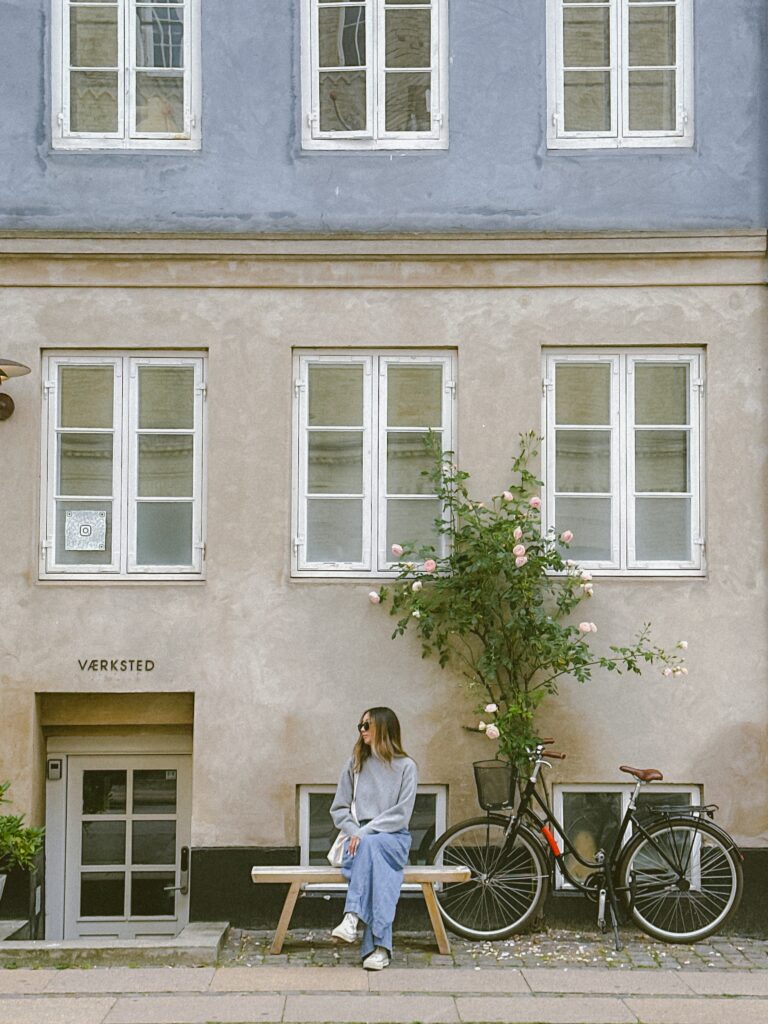
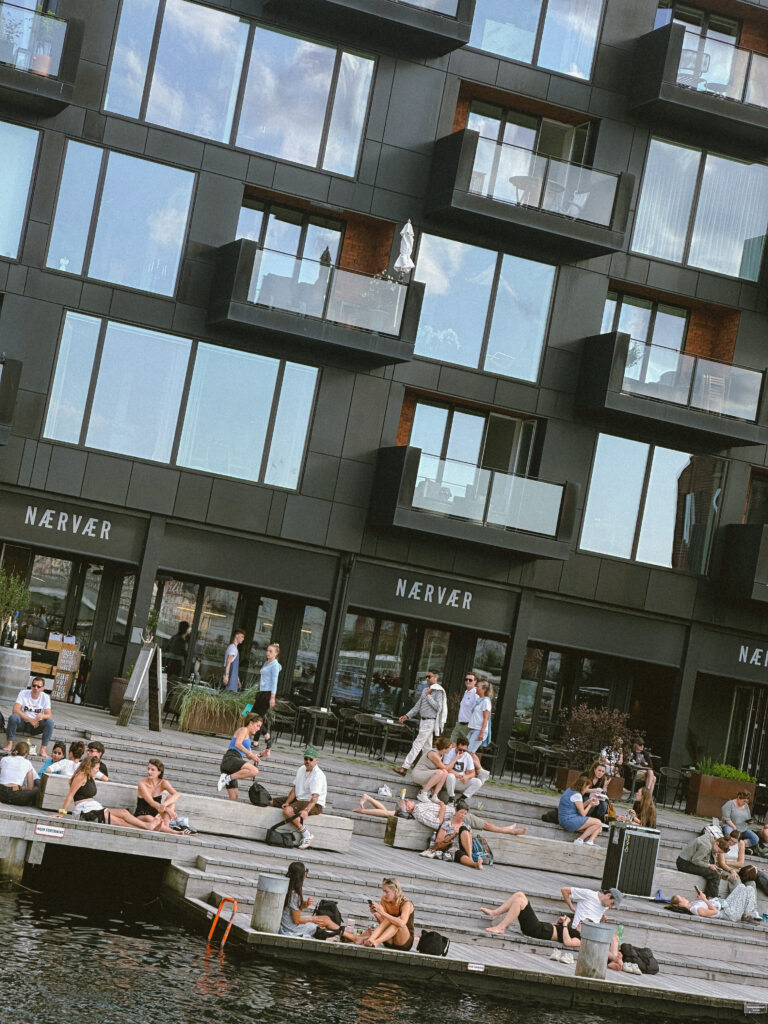
The good news is that Copenhagen is technically a year-round destination. However, it is quite north, and conditions in the city can vary drastically between the seasons.
Visiting Copenhagen during spring/summer
Spring can still be kind of chilly in Copenhagen but temperatures usually rise to a pleasant 16°C (60°F) by May, which is perfect for enjoying some of the city’s outdoor cafes and riding the rides at Tivoli Gardens.
Summer is definitely peak season in Copenhagen, with warm (depending on where you’re from) temperatures (20–25°C/68–77°F), long sunny days, and plenty of events such as concerts across the city and around the waterfront.
Cold weather and I don’t get along so I purposefully planned my trip to make sure I visited during summer but I’d honestly love to go back and experience the true “hygge” of winter in Denmark. (Hygge is a well-known Danish word that describes the feeling of coziness and contentment).
Spring/summer are also the ideal time to explore Copenhagen by bike, thanks to its extensive bike paths. The city is widely considered one of the best cycling cities in the world, with miles of marked trails and long sunny days to keep you awake.
And if you’d rather not navigate solo (or you just want someone to point out the good stuff while you pedal), a guided E-bike tour during spring/summer is such an easy way to cover a ton of ground on day 1 and get your bearings fast.
If you’re visiting during this time of year, like with any European destination during summer, you can expect to pay slightly more for flights and accommodation (but without the crowds of Italy or Greece). And if you’re trying to balance budget and location, my where to stay in Copenhagen guide has some great options across different price points and neighborhoods.
Visiting Copenhagen during fall/winter
The crowds drop off again in fall as temperatures start to dip back to their winter lows. September can still be a good month to visit, averaging around 15°C (59°F) and this gives you the chance to enjoy the leaves turning colors inside the city’s parks.
Copenhagen’s largest annual event also takes place in fall. On a night in October each year, Copenhagen Culture Night sees the city’s museums and landmarks open late, offering a unique chance for sightseeing in the city.
Now, winter in Copenhagen might seem daunting – those cold, dark days can be a bit of a drag but there’s a certain magic to the city during this time of year. Sadly, many of the outdoor spots close up shop, but the city comes alive with festive cheer!
You’ll find some of the most magical Christmas markets here in Copenhagen (though Vienna gives them a serious run for their money), and let’s be honest, who doesn’t love a good deal? Flights and hotels are much more affordable during the off-season, so you can indulge in that hygge feeling without breaking the bank.
Best Hotels & Places To Stay During Your 2-Day Copenhagen Itinerary

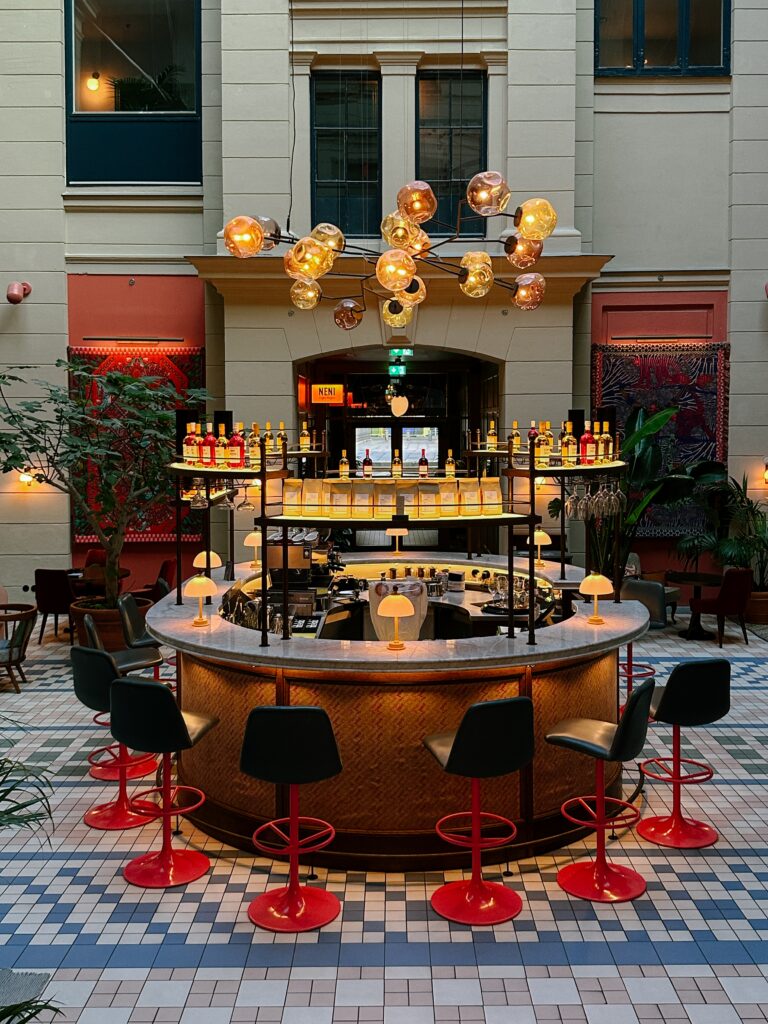
Figuring out where to stay in Copenhagen is important, with different parts of the city offering a completely different experience. I actually wrote an entire post dedicated to this if you want the full breakdown, you can check out my guide to where to stay in Copenhagen for a deeper dive into each neighborhood.
If you’re only in Copenhagen for a couple of days, I highly recommend staying in the Indre By neighborhood aka the heart of the city. This is where I spent my first two nights, and it was the perfect base for exploring. (Plus, it’s close to all of the incredible bakeries like Hart Bageri, Buka, and Sankt Peders).
The neighborhood is home to most of the city’s main attractions, including Nyhavn, the Tivoli Gardens and the popular shopping street of Strøget. You will pay slightly more for your accommodation here, but the location is unbeatable, especially if you’re short on time.
All of the hotels in this area are walking distance to the best attractions, restaurants, stores, and more.
Here are the top two hotels I recommend for your stay in Copenhagen. I know I usually recommend more but I personally stayed in both of these during my trip so I wanted to make sure I covered properties that I could personally vouch for.
Plus, this is exactly why I also wrote an entire guide on where to stay in Copenhagen so that you could get the full picture on hotels if you still haven’t make your booking yet!
25hours Hotel Indre By (Indre By), for the design lover who wants checkered walls, a tree made of books in the lobby, and a ground-floor bar so pretty you won’t want to leave. It’s a quirky 4-star steps from the Round Tower, so you have zero excuse not to beat the crowds up top in the morning. There was also a well-stocked grocery store a couple blocks away which was really great for picking up water, snacks, and some alcoholic bevvies. You can read my full review of 25hours Hotel here.
Check prices via ExpediaCheck prices via Booking.com
NH Collection Copenhagen (Christianshavn), for a sleek 5-star stay right on the harbor with floor-to-ceiling windows, a seasonal rooftop bar, and bikes you can rent from outside the door. Staying across the water actually pushed me to explore the other side of town way more than I would have otherwise. Also, it was SUPER convenient from the airport. I’m normally a private transport girlie but when I saw that the metro stop was 2 blocks away from the hotel, I just couldn’t justify hiring a car when there was really no need to.
Check prices via ExpediaCheck prices via Booking.com
Best Boutique Hotels in Copenhagen
Not a fan of the two hotels I stayed at? No worries. Here’s a personally curated list of my favorite boutique hotels in Copenhagen. Spoiler alert: there’s a lot to choose from. You might even end up splitting your time between two places like I did 🙃
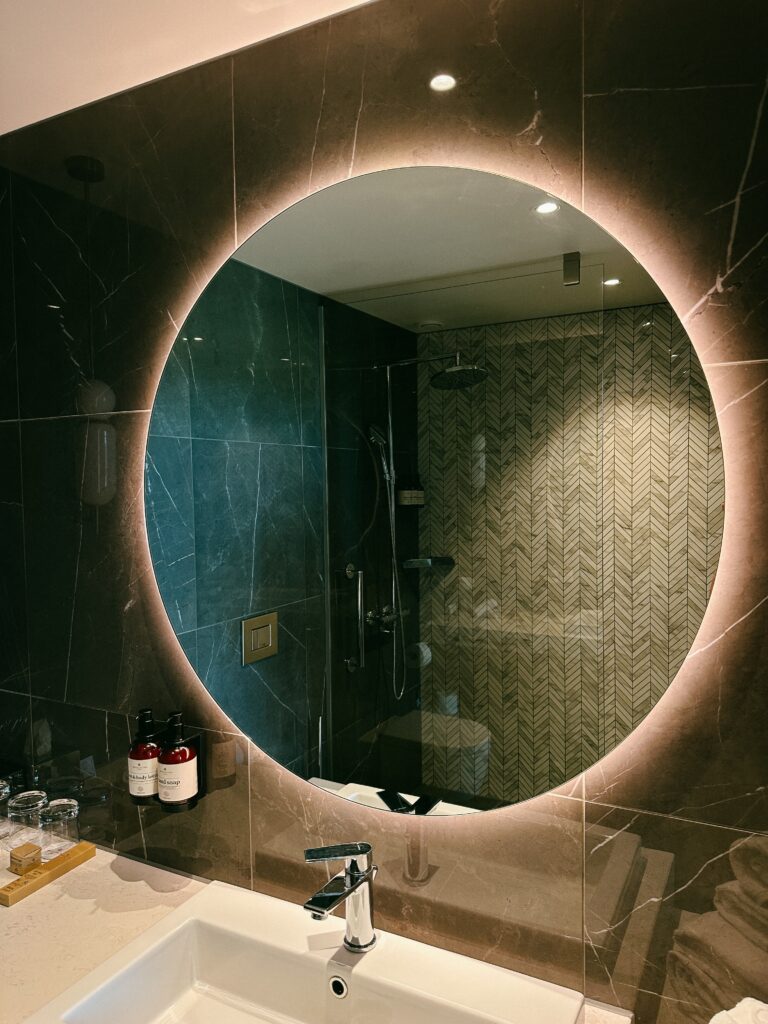
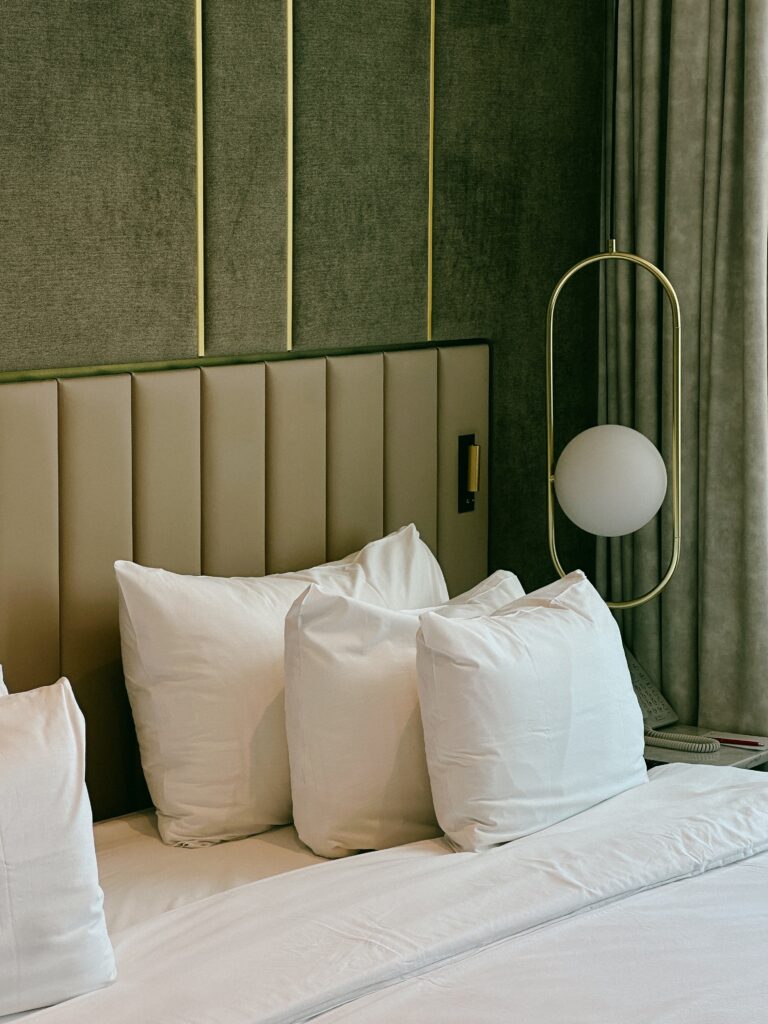
- Hotel Tiffany ($$) — A cozy, boutique hotel with a warm and inviting atmosphere, perfect for travelers looking for a comfortable and quiet stay near Copenhagen’s central attractions.
Check prices via ExpediaCheck prices via Booking.com - Axel Guldsmeden Hotels ($$) — A charming, eco-friendly boutique hotel blending Balinese-inspired decor with Scandinavian minimalism, perfect for travelers who appreciate sustainability and unique design.
Check prices via ExpediaCheck prices via Booking.com - Tivoli Hotel ($$$) — A modern, family-friendly hotel with stylish Scandinavian design and excellent amenities, ideal for both business travelers and those visiting the iconic Tivoli Gardens.
Check prices via ExpediaCheck prices via Booking.com - Villa Copenhagen ($$$$) — A grand, heritage-style hotel offering a seamless blend of historical charm and modern luxury, perfect for travelers seeking an upscale and sophisticated stay in the heart of the city.
Check prices via ExpediaCheck prices via Booking.com - Manon Les Suites – Guldsmeden Hotels ($$$$) — THE “instagram-famous” vibrant, luxury eco-hotel with a tropical-inspired aesthetic, featuring a stunning indoor pool and bohemian-chic decor, ideal for those looking for a stylish and Instagram-worthy stay.
Check prices via ExpediaCheck prices via Booking.com
And if these hotels aren’t enough, then head to my complete guide on where to stay in Copenhagen for a deeper dive into each neighborhood.
The Perfect 2-Day Copenhagen Itinerary
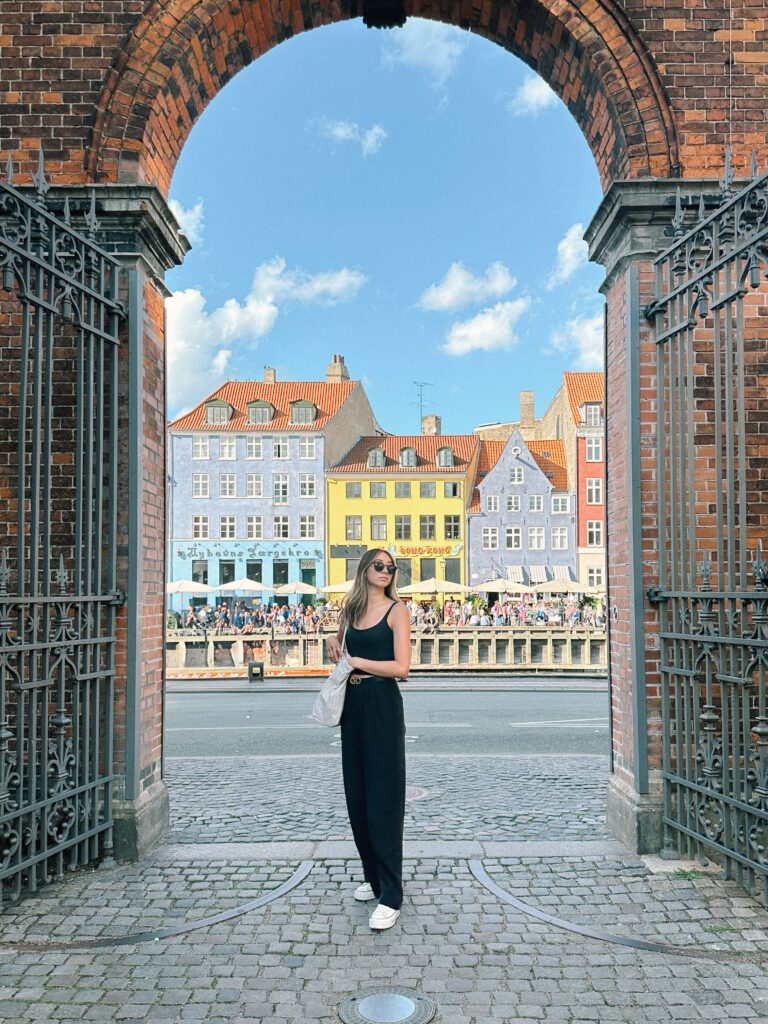
Ok so you’ve booked your flights, hotels, and now you’re wondering what the heck you’re actually going to do once you get there?? The best thing about Copenhagen is that there’s loooooads of things to do in the city and it doesn’t matter when you visit.
But we’ve only got 2 days together so we’re going to be efficient about it. I’ve mapped this out geographically so you’re not bouncing back and forth across the city. Day 1 keeps you in the walkable center and along the harbor, and Day 2 takes you across the water and ends with Tivoli all lit up at night.
I’ve also included a TON of my personal favorite bars and restaurants as well so you won’t be going hungry or thirsty at the end of each of your days.
Now you can put on a comfortable pair of shoes, a light jacket (this is still Scandinavia), and bring your appetite for delicious pastries, and let’s get into this 2-day Copenhagen itinerary👇
(And if you want to see everything the city has to offer before we narrow it down to two days, here’s my bigger list of the best things to do in Copenhagen.)
Day 1: Exploring the Heart of the City (Indre By, Strøget, and Nyhavn)
Rise and shine friends!!! Day 1 is all about the center of Copenhagen! Which is good because this is a short itinerary so you don’t want to waste any time on logistics. And yes, we’re starting early (because I’m an insomniac early bird), working through the icons of Indre By, Rosenborg Castle, Strøget, and finishing along the water just in time for some golden hour magic.
Morning: cardamom buns and the Round Tower
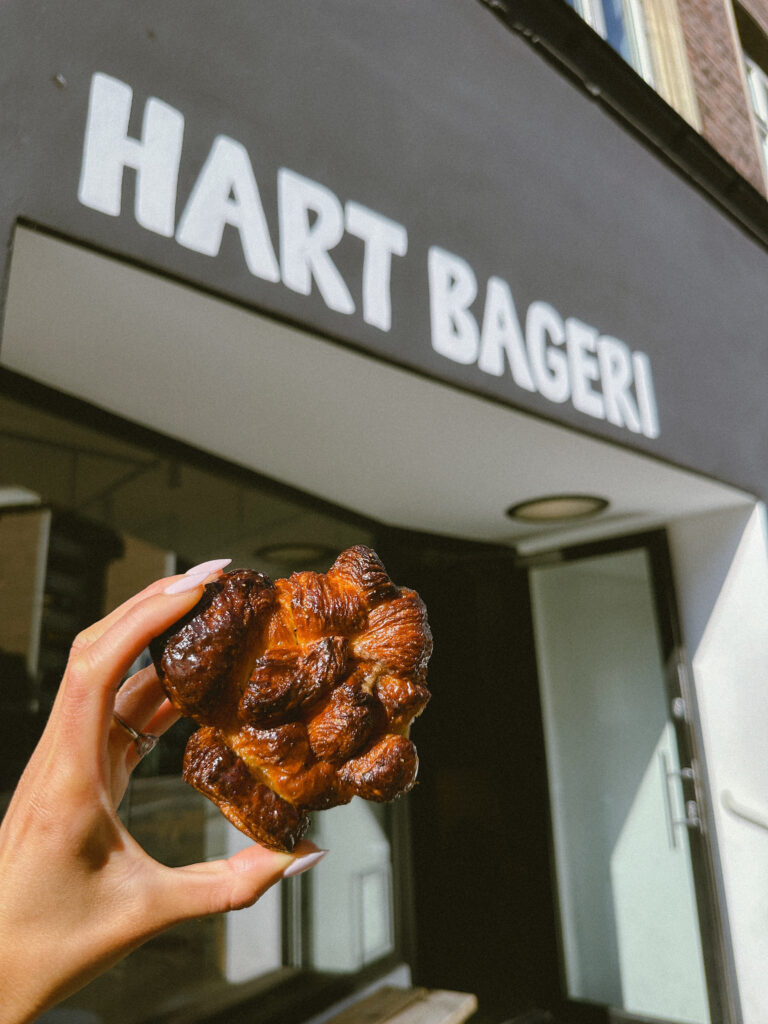
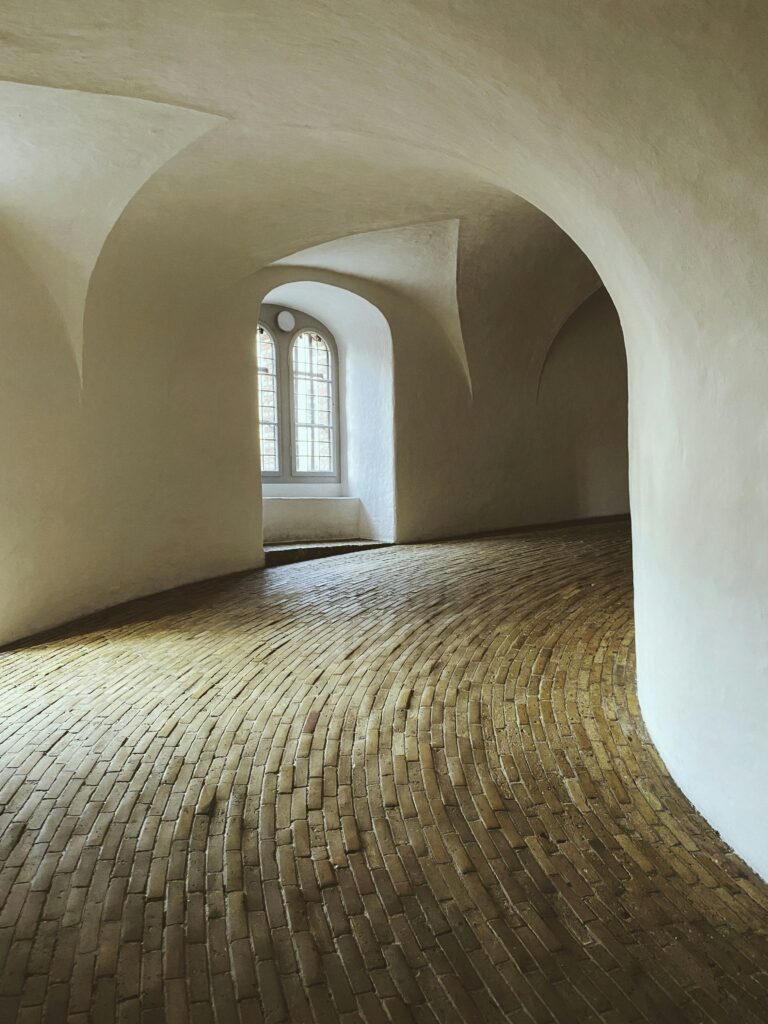
For day 1 of your 2-day Copenhagen itinerary, you’ll want to start the way every good Copenhagen day should start: with a cardamom bun and a coffee from one of the incredible bakeries near your hotel like Hart Bageri, Buka, and Sankt Peders. Make sure to fuel up, because you’ll need it. (If you haven’t locked in where you’re sleeping yet, I’ve got a whole guide on the best spots to stay in Copenhagen that might help you narrow it down.)
Then make your way over to the Round Tower, which is just steps from the 25hours Hotel. Built in the 17th century, the Round Tower offers panoramic views of Copenhagen from its observation deck. Its unique spiral ramp makes the climb easier and more interesting than traditional stairs.
A few logistics before you go. Tickets are 60 DKK (~$9 USD) for adults and 40 DKK (~$6 USD) for students with ID, and kids under 18 get in free. Heads up: you can’t buy ordinary entry tickets in advance, so it’s cash or card at the door.
It’s open daily 10am–8pm in summer (April–September) and 10am–6pm in winter (October–March). The tower has a guest capacity cap, so at peak times you might hit a short queue, but the wait rarely tops 20 minutes.
Inside, you’ll find an exhibition space and a working astronomical observatory, one of the oldest in Europe.
Fun fact – The Round Tower was also one of the first places visited by Hans Christian Andersen (the father of fairy tales) on arrival in Copenhagen, which is why he ends up mentioning it a lot in his later novels.
Pro tip for your 2-day Copenhagen itinerary: Arrive early and be one of the first to climb to the top for epic views of the entire city!
Late morning: Rosenborg Castle and the Botanical Garden
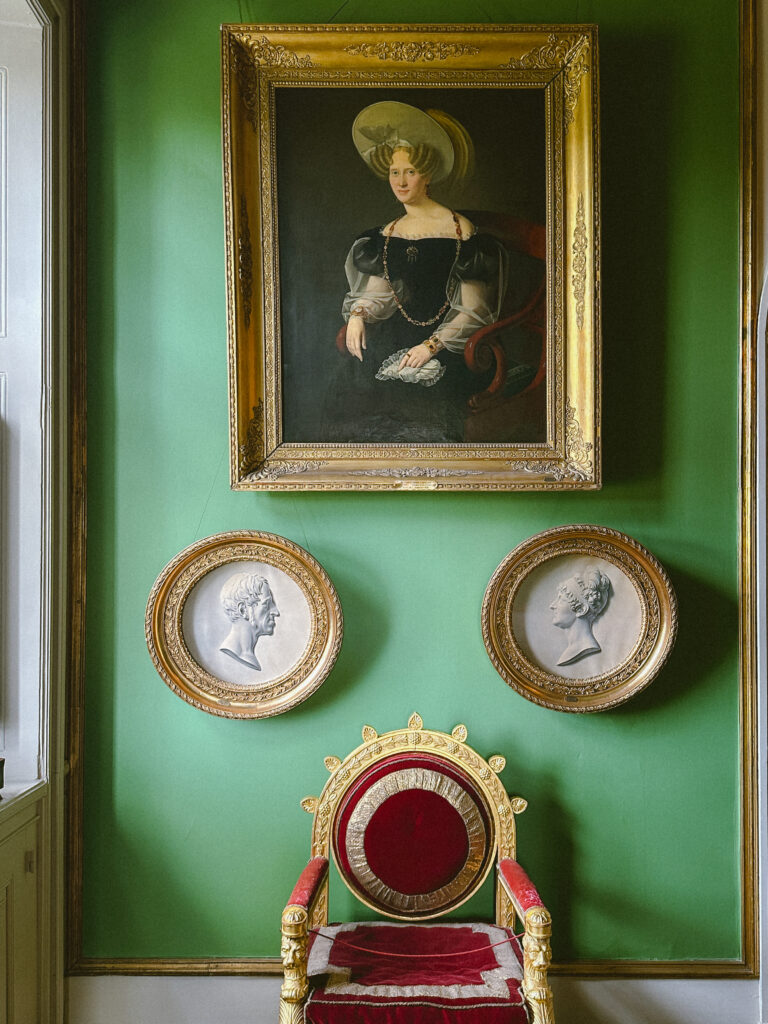
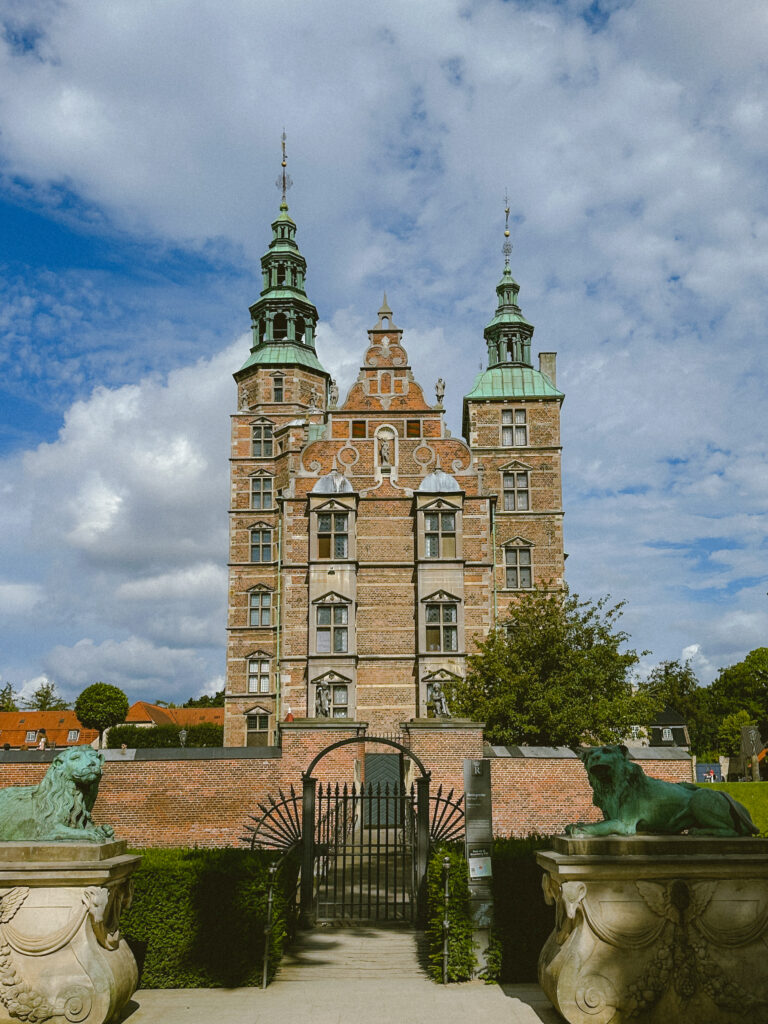
From the Round Tower, it’s about a 10-minute walk north to Rosenborg Castle. What’s a trip to Europe without another castle?? Okay but this one is cool because you get to see a crown made entirely out of jewels. Can you imagine how heavy that thing must’ve been to wear on your head all day lol.
Located in the heart of the city and dating to the early 1600s, Rosenborg Castle is one of the most impressive buildings to be found in Copenhagen. The surrounding King’s Garden is a peaceful spot for picnics or walks, especially during spring and summer. If unfamiliar, Rosenborg Castle is best known as the home of the Danish crown jewels and royal regalia. The jewels are even still used a few times per year for royal events!
If you’re a history buff like me and prefer to be told about the history in an engaging way vs just reading all the signs and placards in the castle, then I’d recommend booking a guided tour in advance. Not only do you get to skip the line (yay), but you also get to hit up Amalienborg Palace and King’s Garden.
Oh and if you followed my suggestion above of staying at 25hours Hotel, this Rosenborg Castle guided tour picks up directly from the lobby! You can check out my full hotel review here.
And conveniently, the Copenhagen Botanical Garden is also right across the street, so pop in for a quick wander before you move on. The Botanical Garden is a serene oasis in the heart of the city, boasting a diverse collection of plants from around the globe. Explore lush greenhouses, wander through enchanting flower beds, and discover rare and exotic species. Whether you’re a passionate botanist or simply seeking a peaceful escape, this beautiful garden offers a tranquil retreat for all to enjoy (and photograph).
Afternoon: lunch at Torvehallerne and shopping down Strøget
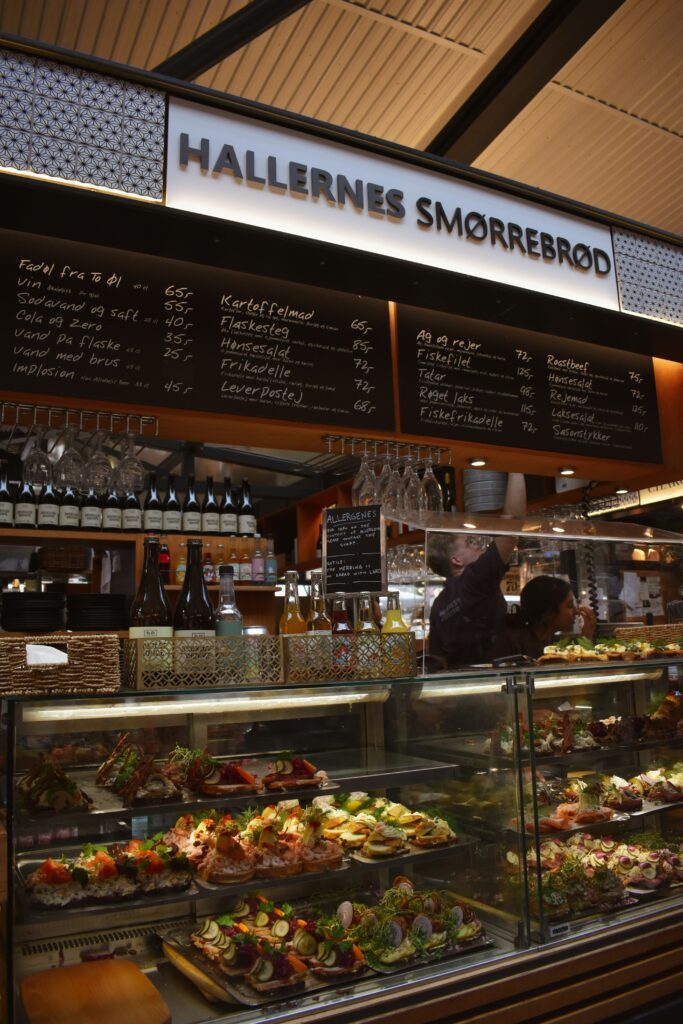
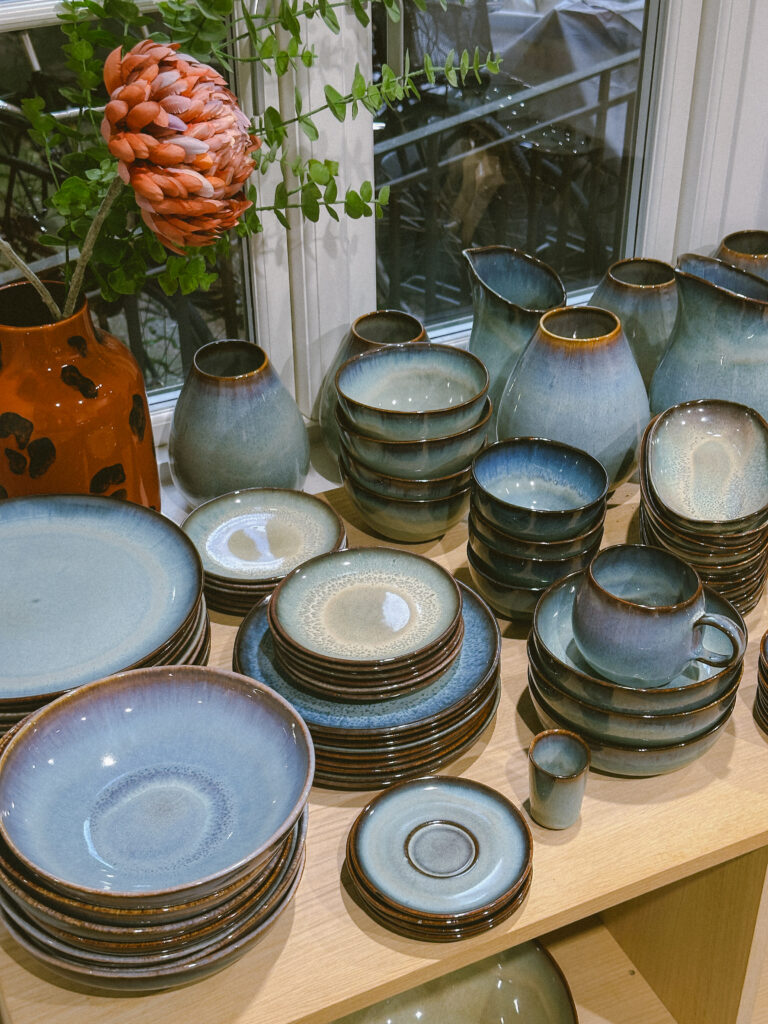
A short walk from the Botanical Garden (over by Nørreport) is Torvehallerne. If your 2-day Copenhagen itinerary includes food stops (and honestly, it should), TorvehallerneKBH is a must. This lively food market is buzzing with over 60 stalls, serving everything from fresh produce and artisan cheeses to mouthwatering pastries and international flavors. Whether you’re grabbing a quick bite, hunting for gourmet ingredients, or just soaking in the vibrant vibe, it’s the perfect spot for any foodie in Copenhagen.
Once you’re fed, point yourself toward Strøget and let it carry you east toward the harbor. If you’re staying at the 25 hours hotel I recommended above, then there’s no way that you’ll miss the hustle and bustle of Strøget street in Copenhagen.
For those looking to indulge in a little bit of retail therapy, Strøget is one of the longest pedestrianized streets in Europe and is the heart of the city’s retail stores. Strøget offers more than a kilometer of everything from top luxury brands to discount chains, as well as a number of places to eat and drink.
Whether you’ve got a long list of purchases to make or are simply in the mood for some window shopping, you are sure to find what you need along this pretty stretch of the city. Plus, it dumps you right out near Nyhavn, which is exactly where you want to be next.
Evening: sunset at Nyhavn and the Little Mermaid
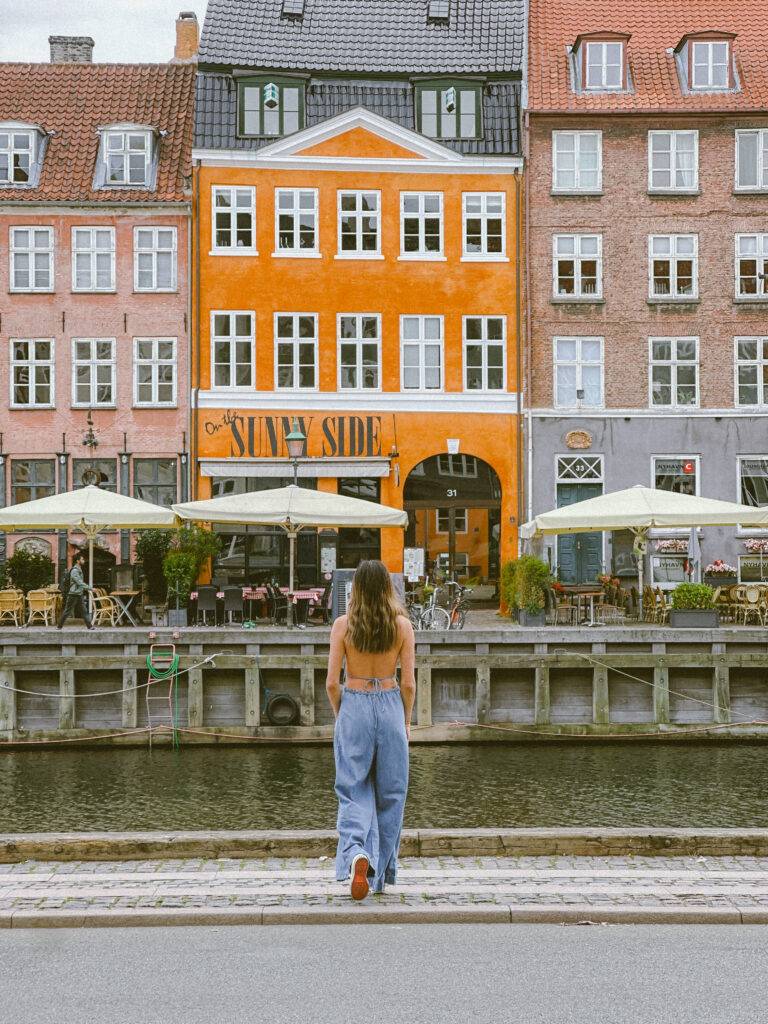
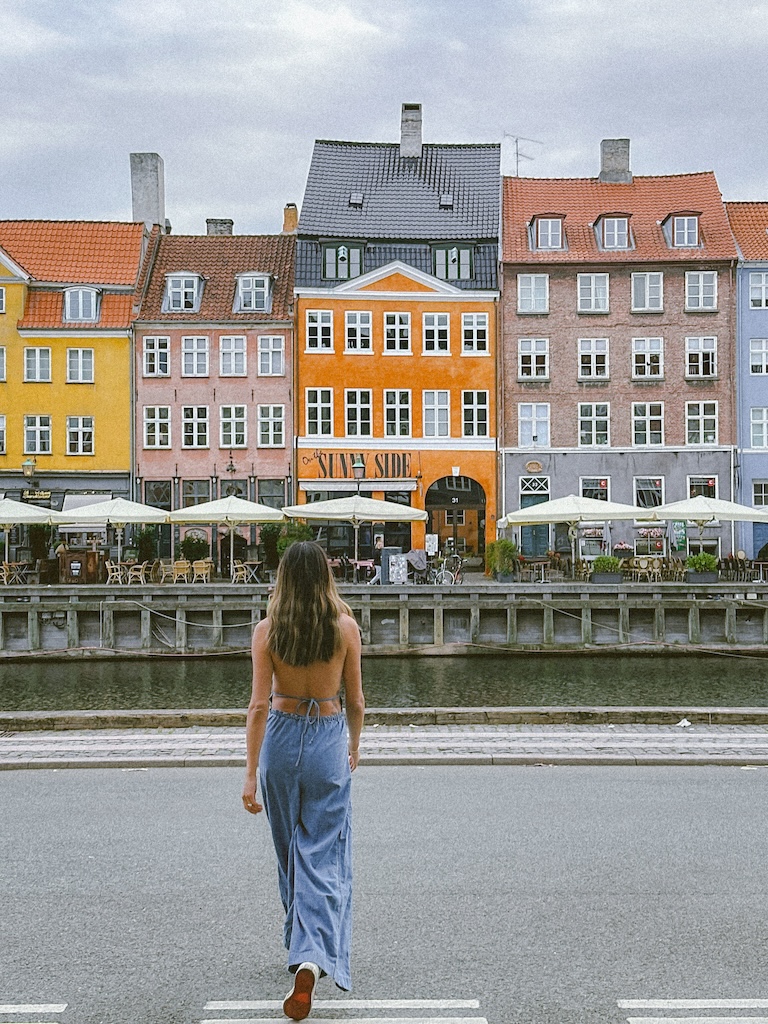
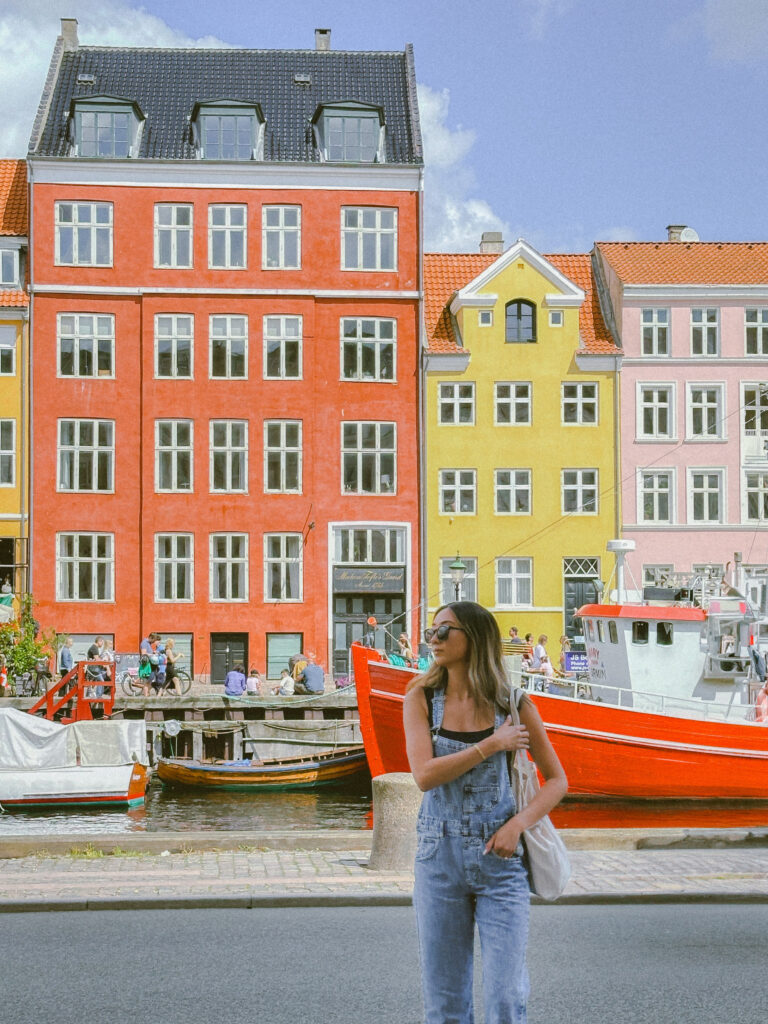
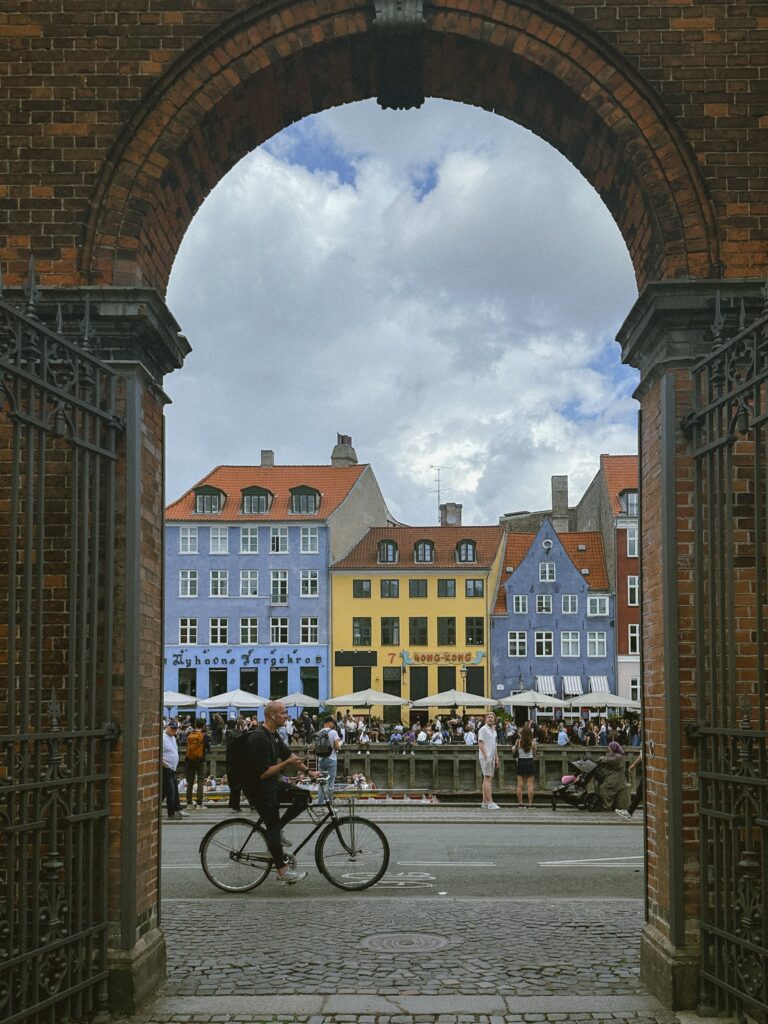
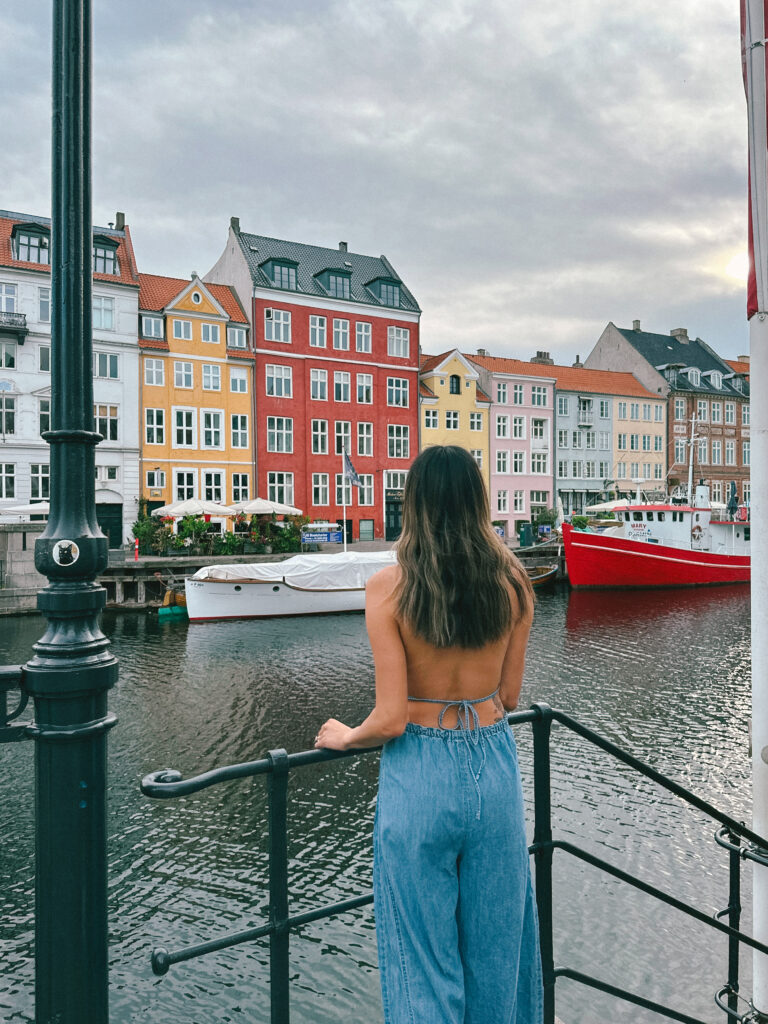
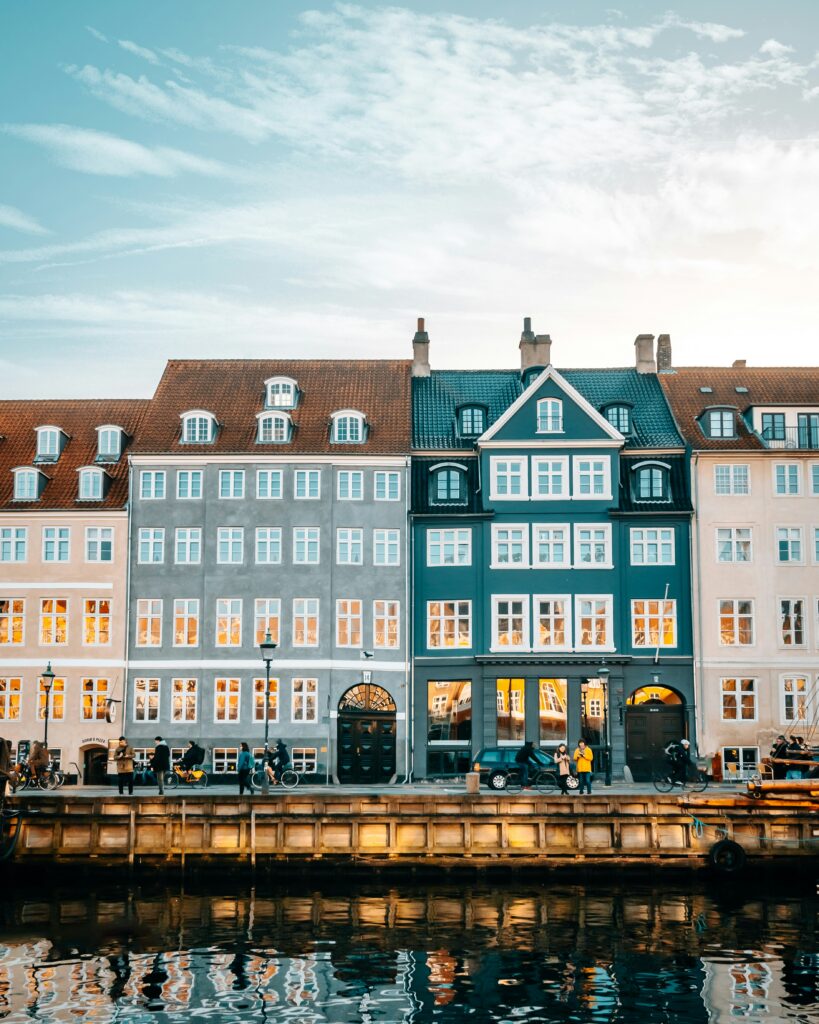
You’ll hit Nyhavn at the end of Strøget, and trust me, it’s just as good as the photos. Nyhavn is probably the most famous spot in the city, known for its colorful 17th-century Canalside townhouses. It used to be an important trading port and merchant harbor, but is now Copenhagen’s beating heart.
Fun fact: the neighborhoods right around Nyhavn are some of the most popular for first-time visitors to base themselves, which is something I get into a lot more in my Copenhagen neighborhood guide.
There are a bunch of different places to dine outside and in the warmer months, you can book a Nyhavn canal cruise tour directly from the habor! The Nyhavn Christmas Market is also the city’s most popular attraction during winter. You’ll definitely want to get all of your photos here and along the river.
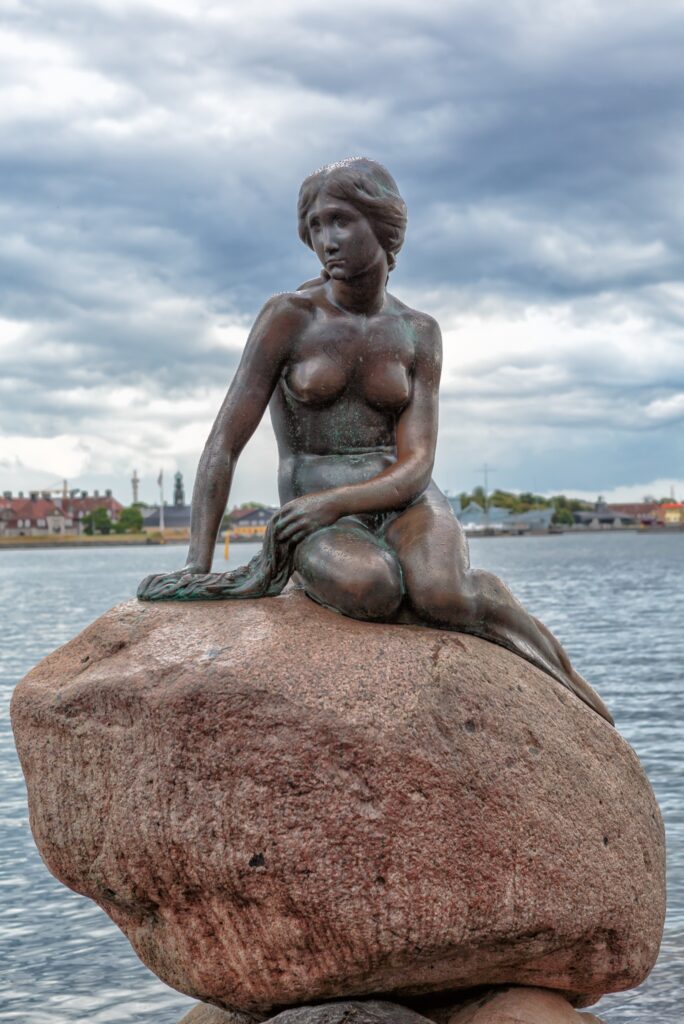
From Nyhavn, take the scenic 20-minute walk north along the waterfront to say hello to Ariel at the Little Mermaid Statue. Okay call me an idiot but I had no idea that Disney wasn’t the actual original creator of fairytales…which is why visiting this iconic sculpture is one of the top-rated things to do in Copenhagen.
Inspired by the fairy tales of Denmark’s own Hans Christian Andersen, The Little Mermaid is arguably the most famous landmark in Copenhagen, and it’s free to visit. The bronze stature sits on a rock by the waterfront and although small in size, the statue is a cultural phenomenon and a must-visit for any first time traveler to the city.
Sadly, I didn’t see Flounder anywhere but he does make a small appearance in The Flying Trunk ride at Tivoli Gardens.
Speaking of which, the ride is one of those little surprises that always ends up on my running list of the coolest things to do around the city.
For dinner, head back into Indre By for a meal at Vækst (more on this one-of-a-kind greenhouse restaurant situation in the restaurants section below).
Day 1 Booking Essentials
Book these before you go 🇩🇰
The Day 1 stuff I’d lock in ahead of time so golden hour at Nyhavn isn’t a scramble 👇
-
Nyhavn Harbor Canal Cruise →
Under $35/person · my Day 1 highlight, see the colorful 17th-century harbor from the water at golden hour
-
Rosenborg Castle Guided Tour →
Skip the line + hits Amalienborg Palace and King’s Garden · picks up right from the 25hours Hotel lobby
Day 2: Castles, Christiania, and Tivoli by Night
Are we already on the final day of your 2-day Copenhagen itinerary? Jeez that was fast! Time really does fly when you’re having fun. Or you tell me if you’re having fun yet. For our final day in Copenhagen, we’re going to spend a bit of time across the water. We’ll start central on Slotsholmen, cross over to Christianshavn for a glimpse into the weird and wonderful stuff, then loop back for Tivoli once it’s lit up at night.
If you’re staying in Christianshavn or Islands Brygge for part of your trip, today is going to feel super easy logistics-wise which is one of the things I love about those neighborhoods, which I cover in my where to stay in Copenhagen guide.
Morning: coffee and Christiansborg Palace
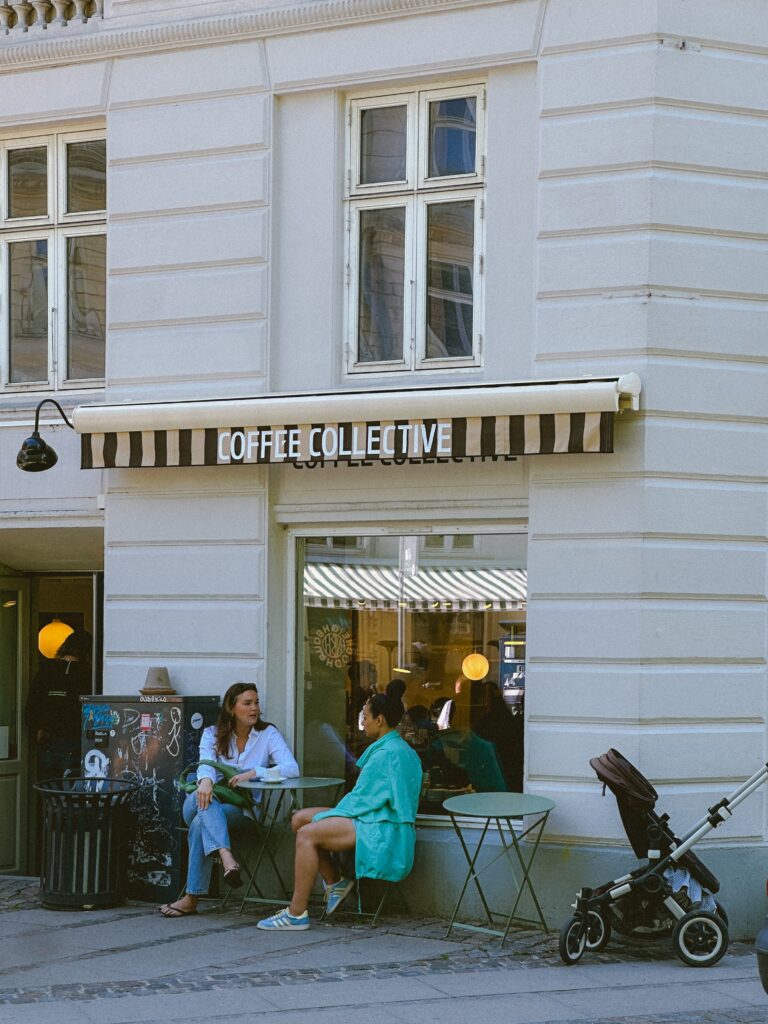
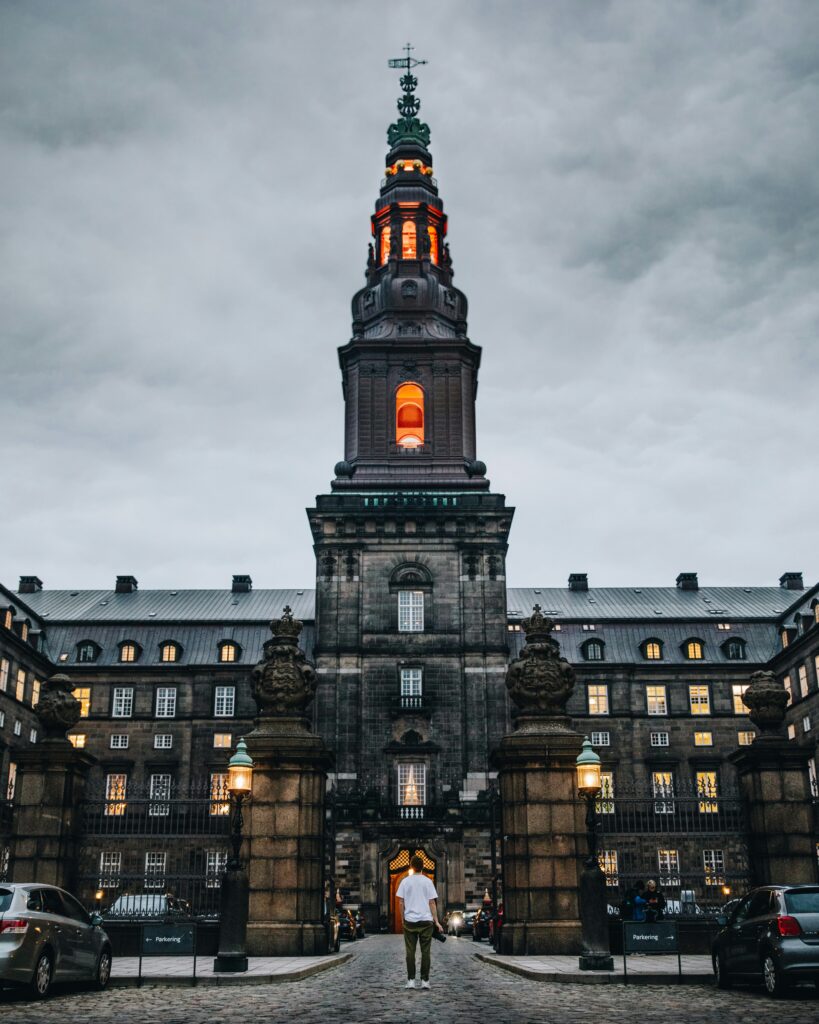
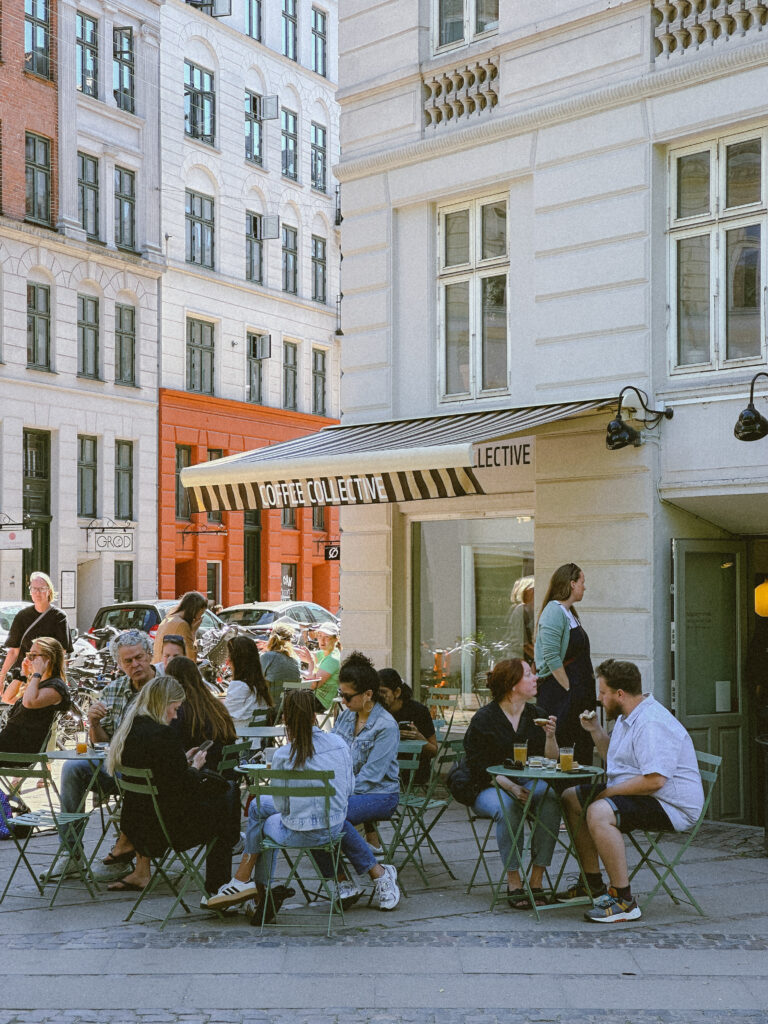
Since this is a 2-day itinerary for Copenhagen, I can assume you’ll be on the go for most of the trip which is why you’ll need to stop for caffeine somewhere along the way. There are SO MANY good coffee shops around Copenhagen but I recommend popping into the Coffee Collective for a morning pick me up. The Coffee Collective is a Copenhagen-based coffee roastery that’s highly regarded for its commitment to ethical sourcing and exceptional quality.
They source beans directly from farmers, ensuring fair trade practices and building long-term relationships. It’s a wonderful place to support local, enjoy a pastry, and people watch before your next adventure.
After being properly caffeinated, you’ll want to head over to Christiansborg Palace. If you’re only working with a 2-day Copenhagen itinerary, Christiansborg Palace is a must-see. It’s perfect for anyone into royalty, politics, or just cool history.
Not only is it home to the Danish parliament, but it used to be where the Royal Family lived. You can roam the royal reception rooms, peek into the kitchens, and even check out the ruins beneath the palace. And for a killer view of the city (without spending a dime), climb the palace tower.
It’s also a great budget-friendly alternative to the Round Tower.
Late morning: Viking history at the National Museum
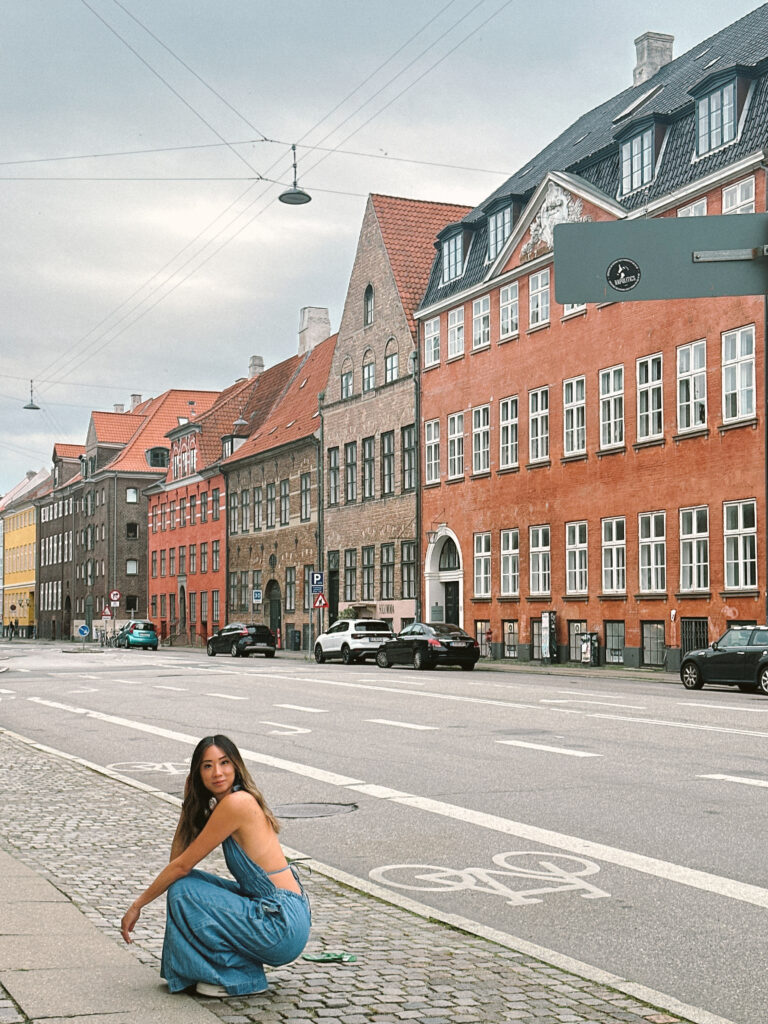
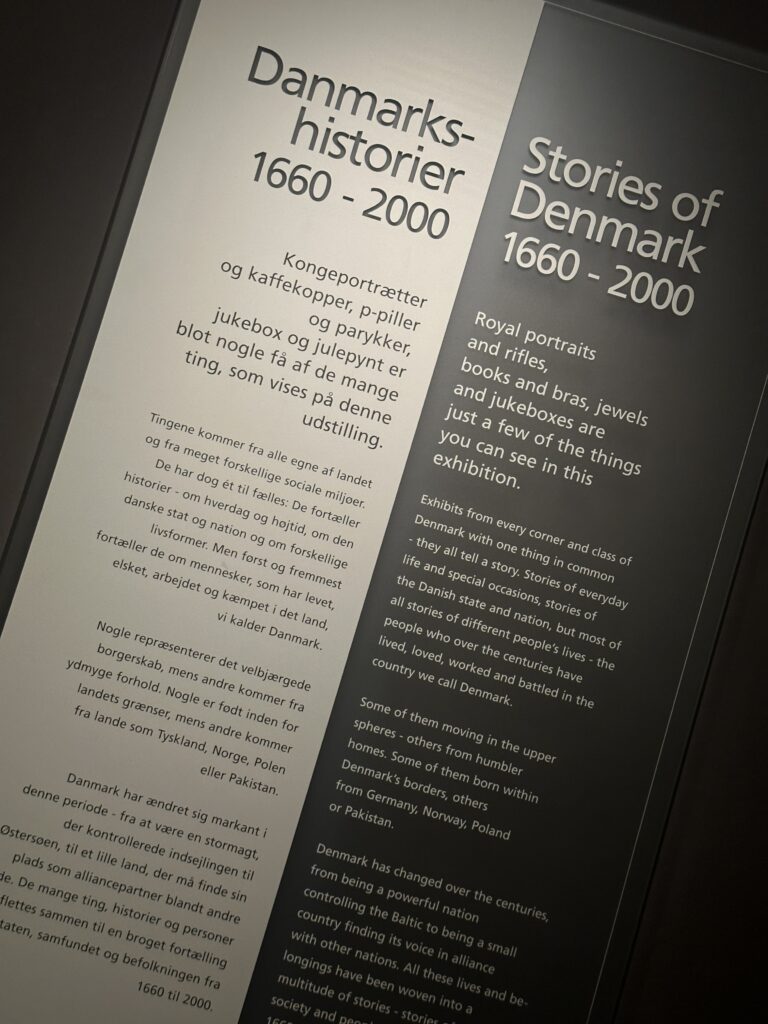
Five minutes on foot from Christiansborg is the National Museum of Denmark. Raise your hand if you thought vikings were just a made up thing from children’s books. Nope? Just me? Okay then.
Well, good thing Denmark has a long and storied history, much of it Viking-related. Visitors wanting to delve into this should visit the National Museum of Denmark, which charts the country’s national story from the Viking Age to the modern day.
I usually buy all of my museum tickets in advance so I can skip the line in case there is one. The prices are usually the exact same as buying from the website.
Just be prepared for a really confusing museum floor layout at the National Museum of Denmark. I got lost many times just trying to find the exhibits on modern day Denmark. I eventually found it but just a heads-up that the signage was very confusing.
Afternoon: Christiania and Danish ceramics at Studio Arhoj
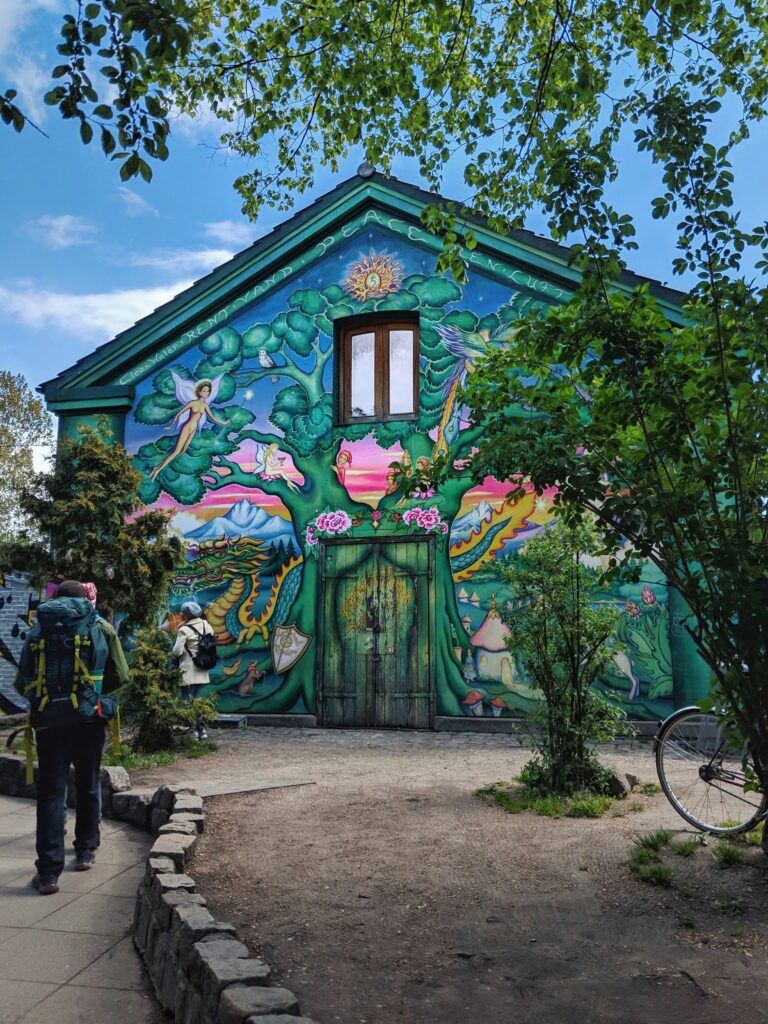

Now cross over to Christianshavn, where things get a little weird (in the best way). First up is Christiania, the self-governing “freetown” that’s been doing its own thing on an old military base since the ’70s.
Here’s the part your older guidebooks won’t tell you though, the infamous Pusher Street (aka the open-air cannabis market it was once known for) was permanently dug up and dismantled by Christiania’s own residents back in 2024 after years of gang violence. So if you showed up expecting that version of Christiania, it’s gone, and honestly the place is better for it.
What’s left is the part that was always worth the visit anyway: ramshackle DIY houses, murals on every surface, little art workshops, cozy cafes, and an organic food spot or two. It’s calm, it’s creative, and it basically feels like a regular Copenhagen neighborhood now.
And yes, it’s totally safe to wander in 2026, and photography is generally fine again too, which wasn’t always the case, so snap away.
Important to note: Christiania still runs on its own rules and a whole lot of community pride, so read the signs, be respectful, and don’t be the tourist who treats someone’s actual home like a theme park.
Just a few minutes away is Studio Arhoj. There’s nothing I love more than bringing home one-of-a-kind kitchenware (even though it’s usually a b*tch to pack because it’s so heavy).
Studio Arhoj is a famous Danish ceramics studio celebrated for its whimsical and playful designs. Known for its unique glazes and sculptural forms, Studio Arhoj embodies the spirit of Danish design – functionality combined with artistic expression.
Danish ceramics, in general, are highly regarded for their minimalist aesthetics, high quality, and focus on craftsmanship. You can expect to find a range of items, from everyday tableware to decorative sculptures, showcasing the talent and creativity of Danish ceramic artists.
Evening: Tivoli Gardens all lit up

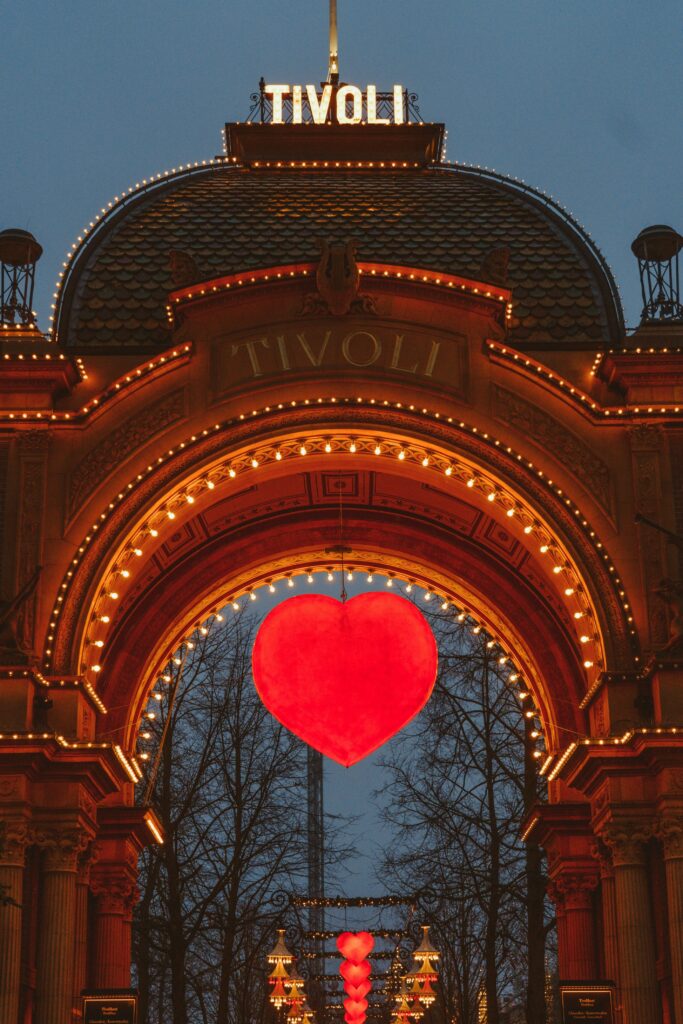
Now it’s time to end your 2-day Copenhagen itinerary by feeling like a kid again. (Or an adult if you’re traveling with your kids).
Hop on the metro back toward the center (it’s a quick ride from Christianshavn) and spend your final evening at Tivoli Gardens, which is genuinely best at night when the whole place is glowing.
Tivoli Gardens is technically Denmark’s most popular attraction, with more than 4 million annual visitors. (In 2026, it’s on track to having 4.2+ million visitors). It first opened in 1843, and is one of the oldest operating amusement parks. Tivoli is also said to have been the inspiration for Walt Disney’s theme parks. There are a ton of adult and kid-friendly rides, while there are also tranquil gardens, Christmas markets and open-air concerts during the summer months.
In 2026, entry tickets start at around $26 USD and you can either buy an all-day unlimited ride pass for under $30 USD or pay for each ride one at a time.
If you have kids, I’d definitely recommend the unlimited day pass as you’ll likely be spending the entire day and night here with them 🎡
Ps. the Tivoli Hotel is also literally right next door if you want to be within walking distance, and it’s one of the picks I mention in my guide on where to stay in Copenhagen for families.
Day 2 Booking Essentials
Book these before you go 🇩🇰
-
Tivoli Gardens Amusement Park →
My Day 2 finale · one of the world’s oldest amusement parks and genuinely best at night when it’s all glowing. Entry from ~$26, or grab the unlimited ride pass (under $30) so you can ride everything 🎠
-
National Museum of Denmark Ticket →
5 min from Christiansborg · buy ahead to skip the line (same price as the door) and dig into Viking history
Where to Eat & Drink: The Best Restaurants & Bars in Copenhagen


Have you ever spent $800/person on dinner? Don’t worry. Neither have I. And in 2026? Definitely not in this economy. Which is why I won’t be recommending Noma in this upcoming list. But it’s a good thing that Copenhagen has thousands of restaurants and bars that are just as good to choose from for those less financially fortunate. From other Michelin-starred restaurants serving up exquisite Nordic dishes to cozy pubs offering local brews, the city caters to every taste and budget.
It’s kind of impossible to cover all of the best bars & restaurants in this article so I’ll share my Top 5. Eating your way through the city is honestly one of my favorite things to do in Copenhagen, so consider this your starting point.
I ate and drank at all of these places and had such a fantastic experience, so you should definitely check them out when you visit Copenhagen. Just make sure to snag a reservation in advance as most of these places tend to fill up quickly.
Vækst
📍 Sankt Peders Stræde 34, 1453 København, Denmark
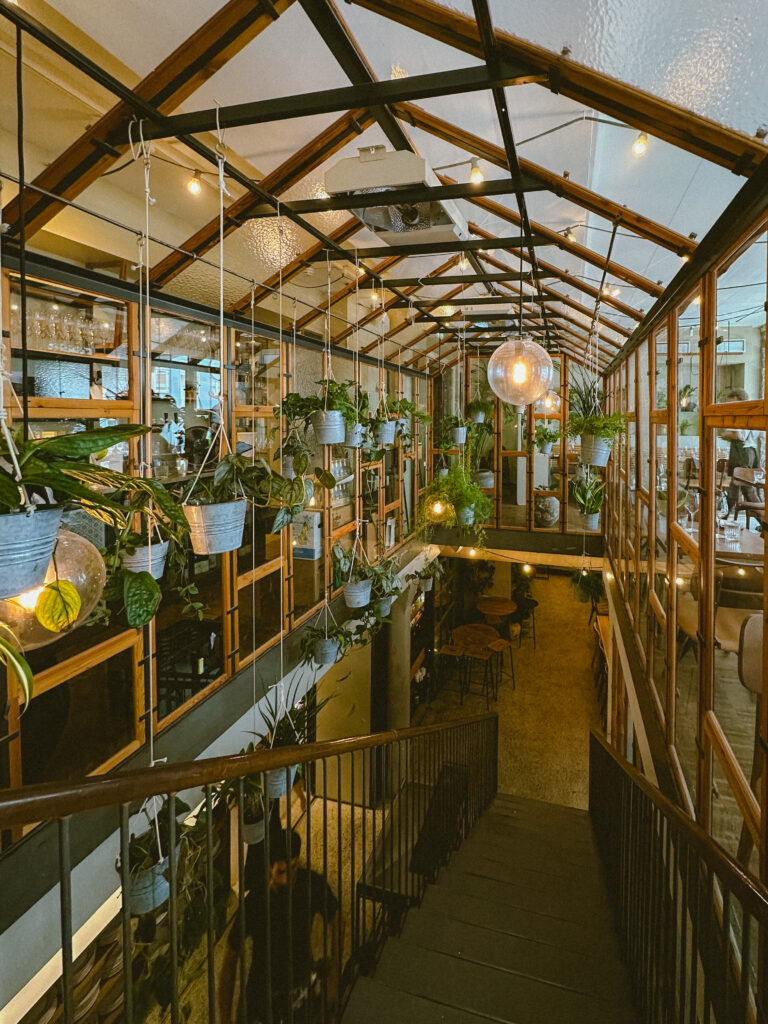
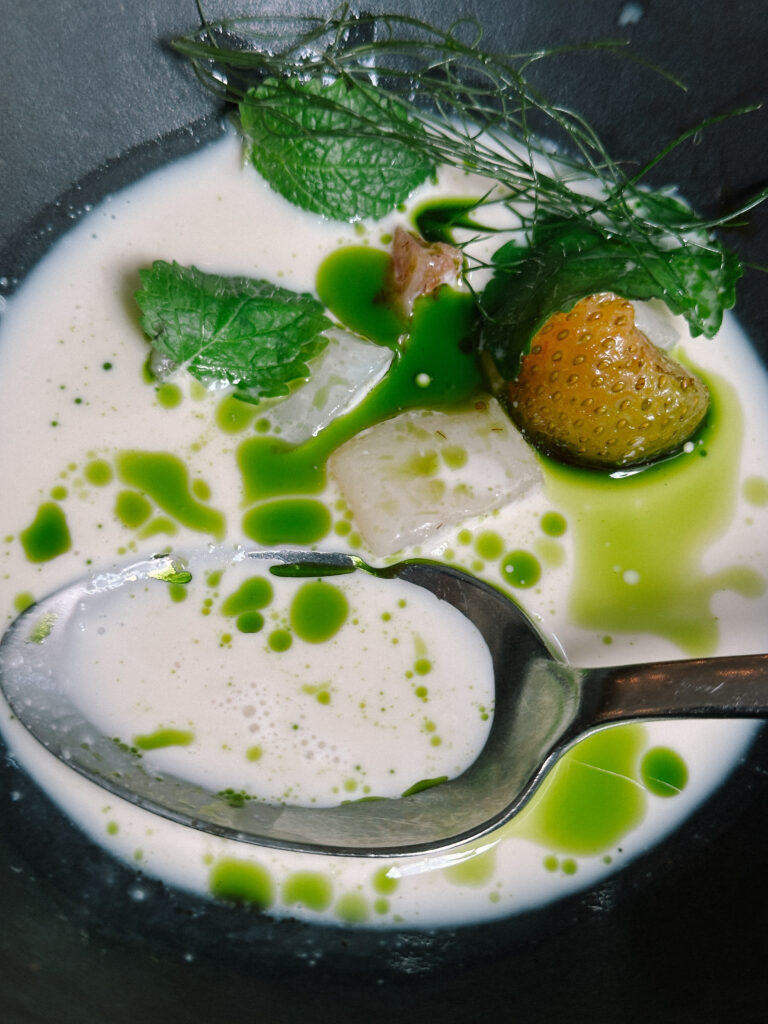
Copenhagen is known for its world class dining scene however I was alone and am still not in the tax bracket that I need to be in to dine at Noma so I decided to head to Vækst (a Michelin Guide restaurant) for my tasting menu fix and was blown away by the decor and food.
Dining at Vækst in Copenhagen was an unforgettable experience. As soon as you walk inside, you’re greeted by a real life greenhouse and beautiful luscious plants covering the walls. They also had a really nice wine selection which featured some natural wines from European countries such as Croatia, Georgia, and more.
The food was also very innovative, they served a traditional Nordic cuisine with a focus on seasonal, locally sourced ingredients. The price point was also very reasonable, my entire 3-course lunch meal paired with a glass of natural wine costs me around ~$60 USD.
Pompette
📍 Møllegade 3, 2200 København, Denmark
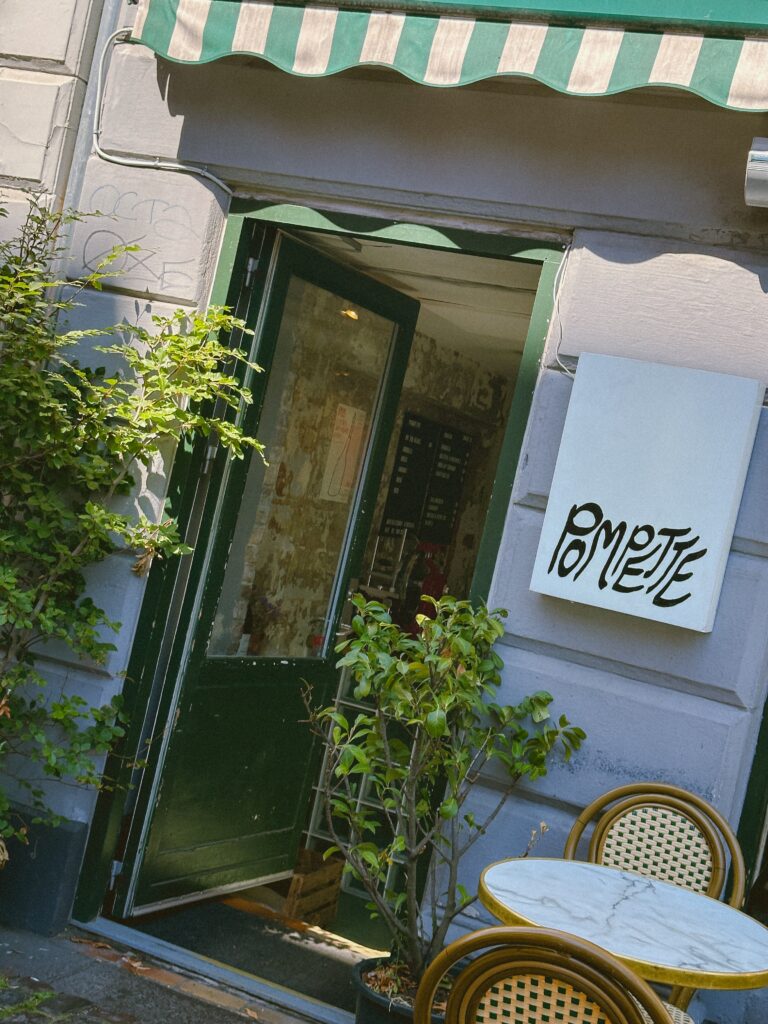
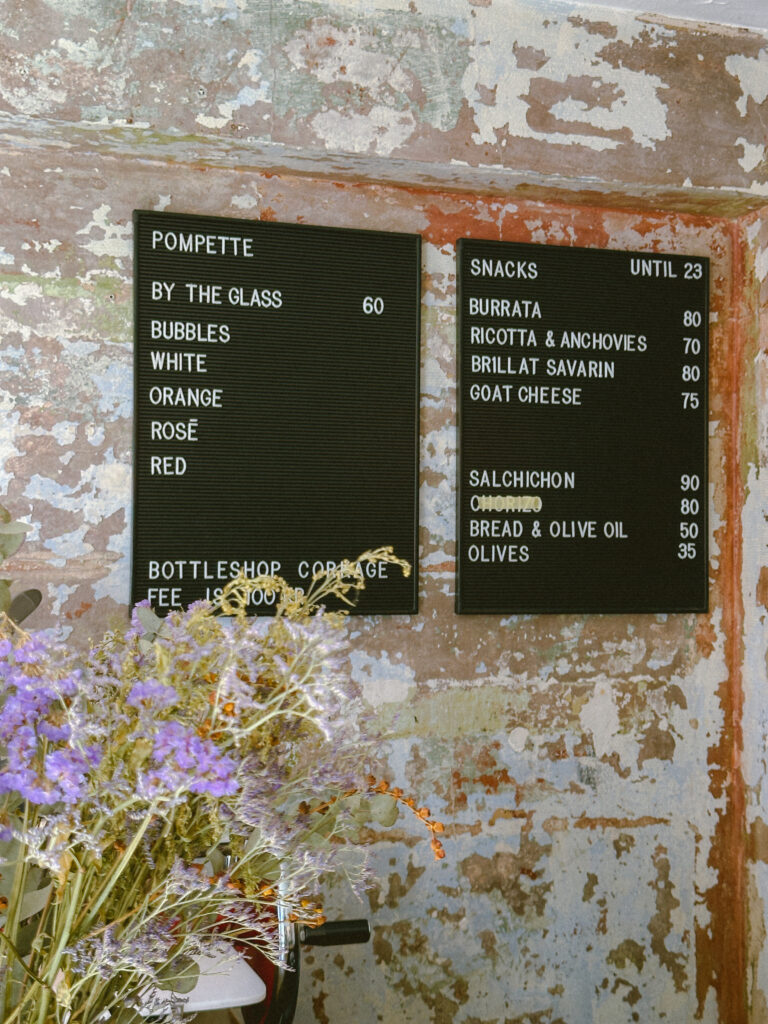
Before heading out to dinner, you should consider heading to Pompette, a stylish wine bar in the buzzing Nørrebro neighborhood. The name translates to “tipsy”, which is how you will likely be feeling after a couple of glasses of well-priced natural wine at this much-loved establishment.
The bar is owned and managed by Martin and Jesper, two former sommeliers and wine makers who wanted to bring great wine to Copenhagen at a good price. There are no long wine lists, expect to find a simple selection of one expertly chosen red, white, rose and orange wine, sold by the glass for 50 DKK (USD $7). You can also buy bottles from the cellar to take away with you, also sold well below the market average.
Duck & Cover
📍Dannebrogsgade 6, 1660 København V, Denmark

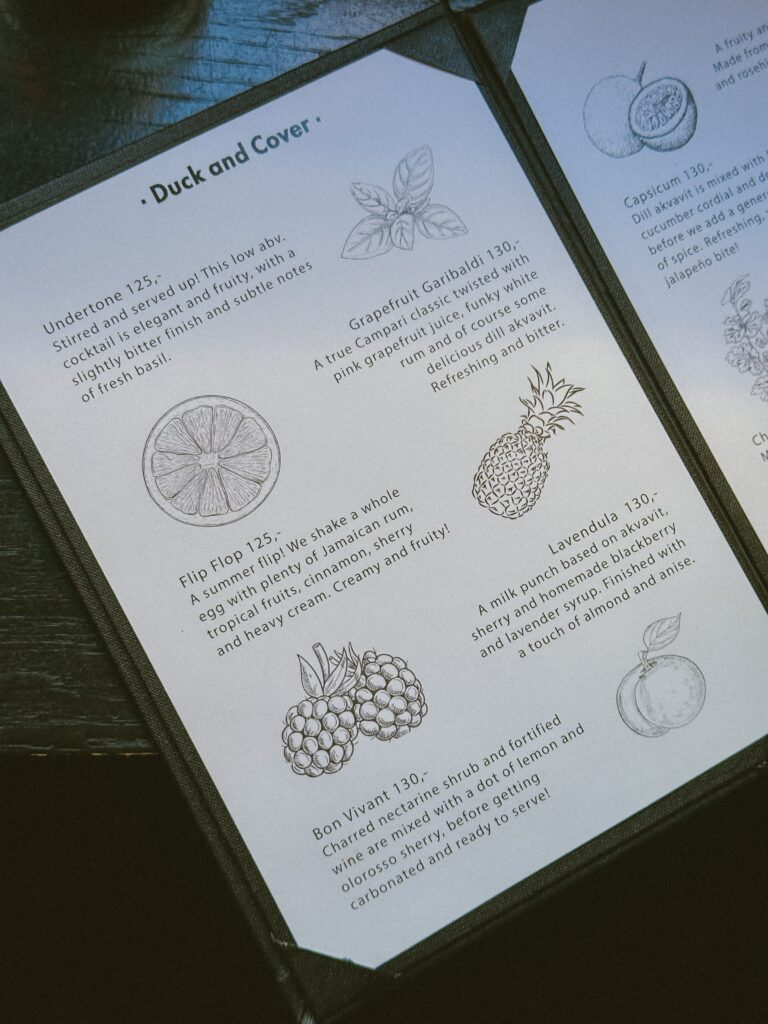
Another bar to hit up before (or after) dinner is Duck & Cover. It’s located right around the corner from another restaurant on this list so it would make a great pairing for a night out.
The playful name for this cocktail bar suggests seeking shelter from the hustle and bustle of the city, or, depending on the time of your visit, the weather. Dim lighting and wood paneling sets the tone, whilst the ever-rotating menu ensures there is always a fresh selection of craft cocktails and other drinks to choose from.
I ordered the Capiscum cocktail which had cucumber cordial, dry sherry, and a hint of spicy jalapeno. This bar definitely has a real speakeasy vibe all around. Duck & Cover is also a winner of multiple Bartender’s Choice Awards and the perfect place to enjoy a laid back evening out in the Danish capital.
Delphine
📍Vesterbrogade 40, 1620 København, Denmark
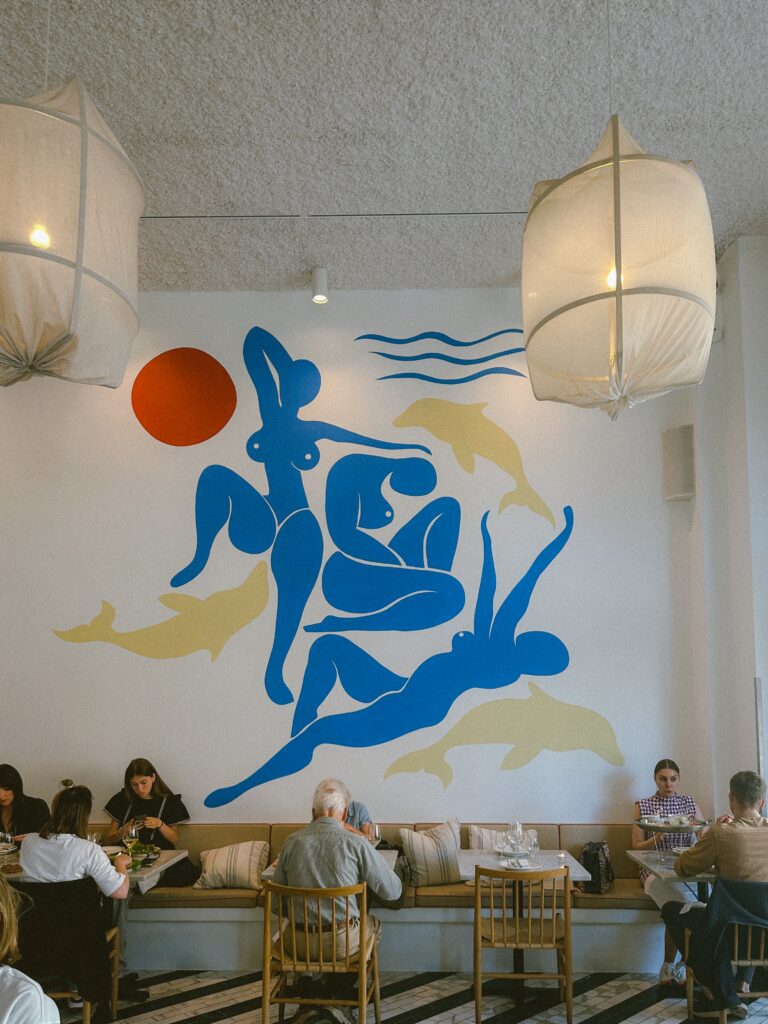
Located 3 blocks away from Duck & Cover, Delphine brings the hearty flavors of Greece and the Mediterranean to the brisk streets of Copenhagen, specifically to the heart of the Vesterbro district. In the warmer months, al fresco dining can be enjoyed outside, whilst the indoor space is large and bright.
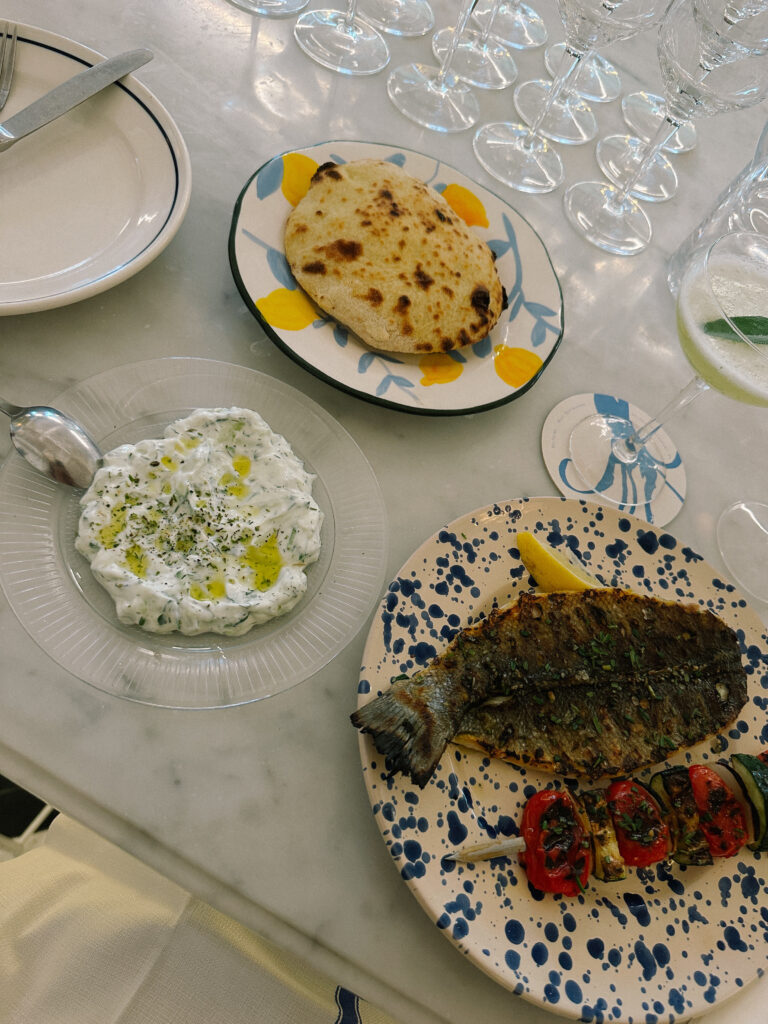
The menu offers traditional Greek dishes including taramasalata and tzatziki, as well as a diverse selection of fish, shellfish, skewered meat and vegetarian dishes. I ordered pita bread, tzatziki dipping sauce, and an entire grilled sea bream and then topped it off with a pisco egg white cocktail. It was absolutely delicious!
Barr
📍Strandgade 93, 1401 København, Denmark
Barr, located in the former home of the renowned Noma restaurant, offers a unique dining experience that celebrates the flavors of the North Sea. Chef Thorsten Schmidt presents a menu of elevated and comforting classics from across the region. Expect dishes like perfectly executed frikadeller (Danish meatballs) served with red cabbage and lingonberries, crispy schnitzel, and decadent Belgian waffles with smoked marrow.
The atmosphere at Barr is warm and inviting, with a focus on Danish design and a cozy, hygge feel. The dining room features simple tables and chairs, washed stone walls, and an old, wood-beamed ceiling. Even the bar is carved from large pieces of untreated and polished wood, with the copper beer taps forming the wall behind.
Beyond the delicious food, Barr boasts an impressive drink menu. Guests can choose from a carefully curated selection of craft beers, aquavits, and wines, perfectly complementing the Nordic flavors on offer.
More Things To Do With Extra Time in Copenhagen
I know, a 2-day Copenhagen itinerary is tight, so a few great spots didn’t make it onto the list. If you’ve got a third day (or you’re just an overachiever), here are some additional fun things to do and see that I’d add. Or just hide your boss from your stories and extend another night. I mean, isn’t that what sick days are for?!
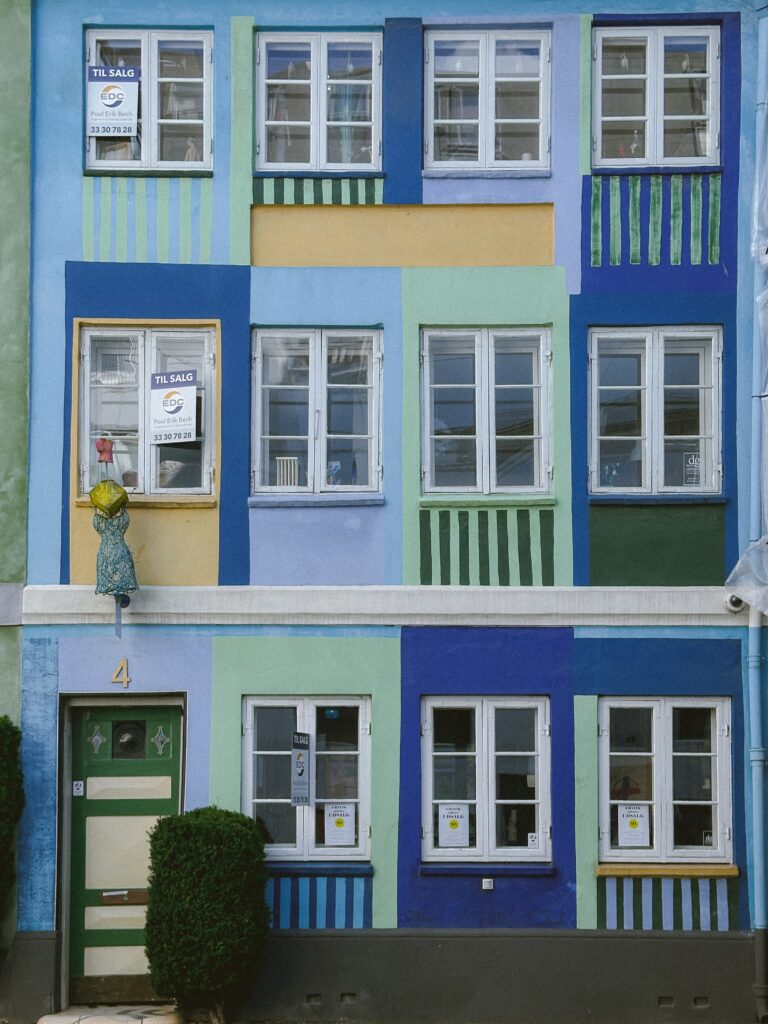
Find the colorful houses of Olufsvej

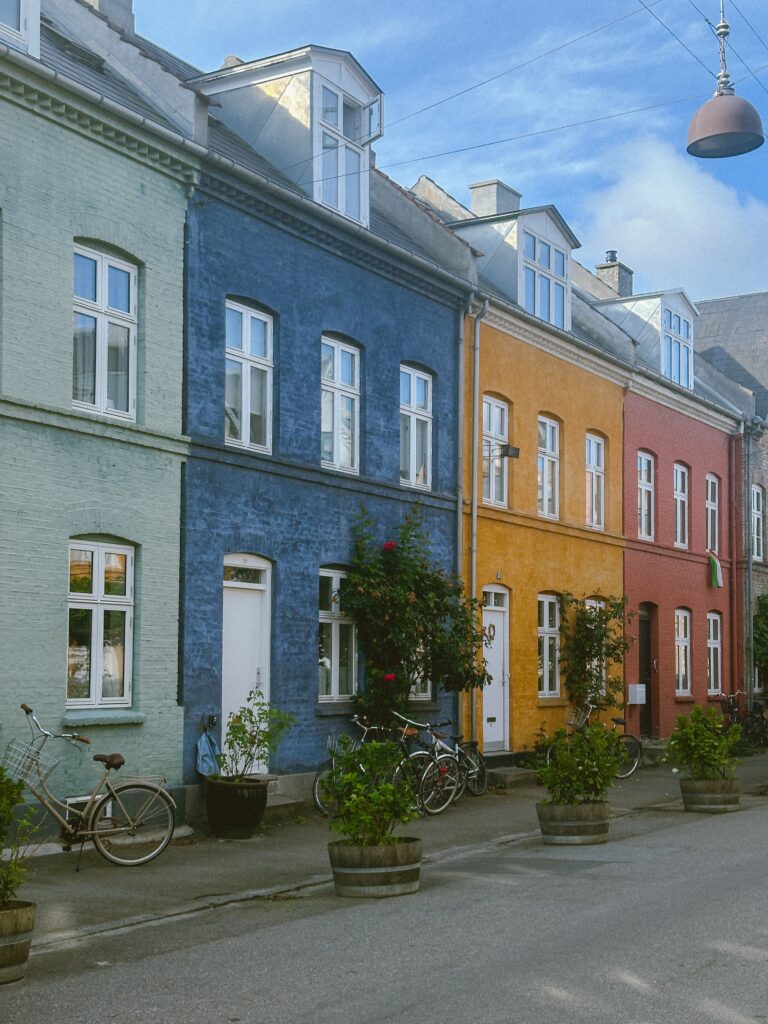
Olufsvej is an adorably charming street in Copenhagen known for its row of brightly colored houses, creating a cheerful and picturesque (aka very instagrammable) scene. To reach Olufsvej from the city center, you can take public transport such as the S-train to Nørreport Station. From there, it’s a short walk or a quick bike ride to the street.
Since I was visiting during summer, I actually walked all the way from Nyhavn which took over an hour but it was such an enjoyable stroll! I also passed by Hart Bageri on the way so I was able to refuel with the most delicious cardamom croissant of my freakin life.
Wait in line for cardamom buns at Juno the Bakery
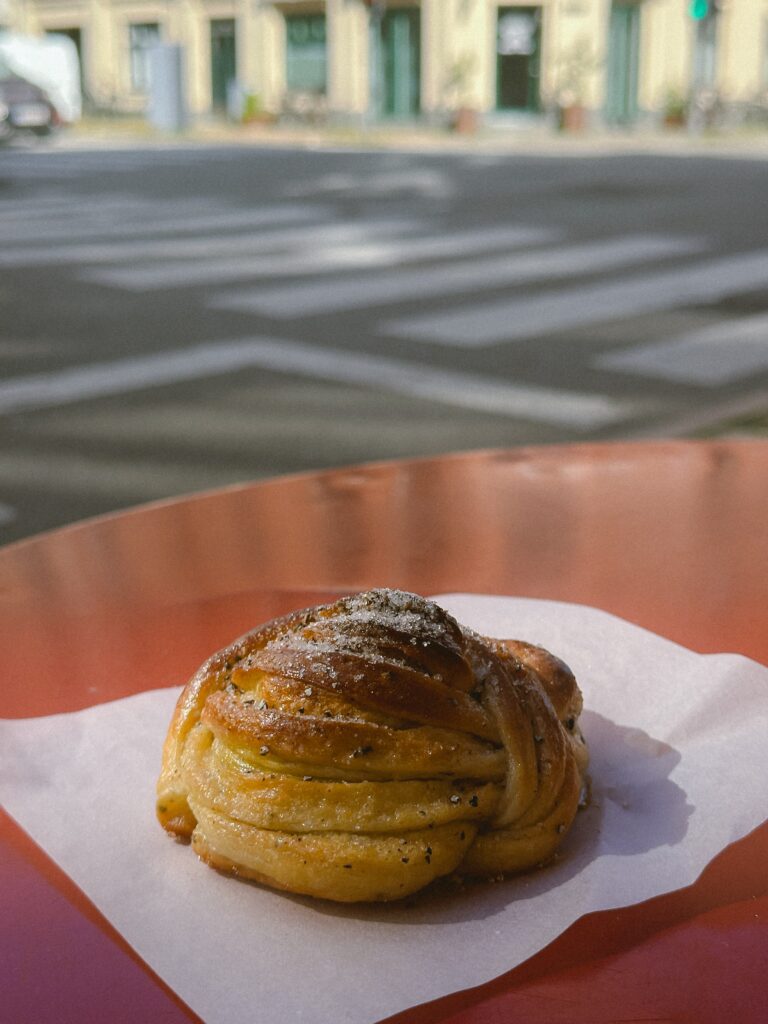

I’m sure you’ve heard of the bakery by now since I’m pretty sure it’s on every online Copenhagen hit list. Juno the Bakery is a renowned Copenhagen institution famous for its exquisite pastries, but particularly its iconic cardamom buns. If you have the appetite for waiting in line, you can expect to find beautifully crafted treats made with high-quality, organic ingredients once you get inside.
The bakery is known for its minimalist aesthetic and focus on the art of baking. Again – just be prepared for a very long line, since Juno is a very popular spot among both tourists and locals. And if you’re obsessed with flaky pastries like me, I’ve also got a running list of the best bakeries in Milan and a roundup of the best pain au chocolat in Paris.
Hot take but I didn’t love their cardamom bun. I know don’t come for me. I probably ordered the wrong thing but I tried their other pastries and they were 💣 (I still thought the Cardamom bun from Hart Bageri won but to each their own).
Drink a beer at the Carlsberg Brewery
Horses and beer – the perfect relationship? Who would’ve thought.
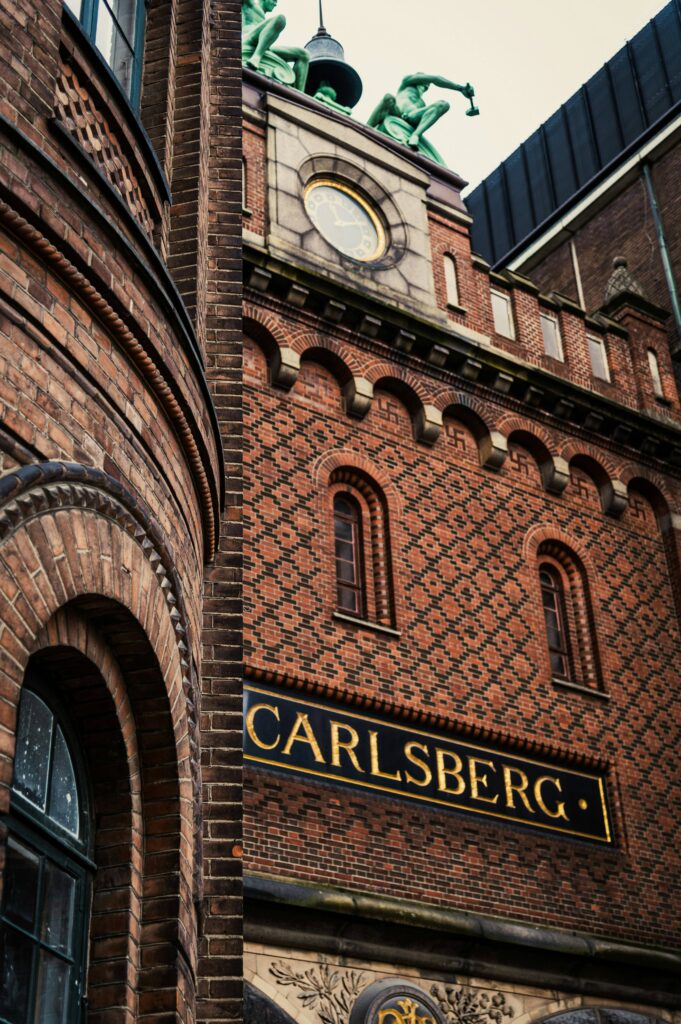
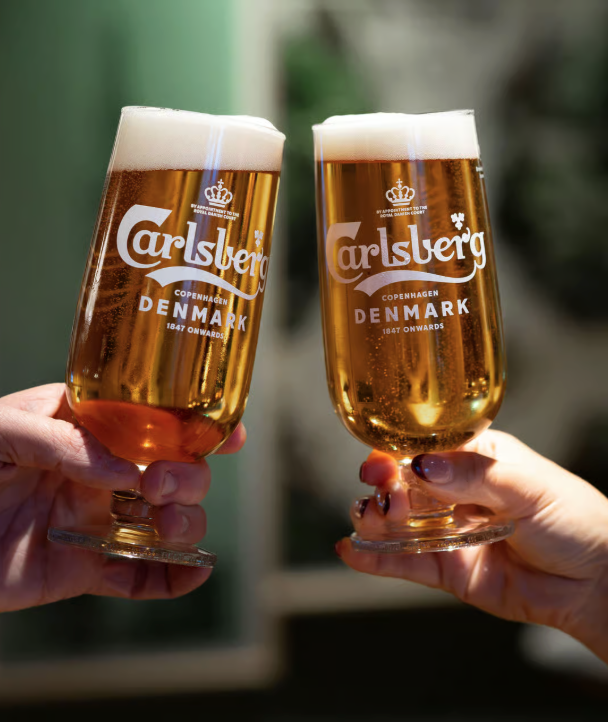
Widely promoted as “probably the best beer in the world,” Carlsberg originates from Copenhagen, where a Danish brewery tour can be a fantastic way to spend a rainy or snowy day in the city.
The brewery houses the world’s largest collection of unopened beer bottles, and you’ll get the chance to meet some of their four-legged ambassadors in their outdoor stables. This is a great activity for travelers wanting to explore the brand’s history, enjoy tastings, and experience a variety of interactive displays.
Copenhagen FAQ
To help you plan your 2-day Copenhagen itinerary, here are some commonly asked questions for first time visitors to Copenhagen 🇩🇰
What currency is used in Copenhagen?
If you think that Denmark uses the Euro, then I’m sorry but you’re mistaken. The currency in Copenhagen and all of Denmark is the Danish Krone (DKK). The exchange rate hovers at around 6 Krone to the dollar and as you would expect, credit and debit cards are widely accepted across Denmark.
What language do they speak in Copenhagen?
Danish is the official language in Denmark but English is widely spoken, especially in Copenhagen and even more so in tourist businesses such as hotels and restaurants.
How should I get around Copenhagen?
Copenhagen is one of the most bike-friendly cities in the world, with miles of cycle lanes. Bikes can easily be hired around the city, and cycling is a great way to explore Copenhagen, especially in summer.
The most Copenhagen thing you can do is skip the metro and just bike everywhere like a local. The whole city is built for it, flat, safe, and covered in dedicated bike lanes that put most cities to shame. You can easily rent an E-bike for the entire day and get around faster (and cheaper) than you’d expect, plus it basically doubles as sightseeing.
There’s also a clean, modern and efficient metro and bus network – use mobile apps like Citymapper to help you get around and buy a City Pass for unlimited travel on the network.
Is Copenhagen safe?
Copenhagen is consistently one of the safest cities on the planet, and 2026 is no exception. It still ranks as the second safest city globally this year, right behind Reykjavik, and honestly the numbers back it up.
Violent crime is rare, and tourists are unlikely to run into any real trouble (even wandering home at night). Take the usual precautions in busy spots, like keeping your valuables in a zipped pocket, but otherwise? You’ll be about as safe here as anywhere on earth.
Still figuring out which neighborhoods are safe to stay in? Here’s my full guide on where to stay in Copenhagen.
Do I need a visa to visit Copenhagen?
Whether you need a visa to visit Copenhagen depends on your nationality. As of 2026, citizens of EU/EEA countries, the US, Canada, Australia, and the UK can visit Denmark visa-free for up to 90 days. If you’re from outside these regions, check with the Danish Immigration Service or your nearest Danish embassy before traveling.
Is Copenhagen expensive?
Copenhagen is one of the more expensive cities in Europe, so it’s worth budgeting carefully. Eating out, accommodation, and activities can all add up quickly. That said, you can save money by cooking your own meals, making use of the city’s excellent free attractions, and booking accommodation well in advance.
What is the tipping culture in Copenhagen?
Tipping is not expected or mandatory in Copenhagen since service charges are already included in restaurant bills. That said, it is always appreciated if you’ve had exceptional service. Rounding up the bill or leaving a small tip of 10% is a perfectly kind gesture, but never feel obligated.
What is Copenhagen known for?
Copenhagen is known for its world-class food scene (it’s home to multiple Michelin-starred restaurants, including the legendary Noma), its cycling culture, colourful Nyhavn harbour, and its high quality of life. It’s also famous for hygge, the Danish concept of cosiness and convivial togetherness which you’ll feel throughout the city, especially during winter.
How many days do you need in Copenhagen?
Two days in Copenhagen is enough time to hit the main highlights, but three to four days gives you a much more relaxed pace and the chance to explore the city’s neighbourhoods, day trips, and hidden gems. If you’re short on time, this 2-day Copenhagen itinerary has you covered.
Spending 2 Days in Copenhagen: Final Thoughts

And that’s a wrap on my 2-day Copenhagen itinerary! I hope you enjoyed it.
As you can see, Copenhagen is fairly compact, and if you’re staying in or around the city center, my 2-day Copenhagen itinerary gives you plenty of time to explore many of the Danish capital’s top attractions, enjoy fantastic food and drinks, and even fit in some shopping and sightseeing.
And if you’re still deciding on which part of the city to base yourself, my Copenhagen neighborhood guide is a good place to start since it covers everything from the lively city center to quieter waterfront spots.
Copenhagen is well served by regional European airlines, making it a great stopover destination for those US travelers on a longer European trip. And from the city, it’s easy to reach other Scandinavian cities like Oslo, Mälmo, or Stockholm, either by air or by ferry.
(I’m a big believer in squeezing every drop out of a long layover, so here’s how I’d spend a long layover in Athens or a one-day layover in Frankfurt if your routes happen to pass by either of these cities).
You can visit the city all year-round but for a 2-day Copenhagen itinerary where you can’t afford (or don’t want) to lose a day to bad weather so spring and summer are definitely most reliable for outdoor dining and sightseeing-friendly weather.
Did you get a chance to visit Copenhagen? Let me know in the comments below!
Visiting Other Parts of Denmark?
Check out my other travel guides on Denmark here.
Visiting Other Parts of Europe?
Check out my other travel guides on Europe here.
Looking for Travel Inspiration to Somewhere Else?
Last updated on June 15th, 2026 at 10:47 pm
Soooo you’re finally crossing off a Scandinavian country from your bucket-list and you’ve decided to make it Copenhagen…congrats!!! What better place to visit than the birthplace of The Little Mermaid or a city filled with the most delicious cardamom pastries and Rugbrød (rye bread) in the world? (Okay I know France is up there but I swear Danish pastries are just as good and nobody can compete with Danish sprouted rye bread). Whether you’re here for just a quick getaway or following my 2-day Copenhagen itinerary, you’ll quickly see why this city has everyone falling in love at first bite (and sight).
Surprisingly, Copenhagen is still a bit of a hidden gem in Europe (though it’s definitely on the rise). This charming Danish capital is often a stop on a bigger Scandinavian tour. But it’s becoming an increasingly popular weekend destination for travelers from London, Paris, Rome, and beyond.
If you’re putting together a 2-day Copenhagen itinerary, you’ll find that a couple of days or a long weekend is the perfect amount of time to dive into the culture, try incredible food, and soak up the vibe of this hygge (danish word for cozy) city.
I recently spent a couple of nights in Copenhagen, and trust me, two days in Copenhagen is all you need to hit the main attractions, indulge in the local cuisine, and rack up over 50,000 steps – all in under 48 hours.
In this article, I’ll help you craft the ultimate 2-day Copenhagen itinerary from the best time to visit to all the must-see activities, attractions, and food spots.
And if you’re the type who likes to see the full menu of options before committing to a plan, I also put together a roundup of the best things to do in Copenhagen that you can pick and choose from.
And per usual, I’ll throw in a list of my favorite design-forward boutique hotels for the perfect stay. Speaking of hotels, if you’re still figuring out the accommodation piece, I have a whole separate guide on where to stay in Copenhagen that breaks down the best neighborhoods depending on your travel style.
Keep reading if you’re planning your 2-day Copenhagen adventure!
Read more on Copenhagen 🇩🇰
- Where to Stay in Copenhagen: Top Neighborhoods for First-Time Visitors
- Inside 25hours Hotel Indre By: My Bold and Colorful Stay in Copenhagen
This site contains affiliate links, which means I may earn a small commission if you make a purchase through them (which will likely go towards overpriced airport wine or buying my dog more unnecessary toys). However, none of that impacts the integrity of my reviews. All thoughts and opinions are my own.
2-Day Copenhagen Itinerary At a Glance
Your 2-Day Copenhagen Itinerary 🇩🇰
Short on time? Here’s the cheat sheet, the stuff I’d lock in before you fly so you can just show up and enjoy it 👇
-
⏱️ How many days you need
2 full days · the perfect long weekend for a compact, walkable city (enough to hit every highlight)
-
🗓️ Best time to visit
Spring & summer (May–Aug) · long sunny days, outdoor dining & the city’s best biking weather. Winter is darker but brings serious hygge, magical Christmas markets & cheaper flights.
-
🛏 Top hotel picks
25hours Hotel Indre ByMy fave · funky design-forward 4-star in the heart of the city, steps from the Round Tower. I stayed here myself, you can read my full 25hours Hotel review for the deets.NH Collection CopenhagenSleek 5-star on the harbor in Christianshavn · floor-to-ceiling views & a rooftop bar
-
⛵ Best activity → Nyhavn sunset stroll + canal cruise
Under $35/person · wander the colorful 17th-century harbor at golden hour, then see the city from the water
-
🎡 Traveling with kids? → book Tivoli Gardens
Denmark’s most-visited attraction and one of the oldest amusement parks in the world. Rides for all ages, a food hall for picky eaters, and unbeatable value. Grab entry, or the unlimited rides pass if your crew actually wants to ride.
-
🥐 Most unique → the great cardamom bun showdown
Settle the debate yourself: who bakes the better cardamom bun, Hart Bageri or Juno the Bakery? Taste both and pick a side (my vote goes to Hart Bageri 🥳).
Copenhagen Boutique Hotels: Quick Picks
Short on Time? These are my top three picks for boutique hotels in Copenhagen 👇
I personally stayed at the first two hotels on this list during my stay and I’m so glad I did because I was able to experience a few nights in the city center and a few nights by along the water. Both hotels are a 10/10 in my book for fantastic service, impeccable design, amenities, cleanliness, and an overall peaceful stay 💭
- 25Hours Hotel, for a trendy, design-forward hotel with a playful and eclectic vibe, perfect for travelers who love bold interiors and a lively atmosphere. I’m talking checkered walls, a tree made of books in the lobby, and a ground floor bar so beautiful you’ll never want to leave. Located in the heart of Copenhagen, it’s an ideal spot for those looking for a fun and unconventional stay.
- NH Hotel Copenhagen, for a sleek, upscale hotel blending modern Scandinavian elegance with top-tier comfort. Situated along the waterfront, it’s perfect for travelers seeking a stylish and sophisticated stay with easy access to the city’s main attractions.
- Manon Les Suites – Guldsmeden Hotels, for an “instagram-famous” vibrant, luxury eco-hotel with a tropical-inspired aesthetic, featuring a stunning indoor pool and bohemian-chic decor, ideal for those looking for a stylish and Instagram-worthy stay.
Is 2 Days Enough Time in Copenhagen?
Short answer? Yes. Slightly longer answer? Yes, but you’ll be moving. If this isn’t your first Discover Over There itinerary then you already know I’m convinced you can see almost any city in under 72 hours, and Copenhagen is honestly one of the easiest to pull off.
It’s a small city that doesn’t try to be a big one. The center is flat, walkable, and packed so tightly that you can knock out the icons on foot without losing your mind. Two days won’t get you everything (you’ll have to skip a few things, and that’s okay, it just means you’ll come back), but it’s plenty to fall hard for the place. If you like a city you can knock out in a weekend, 2 days in Budapest runs on exactly the same wavelength.
And if you do end up with an extra afternoon or you’re just curious what else is out there, my full list of things to do in Copenhagen has plenty more to fill the gaps.
Best Time to Visit Copenhagen
The good news is that Copenhagen is technically a year-round destination. However, it is quite north, and conditions in the city can vary drastically between the seasons.
Visiting Copenhagen during spring/summer
Spring can still be kind of chilly in Copenhagen but temperatures usually rise to a pleasant 16°C (60°F) by May, which is perfect for enjoying some of the city’s outdoor cafes and riding the rides at Tivoli Gardens.
Summer is definitely peak season in Copenhagen, with warm (depending on where you’re from) temperatures (20–25°C/68–77°F), long sunny days, and plenty of events such as concerts across the city and around the waterfront.
Cold weather and I don’t get along so I purposefully planned my trip to make sure I visited during summer but I’d honestly love to go back and experience the true “hygge” of winter in Denmark. (Hygge is a well-known Danish word that describes the feeling of coziness and contentment).
Spring/summer are also the ideal time to explore Copenhagen by bike, thanks to its extensive bike paths. The city is widely considered one of the best cycling cities in the world, with miles of marked trails and long sunny days to keep you awake.
And if you’d rather not navigate solo (or you just want someone to point out the good stuff while you pedal), a guided E-bike tour during spring/summer is such an easy way to cover a ton of ground on day 1 and get your bearings fast.
If you’re visiting during this time of year, like with any European destination during summer, you can expect to pay slightly more for flights and accommodation (but without the crowds of Italy or Greece). And if you’re trying to balance budget and location, my where to stay in Copenhagen guide has some great options across different price points and neighborhoods.
Visiting Copenhagen during fall/winter
The crowds drop off again in fall as temperatures start to dip back to their winter lows. September can still be a good month to visit, averaging around 15°C (59°F) and this gives you the chance to enjoy the leaves turning colors inside the city’s parks.
Copenhagen’s largest annual event also takes place in fall. On a night in October each year, Copenhagen Culture Night sees the city’s museums and landmarks open late, offering a unique chance for sightseeing in the city.
Now, winter in Copenhagen might seem daunting – those cold, dark days can be a bit of a drag but there’s a certain magic to the city during this time of year. Sadly, many of the outdoor spots close up shop, but the city comes alive with festive cheer!
You’ll find some of the most magical Christmas markets here in Copenhagen (though Vienna gives them a serious run for their money), and let’s be honest, who doesn’t love a good deal? Flights and hotels are much more affordable during the off-season, so you can indulge in that hygge feeling without breaking the bank.
Best Hotels & Places To Stay During Your 2-Day Copenhagen Itinerary
Figuring out where to stay in Copenhagen is important, with different parts of the city offering a completely different experience. I actually wrote an entire post dedicated to this if you want the full breakdown, you can check out my guide to where to stay in Copenhagen for a deeper dive into each neighborhood.
If you’re only in Copenhagen for a couple of days, I highly recommend staying in the Indre By neighborhood aka the heart of the city. This is where I spent my first two nights, and it was the perfect base for exploring. (Plus, it’s close to all of the incredible bakeries like Hart Bageri, Buka, and Sankt Peders).
The neighborhood is home to most of the city’s main attractions, including Nyhavn, the Tivoli Gardens and the popular shopping street of Strøget. You will pay slightly more for your accommodation here, but the location is unbeatable, especially if you’re short on time.
All of the hotels in this area are walking distance to the best attractions, restaurants, stores, and more.
Here are the top two hotels I recommend for your stay in Copenhagen. I know I usually recommend more but I personally stayed in both of these during my trip so I wanted to make sure I covered properties that I could personally vouch for.
Plus, this is exactly why I also wrote an entire guide on where to stay in Copenhagen so that you could get the full picture on hotels if you still haven’t make your booking yet!
25hours Hotel Indre By (Indre By), for the design lover who wants checkered walls, a tree made of books in the lobby, and a ground-floor bar so pretty you won’t want to leave. It’s a quirky 4-star steps from the Round Tower, so you have zero excuse not to beat the crowds up top in the morning. There was also a well-stocked grocery store a couple blocks away which was really great for picking up water, snacks, and some alcoholic bevvies. You can read my full review of 25hours Hotel here.
Check prices via ExpediaCheck prices via Booking.com
NH Collection Copenhagen (Christianshavn), for a sleek 5-star stay right on the harbor with floor-to-ceiling windows, a seasonal rooftop bar, and bikes you can rent from outside the door. Staying across the water actually pushed me to explore the other side of town way more than I would have otherwise. Also, it was SUPER convenient from the airport. I’m normally a private transport girlie but when I saw that the metro stop was 2 blocks away from the hotel, I just couldn’t justify hiring a car when there was really no need to.
Check prices via ExpediaCheck prices via Booking.com
Best Boutique Hotels in Copenhagen
Not a fan of the two hotels I stayed at? No worries. Here’s a personally curated list of my favorite boutique hotels in Copenhagen. Spoiler alert: there’s a lot to choose from. You might even end up splitting your time between two places like I did 🙃
- Hotel Tiffany ($$) — A cozy, boutique hotel with a warm and inviting atmosphere, perfect for travelers looking for a comfortable and quiet stay near Copenhagen’s central attractions.
Check prices via ExpediaCheck prices via Booking.com - Axel Guldsmeden Hotels ($$) — A charming, eco-friendly boutique hotel blending Balinese-inspired decor with Scandinavian minimalism, perfect for travelers who appreciate sustainability and unique design.
Check prices via ExpediaCheck prices via Booking.com - Tivoli Hotel ($$$) — A modern, family-friendly hotel with stylish Scandinavian design and excellent amenities, ideal for both business travelers and those visiting the iconic Tivoli Gardens.
Check prices via ExpediaCheck prices via Booking.com - Villa Copenhagen ($$$$) — A grand, heritage-style hotel offering a seamless blend of historical charm and modern luxury, perfect for travelers seeking an upscale and sophisticated stay in the heart of the city.
Check prices via ExpediaCheck prices via Booking.com - Manon Les Suites – Guldsmeden Hotels ($$$$) — THE “instagram-famous” vibrant, luxury eco-hotel with a tropical-inspired aesthetic, featuring a stunning indoor pool and bohemian-chic decor, ideal for those looking for a stylish and Instagram-worthy stay.
Check prices via ExpediaCheck prices via Booking.com
And if these hotels aren’t enough, then head to my complete guide on where to stay in Copenhagen for a deeper dive into each neighborhood.
The Perfect 2-Day Copenhagen Itinerary
Ok so you’ve booked your flights, hotels, and now you’re wondering what the heck you’re actually going to do once you get there?? The best thing about Copenhagen is that there’s loooooads of things to do in the city and it doesn’t matter when you visit.
But we’ve only got 2 days together so we’re going to be efficient about it. I’ve mapped this out geographically so you’re not bouncing back and forth across the city. Day 1 keeps you in the walkable center and along the harbor, and Day 2 takes you across the water and ends with Tivoli all lit up at night.
I’ve also included a TON of my personal favorite bars and restaurants as well so you won’t be going hungry or thirsty at the end of each of your days.
Now you can put on a comfortable pair of shoes, a light jacket (this is still Scandinavia), and bring your appetite for delicious pastries, and let’s get into this 2-day Copenhagen itinerary👇
(And if you want to see everything the city has to offer before we narrow it down to two days, here’s my bigger list of the best things to do in Copenhagen.)
Day 1: Exploring the Heart of the City (Indre By, Strøget, and Nyhavn)
Rise and shine friends!!! Day 1 is all about the center of Copenhagen! Which is good because this is a short itinerary so you don’t want to waste any time on logistics. And yes, we’re starting early (because I’m an insomniac early bird), working through the icons of Indre By, Rosenborg Castle, Strøget, and finishing along the water just in time for some golden hour magic.
Morning: cardamom buns and the Round Tower
For day 1 of your 2-day Copenhagen itinerary, you’ll want to start the way every good Copenhagen day should start: with a cardamom bun and a coffee from one of the incredible bakeries near your hotel like Hart Bageri, Buka, and Sankt Peders. Make sure to fuel up, because you’ll need it. (If you haven’t locked in where you’re sleeping yet, I’ve got a whole guide on the best spots to stay in Copenhagen that might help you narrow it down.)
Then make your way over to the Round Tower, which is just steps from the 25hours Hotel. Built in the 17th century, the Round Tower offers panoramic views of Copenhagen from its observation deck. Its unique spiral ramp makes the climb easier and more interesting than traditional stairs.
A few logistics before you go. Tickets are 60 DKK (~$9 USD) for adults and 40 DKK (~$6 USD) for students with ID, and kids under 18 get in free. Heads up: you can’t buy ordinary entry tickets in advance, so it’s cash or card at the door.
It’s open daily 10am–8pm in summer (April–September) and 10am–6pm in winter (October–March). The tower has a guest capacity cap, so at peak times you might hit a short queue, but the wait rarely tops 20 minutes.
Inside, you’ll find an exhibition space and a working astronomical observatory, one of the oldest in Europe.
Fun fact – The Round Tower was also one of the first places visited by Hans Christian Andersen (the father of fairy tales) on arrival in Copenhagen, which is why he ends up mentioning it a lot in his later novels.
Pro tip for your 2-day Copenhagen itinerary: Arrive early and be one of the first to climb to the top for epic views of the entire city!
Late morning: Rosenborg Castle and the Botanical Garden
From the Round Tower, it’s about a 10-minute walk north to Rosenborg Castle. What’s a trip to Europe without another castle?? Okay but this one is cool because you get to see a crown made entirely out of jewels. Can you imagine how heavy that thing must’ve been to wear on your head all day lol.
Located in the heart of the city and dating to the early 1600s, Rosenborg Castle is one of the most impressive buildings to be found in Copenhagen. The surrounding King’s Garden is a peaceful spot for picnics or walks, especially during spring and summer. If unfamiliar, Rosenborg Castle is best known as the home of the Danish crown jewels and royal regalia. The jewels are even still used a few times per year for royal events!
If you’re a history buff like me and prefer to be told about the history in an engaging way vs just reading all the signs and placards in the castle, then I’d recommend booking a guided tour in advance. Not only do you get to skip the line (yay), but you also get to hit up Amalienborg Palace and King’s Garden.
Oh and if you followed my suggestion above of staying at 25hours Hotel, this Rosenborg Castle guided tour picks up directly from the lobby! You can check out my full hotel review here.
And conveniently, the Copenhagen Botanical Garden is also right across the street, so pop in for a quick wander before you move on. The Botanical Garden is a serene oasis in the heart of the city, boasting a diverse collection of plants from around the globe. Explore lush greenhouses, wander through enchanting flower beds, and discover rare and exotic species. Whether you’re a passionate botanist or simply seeking a peaceful escape, this beautiful garden offers a tranquil retreat for all to enjoy (and photograph).
Afternoon: lunch at Torvehallerne and shopping down Strøget
A short walk from the Botanical Garden (over by Nørreport) is Torvehallerne. If your 2-day Copenhagen itinerary includes food stops (and honestly, it should), TorvehallerneKBH is a must. This lively food market is buzzing with over 60 stalls, serving everything from fresh produce and artisan cheeses to mouthwatering pastries and international flavors. Whether you’re grabbing a quick bite, hunting for gourmet ingredients, or just soaking in the vibrant vibe, it’s the perfect spot for any foodie in Copenhagen.
Once you’re fed, point yourself toward Strøget and let it carry you east toward the harbor. If you’re staying at the 25 hours hotel I recommended above, then there’s no way that you’ll miss the hustle and bustle of Strøget street in Copenhagen.
For those looking to indulge in a little bit of retail therapy, Strøget is one of the longest pedestrianized streets in Europe and is the heart of the city’s retail stores. Strøget offers more than a kilometer of everything from top luxury brands to discount chains, as well as a number of places to eat and drink.
Whether you’ve got a long list of purchases to make or are simply in the mood for some window shopping, you are sure to find what you need along this pretty stretch of the city. Plus, it dumps you right out near Nyhavn, which is exactly where you want to be next.
Evening: sunset at Nyhavn and the Little Mermaid
You’ll hit Nyhavn at the end of Strøget, and trust me, it’s just as good as the photos. Nyhavn is probably the most famous spot in the city, known for its colorful 17th-century Canalside townhouses. It used to be an important trading port and merchant harbor, but is now Copenhagen’s beating heart.
Fun fact: the neighborhoods right around Nyhavn are some of the most popular for first-time visitors to base themselves, which is something I get into a lot more in my Copenhagen neighborhood guide.
There are a bunch of different places to dine outside and in the warmer months, you can book a Nyhavn canal cruise tour directly from the habor! The Nyhavn Christmas Market is also the city’s most popular attraction during winter. You’ll definitely want to get all of your photos here and along the river.
From Nyhavn, take the scenic 20-minute walk north along the waterfront to say hello to Ariel at the Little Mermaid Statue. Okay call me an idiot but I had no idea that Disney wasn’t the actual original creator of fairytales…which is why visiting this iconic sculpture is one of the top-rated things to do in Copenhagen.
Inspired by the fairy tales of Denmark’s own Hans Christian Andersen, The Little Mermaid is arguably the most famous landmark in Copenhagen, and it’s free to visit. The bronze stature sits on a rock by the waterfront and although small in size, the statue is a cultural phenomenon and a must-visit for any first time traveler to the city.
Sadly, I didn’t see Flounder anywhere but he does make a small appearance in The Flying Trunk ride at Tivoli Gardens.
Speaking of which, the ride is one of those little surprises that always ends up on my running list of the coolest things to do around the city.
For dinner, head back into Indre By for a meal at Vækst (more on this one-of-a-kind greenhouse restaurant situation in the restaurants section below).
Day 1 Booking Essentials
Book these before you go 🇩🇰
The Day 1 stuff I’d lock in ahead of time so golden hour at Nyhavn isn’t a scramble 👇
-
Nyhavn Harbor Canal Cruise →
Under $35/person · my Day 1 highlight, see the colorful 17th-century harbor from the water at golden hour
-
Rosenborg Castle Guided Tour →
Skip the line + hits Amalienborg Palace and King’s Garden · picks up right from the 25hours Hotel lobby
Day 2: Castles, Christiania, and Tivoli by Night
Are we already on the final day of your 2-day Copenhagen itinerary? Jeez that was fast! Time really does fly when you’re having fun. Or you tell me if you’re having fun yet. For our final day in Copenhagen, we’re going to spend a bit of time across the water. We’ll start central on Slotsholmen, cross over to Christianshavn for a glimpse into the weird and wonderful stuff, then loop back for Tivoli once it’s lit up at night.
If you’re staying in Christianshavn or Islands Brygge for part of your trip, today is going to feel super easy logistics-wise which is one of the things I love about those neighborhoods, which I cover in my where to stay in Copenhagen guide.
Morning: coffee and Christiansborg Palace
Since this is a 2-day itinerary for Copenhagen, I can assume you’ll be on the go for most of the trip which is why you’ll need to stop for caffeine somewhere along the way. There are SO MANY good coffee shops around Copenhagen but I recommend popping into the Coffee Collective for a morning pick me up. The Coffee Collective is a Copenhagen-based coffee roastery that’s highly regarded for its commitment to ethical sourcing and exceptional quality.
They source beans directly from farmers, ensuring fair trade practices and building long-term relationships. It’s a wonderful place to support local, enjoy a pastry, and people watch before your next adventure.
After being properly caffeinated, you’ll want to head over to Christiansborg Palace. If you’re only working with a 2-day Copenhagen itinerary, Christiansborg Palace is a must-see. It’s perfect for anyone into royalty, politics, or just cool history.
Not only is it home to the Danish parliament, but it used to be where the Royal Family lived. You can roam the royal reception rooms, peek into the kitchens, and even check out the ruins beneath the palace. And for a killer view of the city (without spending a dime), climb the palace tower.
It’s also a great budget-friendly alternative to the Round Tower.
Late morning: Viking history at the National Museum
Five minutes on foot from Christiansborg is the National Museum of Denmark. Raise your hand if you thought vikings were just a made up thing from children’s books. Nope? Just me? Okay then.
Well, good thing Denmark has a long and storied history, much of it Viking-related. Visitors wanting to delve into this should visit the National Museum of Denmark, which charts the country’s national story from the Viking Age to the modern day.
I usually buy all of my museum tickets in advance so I can skip the line in case there is one. The prices are usually the exact same as buying from the website.
Just be prepared for a really confusing museum floor layout at the National Museum of Denmark. I got lost many times just trying to find the exhibits on modern day Denmark. I eventually found it but just a heads-up that the signage was very confusing.
Afternoon: Christiania and Danish ceramics at Studio Arhoj
Now cross over to Christianshavn, where things get a little weird (in the best way). First up is Christiania, the self-governing “freetown” that’s been doing its own thing on an old military base since the ’70s.
Here’s the part your older guidebooks won’t tell you though, the infamous Pusher Street (aka the open-air cannabis market it was once known for) was permanently dug up and dismantled by Christiania’s own residents back in 2024 after years of gang violence. So if you showed up expecting that version of Christiania, it’s gone, and honestly the place is better for it.
What’s left is the part that was always worth the visit anyway: ramshackle DIY houses, murals on every surface, little art workshops, cozy cafes, and an organic food spot or two. It’s calm, it’s creative, and it basically feels like a regular Copenhagen neighborhood now.
And yes, it’s totally safe to wander in 2026, and photography is generally fine again too, which wasn’t always the case, so snap away.
Important to note: Christiania still runs on its own rules and a whole lot of community pride, so read the signs, be respectful, and don’t be the tourist who treats someone’s actual home like a theme park.
Just a few minutes away is Studio Arhoj. There’s nothing I love more than bringing home one-of-a-kind kitchenware (even though it’s usually a b*tch to pack because it’s so heavy).
Studio Arhoj is a famous Danish ceramics studio celebrated for its whimsical and playful designs. Known for its unique glazes and sculptural forms, Studio Arhoj embodies the spirit of Danish design – functionality combined with artistic expression.
Danish ceramics, in general, are highly regarded for their minimalist aesthetics, high quality, and focus on craftsmanship. You can expect to find a range of items, from everyday tableware to decorative sculptures, showcasing the talent and creativity of Danish ceramic artists.
Evening: Tivoli Gardens all lit up
Now it’s time to end your 2-day Copenhagen itinerary by feeling like a kid again. (Or an adult if you’re traveling with your kids).
Hop on the metro back toward the center (it’s a quick ride from Christianshavn) and spend your final evening at Tivoli Gardens, which is genuinely best at night when the whole place is glowing.
Tivoli Gardens is technically Denmark’s most popular attraction, with more than 4 million annual visitors. (In 2026, it’s on track to having 4.2+ million visitors). It first opened in 1843, and is one of the oldest operating amusement parks. Tivoli is also said to have been the inspiration for Walt Disney’s theme parks. There are a ton of adult and kid-friendly rides, while there are also tranquil gardens, Christmas markets and open-air concerts during the summer months.
In 2026, entry tickets start at around $26 USD and you can either buy an all-day unlimited ride pass for under $30 USD or pay for each ride one at a time.
If you have kids, I’d definitely recommend the unlimited day pass as you’ll likely be spending the entire day and night here with them 🎡
Ps. the Tivoli Hotel is also literally right next door if you want to be within walking distance, and it’s one of the picks I mention in my guide on where to stay in Copenhagen for families.
Day 2 Booking Essentials
Book these before you go 🇩🇰
-
Tivoli Gardens Amusement Park →
My Day 2 finale · one of the world’s oldest amusement parks and genuinely best at night when it’s all glowing. Entry from ~$26, or grab the unlimited ride pass (under $30) so you can ride everything 🎠
-
National Museum of Denmark Ticket →
5 min from Christiansborg · buy ahead to skip the line (same price as the door) and dig into Viking history
Where to Eat & Drink: The Best Restaurants & Bars in Copenhagen
Have you ever spent $800/person on dinner? Don’t worry. Neither have I. And in 2026? Definitely not in this economy. Which is why I won’t be recommending Noma in this upcoming list. But it’s a good thing that Copenhagen has thousands of restaurants and bars that are just as good to choose from for those less financially fortunate. From other Michelin-starred restaurants serving up exquisite Nordic dishes to cozy pubs offering local brews, the city caters to every taste and budget.
It’s kind of impossible to cover all of the best bars & restaurants in this article so I’ll share my Top 5. Eating your way through the city is honestly one of my favorite things to do in Copenhagen, so consider this your starting point.
I ate and drank at all of these places and had such a fantastic experience, so you should definitely check them out when you visit Copenhagen. Just make sure to snag a reservation in advance as most of these places tend to fill up quickly.
Vækst
📍 Sankt Peders Stræde 34, 1453 København, Denmark
Copenhagen is known for its world class dining scene however I was alone and am still not in the tax bracket that I need to be in to dine at Noma so I decided to head to Vækst (a Michelin Guide restaurant) for my tasting menu fix and was blown away by the decor and food.
Dining at Vækst in Copenhagen was an unforgettable experience. As soon as you walk inside, you’re greeted by a real life greenhouse and beautiful luscious plants covering the walls. They also had a really nice wine selection which featured some natural wines from European countries such as Croatia, Georgia, and more.
The food was also very innovative, they served a traditional Nordic cuisine with a focus on seasonal, locally sourced ingredients. The price point was also very reasonable, my entire 3-course lunch meal paired with a glass of natural wine costs me around ~$60 USD.
Pompette
📍 Møllegade 3, 2200 København, Denmark
Before heading out to dinner, you should consider heading to Pompette, a stylish wine bar in the buzzing Nørrebro neighborhood. The name translates to “tipsy”, which is how you will likely be feeling after a couple of glasses of well-priced natural wine at this much-loved establishment.
The bar is owned and managed by Martin and Jesper, two former sommeliers and wine makers who wanted to bring great wine to Copenhagen at a good price. There are no long wine lists, expect to find a simple selection of one expertly chosen red, white, rose and orange wine, sold by the glass for 50 DKK (USD $7). You can also buy bottles from the cellar to take away with you, also sold well below the market average.
Duck & Cover
📍Dannebrogsgade 6, 1660 København V, Denmark
Another bar to hit up before (or after) dinner is Duck & Cover. It’s located right around the corner from another restaurant on this list so it would make a great pairing for a night out.
The playful name for this cocktail bar suggests seeking shelter from the hustle and bustle of the city, or, depending on the time of your visit, the weather. Dim lighting and wood paneling sets the tone, whilst the ever-rotating menu ensures there is always a fresh selection of craft cocktails and other drinks to choose from.
I ordered the Capiscum cocktail which had cucumber cordial, dry sherry, and a hint of spicy jalapeno. This bar definitely has a real speakeasy vibe all around. Duck & Cover is also a winner of multiple Bartender’s Choice Awards and the perfect place to enjoy a laid back evening out in the Danish capital.
Delphine
📍Vesterbrogade 40, 1620 København, Denmark
Located 3 blocks away from Duck & Cover, Delphine brings the hearty flavors of Greece and the Mediterranean to the brisk streets of Copenhagen, specifically to the heart of the Vesterbro district. In the warmer months, al fresco dining can be enjoyed outside, whilst the indoor space is large and bright.
The menu offers traditional Greek dishes including taramasalata and tzatziki, as well as a diverse selection of fish, shellfish, skewered meat and vegetarian dishes. I ordered pita bread, tzatziki dipping sauce, and an entire grilled sea bream and then topped it off with a pisco egg white cocktail. It was absolutely delicious!
Barr
📍Strandgade 93, 1401 København, Denmark
Barr, located in the former home of the renowned Noma restaurant, offers a unique dining experience that celebrates the flavors of the North Sea. Chef Thorsten Schmidt presents a menu of elevated and comforting classics from across the region. Expect dishes like perfectly executed frikadeller (Danish meatballs) served with red cabbage and lingonberries, crispy schnitzel, and decadent Belgian waffles with smoked marrow.
The atmosphere at Barr is warm and inviting, with a focus on Danish design and a cozy, hygge feel. The dining room features simple tables and chairs, washed stone walls, and an old, wood-beamed ceiling. Even the bar is carved from large pieces of untreated and polished wood, with the copper beer taps forming the wall behind.
Beyond the delicious food, Barr boasts an impressive drink menu. Guests can choose from a carefully curated selection of craft beers, aquavits, and wines, perfectly complementing the Nordic flavors on offer.
More Things To Do With Extra Time in Copenhagen
I know, a 2-day Copenhagen itinerary is tight, so a few great spots didn’t make it onto the list. If you’ve got a third day (or you’re just an overachiever), here are some additional fun things to do and see that I’d add. Or just hide your boss from your stories and extend another night. I mean, isn’t that what sick days are for?!
Find the colorful houses of Olufsvej
Olufsvej is an adorably charming street in Copenhagen known for its row of brightly colored houses, creating a cheerful and picturesque (aka very instagrammable) scene. To reach Olufsvej from the city center, you can take public transport such as the S-train to Nørreport Station. From there, it’s a short walk or a quick bike ride to the street.
Since I was visiting during summer, I actually walked all the way from Nyhavn which took over an hour but it was such an enjoyable stroll! I also passed by Hart Bageri on the way so I was able to refuel with the most delicious cardamom croissant of my freakin life.
Wait in line for cardamom buns at Juno the Bakery
I’m sure you’ve heard of the bakery by now since I’m pretty sure it’s on every online Copenhagen hit list. Juno the Bakery is a renowned Copenhagen institution famous for its exquisite pastries, but particularly its iconic cardamom buns. If you have the appetite for waiting in line, you can expect to find beautifully crafted treats made with high-quality, organic ingredients once you get inside.
The bakery is known for its minimalist aesthetic and focus on the art of baking. Again – just be prepared for a very long line, since Juno is a very popular spot among both tourists and locals. And if you’re obsessed with flaky pastries like me, I’ve also got a running list of the best bakeries in Milan and a roundup of the best pain au chocolat in Paris.
Hot take but I didn’t love their cardamom bun. I know don’t come for me. I probably ordered the wrong thing but I tried their other pastries and they were 💣 (I still thought the Cardamom bun from Hart Bageri won but to each their own).
Drink a beer at the Carlsberg Brewery
Horses and beer – the perfect relationship? Who would’ve thought.
Widely promoted as “probably the best beer in the world,” Carlsberg originates from Copenhagen, where a Danish brewery tour can be a fantastic way to spend a rainy or snowy day in the city.
The brewery houses the world’s largest collection of unopened beer bottles, and you’ll get the chance to meet some of their four-legged ambassadors in their outdoor stables. This is a great activity for travelers wanting to explore the brand’s history, enjoy tastings, and experience a variety of interactive displays.
Copenhagen FAQ
To help you plan your 2-day Copenhagen itinerary, here are some commonly asked questions for first time visitors to Copenhagen 🇩🇰
What currency is used in Copenhagen?
If you think that Denmark uses the Euro, then I’m sorry but you’re mistaken. The currency in Copenhagen and all of Denmark is the Danish Krone (DKK). The exchange rate hovers at around 6 Krone to the dollar and as you would expect, credit and debit cards are widely accepted across Denmark.
What language do they speak in Copenhagen?
Danish is the official language in Denmark but English is widely spoken, especially in Copenhagen and even more so in tourist businesses such as hotels and restaurants.
How should I get around Copenhagen?
Copenhagen is one of the most bike-friendly cities in the world, with miles of cycle lanes. Bikes can easily be hired around the city, and cycling is a great way to explore Copenhagen, especially in summer.
The most Copenhagen thing you can do is skip the metro and just bike everywhere like a local. The whole city is built for it, flat, safe, and covered in dedicated bike lanes that put most cities to shame. You can easily rent an E-bike for the entire day and get around faster (and cheaper) than you’d expect, plus it basically doubles as sightseeing.
There’s also a clean, modern and efficient metro and bus network – use mobile apps like Citymapper to help you get around and buy a City Pass for unlimited travel on the network.
Is Copenhagen safe?
Copenhagen is consistently one of the safest cities on the planet, and 2026 is no exception. It still ranks as the second safest city globally this year, right behind Reykjavik, and honestly the numbers back it up.
Violent crime is rare, and tourists are unlikely to run into any real trouble (even wandering home at night). Take the usual precautions in busy spots, like keeping your valuables in a zipped pocket, but otherwise? You’ll be about as safe here as anywhere on earth.
Still figuring out which neighborhoods are safe to stay in? Here’s my full guide on where to stay in Copenhagen.
Do I need a visa to visit Copenhagen?
Whether you need a visa to visit Copenhagen depends on your nationality. As of 2026, citizens of EU/EEA countries, the US, Canada, Australia, and the UK can visit Denmark visa-free for up to 90 days. If you’re from outside these regions, check with the Danish Immigration Service or your nearest Danish embassy before traveling.
Is Copenhagen expensive?
Copenhagen is one of the more expensive cities in Europe, so it’s worth budgeting carefully. Eating out, accommodation, and activities can all add up quickly. That said, you can save money by cooking your own meals, making use of the city’s excellent free attractions, and booking accommodation well in advance.
What is the tipping culture in Copenhagen?
Tipping is not expected or mandatory in Copenhagen since service charges are already included in restaurant bills. That said, it is always appreciated if you’ve had exceptional service. Rounding up the bill or leaving a small tip of 10% is a perfectly kind gesture, but never feel obligated.
What is Copenhagen known for?
Copenhagen is known for its world-class food scene (it’s home to multiple Michelin-starred restaurants, including the legendary Noma), its cycling culture, colourful Nyhavn harbour, and its high quality of life. It’s also famous for hygge, the Danish concept of cosiness and convivial togetherness which you’ll feel throughout the city, especially during winter.
How many days do you need in Copenhagen?
Two days in Copenhagen is enough time to hit the main highlights, but three to four days gives you a much more relaxed pace and the chance to explore the city’s neighbourhoods, day trips, and hidden gems. If you’re short on time, this 2-day Copenhagen itinerary has you covered.
Spending 2 Days in Copenhagen: Final Thoughts
And that’s a wrap on my 2-day Copenhagen itinerary! I hope you enjoyed it.
As you can see, Copenhagen is fairly compact, and if you’re staying in or around the city center, my 2-day Copenhagen itinerary gives you plenty of time to explore many of the Danish capital’s top attractions, enjoy fantastic food and drinks, and even fit in some shopping and sightseeing.
And if you’re still deciding on which part of the city to base yourself, my Copenhagen neighborhood guide is a good place to start since it covers everything from the lively city center to quieter waterfront spots.
Copenhagen is well served by regional European airlines, making it a great stopover destination for those US travelers on a longer European trip. And from the city, it’s easy to reach other Scandinavian cities like Oslo, Mälmo, or Stockholm, either by air or by ferry.
(I’m a big believer in squeezing every drop out of a long layover, so here’s how I’d spend a long layover in Athens or a one-day layover in Frankfurt if your routes happen to pass by either of these cities).
You can visit the city all year-round but for a 2-day Copenhagen itinerary where you can’t afford (or don’t want) to lose a day to bad weather so spring and summer are definitely most reliable for outdoor dining and sightseeing-friendly weather.
Did you get a chance to visit Copenhagen? Let me know in the comments below!
Visiting Other Parts of Denmark?
Check out my other travel guides on Denmark here.
Visiting Other Parts of Europe?
Check out my other travel guides on Europe here.
Looking for Travel Inspiration to Somewhere Else?