dessert
10-Day South Africa Itinerary: From a Local South African’s Wife
Last updated on June 7th, 2026 at 04:30 pm
Thinking of visiting a place that has incredible beaches, unforgettable safaris, and more wine than you could ever drink? And what’s better than to get the inside scoop from someone (aka me) that actually married a proper South African? Well you’re in luck. My complete 10-Day South Africa itinerary has you covered. (I know the 30-hour journey from the states is grueling but I promise you it’s worth it).
So keep reading for the perfect 10-Day South Africa itinerary, which includes important logistics, a full guide for visiting Kruger National Park, an overview of the beautiful Western Cape wine countries of Stellenbosch and Franschhoek, and all of the best design-forward hotels, delicious restaurants, and things to do in Cape Town. All with local insight from my husband – a born and raised South African from Johannesburg!
Most importantly, you can also customize this itinerary depending on which airport you fly into and what time of year you visit!
And on that note, “Hakuna Matata” friends and let’s get into it 👇
Read more on South Africa 🇿🇦
This site contains affiliate links, which means I may earn a small commission if you make a purchase through them (which will likely go towards overpriced airport wine or buying my dog more unnecessary toys). However, none of that impacts the integrity of my reviews. All thoughts and opinions are my own.
🇿🇦 10-day South Africa itinerary overview
🗓️ Trip length: 10-day, 9-night itinerary
🛏️ Where we stayed: Baobab Ridge, Clouds Estate, POD Camps Bay
🦁 What it’s known for: Big Five safaris, world-class wine country, Table Mountain, dramatic coastlines
☀️ Best time to visit: May–September
🔄 Can you do it in reverse? Yes! You can easily start in either Johannesburg or Cape Town.
- Day 1: Fly into Johannesburg (JNB)
- Days 2–5: Safari in Kruger National Park (Klaserie, Sabi Sands, or Timbavati)
- Days 6–7: Cape Winelands – Stellenbosch & Franschhoek
- Days 8–10: Cape Town (Camps Bay, V&A Waterfront, Boulders Beach, Table Mountain)
- Day 10: Fly home from Cape Town (CPT)
Is 10 Days Enough Time in South Africa?
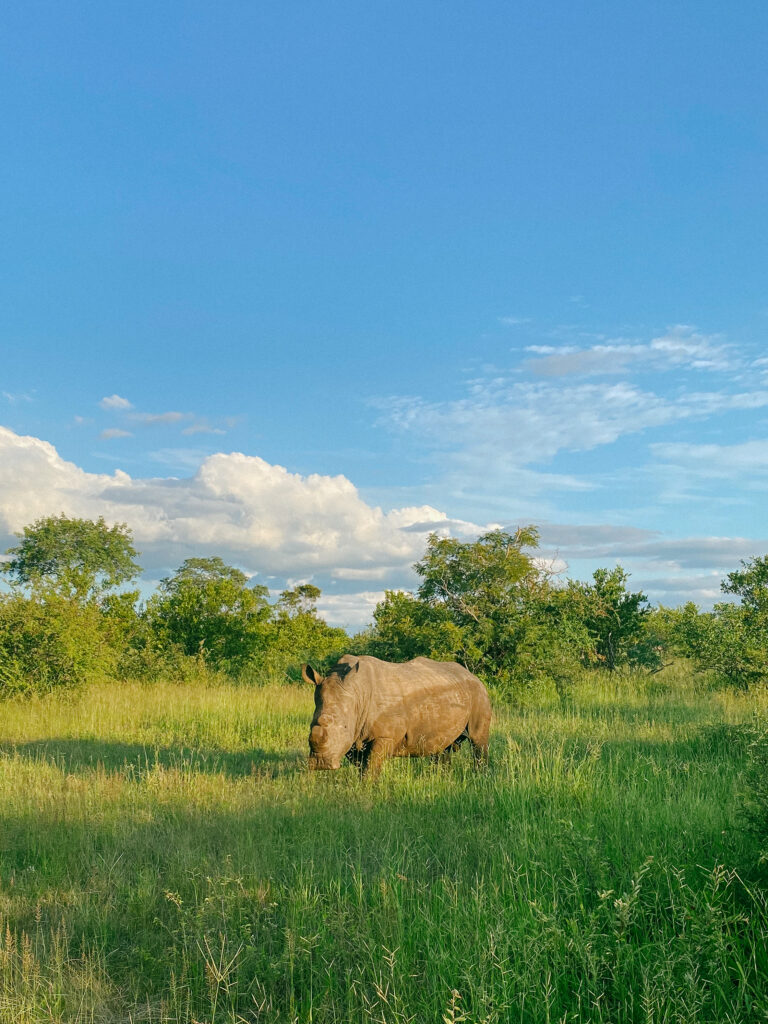
Before we get into the full 10-day South Africa itinerary you’re probably wondering if 10 days is even enough time.
And we should be honest here. The majority of the world (including myself) has to work – which means that spending 10 days in South Africa is better than spending no time at all in this beautiful country. So for some, 10 days in South Africa might be rushed but for those of us who travel well, plan efficiently, and would rather see a country than not at all – 10 days in South Africa is 100% doable if you’re strategic like we are.
In fact, my husband and I make this trip annually. And 10 days is usually the perfect amount of time to see everything we want. And this includes the grueling 30 hour journey each way.
With the somewhat limited time, you’ll want to pick two or three regions max (like I did for this 10-day South Africa itinerary) and make peace with the fact that you won’t see the whole country. And honestly? That’s a good thing. You’ll still hit all the major highlights, and you’ve gotta save something for the next trip anyway, right?
When Is the Best Time to Visit South Africa?
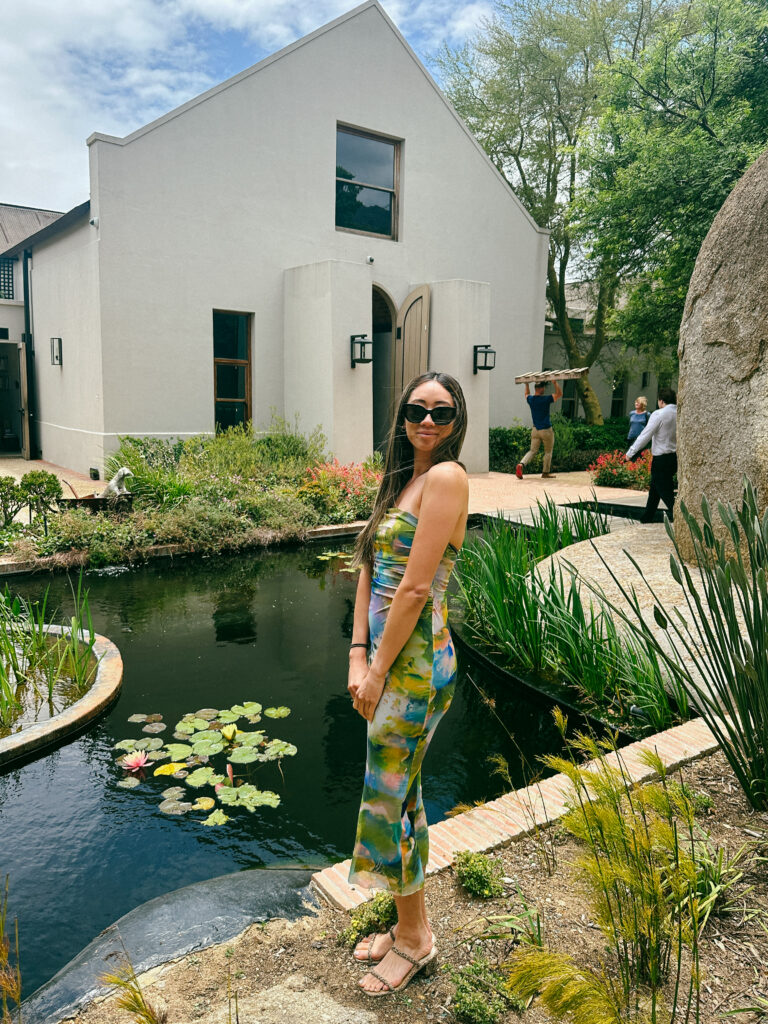
Is there ever a bad time to see the home of Timon and Pumba?!
Actually there is because the last time my husband and I went over Thanksgiving, we got caught in a freak hailstorm that damaged his mom’s house. But it only lasted a couple hours and then it was sunny skies. So talk about bipolar weather.
Generally, visiting South Africa during shoulder season (April-May and September-October) is your best bet for visiting. You’ll get mild, pleasant weather pretty much everywhere, thinner crowds, and better prices across the board.
Summer (November to March) brings hot, sunny days perfect for Cape Town beaches but can get swelteringly humid up north.
Winter (June to August) is dry and cool, with chilly mornings and warm afternoons (and occasional snow in the mountains, believe it or not). Basically, there’s no bad time, just pick what works best for your schedule!
Day 1 of Your 10-Day South Africa Itinerary: Arriving in South Africa
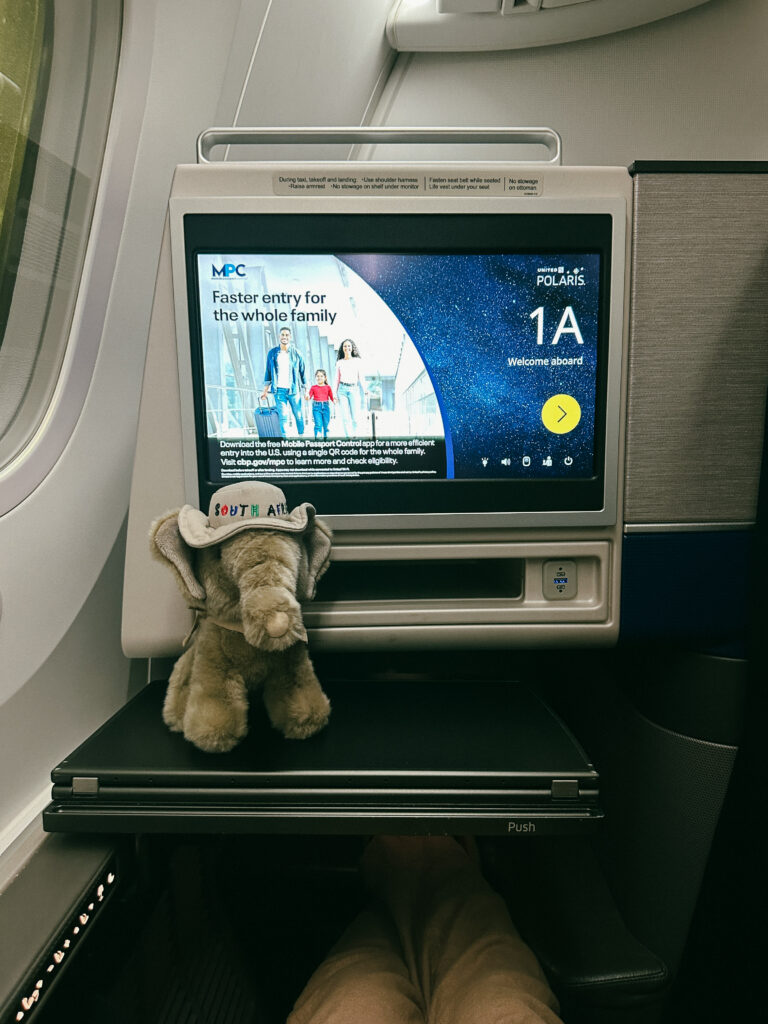
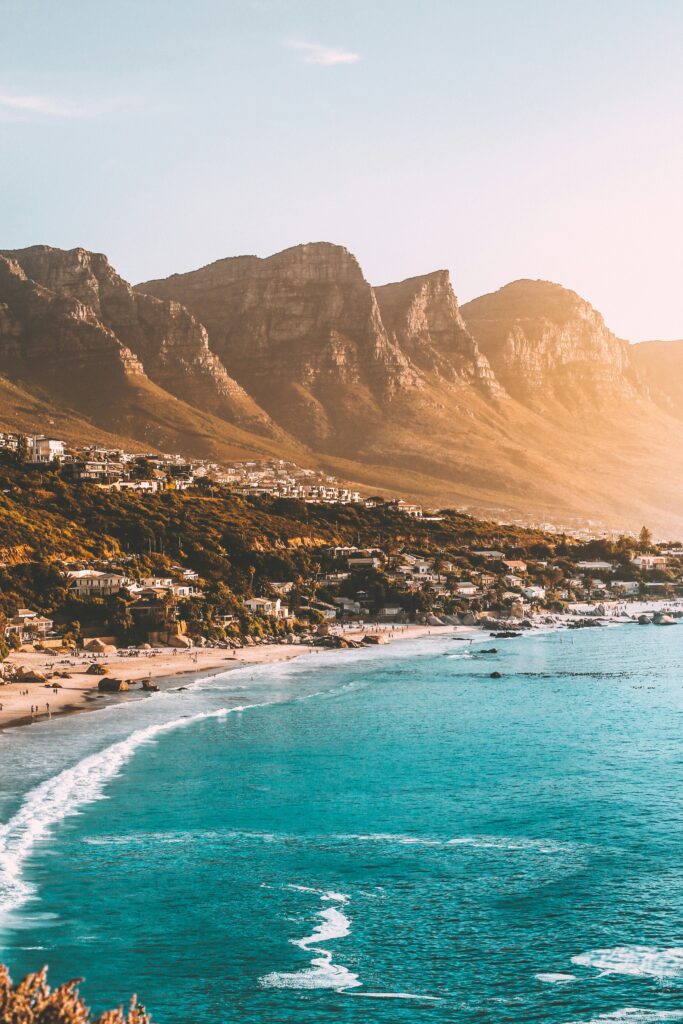
For many visitors to South Africa, chances are that you’ll be flying directly into Johannesburg International Airport (JNB) or Cape Town International Airport (CPT). My particular 10-day South Africa itinerary starts by flying into Johannesburg (JNB) but it’s important to note that you can do this whole thing in reverse which I’ve also done before.
The reason I like starting in Joburg is because I want to end in Cape Town – wine drunk and relaxing on the beach. If you start in Cape Town, you’ll probably end in Kruger which is totally fine too but just know that when you go on a safari, it usually means early (4-5am) wake ups and it just makes the journey back to the states a lot longer imo.
Also, my in-laws are in Johannesburg. So we technically don’t have an option. Family comes first 😂
My preferred airline is United Airlines so my typical route is SFO – EWR – JNB but there are also direct flights from Newark to Cape Town with United! For travelers from the US, I think Delta is another good option because they fly direct from Atlanta but I’m personally a United Airlines girlie for life.
Days 2-5 of Your 10-Day South Africa Itinerary: Exploring Kruger National Park

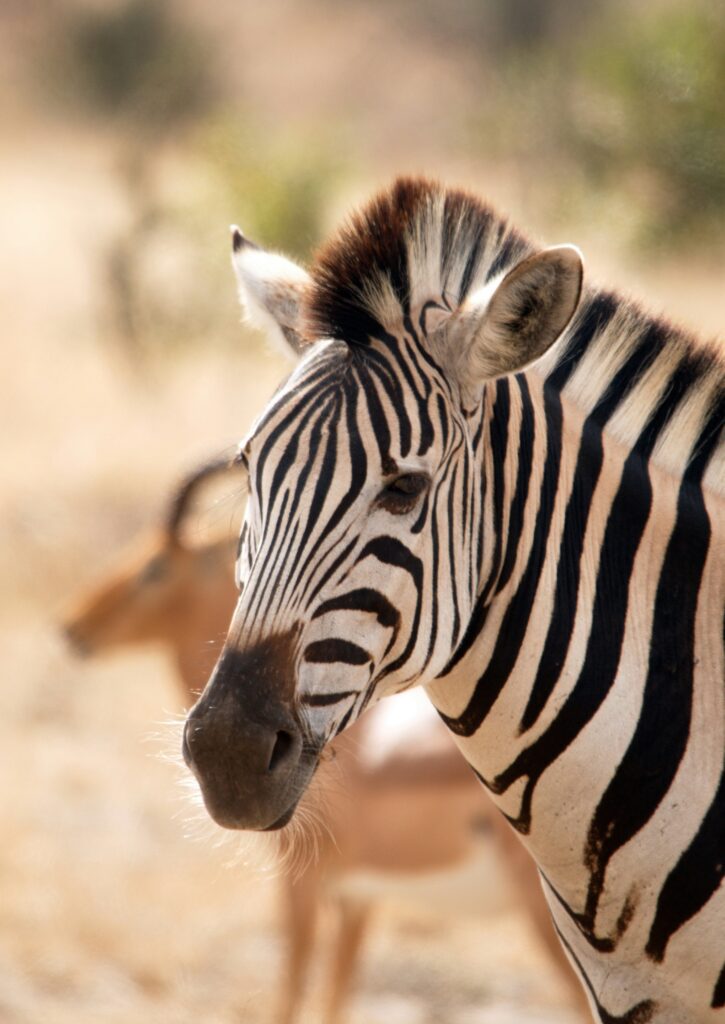
If you’re heading to South Africa and don’t visit Kruger National Park, did you even go?
Some folks tend to spend a night or two in Johannesburg since the journey to South Africa can be quite long. If you do, I highly recommend staying at Saxon Hotel Villas and Spa or The Palazzo Montecasino which is a fun vegas-y resort with a ton of restaurants (and gambling). Both are located in Sandton, which is a really nice area of Johannesburg and one of the safest neighborhoods in the city.
And apparently, my husband says the locals call Montecasino “Monte” for short 😉
There’s a lot of history in Johannesburg but you can see most of it in under two days. Plus, this is a 10-day South Africa itinerary so timing is a bit tight. You can always extend and make your trip longer though of course.
But for days 2-5 of your 10-day South Africa itinerary, we’re going to be heading to the iconic Kruger national Park!
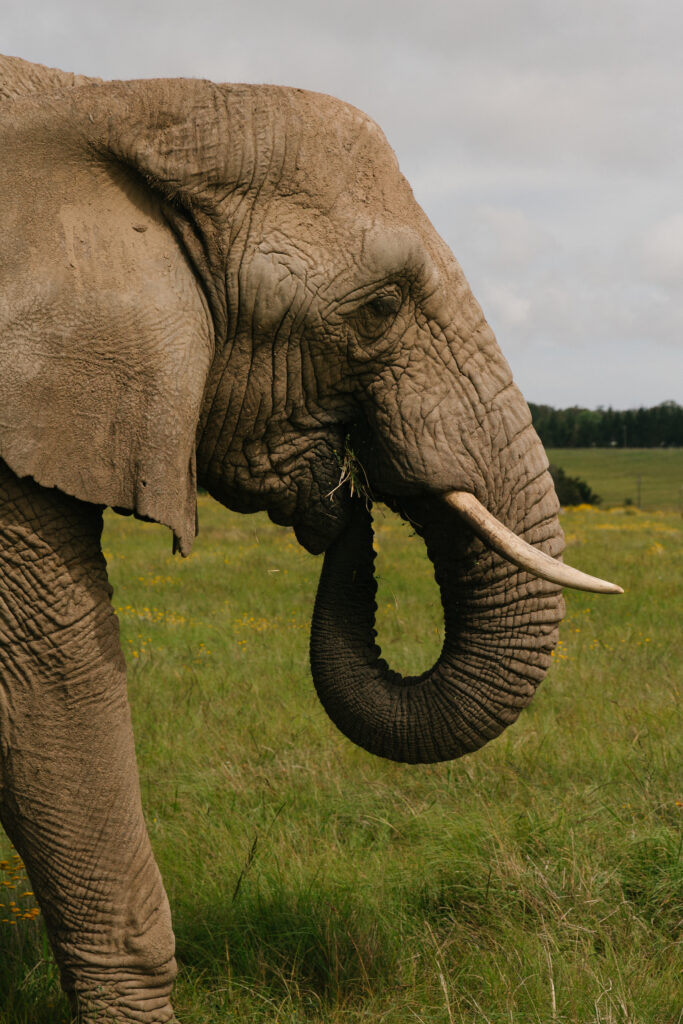
This place is basically the Beyoncé of safari destinations – iconic, larger-than-life, and absolutely unmissable. We’re talking about nearly 20,000 square km of untamed wilderness, home to the Big Five (lion, leopard, elephant, rhino, and buffalo), plus cheetahs, wild dogs, and more animals than you can count.
How to get to Kruger National Park from Johannesburg
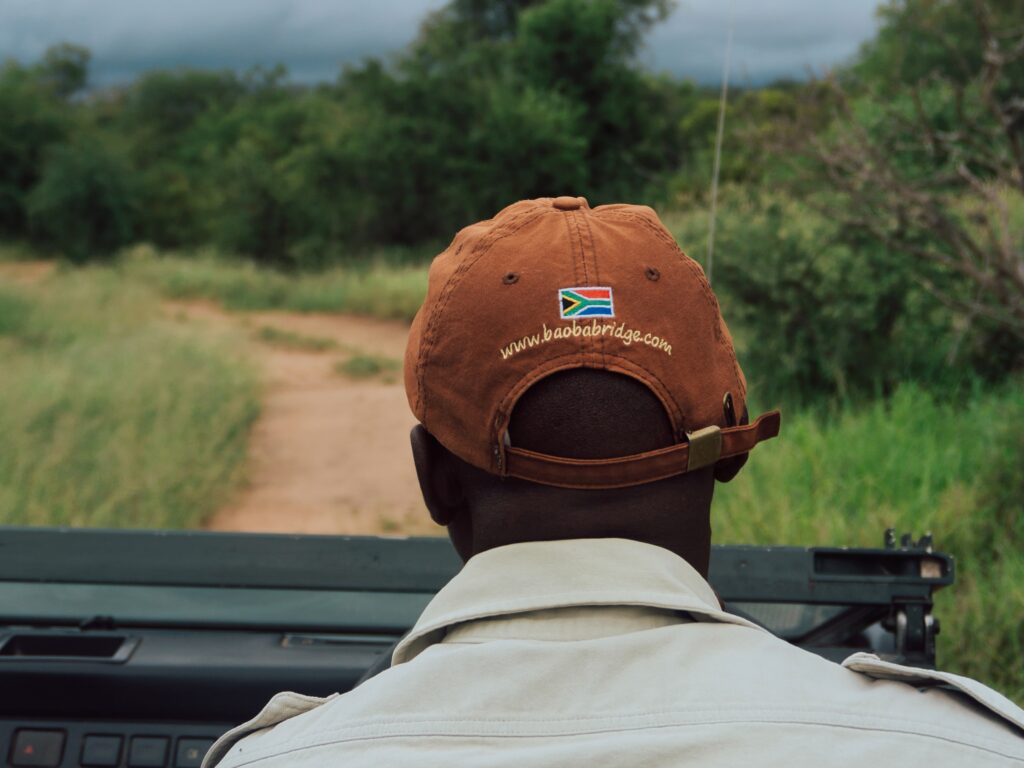
Once you land in Johannesburg, you can choose to overnight in Joburg like I mentioned or continue on directly to Kruger National Park. Depending on your budget, how you feel, and your appetite for long travel days – I would recommend flying directly into one of the many airports surrounding Kruger National Park.
However, if flying is out of the budget, then I would recommend renting a car from JNB and/or hiring private transportation to get to the bush. We rented a car directly from JNB and it cost us about ~$90 for 4 days. The pickup/dropoff process was also super quick and seamless.
Once you get to the bush, you honestly won’t really need a car as most game lodges include all meals, game drives, and additional amenities however it’s nice to have one if you want to explore other parts of Kruger during the day since most game drives happen super early so the majority of your day is free until the afternoon game drive. Since my partner is from South Africa, we also didn’t want to leave his poor mom without a car for a week so we decided to just rent.
Kruger National Park is one of Africa’s most famous wildlife reserves. Renowned for its diverse ecosystems and abundant wildlife, a visit to Kruger is an absolute must for any first time visitor to South Africa. Here, you can encounter the Big Five, explore diverse landscapes, and immerse yourself in the magic of the African bush.
Within Kruger, the land is divided up further into different private game reserves. A few of the main reserves include Timbavati, Sabi Sands, and Klaserie. I break down the differences between the reserves below!
Which private reserve should you choose? (Sabi Sands vs. Klaserie vs. Timbavati)
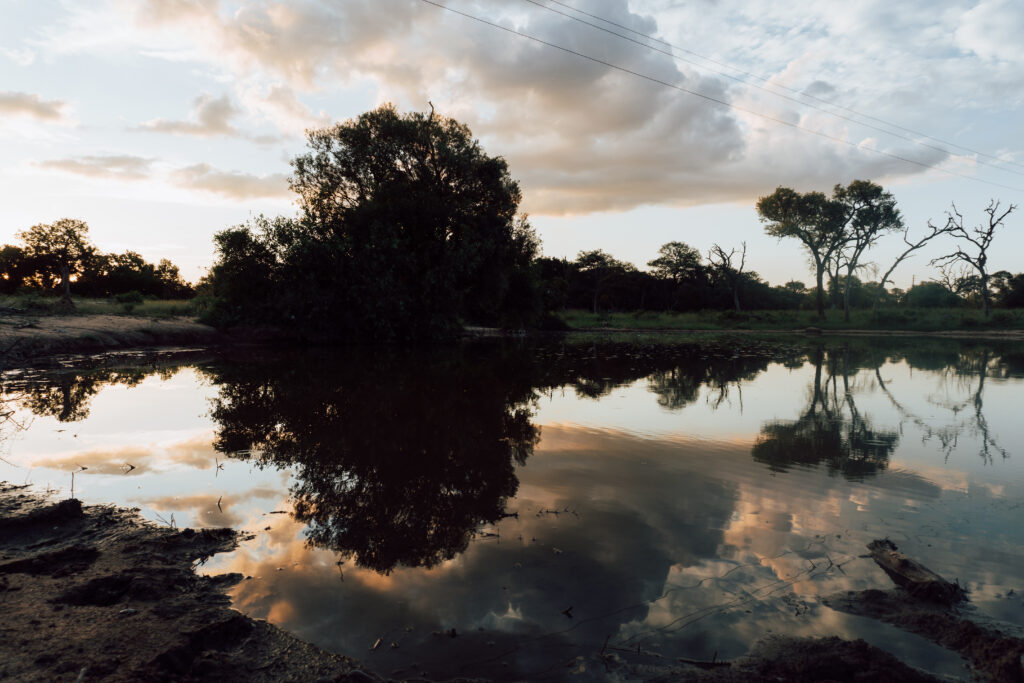
Okay, this is where it gets fun. Sabi Sands is the OG and the most commercialized of the bunch, famous for leopard sightings and seriously luxe lodges (aka Singita Ebony and Londolozi Private Game Reserve).
I’ll be honest – we went to Kruger when we were still in our twenties. The next time we go with our kids? We’ll absolutely be staying at a luxury lodge like Lion Sands.
Game viewing inside Sabi Sands is arguably the most consistent due to the sheer number of lodges and guides, but it comes at a price, both literally and in terms of feeling like you’re waiting in line behind five other land cruisers at every sighting.
The bush isn’t a zoo, you know???
Timbavati Private Nature Reserve sits somewhere in the middle: excellent game viewing (it’s known for white lions) and having a bit more breathing room.
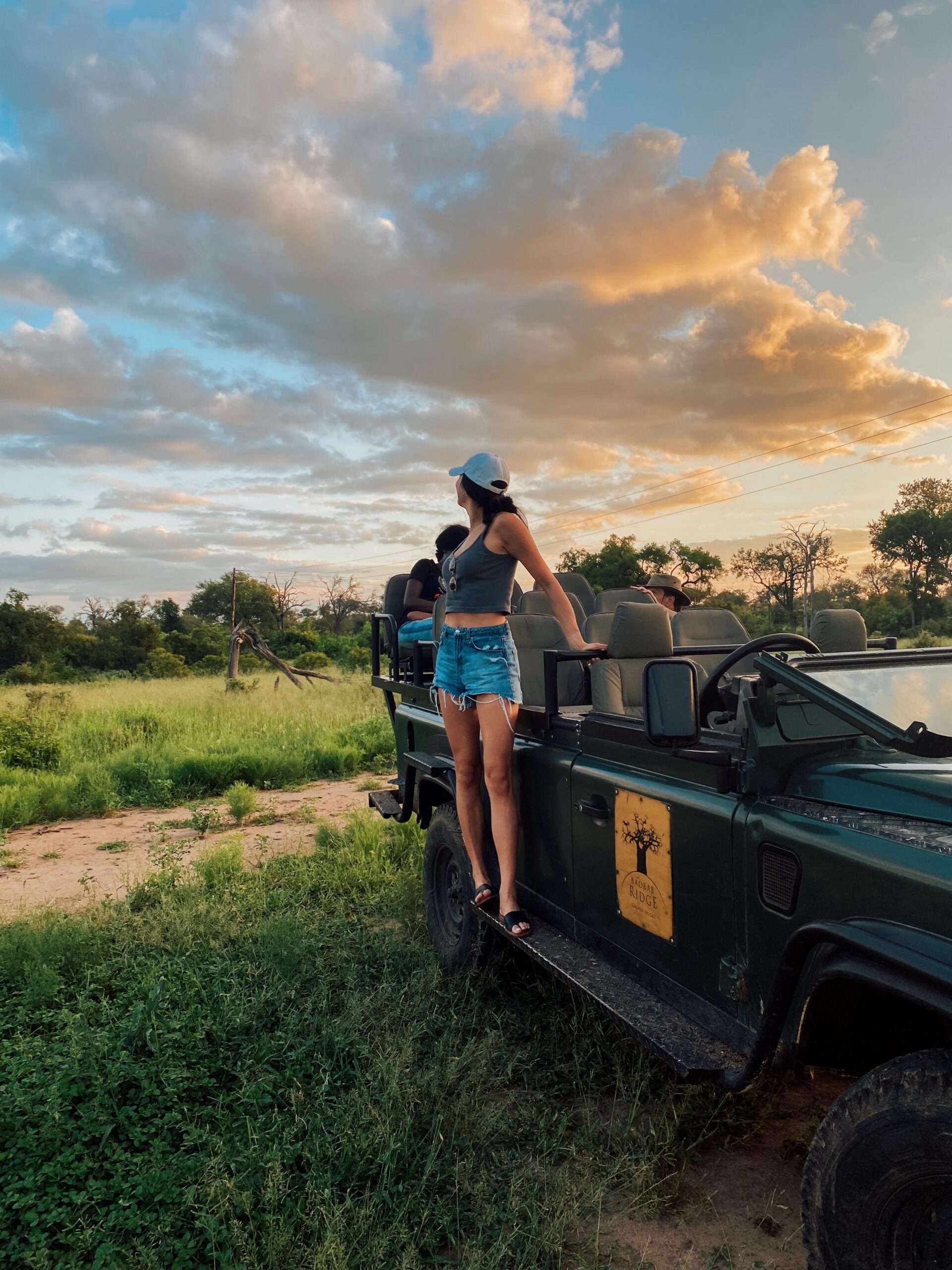
And last but not least, there’s Klaserie Private Nature Reserve. This is where we stayed (Baobab Ridge) and I honestly can’t recommend it enough.
Game viewing was on par with anywhere else in Kruger, the lodges are more intimate (Baobab has just seven units), and you actually get to experience the bush without a traffic jam of safari vehicles ruining the moment.
Want the full rundown of our stay? I wrote a whole post on our stay at Baobab Ridge here: Luxury Safari Review: Baobab Ridge, Kruger National Park
Where to stay in Kruger National Park: Best boutique hotels & luxury lodges
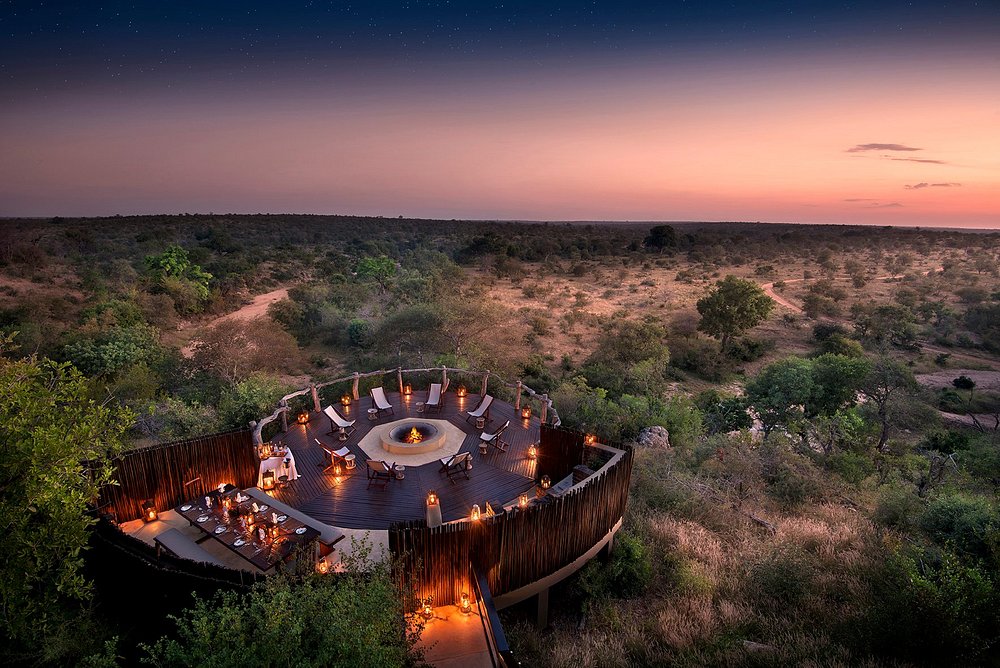
- Sunbirds Oasis Lodge ($) – A laid-back, affordable bush B&B near Orpen Gate, perfect for self-drive travelers who want a relaxed garden-and-pool base to explore Kruger without the luxury lodge price tag.
- Mbizi Bush Lodge ($$) – An intimate, family-run boutique lodge in the unfenced Balule Reserve, ideal for travelers who want homemade meals, elephants at the pool, and a personal, no-frills bush experience.
- Kruger Gate Hotel ($$) – A comfortable, family-friendly hotel literally next to the Paul Kruger Gate, great for travelers who want easy park access, a riverside infinity pool, and solid buffet dining without splurging on a private lodge.
- Baobab Ridge ($$$) – Where we stayed during our most recent visit to Kruger! (Full details below and in my complete hotel review here). A small, owner-run 4-star lodge in the Klaserie with just seven cottages overlooking an active waterhole, perfect for families and travelers who want a warm, home-away-from-home safari experience at relatively sensible rates.
- Kruger Shalati – Train on the Bridge ($$$) – An iconic luxury stay aboard a restored 1920s train permanently parked on the Selati Bridge above the Sabie River, perfect for design lovers and honeymooners who want a one-of-a-kind setting with hippos and elephants below their window.
- Makumu Private Game Lodge ($$$$) – An intimate, family-run luxury lodge in the Klaserie with just six African-tribe-themed suites, perfect for couples and honeymooners wanting exclusive Big 5 drives, candlelit dinners, and a true home-in-the-bush feel.
- Londolozi Private Game Reserve ($$$$) – An iconic Relais & Châteaux pioneer of Sabi Sands, perfect for travelers who want the pinnacle of South African safari: legendary leopard sightings, multi-generational Varty family hospitality, and a conservation legacy endorsed by Nelson Mandela himself.
Where we stayed: Our 3-night stay at Baobab Ridge hotel review
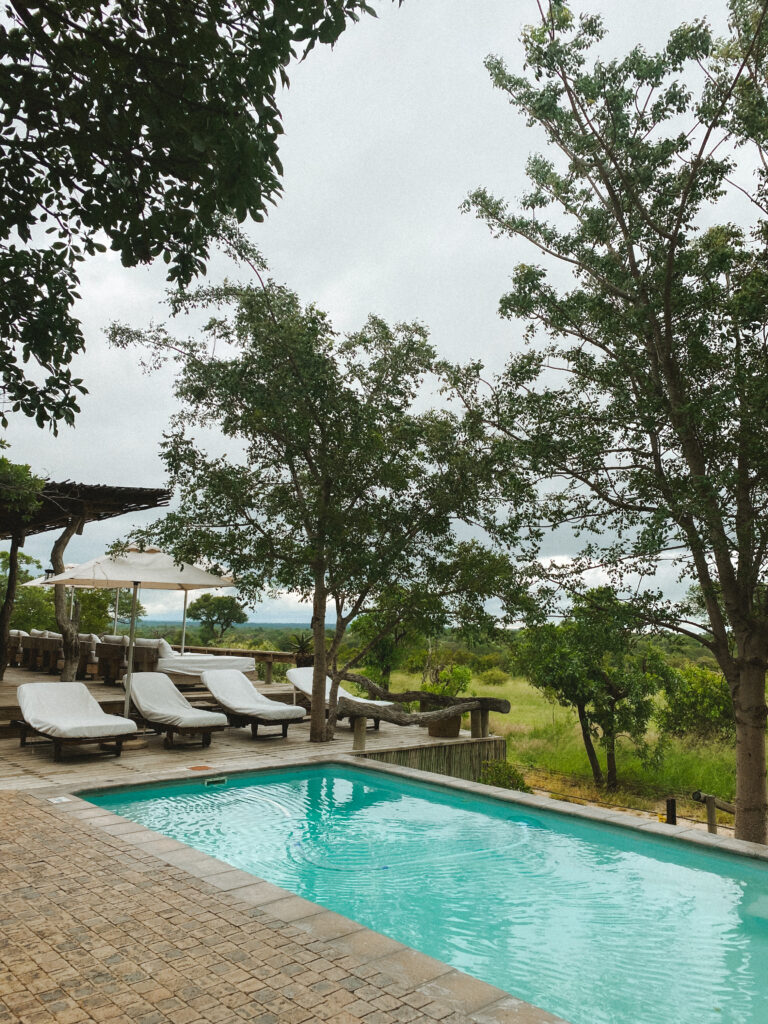
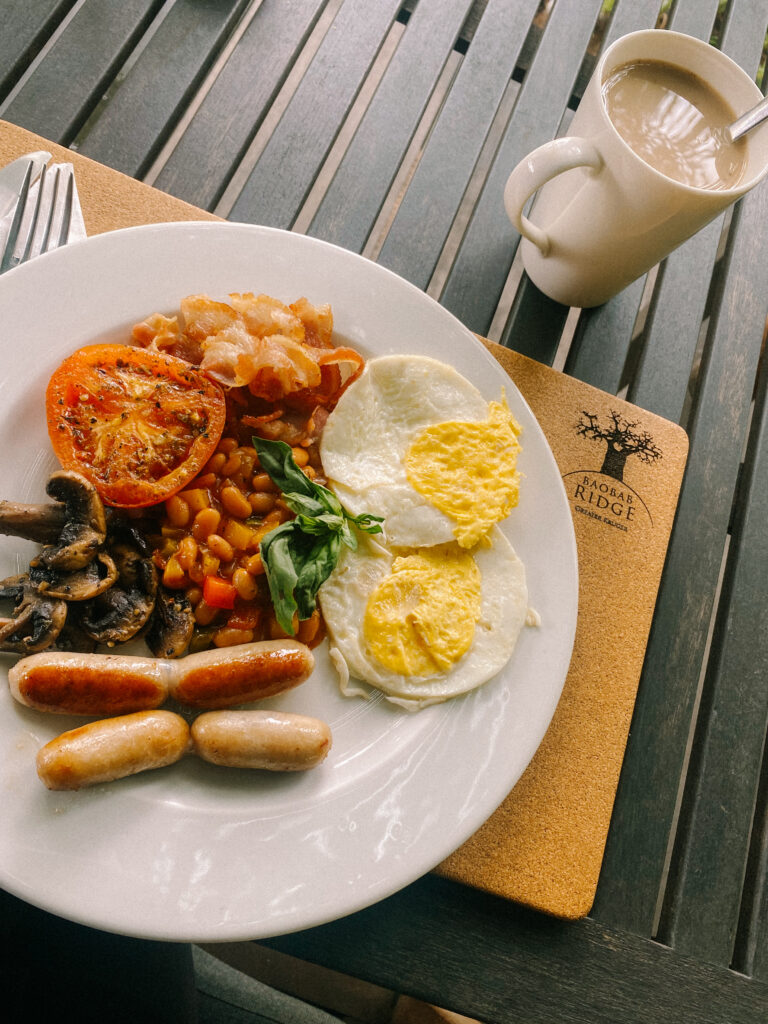
As I mentioned earlier, we spent 3 unforgettable nights at Baobab Ridge (which is located within the Klaserie Private Nature Reserve) and had the most incredible time. The service was outstanding and the morning game drives were truly a one-of-a-kind experience. Game viewing is relatively on par across all the private reserves.
However, people have mentioned that Sabi Sands might be more consistent due to the sheer amount of lodges and guides in that area. We got pretty lucky and managed to see all of the Big Five on our first day.
I could seriously go on and on about Baobab Ridge (and I did – full review here): Luxury Safari Review: Baobab Ridge, Kruger National Park
Days 6-7 of Your 10-Day South Africa Itinerary: Cape Winelands (Stellenbosch & Franschhoek)
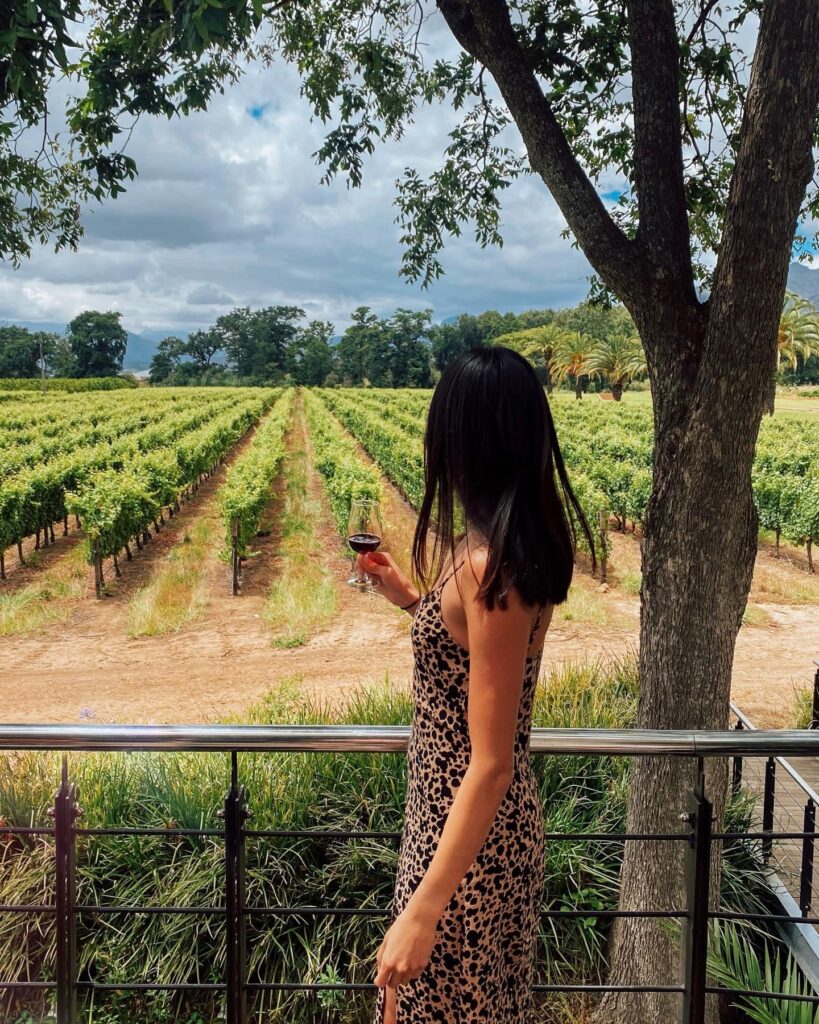
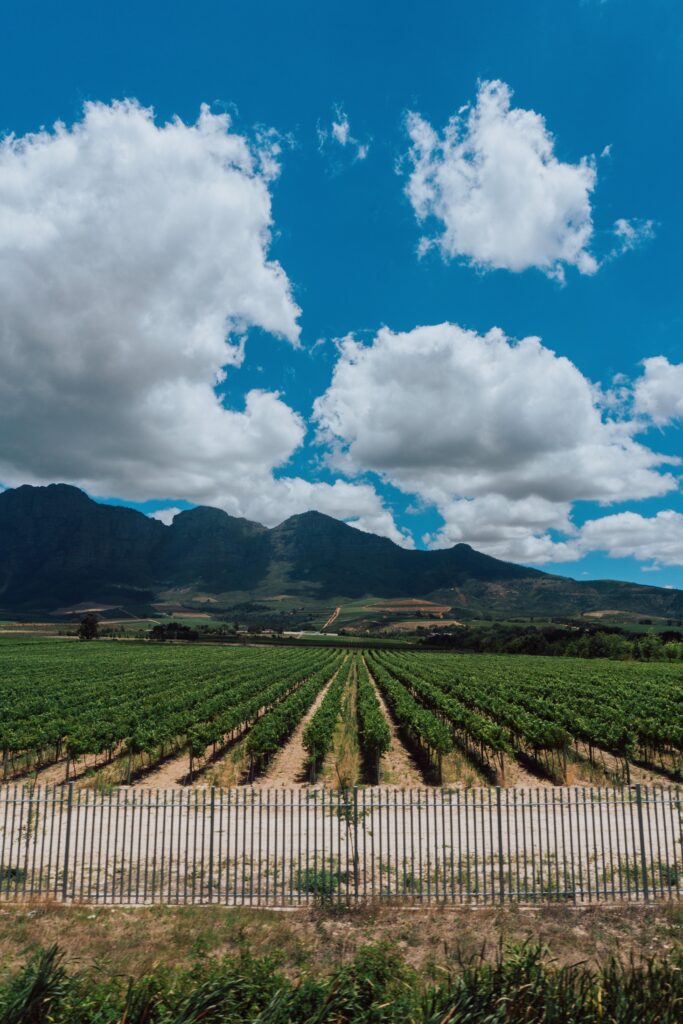
After you’ve seen enough giraffes and elephants for a lifetime, you’ll make your way back towards Johannesburg and hop on a quick two-hour flight towards the beautiful region of Cape Town.
Once you land in Cape Town (CPT), you’ll head directly to South Africa’s incredible wine country, specifically Stellenbosch or Franschhoek. (Don’t worry – I promise you’ll come back and explore all of Cape Town later).
Similar to the logistics of Kruger, I would recommend hiring private transportation or renting a car. You can also Uber which is what we’ve done in the past. From the airport, it typically takes ~40 minutes to reach the wineries and will cost around ~$50 USD. Gotta love the US <> South African Rand exchange rate.
The two main wine regions, Stellenbosch and Franschhoek, are each renowned for their breathtaking vineyards, world-class wines, and rich history. Personally, I’m not someone that likes to move around a lot so I’d recommend basing yourself in either or and using uber to travel between the two regions.
If you rented a car, you can easily drive between the two but I imagine most people will be doing a bit of wine tasting in between.
Keep reading for a few of my favorite accommodations and wineries worth exploring in both regions!
Stellenbosch vs. Franschhoek: Which should you choose?
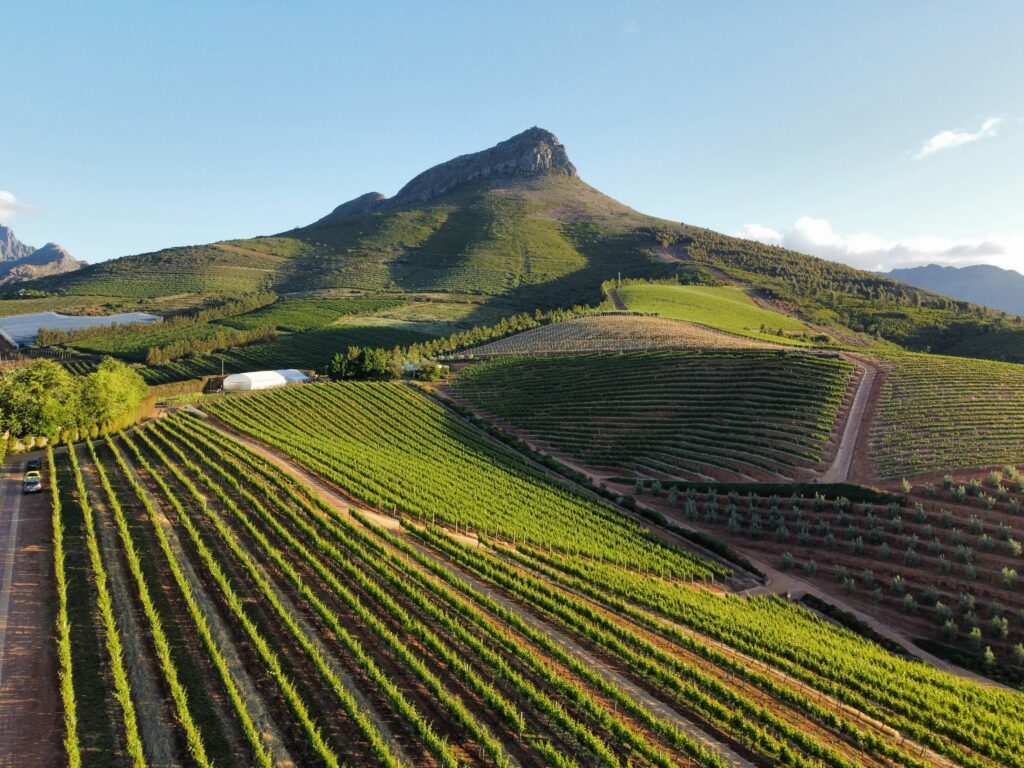
Why not both? They’re only about 30 minutes apart, so you can easily hit both in a day if you’re tight on time.
But if you’re really forced to pick…
Stellenbosch is the bigger, buzzier one with a cool university town vibe, centuries-old Cape Dutch architecture, and hundreds of wineries to choose from.
Franschhoek (aka “French Corner”) is smaller, more polished, and leans seriously into the food scene with Michelin-caliber tasting menus and the famous Wine Tram that lets you hop between estates without worrying about a designated driver.
My pick? Stellenbosch for the wine obsessives who want variety and deeper, bolder reds (yumm Stellenbosch wines actually remind me a lot of Napa reds which are my favs). Franschhoek for the foodies who want a more curated, splurge-y day out.
Where to stay in Stellenbosch: Top boutique hotels & luxury estates
With so many beautiful places to choose from, it can be exhausting trying to figure out where to stay and which wineries to visit. Luckily for you, I’m married to a South African whose best friend just happened to go to Stellenbosch University.
And he now works in venture capital so I’m always up to date on the best design-forward boutique and luxury hotels. Our favorite boutique Stellenbosch hotels and estates include the following:
- Oude Werf Hotel ($$)– The oldest running hotel in South Africa, but don’t let that fool you—this Stellenbosch gem is old-world charm meets modern comfort. Think cozy, stylish rooms, a courtyard straight out of a Jane Austen novel, and a restaurant that serves some seriously good food. Perfect spot if you want history and luxury without feeling like you’re in a museum.
- Coopmanhuijs Boutique Hotel & Spa ($$) – A tiny slice of European elegance in the middle of Stellenbosch. Expect five-star service, an intimate feel, and a spa that’ll have you questioning whether you ever need to leave. Bonus points for the location. It’s smack in the middle of town, so you’re walking distance from wine bars, cute cafés, and whatever else your vacation-self desires.
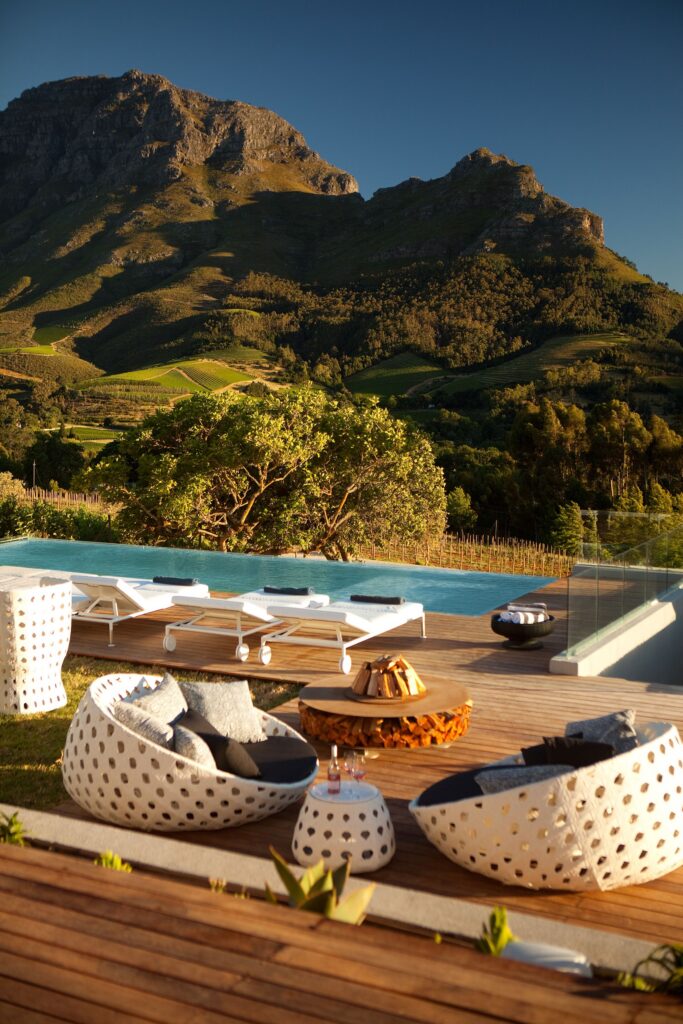
- Clouds Estate ($$$) – A sleek, contemporary stay with insane views of the Stellenbosch vineyards. If you’re into boutique hotels with a side of holy sht, look at that sunset*, this place is for you. Add in a killer wine selection and an infinity pool that’ll make you rethink all your life choices (in a good way), and you’ve got a winner.
- Delaire Graff Estate ($$$$) – Your literal dream wedding venue? Yeah, makes sense because it was literally mine except my husband was adamant on not getting married in his home country. How rude I know. This place is ridiculous in the best way possible. Ultra-luxe suites, some of the best wine in the country, and views so good they should be illegal. The whole estate is basically an art gallery meets five-star resort, and if you ever get married here, just know I’ll be fully jealous.
Best wineries in Stellenbosch
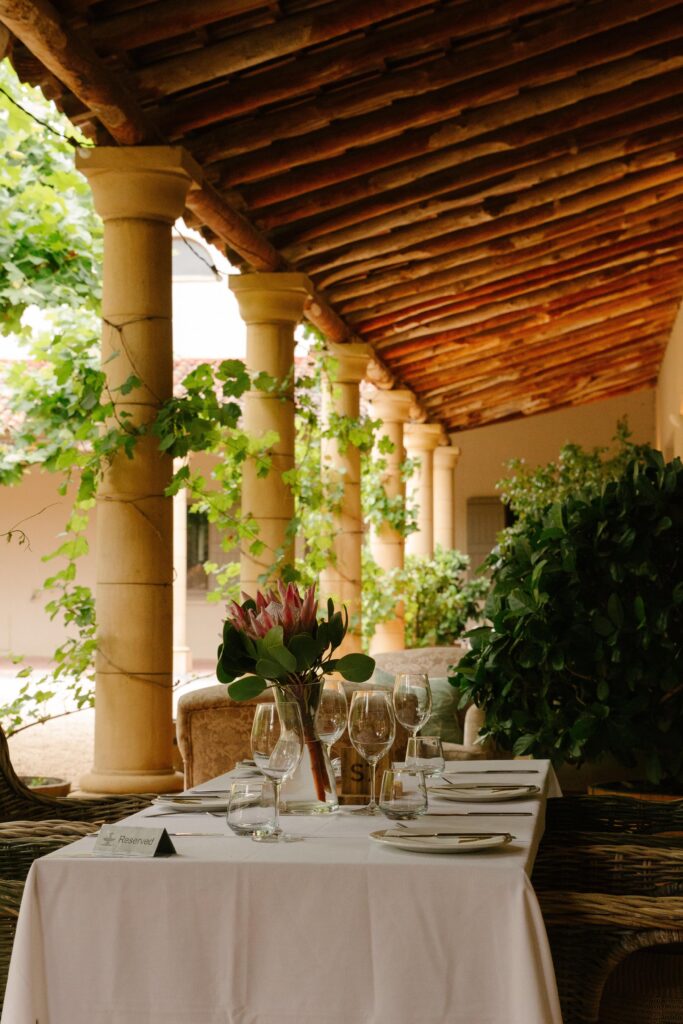
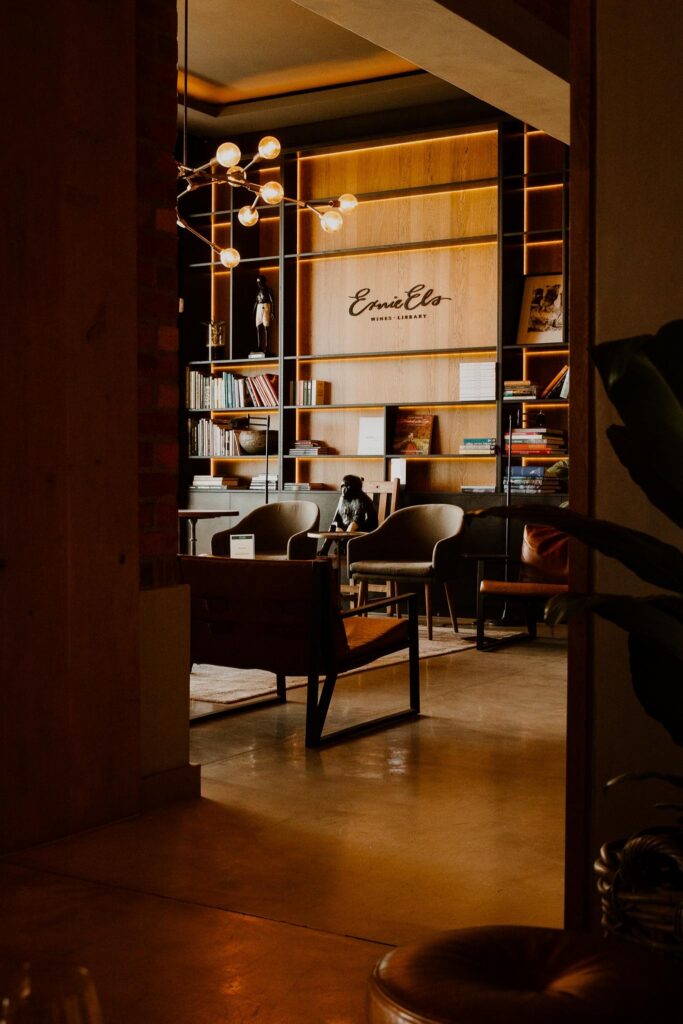
For wineries, I am an absolute sucker for a beautiful view, a delicious glass of pinot, and some tasty light bites. When visiting Stellenbosch, I highly recommend visiting Ernie El’s, Delaire Graff, Waterford, and Tokara. Most of the wineries in this region will range from $8-$20 USD per tasting – which is an absolute steal if you’re a California native like me and you know that tastings at home cost twice (sometimes 3x) as much.
Where to stay in Franschhoek: Top boutique hotels & luxury estates
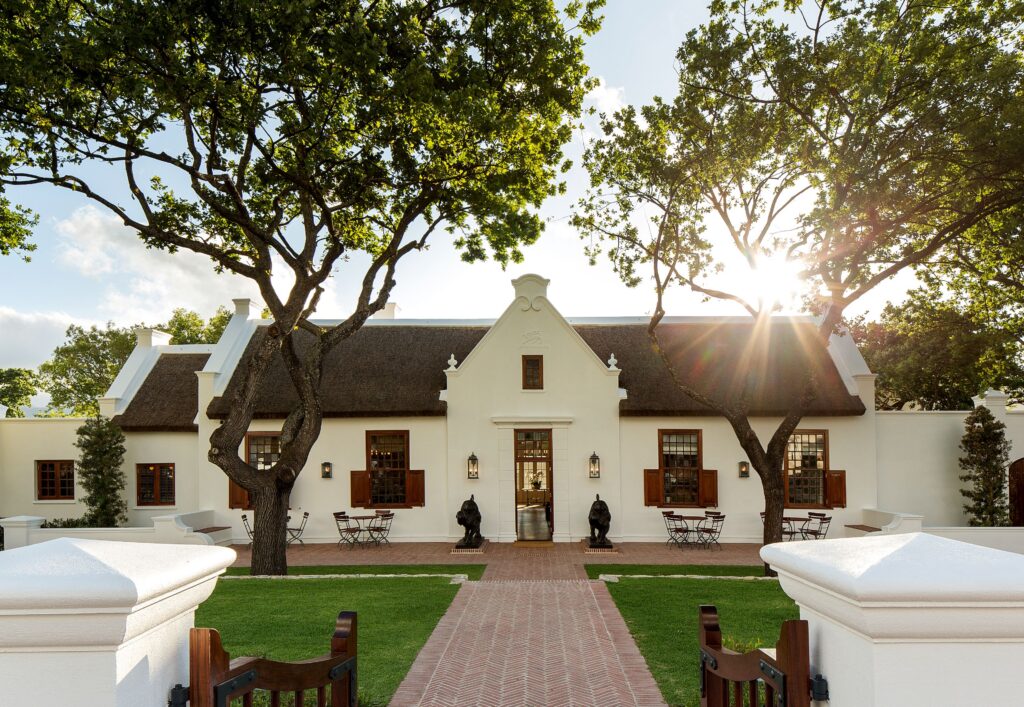
Located only a half hour away from Stellenbosch, Franschhoek is another major wine region in South Africa. Personally, I find Franschhoek a bit more quaint and intimate than Stellenbosch, but both places are an absolute must when visiting the area.
For accommodation, I recommend checking out these stunning Franschhoek boutique hotels:
- Protea Hotel by Marriott Franschhoek ($) – A solid, no-fuss stay right in the heart of Franschhoek. I know this is a chain which I’m usually allergic to but I’ve stayed at quite a few Protea by Marriott’s in South Africa and I think they are great value for money, and the location of these hotels can’t be beat.
- La Cotte Farm ($$) – Picture this: rolling vineyards, dreamy cottages, and interiors straight out of an upscale country home Pinterest board. It’s got that perfect mix of rustic and refined—where you can sip your morning coffee on a veranda, then swan-dive into a clawfoot tub by evening. Ideal for escaping reality (or just your inbox).
- La Clé Lodge ($$$) – Staying here feels like you somehow scored an invite to an ultra-chic private estate in the heart of Franschhoek. Think Cape Dutch architecture, vineyards for days, and interiors that scream effortless luxury. The vibe? Understated elegance with a side of let’s sip wine by the pool and pretend we live here forever.
- L’Ermitage Franschhoek Chateau and Villas ($$$) – If you’ve ever wanted to feel like royalty without the whole “born into aristocracy” thing, this is your spot. A fairytale-style château with private villas, mountain views, and enough old-world charm to make you forget what year it is. Bonus: You’re just a short drive (or a very ambitious walk) from some of South Africa’s best restaurants.
Best wineries in Franschhoek
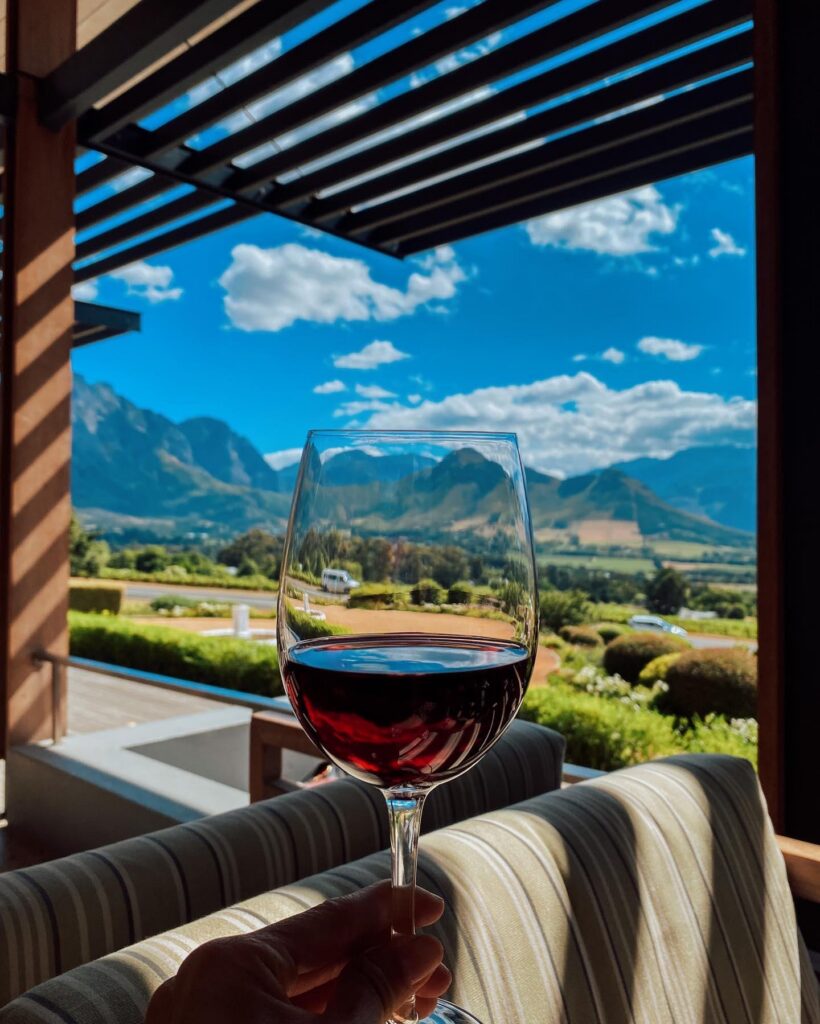
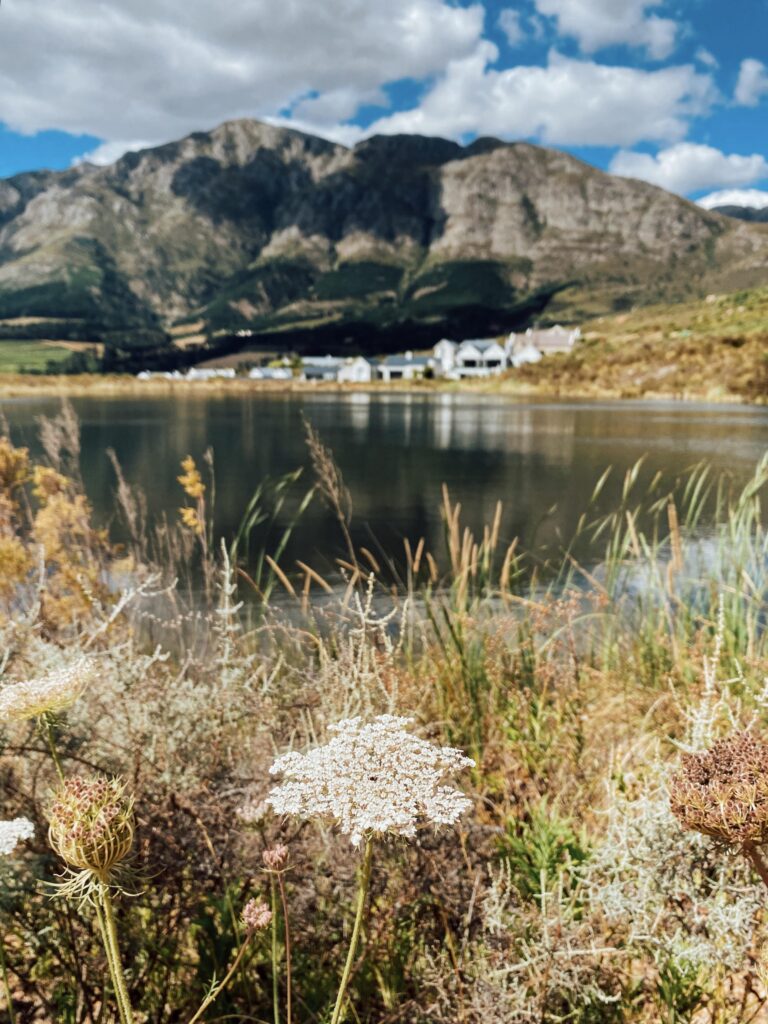
Similar to Stellenbosch, there are just SO MANY wineries to choose from in Franschhoek. To avoid rushing to see it all, these are my top 3 recommendations for Franschhoek wineries:
- Haute Cabrière (absolute must) – the views here are absolutely incredible. Some of you might know that I spend a lot of time in California wine country (aka Napa Valley) since it’s right in my backyard but I promise you I’ve never seen anything like the rolling hills of Franschhoek, but particularly the views from Haute Cabrière. They’re mostly known for Pinotage and Chardonnay which honestly aren’t my personal favorite to drink but the views make up for it. This is easily my #1 recommendation for wineries in Franschhoek.
- Rupert & Rothschild – anytime I fly home from South Africa, I always manage to bring a few bottles of Rupert & Rothschild Classique red wine home with me. It’s one of the best red blends out there and I kid you not, it costs like $8 USD. But it cost $30 USD if you try to buy it at home. And don’t let the price tag fool you because their wine is absolutely delicious. And their tasting room is even more beautiful!
- Dieu Donné Vineyards – Tucked into the mountain slopes above Franschhoek, Dieu Donné is one of the oldest wine farms in the valley (est. 1984) and sits at one of the highest elevations in the region, which is exactly why the wines here have the structure they do. The tasting room is fully glass-walled with panoramic views over the Franschhoek Valley, and the on-site restaurant does a proper long-lunch menu with a wood-fired pizza option if you want something more casual.
Is the Franschhoek Wine Tram worth it?

Instead of spending a couple nights in wine region, some people prefer to stay in Cape Town and just visit for the day which is also a great option!
If you prefer to spend more time in Cape Town or are shorter on time, then you absolutely need to book the Franschhoek Wine Tram Tour which includes roundtrip transportation, access to the hop-on hop-off wine tram with the option of two different routes, and a complimentary tasting sized glass of wine (or two) while on the tram.
Depending on your budget, you can also use this as a way to get to the area and explore the different wineries and then just call an uber back to Cape Town which is what we did because we wanted to stay longer to watch the sunset at Haute Cabrière.
Days 8-10 of Your 10-Day South Africa Itinerary: Discovering Cape Town’s Coastal Charm
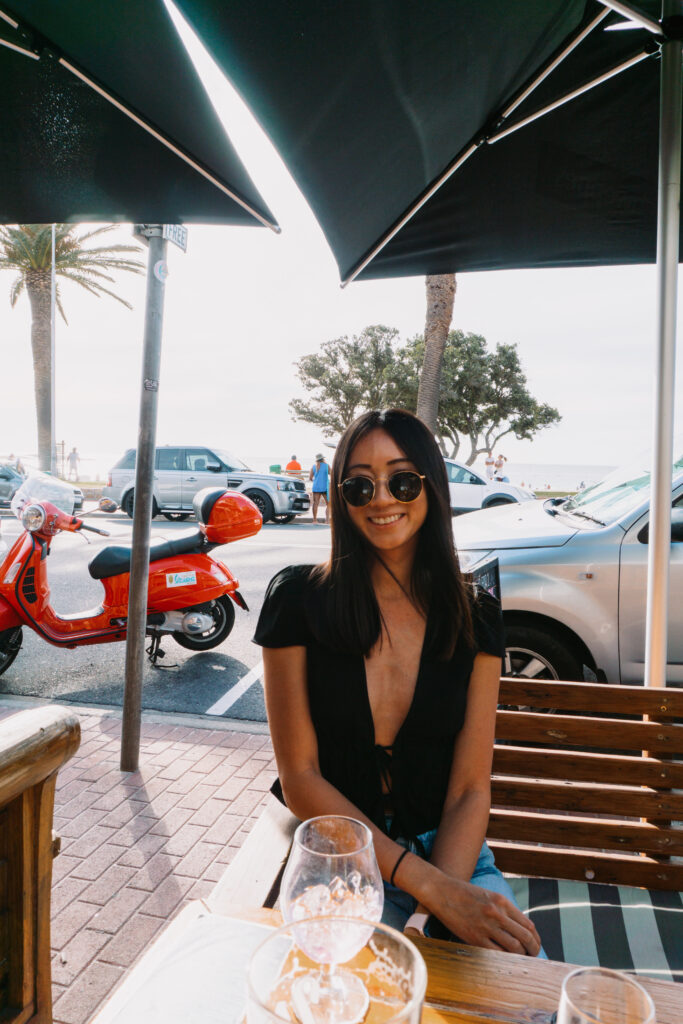
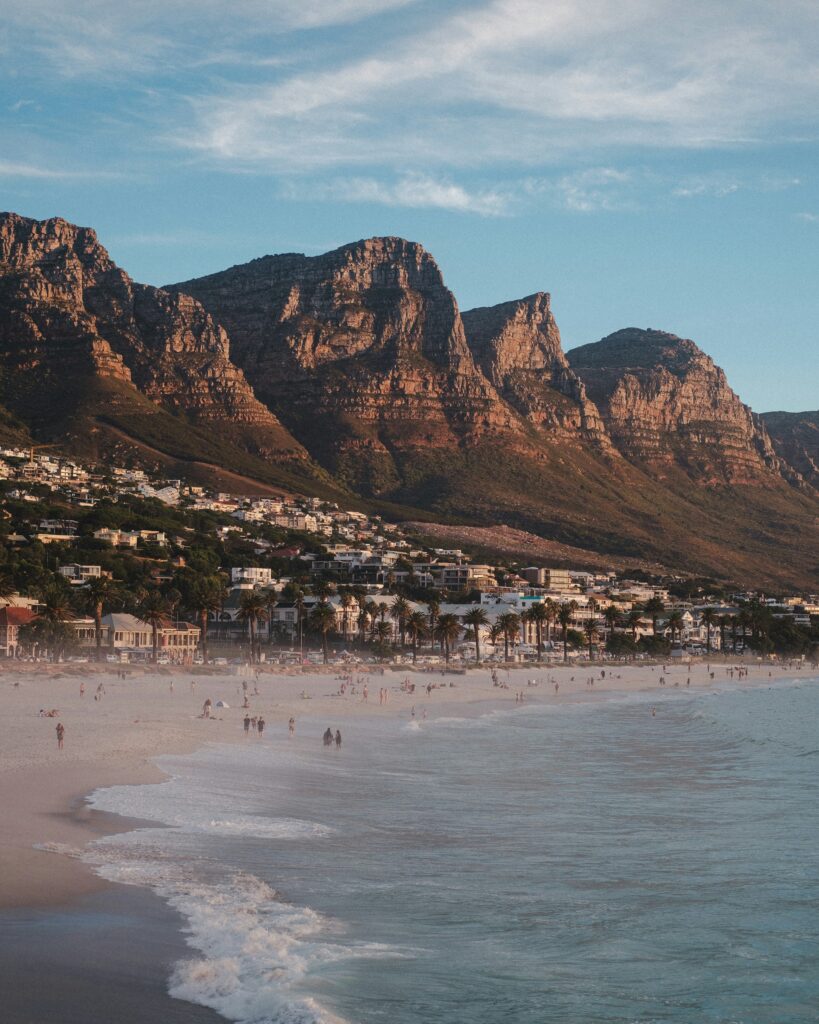
For your final few days in South Africa, there’s no better place than to spend it in Cape Town. Assuming you’ve done some research already before landing on my page, you probably already saw for yourself how beautiful the beaches are here and how there’s no shortage of attractions and things to do.
Where to stay in Cape Town: (Camps Bay vs. V&A Waterfront)
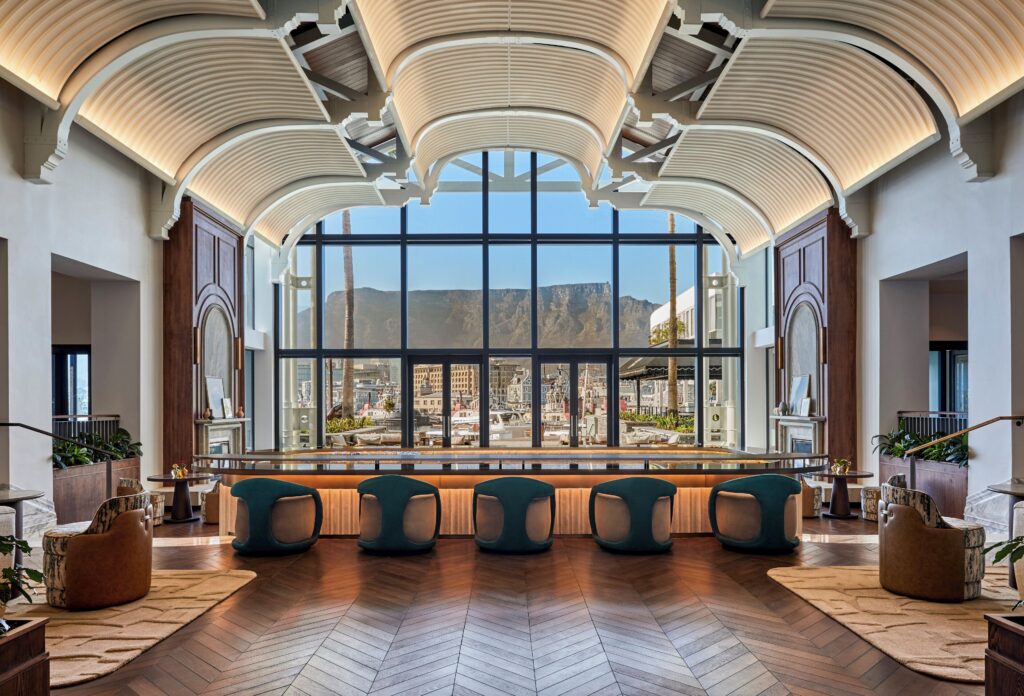
I’ll admit – it can be a bit overwhelming when it comes to deciding on where to stay in Cape Town. There are just SO MANY different options to choose from – and there are a lot of equally amazing hotels in this area. When choosing a place, I think it really just comes down to what you want to be closest to.
And yes, I know some of you are already typing “but what about Airbnb?” into the comments. I think most of you know this by now but I’m very much Team Hotel (specifically boutique hotels), so apologies in advance that you won’t find any Airbnb recommendations below.
So let’s break down the two main areas most travelers are deciding between 👇
Where to stay in Cape Town: Camps Bay (& Clifton)
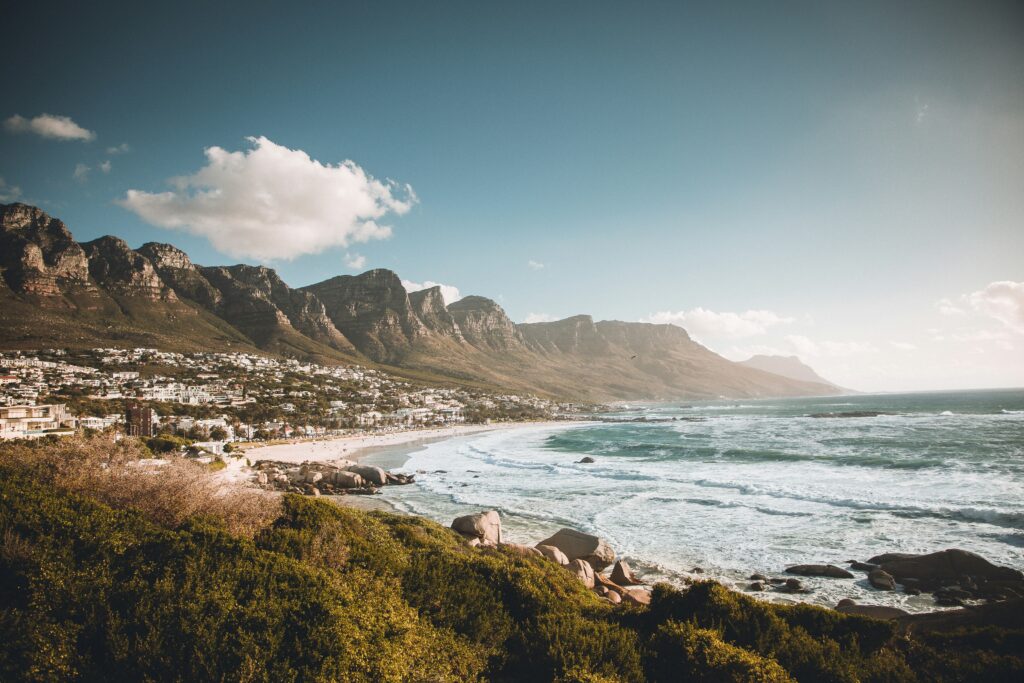
If you’re like me and prefer to be near the ocean, then I highly recommend booking a place in Clifton or Camps Bay, which is located a bit further south from the city center.
On our last visit over Thanksgiving, we spent 3 nights at POD Camps Bay and I’m already counting down the days until we get to go back. The location is unbeatable, literally 20 steps from the beach and 2 blocks from Victoria Road, which is the main strip filled with trendy restaurants, bars, shops, and more. You can roll out of bed, grab a coffee, and be toes-in-the-sand in under 10 minutes.
The tradeoff: you’re a 15-20 minute Uber from the V&A Waterfront and most of the main tourist attractions in the city center. Not a dealbreaker (Ubers in Cape Town are cheap and plentiful), but something to know.
Stay in Camps Bay/Clifton if: you want beach days, sunset views, a more relaxed vibe, and you don’t mind a quick Uber to get into town.
Where to stay in Cape Town: V&A Waterfront
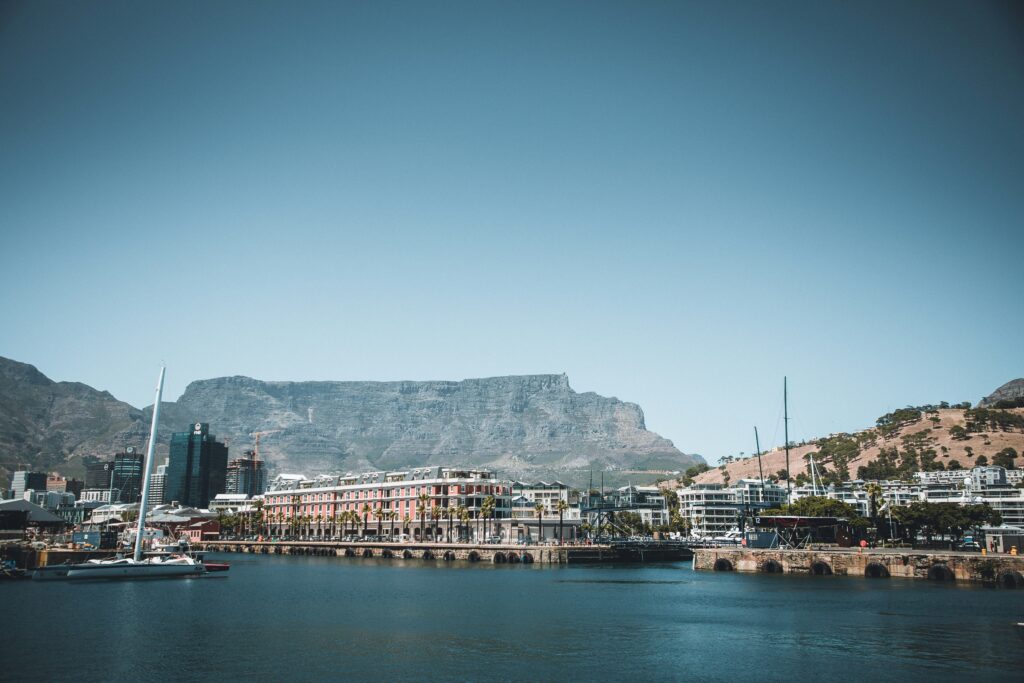
If you want to be walking distance to all the bars, restaurants, and main tourist attractions, then I would recommend staying near the V&A Waterfront. We’ve stayed in both areas many times and it just depends on what you’re mostly going to be doing during your trip. You can’t go wrong with either option!
The V&A Waterfront is also where the Franschhoek Wine Tram Tour picks up, along with most of the big-name attractions (the Two Oceans Aquarium, boat trips to Robben Island, tons of shopping, etc).
The V&A is polished, busy, and genuinely convenient. You won’t need a car or an Uber for most of what you’ll want to do. It’s also where you’ll find some of the city’s most iconic hotels, including the stunning InterContinental Table Bay pictured above.
The tradeoff: it’s not the beach. It’s a working harbor with great views of Table Mountain, but if your dream Cape Town trip involves waking up to ocean waves, this isn’t it.
Stay at the V&A if: you want to be in the middle of everything, prefer walkability over beach access, and want to minimize logistics.
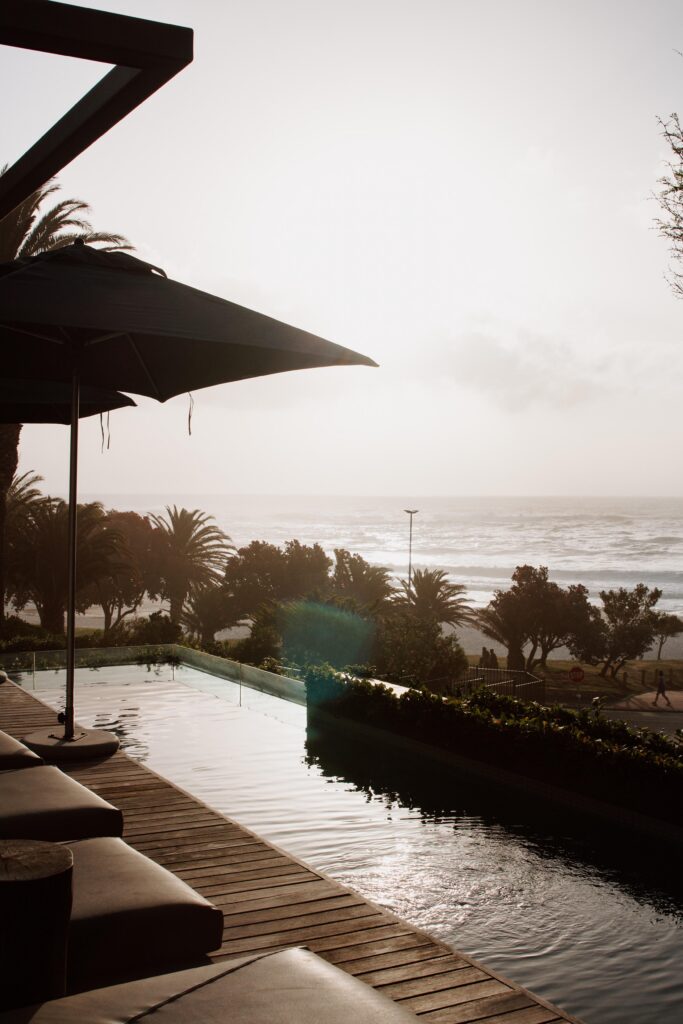
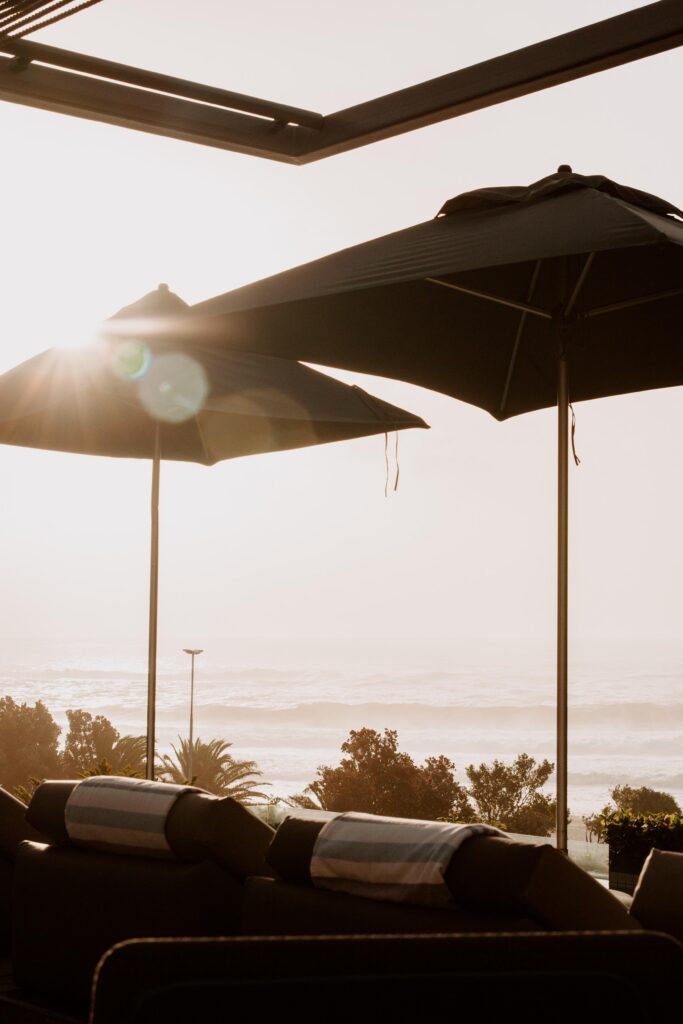
Here are all my top hotel picks for Cape Town:
- Radisson Blu Hotel Waterfront ($$) —This is where we stayed for New Year’s a few years ago and it was perfect! You’re basically getting 5 star service for less than a couple hundred dollars a night. The location was also great, it was close to V&A and Camp’s Bay.
- O’Two Boutique Hotel ($$) — A hidden gem with modern vibes and just the right amount of luxury. The rooftop pool is the real star, with mountain views on one side and the ocean on the other. The location is perfect if you want to be near the Waterfront without actually staying in the thick of it. Feels stylish but still relaxed, like a cool friend’s beach apartment that happens to have hotel-level service.
- The Winchester Hotel ($$) – A classic, elegant stay right along the Sea Point Promenade, offering old-school charm, ocean views, and a beautiful courtyard restaurant for travelers who want refined comfort without the splurge-level price tag.
- POD Camp’s Bay ($$$) — If sleek and beachy had a baby, it would be POD. As I shared, this is where we stayed during our last trip. Even though I got deathly ill from bad sushi and basically had to stay in bed fora full day, I’m glad it was at POD. This place is all clean lines, natural wood, and ocean views that make you question why you don’t live here full-time. It feels exclusive without trying too hard. The breakfast is next-level, the service is seamless, and you’re just steps from Camps Bay’s best restaurants and bars.
- Queen Victoria Hotel Cape Town ($$$) — Understated elegance in the best way possible. The rooms feel polished and grown-up with just the right amount of glam. The location is unbeatable, tucked in a quiet corner of the V&A Waterfront but still close enough to walk to everything. The service is top-tier, and the vibe is perfect if you like luxury with a little old-school charm.
- Gorgeous George ($$$) – A bold, design-forward boutique hotel tucked into two heritage buildings in downtown Cape Town, with a buzzy rooftop pool and playful interiors, perfect for travelers who want style, energy, and walkability to the city’s best bars and restaurants.
- The Silo Hotel ($$$$) – Iconic and ultra-luxurious, The Silo sits atop a converted grain silo with floor-to-ceiling pillowed windows, some of the best views in Cape Town, and a rooftop pool that’s basically a bucket-list item on its own, ideal for travelers who want a full-on five-star experience.
Best things to do in Cape Town

Cape Town is one of those rare places that actually delivers on the “something for everyone” promise (a phrase I normally think is cliche AF but I swear it’s true for Cape Town).
We met so many different people from all walks of life on our trips – honeymooners, solo travelers, families with toddlers, retirees crossing it off the bucket list, guys on a boys trip, and more.
So whether you’re dragging the kids along, celebrating your honeymoon, or flying solo with zero agenda, I promise there’s a little bit of something for everyone.
My husband and I have been more than enough times now to have strong opinions, so here are the things we actually think are worth your time 👇
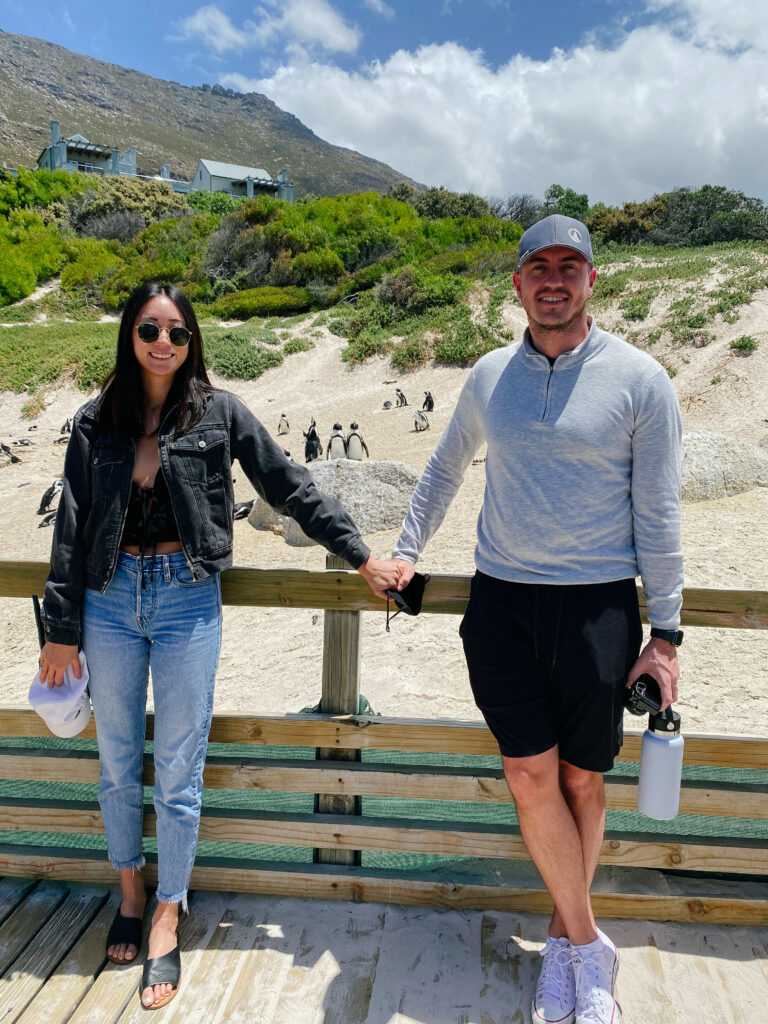
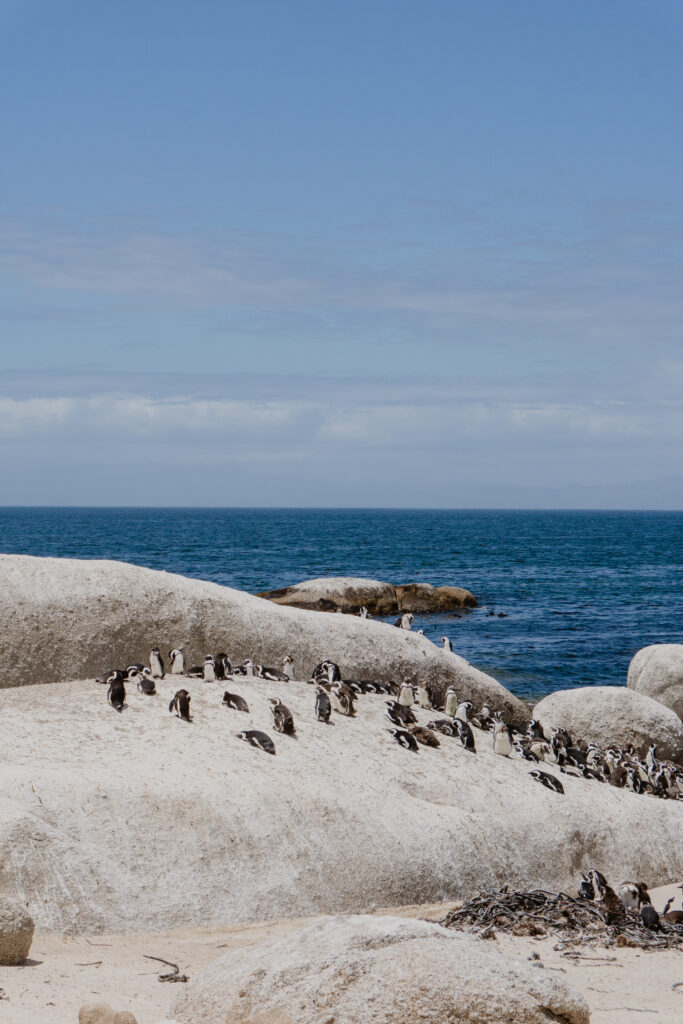
#1: Swim with penguins on Boulder’s Beach in Simon’s Town

If you’re looking for a totally Instagrammable moment – then this is it!
And even if you don’t have social media, you definitely don’t want to miss this one-of-a-kind opportunity where you get to swim with the cutest penguins in the world!
I would suggest using Uber again to get to Simon’s Town or booking a day tour with GetYourGuide.
There are a few options that include Cape Point aka Cape of Good Hope as well. I’ve done both and highly recommend either one – both options are easy to organize.
#2: Discover the beauty of Lions Head and Table Mountain

Lace up your hiking boots and make your way to THE #1 viewpoint in all of South Africa – Lions Head and Table Mountain.
It’s best to start early in the day and make sure you pack the sunscreen, wear comfortable clothes, and carry lots of water!
The African heat is no joke.
#3: Soak up the sun at Clifton Beach

Nowhere else in the world does summer better than South Africans on Clifton Beach (okay maybe Australia comes close).
I’ve visited a lot of incredible beaches around the world and Clifton Beach is easily in my Top 3.
For me, it’s the incredible turquoise hues of the ocean and white sandy beaches combined with the backdrop of the Twelve Apostles mountain range. Not to mention, there are FOUR beaches of Clifton to choose from with each of them offering something special.
#4: Explore the colorful neighborhood of Bo-Kaap

What’s better than warm weather and colorful streets? I highly recommend making a stop to see the vibrant hues of Bo-Kaap’s historic streets which reflects the deep history of South Africa during Apartheid.
The streets are so colorful because originally, the houses in Bo-Kaap were rented to southeast Asian slaves, and during this time, it was mandatory for all houses to be painted in plain white.
Eventually, the slaves gained the opportunity to purchase these homes and upon becoming owners, they transformed the houses by painting them in bright and beautiful colors, symbolizing a celebration of freedom and happiness.
#5: Enjoy lunch and an all-day game drive at Aquila Game Reserve

If you didn’t get enough animals in the first part of your trip – then don’t fret! You can go on a day trip to the nearby Aquila Game Reserve for more game drive and safari fun!
Although since your visit to Kruger, you probably know by now that no one in South Africa actually refers to game drives as “safaris”.
If you’re near Cape Town, I highly recommend this day tour which includes a thrilling all-day game drive and lunch!
And if you happen to be driving along the Garden Route on this trip, I also can’t recommend Botlierskop Private Game Reserve enough.
#6: Check out the nightlife in Cape Town!

There are so many amazing restaurants and nightlife in Cape Town! My favorite part is to head down to Camp’s Bay and go bar hopping along Victoria Road which has a bunch of different restaurants, lounges, and bars to choose from.
My favorites are Café Caprice (an absolute staple), Tiger’s Milk, and Cause Effect Cocktail Kitchen!
#7: Go for a scenic drive along Chapman’s Peak

Chapman’s Peak Drive is renowned for being one of the most picturesque coastal routes globally, often referred to as the “Chappies” by locals.
Spanning approximately 5 miles, this beautiful winding road offers panoramic views of the ocean and surrounding mountains.
This is where having a rental car is an absolute must so you can take your time stopping along all the beautiful viewpoints on the way! Pro tip:
Head to the end first and plan your day around heading back towards Cape Town just in time for sunset!
Final Day of Your 10-Day South Africa Itinerary: Flying Home from South Africa
Well, you’ve officially made it to your final day in South Africa. If you’re like me, you’re probably leaving the country filled with an abundance of happiness from all the $10 filet mignons and red wine you’ve indulged in over the last 10 days. You’re also probably leaving with hundreds of photos of all the incredible wildlife you witnessed over the last 10 days – which will be perfect for sifting through on your long journey back home.
For our final day in South Africa, we flew out of CPT, but like I mentioned earlier in the post, you can absolutely do this whole itinerary in reverse if that works better for your flights.
10-Day South Africa Itinerary FAQ
To help you plan your 10-day South Africa itinerary, here are some commonly asked questions for first time visitors to South Africa 🇿🇦
Do I need a visa to visit South Africa?
Most US, UK, EU, Canadian, and Australian passport holders do not need a visa for stays under 90 days. You’ll get a free visitor’s visa stamped on arrival. Just make sure your passport has at least two blank pages and is valid for 30+ days beyond your departure date.
What currency is used in South Africa?
The South African Rand (ZAR). At the time of writing, $1 USD equals roughly 18–19 Rand, which is part of why South Africa feels like such a steal for US travelers. Credit cards are widely accepted, but keep some cash on hand for tipping safari guides and smaller local spots.
What language do they speak in South Africa?
South Africa has 11 official languages, but English is the most widely spoken and understood, especially in tourist areas like Cape Town, Johannesburg, and the Winelands. You’ll have zero language barrier issues on this itinerary.
Is South Africa safe for tourists?
Yes, South Africa is generally safe for tourists who stick to well-traveled areas and use common sense. Cape Town, the Winelands, and private game reserves in Kruger are all very safe. Avoid walking alone at night in unfamiliar neighborhoods, use Uber instead of hailing cabs, and don’t flash expensive jewelry or electronics.
Do I need a car in South Africa?
It depends on where you’re going. You don’t need a car for safari (lodges handle everything) or Cape Town (Uber is cheap and reliable). You’ll want a rental car or private transport for getting between Johannesburg and Kruger, and it’s nice to have one for exploring the Winelands and driving Chapman’s Peak.
Just keep in mind they drive on the left in South Africa. So by default, I’m usually too scared to rent a car by myself anyway without my husband.
What should I pack for a South Africa safari?
Pack neutral-colored clothing (khaki, olive, beige), layers for chilly mornings and warm afternoons, closed-toe shoes, a wide-brimmed hat, sunscreen, sunglasses, insect repellent, and a good camera with zoom!
What food is South Africa known for?
South Africa is famous for braai (the South African version of BBQ), biltong (dried cured meat similar to jerky), bobotie (spiced minced meat with an egg topping), boerewors sausage, and world-class wine from the Western Cape. You’ll also find incredible seafood in Cape Town and fusion cuisine influenced by Dutch, Malay, and Indian traditions.
Should I fly into Johannesburg or Cape Town first?
Either works, but this itinerary starts in Johannesburg (JNB) because it’s the easiest gateway to Kruger National Park. (Also because my husband’s mom is in JNB so she’d probably have a heart attack if she wasn’t our first stop into South Africa).
Flying in via JNB, doing safari first, then ending in Cape Town lets you wind down with beaches and wine after the early-morning game drives. You can absolutely do it in reverse if flight pricing or schedules work better that way.
10-Day South Africa Itinerary: Final Thoughts
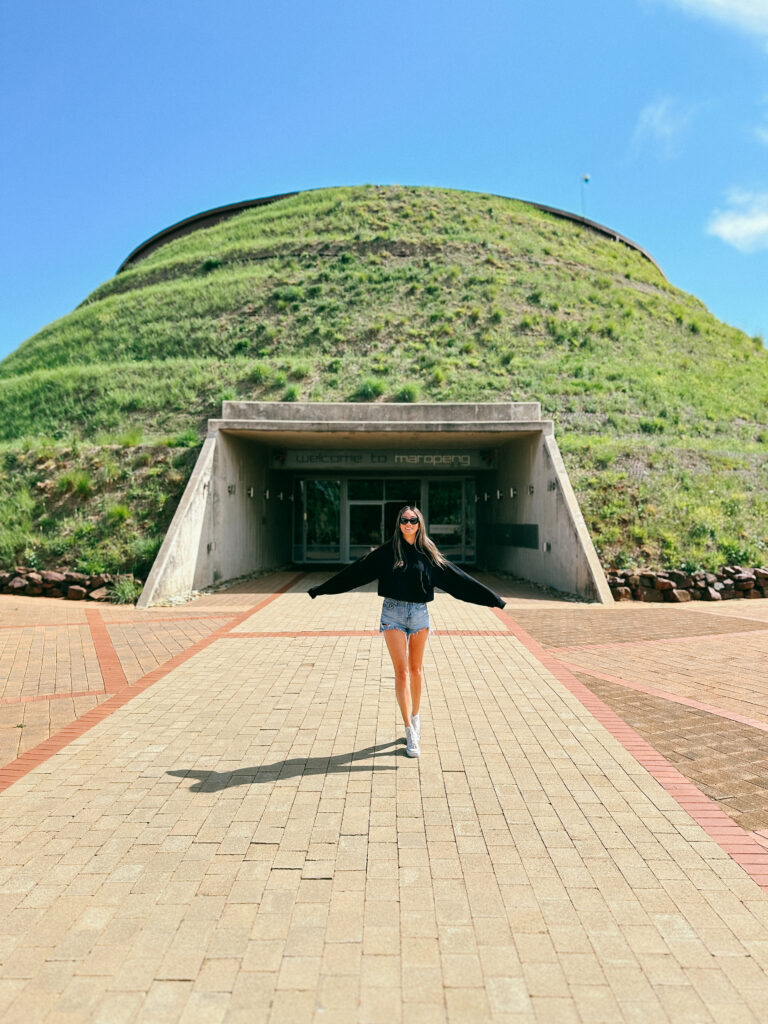
I always joke about how I always knew I’d end up marrying someone with an accent but never in a million years did I think it’d be a South African. But boy am I glad I did because otherwise I don’t think I would’ve stepped foot into this beautiful country nearly as many times as I have.
Well that’s a wrap on this detailed 10-day South Africa itinerary based on our real travel experiences.
10 days, roughly 47 glasses of red wine, a million more giraffe and elephant photos, and 60 hours of travel.
South Africa is one of those destinations that delivers on basically every front – wildlife, wine, food, beaches, city culture, jaw-dropping coastlines, and more.
And the best part is the US dollar tends to go a looong way in this part of the world.
Did you get a chance to test out my 10-day South Africa itinerary? Let me know in the comments below!
Visiting Other Parts of South Africa?
Check out my other travel guides on Africa here.
Looking for Travel Inspiration to Somewhere Else?
Last updated on June 7th, 2026 at 04:30 pm
Thinking of visiting a place that has incredible beaches, unforgettable safaris, and more wine than you could ever drink? And what’s better than to get the inside scoop from someone (aka me) that actually married a proper South African? Well you’re in luck. My complete 10-Day South Africa itinerary has you covered. (I know the 30-hour journey from the states is grueling but I promise you it’s worth it).
So keep reading for the perfect 10-Day South Africa itinerary, which includes important logistics, a full guide for visiting Kruger National Park, an overview of the beautiful Western Cape wine countries of Stellenbosch and Franschhoek, and all of the best design-forward hotels, delicious restaurants, and things to do in Cape Town. All with local insight from my husband – a born and raised South African from Johannesburg!
Most importantly, you can also customize this itinerary depending on which airport you fly into and what time of year you visit!
And on that note, “Hakuna Matata” friends and let’s get into it 👇
Read more on South Africa 🇿🇦
This site contains affiliate links, which means I may earn a small commission if you make a purchase through them (which will likely go towards overpriced airport wine or buying my dog more unnecessary toys). However, none of that impacts the integrity of my reviews. All thoughts and opinions are my own.
🇿🇦 10-day South Africa itinerary overview
🗓️ Trip length: 10-day, 9-night itinerary
🛏️ Where we stayed: Baobab Ridge, Clouds Estate, POD Camps Bay
🦁 What it’s known for: Big Five safaris, world-class wine country, Table Mountain, dramatic coastlines
☀️ Best time to visit: May–September
🔄 Can you do it in reverse? Yes! You can easily start in either Johannesburg or Cape Town.
- Day 1: Fly into Johannesburg (JNB)
- Days 2–5: Safari in Kruger National Park (Klaserie, Sabi Sands, or Timbavati)
- Days 6–7: Cape Winelands – Stellenbosch & Franschhoek
- Days 8–10: Cape Town (Camps Bay, V&A Waterfront, Boulders Beach, Table Mountain)
- Day 10: Fly home from Cape Town (CPT)
Is 10 Days Enough Time in South Africa?
Before we get into the full 10-day South Africa itinerary you’re probably wondering if 10 days is even enough time.
And we should be honest here. The majority of the world (including myself) has to work – which means that spending 10 days in South Africa is better than spending no time at all in this beautiful country. So for some, 10 days in South Africa might be rushed but for those of us who travel well, plan efficiently, and would rather see a country than not at all – 10 days in South Africa is 100% doable if you’re strategic like we are.
In fact, my husband and I make this trip annually. And 10 days is usually the perfect amount of time to see everything we want. And this includes the grueling 30 hour journey each way.
With the somewhat limited time, you’ll want to pick two or three regions max (like I did for this 10-day South Africa itinerary) and make peace with the fact that you won’t see the whole country. And honestly? That’s a good thing. You’ll still hit all the major highlights, and you’ve gotta save something for the next trip anyway, right?
When Is the Best Time to Visit South Africa?
Is there ever a bad time to see the home of Timon and Pumba?!
Actually there is because the last time my husband and I went over Thanksgiving, we got caught in a freak hailstorm that damaged his mom’s house. But it only lasted a couple hours and then it was sunny skies. So talk about bipolar weather.
Generally, visiting South Africa during shoulder season (April-May and September-October) is your best bet for visiting. You’ll get mild, pleasant weather pretty much everywhere, thinner crowds, and better prices across the board.
Summer (November to March) brings hot, sunny days perfect for Cape Town beaches but can get swelteringly humid up north.
Winter (June to August) is dry and cool, with chilly mornings and warm afternoons (and occasional snow in the mountains, believe it or not). Basically, there’s no bad time, just pick what works best for your schedule!
Day 1 of Your 10-Day South Africa Itinerary: Arriving in South Africa
For many visitors to South Africa, chances are that you’ll be flying directly into Johannesburg International Airport (JNB) or Cape Town International Airport (CPT). My particular 10-day South Africa itinerary starts by flying into Johannesburg (JNB) but it’s important to note that you can do this whole thing in reverse which I’ve also done before.
The reason I like starting in Joburg is because I want to end in Cape Town – wine drunk and relaxing on the beach. If you start in Cape Town, you’ll probably end in Kruger which is totally fine too but just know that when you go on a safari, it usually means early (4-5am) wake ups and it just makes the journey back to the states a lot longer imo.
Also, my in-laws are in Johannesburg. So we technically don’t have an option. Family comes first 😂
My preferred airline is United Airlines so my typical route is SFO – EWR – JNB but there are also direct flights from Newark to Cape Town with United! For travelers from the US, I think Delta is another good option because they fly direct from Atlanta but I’m personally a United Airlines girlie for life.
Days 2-5 of Your 10-Day South Africa Itinerary: Exploring Kruger National Park
If you’re heading to South Africa and don’t visit Kruger National Park, did you even go?
Some folks tend to spend a night or two in Johannesburg since the journey to South Africa can be quite long. If you do, I highly recommend staying at Saxon Hotel Villas and Spa or The Palazzo Montecasino which is a fun vegas-y resort with a ton of restaurants (and gambling). Both are located in Sandton, which is a really nice area of Johannesburg and one of the safest neighborhoods in the city.
And apparently, my husband says the locals call Montecasino “Monte” for short 😉
There’s a lot of history in Johannesburg but you can see most of it in under two days. Plus, this is a 10-day South Africa itinerary so timing is a bit tight. You can always extend and make your trip longer though of course.
But for days 2-5 of your 10-day South Africa itinerary, we’re going to be heading to the iconic Kruger national Park!
This place is basically the Beyoncé of safari destinations – iconic, larger-than-life, and absolutely unmissable. We’re talking about nearly 20,000 square km of untamed wilderness, home to the Big Five (lion, leopard, elephant, rhino, and buffalo), plus cheetahs, wild dogs, and more animals than you can count.
How to get to Kruger National Park from Johannesburg
Once you land in Johannesburg, you can choose to overnight in Joburg like I mentioned or continue on directly to Kruger National Park. Depending on your budget, how you feel, and your appetite for long travel days – I would recommend flying directly into one of the many airports surrounding Kruger National Park.
However, if flying is out of the budget, then I would recommend renting a car from JNB and/or hiring private transportation to get to the bush. We rented a car directly from JNB and it cost us about ~$90 for 4 days. The pickup/dropoff process was also super quick and seamless.
Once you get to the bush, you honestly won’t really need a car as most game lodges include all meals, game drives, and additional amenities however it’s nice to have one if you want to explore other parts of Kruger during the day since most game drives happen super early so the majority of your day is free until the afternoon game drive. Since my partner is from South Africa, we also didn’t want to leave his poor mom without a car for a week so we decided to just rent.
Kruger National Park is one of Africa’s most famous wildlife reserves. Renowned for its diverse ecosystems and abundant wildlife, a visit to Kruger is an absolute must for any first time visitor to South Africa. Here, you can encounter the Big Five, explore diverse landscapes, and immerse yourself in the magic of the African bush.
Within Kruger, the land is divided up further into different private game reserves. A few of the main reserves include Timbavati, Sabi Sands, and Klaserie. I break down the differences between the reserves below!
Which private reserve should you choose? (Sabi Sands vs. Klaserie vs. Timbavati)
Okay, this is where it gets fun. Sabi Sands is the OG and the most commercialized of the bunch, famous for leopard sightings and seriously luxe lodges (aka Singita Ebony and Londolozi Private Game Reserve).
I’ll be honest – we went to Kruger when we were still in our twenties. The next time we go with our kids? We’ll absolutely be staying at a luxury lodge like Lion Sands.
Game viewing inside Sabi Sands is arguably the most consistent due to the sheer number of lodges and guides, but it comes at a price, both literally and in terms of feeling like you’re waiting in line behind five other land cruisers at every sighting.
The bush isn’t a zoo, you know???
Timbavati Private Nature Reserve sits somewhere in the middle: excellent game viewing (it’s known for white lions) and having a bit more breathing room.
And last but not least, there’s Klaserie Private Nature Reserve. This is where we stayed (Baobab Ridge) and I honestly can’t recommend it enough.
Game viewing was on par with anywhere else in Kruger, the lodges are more intimate (Baobab has just seven units), and you actually get to experience the bush without a traffic jam of safari vehicles ruining the moment.
Want the full rundown of our stay? I wrote a whole post on our stay at Baobab Ridge here: Luxury Safari Review: Baobab Ridge, Kruger National Park
Where to stay in Kruger National Park: Best boutique hotels & luxury lodges
- Sunbirds Oasis Lodge ($) – A laid-back, affordable bush B&B near Orpen Gate, perfect for self-drive travelers who want a relaxed garden-and-pool base to explore Kruger without the luxury lodge price tag.
- Mbizi Bush Lodge ($$) – An intimate, family-run boutique lodge in the unfenced Balule Reserve, ideal for travelers who want homemade meals, elephants at the pool, and a personal, no-frills bush experience.
- Kruger Gate Hotel ($$) – A comfortable, family-friendly hotel literally next to the Paul Kruger Gate, great for travelers who want easy park access, a riverside infinity pool, and solid buffet dining without splurging on a private lodge.
- Baobab Ridge ($$$) – Where we stayed during our most recent visit to Kruger! (Full details below and in my complete hotel review here). A small, owner-run 4-star lodge in the Klaserie with just seven cottages overlooking an active waterhole, perfect for families and travelers who want a warm, home-away-from-home safari experience at relatively sensible rates.
- Kruger Shalati – Train on the Bridge ($$$) – An iconic luxury stay aboard a restored 1920s train permanently parked on the Selati Bridge above the Sabie River, perfect for design lovers and honeymooners who want a one-of-a-kind setting with hippos and elephants below their window.
- Makumu Private Game Lodge ($$$$) – An intimate, family-run luxury lodge in the Klaserie with just six African-tribe-themed suites, perfect for couples and honeymooners wanting exclusive Big 5 drives, candlelit dinners, and a true home-in-the-bush feel.
- Londolozi Private Game Reserve ($$$$) – An iconic Relais & Châteaux pioneer of Sabi Sands, perfect for travelers who want the pinnacle of South African safari: legendary leopard sightings, multi-generational Varty family hospitality, and a conservation legacy endorsed by Nelson Mandela himself.
Where we stayed: Our 3-night stay at Baobab Ridge hotel review
As I mentioned earlier, we spent 3 unforgettable nights at Baobab Ridge (which is located within the Klaserie Private Nature Reserve) and had the most incredible time. The service was outstanding and the morning game drives were truly a one-of-a-kind experience. Game viewing is relatively on par across all the private reserves.
However, people have mentioned that Sabi Sands might be more consistent due to the sheer amount of lodges and guides in that area. We got pretty lucky and managed to see all of the Big Five on our first day.
I could seriously go on and on about Baobab Ridge (and I did – full review here): Luxury Safari Review: Baobab Ridge, Kruger National Park
Days 6-7 of Your 10-Day South Africa Itinerary: Cape Winelands (Stellenbosch & Franschhoek)
After you’ve seen enough giraffes and elephants for a lifetime, you’ll make your way back towards Johannesburg and hop on a quick two-hour flight towards the beautiful region of Cape Town.
Once you land in Cape Town (CPT), you’ll head directly to South Africa’s incredible wine country, specifically Stellenbosch or Franschhoek. (Don’t worry – I promise you’ll come back and explore all of Cape Town later).
Similar to the logistics of Kruger, I would recommend hiring private transportation or renting a car. You can also Uber which is what we’ve done in the past. From the airport, it typically takes ~40 minutes to reach the wineries and will cost around ~$50 USD. Gotta love the US <> South African Rand exchange rate.
The two main wine regions, Stellenbosch and Franschhoek, are each renowned for their breathtaking vineyards, world-class wines, and rich history. Personally, I’m not someone that likes to move around a lot so I’d recommend basing yourself in either or and using uber to travel between the two regions.
If you rented a car, you can easily drive between the two but I imagine most people will be doing a bit of wine tasting in between.
Keep reading for a few of my favorite accommodations and wineries worth exploring in both regions!
Stellenbosch vs. Franschhoek: Which should you choose?
Why not both? They’re only about 30 minutes apart, so you can easily hit both in a day if you’re tight on time.
But if you’re really forced to pick…
Stellenbosch is the bigger, buzzier one with a cool university town vibe, centuries-old Cape Dutch architecture, and hundreds of wineries to choose from.
Franschhoek (aka “French Corner”) is smaller, more polished, and leans seriously into the food scene with Michelin-caliber tasting menus and the famous Wine Tram that lets you hop between estates without worrying about a designated driver.
My pick? Stellenbosch for the wine obsessives who want variety and deeper, bolder reds (yumm Stellenbosch wines actually remind me a lot of Napa reds which are my favs). Franschhoek for the foodies who want a more curated, splurge-y day out.
Where to stay in Stellenbosch: Top boutique hotels & luxury estates
With so many beautiful places to choose from, it can be exhausting trying to figure out where to stay and which wineries to visit. Luckily for you, I’m married to a South African whose best friend just happened to go to Stellenbosch University.
And he now works in venture capital so I’m always up to date on the best design-forward boutique and luxury hotels. Our favorite boutique Stellenbosch hotels and estates include the following:
- Oude Werf Hotel ($$)– The oldest running hotel in South Africa, but don’t let that fool you—this Stellenbosch gem is old-world charm meets modern comfort. Think cozy, stylish rooms, a courtyard straight out of a Jane Austen novel, and a restaurant that serves some seriously good food. Perfect spot if you want history and luxury without feeling like you’re in a museum.
- Coopmanhuijs Boutique Hotel & Spa ($$) – A tiny slice of European elegance in the middle of Stellenbosch. Expect five-star service, an intimate feel, and a spa that’ll have you questioning whether you ever need to leave. Bonus points for the location. It’s smack in the middle of town, so you’re walking distance from wine bars, cute cafés, and whatever else your vacation-self desires.
- Clouds Estate ($$$) – A sleek, contemporary stay with insane views of the Stellenbosch vineyards. If you’re into boutique hotels with a side of holy sht, look at that sunset*, this place is for you. Add in a killer wine selection and an infinity pool that’ll make you rethink all your life choices (in a good way), and you’ve got a winner.
- Delaire Graff Estate ($$$$) – Your literal dream wedding venue? Yeah, makes sense because it was literally mine except my husband was adamant on not getting married in his home country. How rude I know. This place is ridiculous in the best way possible. Ultra-luxe suites, some of the best wine in the country, and views so good they should be illegal. The whole estate is basically an art gallery meets five-star resort, and if you ever get married here, just know I’ll be fully jealous.
Best wineries in Stellenbosch
For wineries, I am an absolute sucker for a beautiful view, a delicious glass of pinot, and some tasty light bites. When visiting Stellenbosch, I highly recommend visiting Ernie El’s, Delaire Graff, Waterford, and Tokara. Most of the wineries in this region will range from $8-$20 USD per tasting – which is an absolute steal if you’re a California native like me and you know that tastings at home cost twice (sometimes 3x) as much.
Where to stay in Franschhoek: Top boutique hotels & luxury estates
Located only a half hour away from Stellenbosch, Franschhoek is another major wine region in South Africa. Personally, I find Franschhoek a bit more quaint and intimate than Stellenbosch, but both places are an absolute must when visiting the area.
For accommodation, I recommend checking out these stunning Franschhoek boutique hotels:
- Protea Hotel by Marriott Franschhoek ($) – A solid, no-fuss stay right in the heart of Franschhoek. I know this is a chain which I’m usually allergic to but I’ve stayed at quite a few Protea by Marriott’s in South Africa and I think they are great value for money, and the location of these hotels can’t be beat.
- La Cotte Farm ($$) – Picture this: rolling vineyards, dreamy cottages, and interiors straight out of an upscale country home Pinterest board. It’s got that perfect mix of rustic and refined—where you can sip your morning coffee on a veranda, then swan-dive into a clawfoot tub by evening. Ideal for escaping reality (or just your inbox).
- La Clé Lodge ($$$) – Staying here feels like you somehow scored an invite to an ultra-chic private estate in the heart of Franschhoek. Think Cape Dutch architecture, vineyards for days, and interiors that scream effortless luxury. The vibe? Understated elegance with a side of let’s sip wine by the pool and pretend we live here forever.
- L’Ermitage Franschhoek Chateau and Villas ($$$) – If you’ve ever wanted to feel like royalty without the whole “born into aristocracy” thing, this is your spot. A fairytale-style château with private villas, mountain views, and enough old-world charm to make you forget what year it is. Bonus: You’re just a short drive (or a very ambitious walk) from some of South Africa’s best restaurants.
Best wineries in Franschhoek
Similar to Stellenbosch, there are just SO MANY wineries to choose from in Franschhoek. To avoid rushing to see it all, these are my top 3 recommendations for Franschhoek wineries:
- Haute Cabrière (absolute must) – the views here are absolutely incredible. Some of you might know that I spend a lot of time in California wine country (aka Napa Valley) since it’s right in my backyard but I promise you I’ve never seen anything like the rolling hills of Franschhoek, but particularly the views from Haute Cabrière. They’re mostly known for Pinotage and Chardonnay which honestly aren’t my personal favorite to drink but the views make up for it. This is easily my #1 recommendation for wineries in Franschhoek.
- Rupert & Rothschild – anytime I fly home from South Africa, I always manage to bring a few bottles of Rupert & Rothschild Classique red wine home with me. It’s one of the best red blends out there and I kid you not, it costs like $8 USD. But it cost $30 USD if you try to buy it at home. And don’t let the price tag fool you because their wine is absolutely delicious. And their tasting room is even more beautiful!
- Dieu Donné Vineyards – Tucked into the mountain slopes above Franschhoek, Dieu Donné is one of the oldest wine farms in the valley (est. 1984) and sits at one of the highest elevations in the region, which is exactly why the wines here have the structure they do. The tasting room is fully glass-walled with panoramic views over the Franschhoek Valley, and the on-site restaurant does a proper long-lunch menu with a wood-fired pizza option if you want something more casual.
Is the Franschhoek Wine Tram worth it?
Instead of spending a couple nights in wine region, some people prefer to stay in Cape Town and just visit for the day which is also a great option!
If you prefer to spend more time in Cape Town or are shorter on time, then you absolutely need to book the Franschhoek Wine Tram Tour which includes roundtrip transportation, access to the hop-on hop-off wine tram with the option of two different routes, and a complimentary tasting sized glass of wine (or two) while on the tram.
Depending on your budget, you can also use this as a way to get to the area and explore the different wineries and then just call an uber back to Cape Town which is what we did because we wanted to stay longer to watch the sunset at Haute Cabrière.
Days 8-10 of Your 10-Day South Africa Itinerary: Discovering Cape Town’s Coastal Charm
For your final few days in South Africa, there’s no better place than to spend it in Cape Town. Assuming you’ve done some research already before landing on my page, you probably already saw for yourself how beautiful the beaches are here and how there’s no shortage of attractions and things to do.
Where to stay in Cape Town: (Camps Bay vs. V&A Waterfront)
I’ll admit – it can be a bit overwhelming when it comes to deciding on where to stay in Cape Town. There are just SO MANY different options to choose from – and there are a lot of equally amazing hotels in this area. When choosing a place, I think it really just comes down to what you want to be closest to.
And yes, I know some of you are already typing “but what about Airbnb?” into the comments. I think most of you know this by now but I’m very much Team Hotel (specifically boutique hotels), so apologies in advance that you won’t find any Airbnb recommendations below.
So let’s break down the two main areas most travelers are deciding between 👇
Where to stay in Cape Town: Camps Bay (& Clifton)
If you’re like me and prefer to be near the ocean, then I highly recommend booking a place in Clifton or Camps Bay, which is located a bit further south from the city center.
On our last visit over Thanksgiving, we spent 3 nights at POD Camps Bay and I’m already counting down the days until we get to go back. The location is unbeatable, literally 20 steps from the beach and 2 blocks from Victoria Road, which is the main strip filled with trendy restaurants, bars, shops, and more. You can roll out of bed, grab a coffee, and be toes-in-the-sand in under 10 minutes.
The tradeoff: you’re a 15-20 minute Uber from the V&A Waterfront and most of the main tourist attractions in the city center. Not a dealbreaker (Ubers in Cape Town are cheap and plentiful), but something to know.
Stay in Camps Bay/Clifton if: you want beach days, sunset views, a more relaxed vibe, and you don’t mind a quick Uber to get into town.
Where to stay in Cape Town: V&A Waterfront
If you want to be walking distance to all the bars, restaurants, and main tourist attractions, then I would recommend staying near the V&A Waterfront. We’ve stayed in both areas many times and it just depends on what you’re mostly going to be doing during your trip. You can’t go wrong with either option!
The V&A Waterfront is also where the Franschhoek Wine Tram Tour picks up, along with most of the big-name attractions (the Two Oceans Aquarium, boat trips to Robben Island, tons of shopping, etc).
The V&A is polished, busy, and genuinely convenient. You won’t need a car or an Uber for most of what you’ll want to do. It’s also where you’ll find some of the city’s most iconic hotels, including the stunning InterContinental Table Bay pictured above.
The tradeoff: it’s not the beach. It’s a working harbor with great views of Table Mountain, but if your dream Cape Town trip involves waking up to ocean waves, this isn’t it.
Stay at the V&A if: you want to be in the middle of everything, prefer walkability over beach access, and want to minimize logistics.
Here are all my top hotel picks for Cape Town:
- Radisson Blu Hotel Waterfront ($$) —This is where we stayed for New Year’s a few years ago and it was perfect! You’re basically getting 5 star service for less than a couple hundred dollars a night. The location was also great, it was close to V&A and Camp’s Bay.
- O’Two Boutique Hotel ($$) — A hidden gem with modern vibes and just the right amount of luxury. The rooftop pool is the real star, with mountain views on one side and the ocean on the other. The location is perfect if you want to be near the Waterfront without actually staying in the thick of it. Feels stylish but still relaxed, like a cool friend’s beach apartment that happens to have hotel-level service.
- The Winchester Hotel ($$) – A classic, elegant stay right along the Sea Point Promenade, offering old-school charm, ocean views, and a beautiful courtyard restaurant for travelers who want refined comfort without the splurge-level price tag.
- POD Camp’s Bay ($$$) — If sleek and beachy had a baby, it would be POD. As I shared, this is where we stayed during our last trip. Even though I got deathly ill from bad sushi and basically had to stay in bed fora full day, I’m glad it was at POD. This place is all clean lines, natural wood, and ocean views that make you question why you don’t live here full-time. It feels exclusive without trying too hard. The breakfast is next-level, the service is seamless, and you’re just steps from Camps Bay’s best restaurants and bars.
- Queen Victoria Hotel Cape Town ($$$) — Understated elegance in the best way possible. The rooms feel polished and grown-up with just the right amount of glam. The location is unbeatable, tucked in a quiet corner of the V&A Waterfront but still close enough to walk to everything. The service is top-tier, and the vibe is perfect if you like luxury with a little old-school charm.
- Gorgeous George ($$$) – A bold, design-forward boutique hotel tucked into two heritage buildings in downtown Cape Town, with a buzzy rooftop pool and playful interiors, perfect for travelers who want style, energy, and walkability to the city’s best bars and restaurants.
- The Silo Hotel ($$$$) – Iconic and ultra-luxurious, The Silo sits atop a converted grain silo with floor-to-ceiling pillowed windows, some of the best views in Cape Town, and a rooftop pool that’s basically a bucket-list item on its own, ideal for travelers who want a full-on five-star experience.
Best things to do in Cape Town
Cape Town is one of those rare places that actually delivers on the “something for everyone” promise (a phrase I normally think is cliche AF but I swear it’s true for Cape Town).
We met so many different people from all walks of life on our trips – honeymooners, solo travelers, families with toddlers, retirees crossing it off the bucket list, guys on a boys trip, and more.
So whether you’re dragging the kids along, celebrating your honeymoon, or flying solo with zero agenda, I promise there’s a little bit of something for everyone.
My husband and I have been more than enough times now to have strong opinions, so here are the things we actually think are worth your time 👇
#1: Swim with penguins on Boulder’s Beach in Simon’s Town
If you’re looking for a totally Instagrammable moment – then this is it!
And even if you don’t have social media, you definitely don’t want to miss this one-of-a-kind opportunity where you get to swim with the cutest penguins in the world!
I would suggest using Uber again to get to Simon’s Town or booking a day tour with GetYourGuide.
There are a few options that include Cape Point aka Cape of Good Hope as well. I’ve done both and highly recommend either one – both options are easy to organize.
#2: Discover the beauty of Lions Head and Table Mountain
Lace up your hiking boots and make your way to THE #1 viewpoint in all of South Africa – Lions Head and Table Mountain.
It’s best to start early in the day and make sure you pack the sunscreen, wear comfortable clothes, and carry lots of water!
The African heat is no joke.
#3: Soak up the sun at Clifton Beach
Nowhere else in the world does summer better than South Africans on Clifton Beach (okay maybe Australia comes close).
I’ve visited a lot of incredible beaches around the world and Clifton Beach is easily in my Top 3.
For me, it’s the incredible turquoise hues of the ocean and white sandy beaches combined with the backdrop of the Twelve Apostles mountain range. Not to mention, there are FOUR beaches of Clifton to choose from with each of them offering something special.
#4: Explore the colorful neighborhood of Bo-Kaap
What’s better than warm weather and colorful streets? I highly recommend making a stop to see the vibrant hues of Bo-Kaap’s historic streets which reflects the deep history of South Africa during Apartheid.
The streets are so colorful because originally, the houses in Bo-Kaap were rented to southeast Asian slaves, and during this time, it was mandatory for all houses to be painted in plain white.
Eventually, the slaves gained the opportunity to purchase these homes and upon becoming owners, they transformed the houses by painting them in bright and beautiful colors, symbolizing a celebration of freedom and happiness.
#5: Enjoy lunch and an all-day game drive at Aquila Game Reserve
If you didn’t get enough animals in the first part of your trip – then don’t fret! You can go on a day trip to the nearby Aquila Game Reserve for more game drive and safari fun!
Although since your visit to Kruger, you probably know by now that no one in South Africa actually refers to game drives as “safaris”.
If you’re near Cape Town, I highly recommend this day tour which includes a thrilling all-day game drive and lunch!
And if you happen to be driving along the Garden Route on this trip, I also can’t recommend Botlierskop Private Game Reserve enough.
#6: Check out the nightlife in Cape Town!
There are so many amazing restaurants and nightlife in Cape Town! My favorite part is to head down to Camp’s Bay and go bar hopping along Victoria Road which has a bunch of different restaurants, lounges, and bars to choose from.
My favorites are Café Caprice (an absolute staple), Tiger’s Milk, and Cause Effect Cocktail Kitchen!
#7: Go for a scenic drive along Chapman’s Peak
Chapman’s Peak Drive is renowned for being one of the most picturesque coastal routes globally, often referred to as the “Chappies” by locals.
Spanning approximately 5 miles, this beautiful winding road offers panoramic views of the ocean and surrounding mountains.
This is where having a rental car is an absolute must so you can take your time stopping along all the beautiful viewpoints on the way! Pro tip:
Head to the end first and plan your day around heading back towards Cape Town just in time for sunset!
Final Day of Your 10-Day South Africa Itinerary: Flying Home from South Africa
Well, you’ve officially made it to your final day in South Africa. If you’re like me, you’re probably leaving the country filled with an abundance of happiness from all the $10 filet mignons and red wine you’ve indulged in over the last 10 days. You’re also probably leaving with hundreds of photos of all the incredible wildlife you witnessed over the last 10 days – which will be perfect for sifting through on your long journey back home.
For our final day in South Africa, we flew out of CPT, but like I mentioned earlier in the post, you can absolutely do this whole itinerary in reverse if that works better for your flights.
10-Day South Africa Itinerary FAQ
To help you plan your 10-day South Africa itinerary, here are some commonly asked questions for first time visitors to South Africa 🇿🇦
Do I need a visa to visit South Africa?
Most US, UK, EU, Canadian, and Australian passport holders do not need a visa for stays under 90 days. You’ll get a free visitor’s visa stamped on arrival. Just make sure your passport has at least two blank pages and is valid for 30+ days beyond your departure date.
What currency is used in South Africa?
The South African Rand (ZAR). At the time of writing, $1 USD equals roughly 18–19 Rand, which is part of why South Africa feels like such a steal for US travelers. Credit cards are widely accepted, but keep some cash on hand for tipping safari guides and smaller local spots.
What language do they speak in South Africa?
South Africa has 11 official languages, but English is the most widely spoken and understood, especially in tourist areas like Cape Town, Johannesburg, and the Winelands. You’ll have zero language barrier issues on this itinerary.
Is South Africa safe for tourists?
Yes, South Africa is generally safe for tourists who stick to well-traveled areas and use common sense. Cape Town, the Winelands, and private game reserves in Kruger are all very safe. Avoid walking alone at night in unfamiliar neighborhoods, use Uber instead of hailing cabs, and don’t flash expensive jewelry or electronics.
Do I need a car in South Africa?
It depends on where you’re going. You don’t need a car for safari (lodges handle everything) or Cape Town (Uber is cheap and reliable). You’ll want a rental car or private transport for getting between Johannesburg and Kruger, and it’s nice to have one for exploring the Winelands and driving Chapman’s Peak.
Just keep in mind they drive on the left in South Africa. So by default, I’m usually too scared to rent a car by myself anyway without my husband.
What should I pack for a South Africa safari?
Pack neutral-colored clothing (khaki, olive, beige), layers for chilly mornings and warm afternoons, closed-toe shoes, a wide-brimmed hat, sunscreen, sunglasses, insect repellent, and a good camera with zoom!
What food is South Africa known for?
South Africa is famous for braai (the South African version of BBQ), biltong (dried cured meat similar to jerky), bobotie (spiced minced meat with an egg topping), boerewors sausage, and world-class wine from the Western Cape. You’ll also find incredible seafood in Cape Town and fusion cuisine influenced by Dutch, Malay, and Indian traditions.
Should I fly into Johannesburg or Cape Town first?
Either works, but this itinerary starts in Johannesburg (JNB) because it’s the easiest gateway to Kruger National Park. (Also because my husband’s mom is in JNB so she’d probably have a heart attack if she wasn’t our first stop into South Africa).
Flying in via JNB, doing safari first, then ending in Cape Town lets you wind down with beaches and wine after the early-morning game drives. You can absolutely do it in reverse if flight pricing or schedules work better that way.
10-Day South Africa Itinerary: Final Thoughts
I always joke about how I always knew I’d end up marrying someone with an accent but never in a million years did I think it’d be a South African. But boy am I glad I did because otherwise I don’t think I would’ve stepped foot into this beautiful country nearly as many times as I have.
Well that’s a wrap on this detailed 10-day South Africa itinerary based on our real travel experiences.
10 days, roughly 47 glasses of red wine, a million more giraffe and elephant photos, and 60 hours of travel.
South Africa is one of those destinations that delivers on basically every front – wildlife, wine, food, beaches, city culture, jaw-dropping coastlines, and more.
And the best part is the US dollar tends to go a looong way in this part of the world.
Did you get a chance to test out my 10-day South Africa itinerary? Let me know in the comments below!
Visiting Other Parts of South Africa?
Check out my other travel guides on Africa here.
Looking for Travel Inspiration to Somewhere Else?