dessert
7-Day Taiwan Itinerary: A Complete Guide to One Week in Taiwan
Last updated on June 7th, 2026 at 08:14 pm
Ever thought of Taiwan as nothing more than a glorified layover? I get it. But as a first generation Taiwanese American, I’m here to change your mind! Most travelers spend a few hours (a day or two if they’re feeling generous) wandering around Taipei while transiting through the Far East on their way to Europe, Australia, or Southeast Asia. But trust me, you need way more than a quick stopover to do this place justice, which is exactly why I put together this epic 7-day Taiwan itinerary. One week in Taiwan barely scratches the surface (it’s my parents’ homeland, so I’m a little biased), but I promise you there’s SO MUCH MORE to this incredible island than just the capital.
Because beyond Taipei’s temples, night markets, and top-notch street food scene, Taiwan is hiding some seriously dramatic nature: jaw-dropping gorges, misty mountain vistas, the shimmering Sun Moon Lake, and tea terraces so photogenic they look fake (but they’re not). And don’t even get me started on the rest of the island. Tainan, Hualien, Kaohsiung. All ripe for exploration and all completely ignored by people who think Taiwan is just one city with a tall building.
Personally, all of these places hold such a special place in my heart as my mom grew up in the south (near Tainan) and my dad spent most of his life playing in the waters of Hualien before settling down recently in Taipei.
In this article, I’ll explain why Taiwan deserves a dedicated spot in your travel plans. This one week in Taiwan itinerary gives you the perfect opportunity to spend a few days exploring Taipei, before venturing outside the capital to discover more of the island’s hidden gems.
I’ll guide you through the must-visit places both inside and outside Taipei, the best times to visit Taiwan, and share some of my favorite accommodations, food and drink recommendations, and other helpful tips for your Taiwan itinerary.
Now let’s get into this unforgettable 7-day Taiwan itinerary put together by yours truly, an ABT (American-born-Taiwanese)👇
Read more about Taiwan 🇹🇼
- A First-Timer’s Guide To The Best 4-Day Itinerary in Taipei, Taiwan
- 24 Hours in Taipei: How to Spend a Layover in the Capital of Taiwan
This site contains affiliate links, which means I may earn a small commission if you make a purchase through them (which will likely go towards overpriced airport wine or buying my dog more unnecessary toys). However, none of that impacts the integrity of my reviews. All thoughts and opinions are my own.
Spending 7 Days in Taiwan at a Glance
Your 7-Day Taiwan Itinerary 🇹🇼
Doing the whole island in a week? Here’s the cheat sheet with the big stuff I’d lock in before you fly, so you can just show up and enjoy it 👇
-
⏱️ How many days you need
7 full days · just enough to pair Taipei with the east coast (Hualien + Taroko) and the south (Kaohsiung) without feeling rushed
-
🗓️ Best time to visit
October–April · cooler & drier with way less of that brutal humidity. Fall (Oct–Nov) is my personal fave 🍂 and spring brings cherry blossoms 🌸. Skip typhoon-prone summer and triple-priced Lunar New Year.
-
🗺️ The route
Taipei (Days 1–3) → Hualien & Taroko Gorge (Days 4–5) → Kaohsiung (Days 6–7), looping back up to Taipei on the high-speed rail
-
🚆 How to get around
Train all the way is the easiest, cheapest, most stress-free way to do this whole itinerary (HSR + regional rail link every city). Prefer total freedom? Rent a car (you can drive the entire island in about 5 hours). You do not need a car to pull this off.
-
🛏 Where to stay (city by city)
TaipeiW TaipeiMy fave · luxe 5-star right by Taipei 101 with epic skyline viewsHualienSweet Rainbow B&BBudget pick · the cutest family-run B&B steps from the beach + night market (my dad picked it and I was obsessed)Le Méridien Hualien ResortTop pick · the one real luxury stay in town, with hot springs, ocean views & a rooftop sky barKaohsiungHotel Indigo Kaohsiung Central ParkThe sweet spot · design-forward boutique by Central Park with a buzzy rooftop bar, right on the MRT
-
🍜 Best food tour → Shida Night Market Food Tour
Under $60/person · the tastiest way to eat your way through Taipei’s Shida night market with a local (steps from the best beef noodle soup in the city)
-
🏞️ Don’t leave without → Taroko Gorge & Coastal Day Tour
A full day among Taroko’s marble cliffs and turquoise rivers plus Hualien’s scenic coast. The easiest way to see the prettiest part of Taiwan without renting a car.
-
🧳 Don’t want to handle logistics? → All-Inclusive Taiwan Tours
Check out these done-for-you tours where all your hotels and transportation are handled for you. Pick the 7-day option or the longer 9-day version, then just show up and enjoy the island.
Best Time to Visit For Your 7-Day Taiwan Itinerary
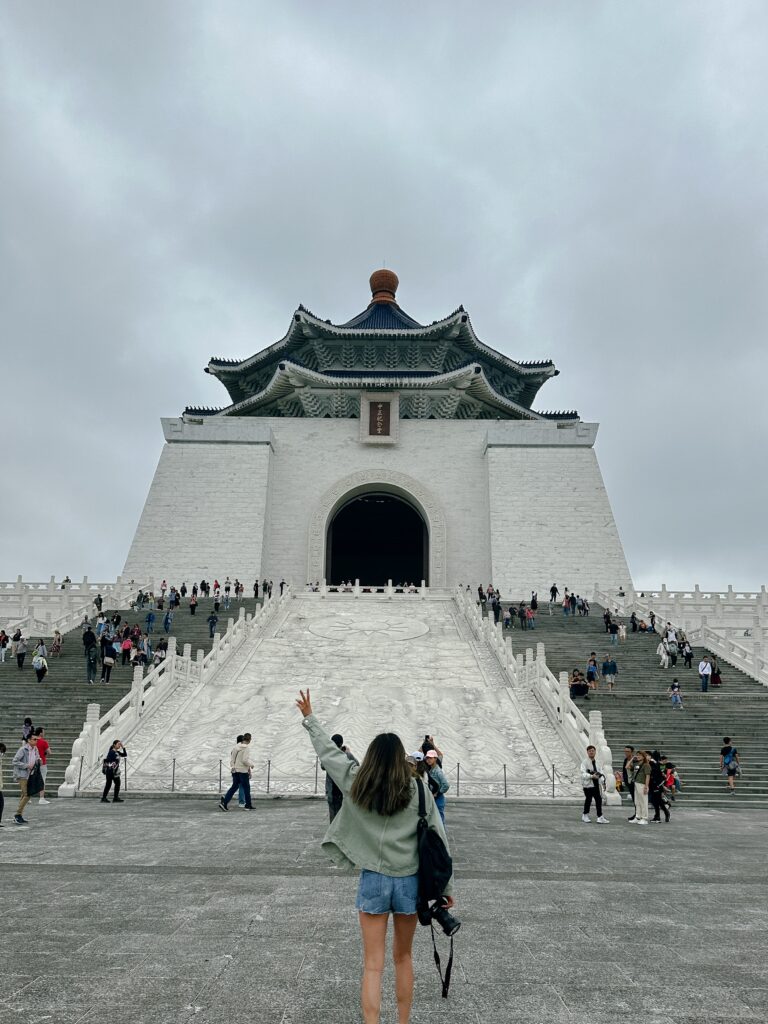
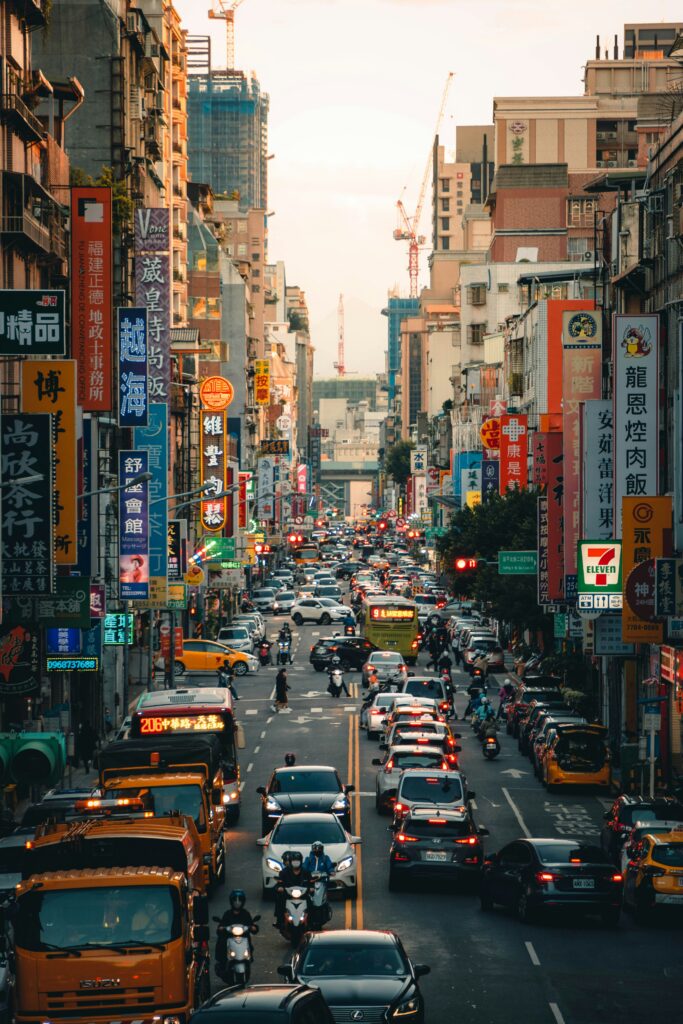
The best thing about Taipei is that it can be visited all year round! They experience relatively mild winters and summers that are hot, but bearable if it’s the only time you can go. (Most places have air conditioning but just be prepared for the humidity). It’s also worth knowing when some of the key festivals and events take place, as you might want to plan your visit around some of these things!
Visiting Taiwan in spring (March to May)
Spring in Taiwan sees mild temperatures of around 15°C to 25°C (59°F to 77°F), ideal for sightseeing and outdoor exploration. This is definitely a great time to visit as flights tend to be pretty cheap but the problem is that it can be hard to get work or school off during this time. Expect the odd rain shower and pack accordingly, and enjoy the blooming cherry blossom of Taipei and Yangmingshan National Park. Conditions are perfect for cycling among the flat, quiet terrain of the East Rift Valley.
Visiting Taiwan in summer (June to August)
Summer is likely the least popular time to visit Taiwan, especially for those planning a one week in Taiwan itinerary. It’s hot and humid, particularly in Taipei, with temperatures regularly climbing above 30°C (86°F). I used to visit every summer as a kid, and I’m still haunted by the island’s intense humidity. I seriously didn’t think there was anywhere in the world that had Taiwan summer weather until I eventually visited the east coast in July lol. Summer was the only time we could go because of school schedules, but flight prices also tend to soar during this time as many people travel home with their families.
If you’re visiting during summer, consider escaping the heat by heading to the mountains or to places like Jiufen. While the warm weather may make it ideal for a beach getaway at Kenting or Penghu, it’s likely too hot for city tours and sightseeing in a Taiwan itinerary. Additionally, it’s crucial to remember that July to September is typhoon season. While this doesn’t have to derail your travel plans, it’s important to keep an eye on the weather forecast and follow local authorities’ advice during any weather alerts.
Visiting Taiwan in fall (September to November)
Personally, I think fall is the best season for visiting Taiwan. The leaves on the trees turn a beautiful golden brown, temperatures come down to a far more manageable 20°C to 28°C (68°F to 82°F) and, most importantly of all, the drenching humidity of summer also reduces. Expect clear skies in Taipei, perfect for enjoying the view from Taipei 101 or hiking Elephant Mountain. The Mid-Autumn Festival is a wonderful annual event during the season, celebrating unity, gratitude and tradition across Taiwan.
Visiting Taiwan in winter (December to February)
Taiwan experiences a relatively mild winter, with average temperatures of 10°C to 18°C (50°F to 64°F) meaning sightseeing is still very much possible. It’s a bit wetter to the north of the island but a good time for relaxing in the hot springs of Beitou and Wulai. It’s much warmer and drier to the south, making this a good time for exploring other cities such as Kaohsiung and Tainan. Winter also offers perhaps the best weather for making the most of Taiwanese cuisine, as travelers can tuck into steaming hot broths and noodle dishes to warm up.
With that being said, you’ll want to avoid visiting during Christmas unless that’s truly the only time you can go as flight prices are usually TRIPLE during the holidays (again, there are a lot of families heading home to see relatives overseas).
How to Get Around Taiwan
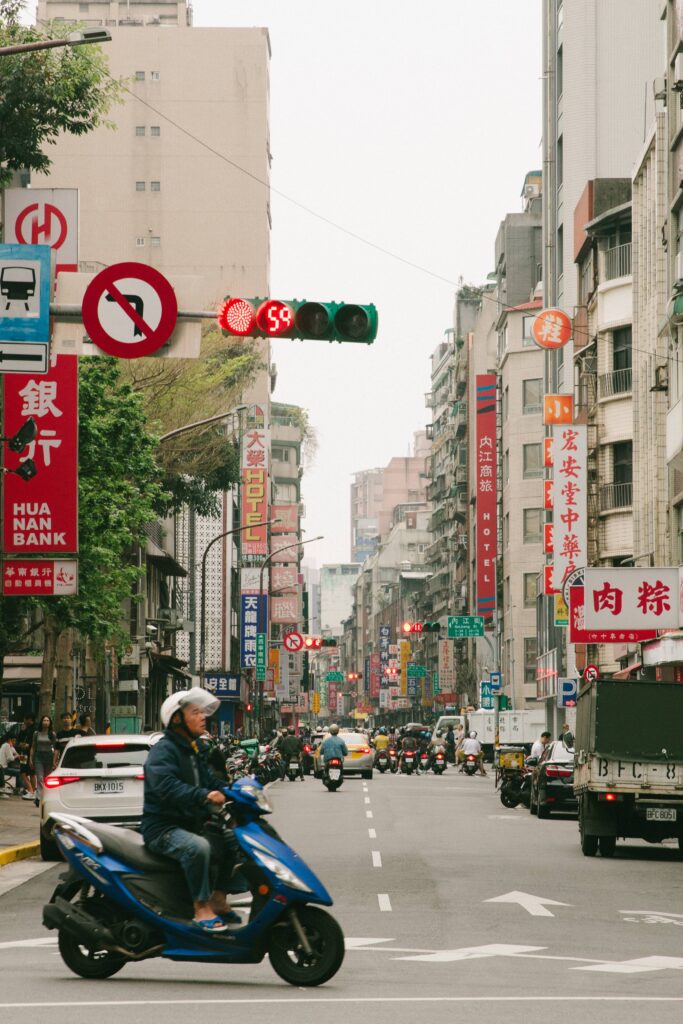
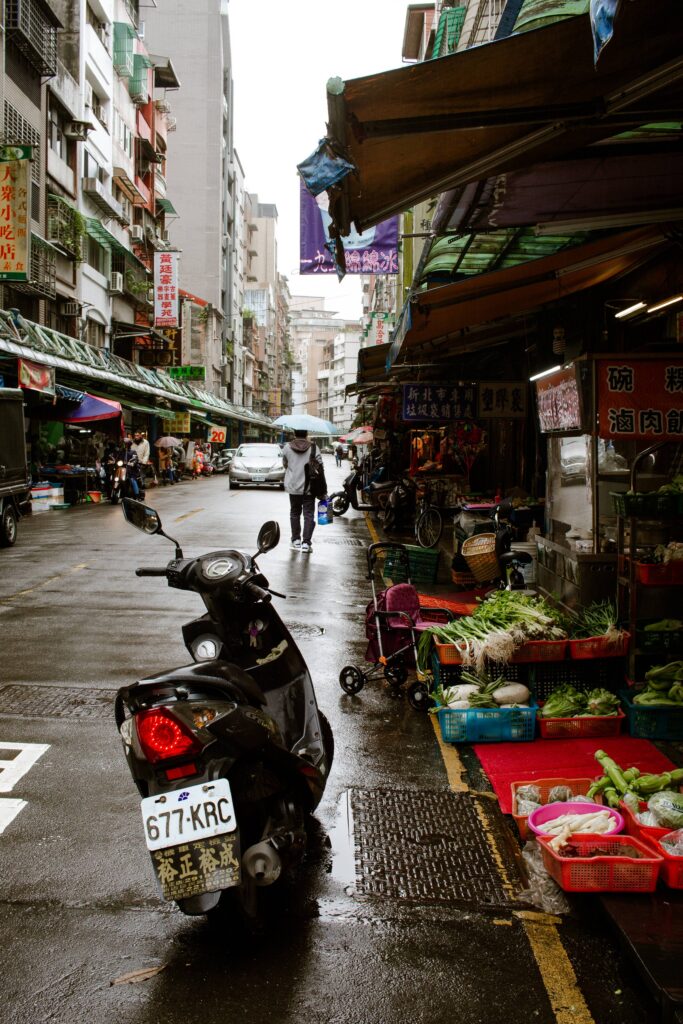
The main point of entry and exit for Taiwan travel is the island’s Taoyuan International Airport. If staying in Taipei city for your Taiwan trip, then public transport should be sufficient to get you from A to B. The public transport system in Taipei is top-notch – it’s always clean, on-time, and all the station signs have English! (My dad always yells at me because I rely on the English names vs the Chinese ones but oh well)
However, for a longer 7 days Taiwan itinerary, you’ll want to consider renting a car. (I’ve made the trek before to Taroko Gorge and Hualien on the train and then we hired a private driver once we got there but I think having your own vehicle is still the best and most convenient way to get around).
Vehicles in Taiwan drive on the right side of the road, and you will of course need a valid driver’s license and International Driving Permit in order to rent a vehicle. If you cannot drive or don’t wish to, then regional high speed rail links in Taiwan are good, and you can use buses and taxis to complete your journey. (If you want to skip the middle of Taiwan, you can definitely take the high speed rail from Taipei to Kaohsiung and vise versa).
Exploring Taiwan: Best Places to Visit During Your 7 Day Itinerary
I’ve put together a suggested 7-day itinerary that takes you around the whole of Taiwan. Starting with 3 days in Taipei, with time for sightseeing and day trips to some nearby destinations including Jiufen and Keelung. From the capital, you’ll want to head east, along the coast, with an overnight stop in Hualien and Taroko Gorge.
Since you can basically drive the whole island in 5 hours…you’ll also want to spend a night or two in the southern capital of Kaohsiung before making your way back to Taipei. I’ve suggested returning up the west coast, with a brief stop in Taichung on your way back. In this itinerary, I’ve added some of the best things to do in Taiwan, but of course you can tweak this, and make it your own!
Days 1 – 3: Diving into the Capital of Taipei
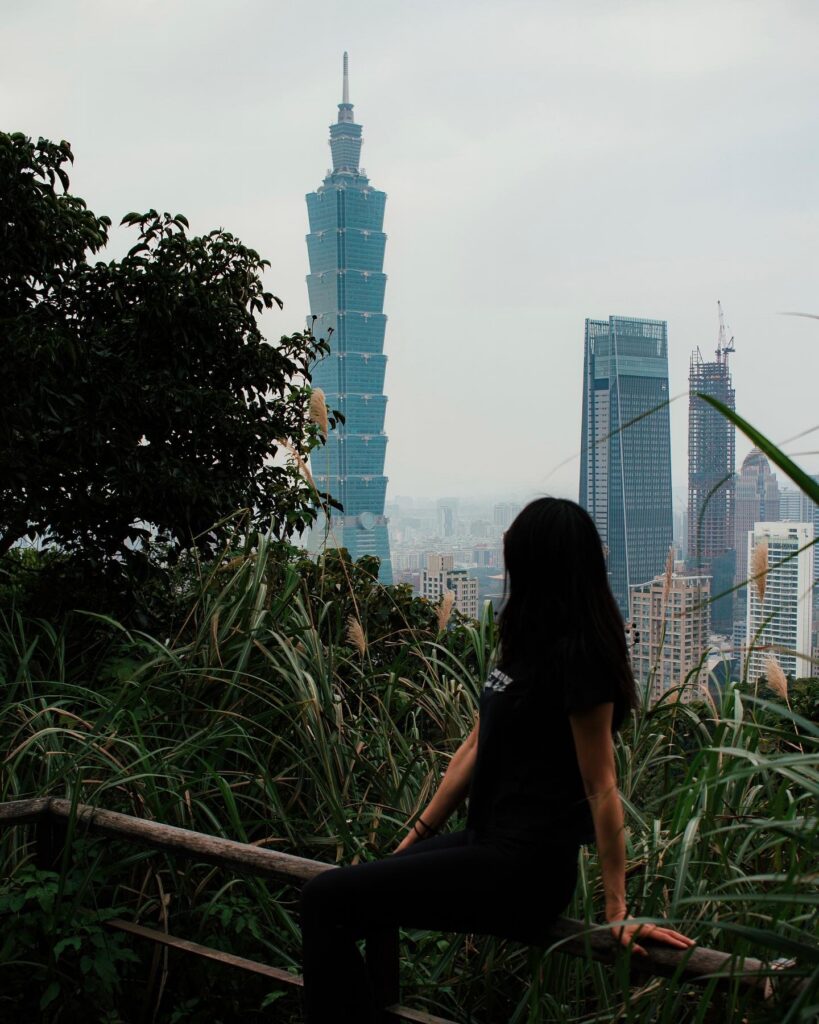
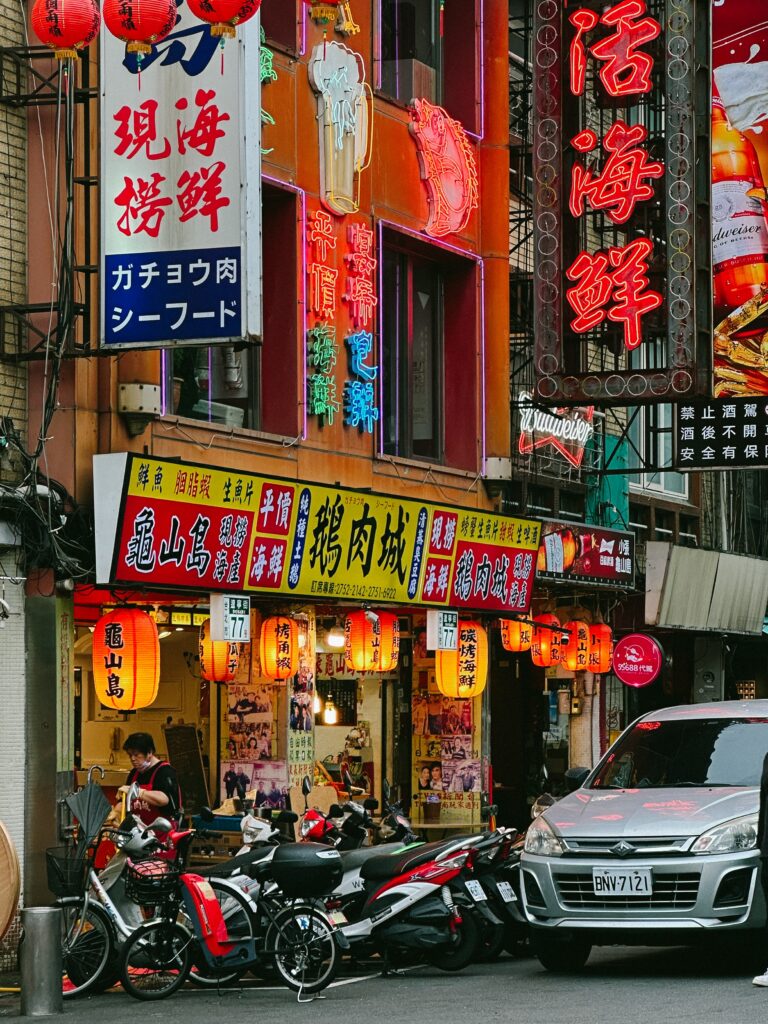
For the most part, a lot of Taiwan trips will start (and end) in Taipei, the island’s capital and largest city, home to Taoyuan International Airport. (Ever since they built the high speed rail, they no longer operate flights from Taipei to Kaohsiung anymore so pretty much everyone flies into Taipei).
For a one week in Taiwan itinerary, I recommend spending three nights in the city initially. This gives you two days to explore the city itself, and one day for a day trip out of town. Taipei is also a nice place to recover from the jetlag because you can basically get food at any hour of the day and/or go out for a night on the town if you get bored.
If you want a really thorough breakdown of exactly how to fill those two days, my 4-day Taipei itinerary covers all the top spots in detail with tips from my dad who grew up there.
There are so many multi-level clubs and bars in Taipei it’s actually crazy. I’ll never forget when I was 18, I saw Steve Aoki for the first time with my super rich cousins at some random club on the 32nd floor of a high-rise. No clue how my parents let me do that but it was definitely memorable.
Once you’re in Taipei, there’s a lot to do and see. My first and most favorite recommendation for anyone visiting Taiwan is to get up early (you’ll be jetlagged AF anyway i promise) for a morning (sunset works too but is more crowded) hike to Elephant Mountain, which you can reach with ease on the metro.
It’s a steep climb up around 400 steps and will take around half an hour, but the reward is wonderful views over Taipei, including of Taipei 101. I’d recommend wearing some decent tennis shoes but honestly, I’ve hiked this before in ankle boots and was fine. I’m not saying you SHOULD do this but it’s not that strenuous of a hike for a fantastic reward.
Elephant Mountain is just one of the highlights I cover in my 4-day Taipei guide if you want the full rundown on how to spend your time in the city.
If you’re blessed with clear skies, then the next place to head is Taipei 101. Formerly the tallest building in the world, this 508-meter tower is home to an 89th floor observatory, the best place in Taipei to enjoy magical views over the city and beyond.
For a dash of culture, I strongly recommend a visit to Longshan Temple, the oldest and most visited temple in the city. It dates back to the 18th century and boasts incredible ancient architecture, carvings and Taoist shrines and statues.
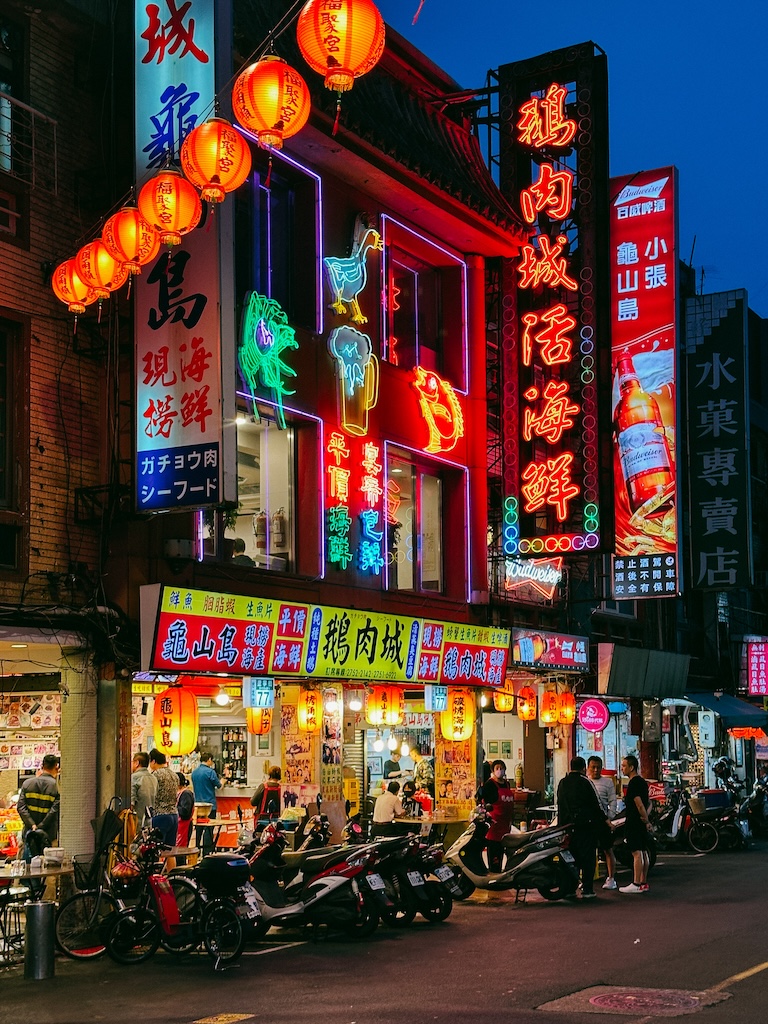
During the evenings, you NEED to spend at least one (or two) nights eating your way through the famous Taipei night markets. Shilin is the big famous one, Raohe is a crowd pleaser, but Shida (the small, local one right by Yongkang Street) is my personal favorite.
It’s the smallest and most local of the bunch (it’s right by the university so it’s got that fun, young, student-y energy) and it’s steps from Yongkang Street, aka home to the best beef noodle soup and mango shaved ice in the entire city. If you don’t feel like decoding the Mandarin-only signs and the general yelling on your own, I’d 100% join a food tour with a local guide so you actually know what you’re shoving in your mouth.
I go way deeper on all three markets (and share some of my dad’s personal food picks) in my 4-day Taipei itinerary if you want the full lowdown before you go.
My dad usually acts as my personal guide (and food sign translator) at these night markets but my husband and I joined the Shida night market food tour last year when we were in Taiwan and had a great time! We had Skyler as a tour guide and she was fantastic and showed us all the stalls that we probably would’ve missed if we had just gone on our own.
Taipei day trip suggestions
Assuming you’re visiting from somewhere outside of Asia, I know spending only 7 days in Taiwan can seem short. And taking a day trip from Taipei isn’t for everyone. But if you have the energy and are itching to get outside of the city, there’s a lot of really great day trips to take that won’t leave you feeling too rushed before you head east on day 4.
One of the best things about Taipei is that you barely have to go anywhere to feel like you’ve left the city entirely. So if you’ve got a spare day (or two), here are the day trips I’d actually make room for.
And if you want more ideas for filling your in-city days before or after the day trips, my first-timer’s guide to 4 days in Taipei has you covered.
Day trip to Jiufen from Taipei
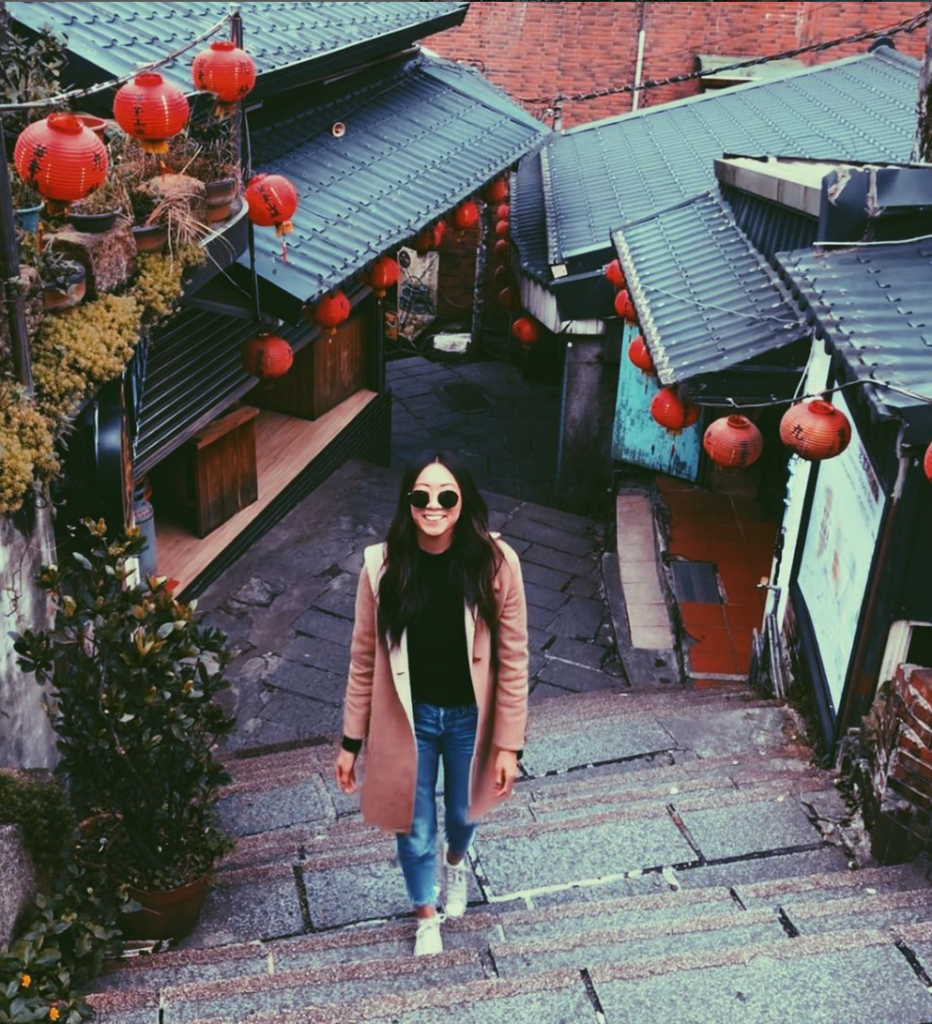
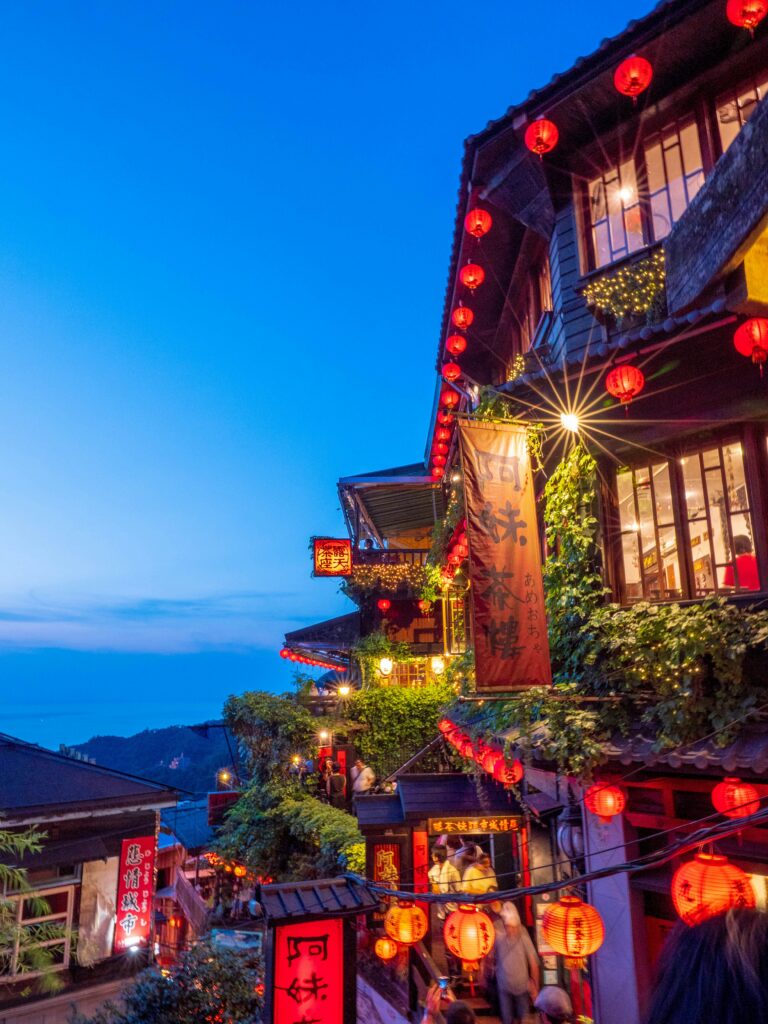
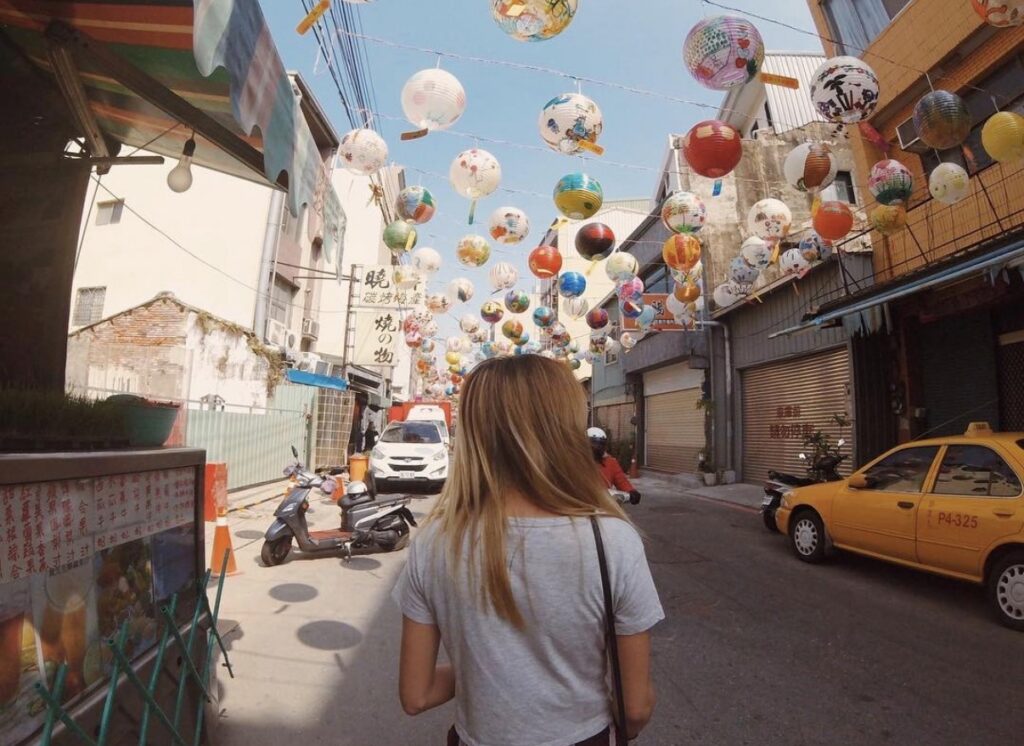
If you’re a Spirited Away fan (and even if you’re not), I definitely recommend taking a day trip to Jiufen. It’s only about 25 miles from Taipei (you can book a tour or make your own way by taxi or train), but those narrow, lantern-lit streets feel like an entirely different world.
The whole mountain village is constantly compared to the onsen town in Hayao Miyazaki’s 2001 anime, and the resemblance really is uncanny.
Give yourself 6 to 8 hours to wander Old Street, sip tea at the famous A-Mei Teahouse (drowning in red lanterns with views over Keelung Mountain and Taiwan’s northern shore), dig into the town’s gold-mining past at the Gold Museum, and shop for handcrafted trinkets you absolutely do not need but will somehow buy anyway, before heading back to Taipei in time for dinner.
I go way deeper on Jiufen in my 4-day Taipei itinerary if you want the full breakdown.
Day trip to Keelung from Taipei
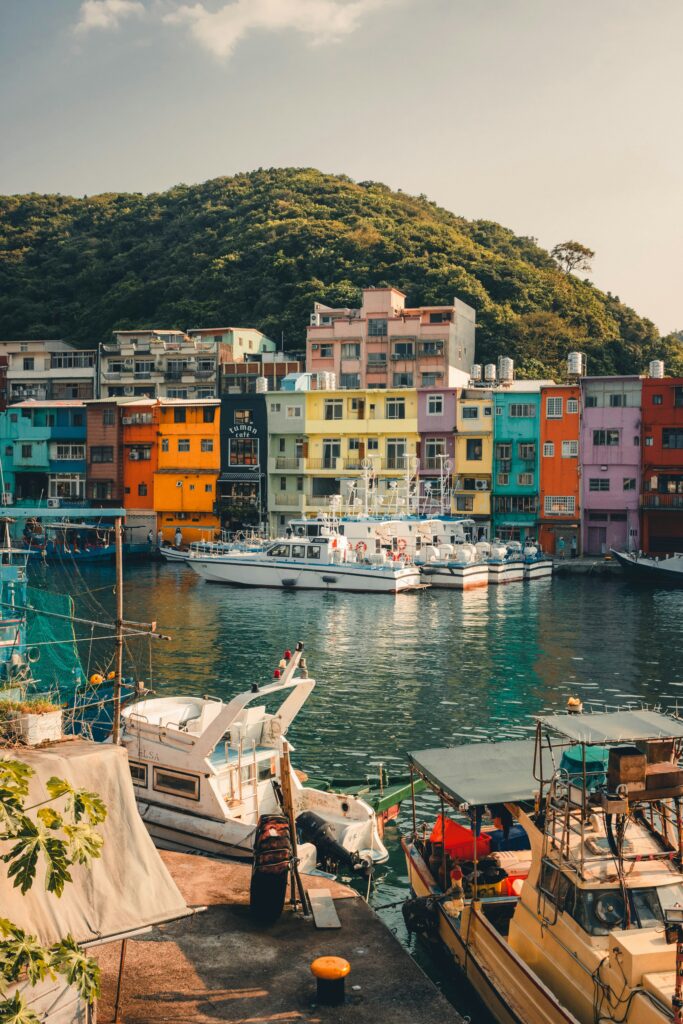
Next up is Keelung, aka the “Port of Taipei,” a far-north coastal city that’s quietly become a favorite in recent years (and is super easy to reach by high-speed rail or bus).
Start at the Zhengbin Fishing Harbor, about 15 minutes by bus from the city center, where you can snap photos of the candy-colored waterfront buildings and traditional fishing boats. Then climb up to Zhongzheng Park for its towering Guan Yin statue and seriously good views over the city.
It’s a bit of a trek but worth it, especially since you’ll come back down right next to the Miaokou Night Market. Weekends glow with yellow lanterns, but honestly any night you can take your pick of crab soup, crispy pork, peanut ice, or whatever speaks to you before rolling back to Taipei in the late evening, very full and very happy.
Top-rated Taipei to Jiufen / Keelung day tours
-
Small-Group Tour: Jiufen, Yehliu Geopark & Shifen
⏱️ ~9 hoursIf you know me, you know I love a small-group tour, especially solo, when I get to meet people from all walks of life but still keep my alone time. This one’s a great (and seriously affordable) pick that’s totally worth the full day, with a stop at the charming old railway town of Shifen.
-
Private Tour to Jiufen, Yehliu Geopark & Pingxi
⏱️ ~8 hoursAnother excellent private option, this one adds Yehliu Geopark, a protected stretch of coastline famous for its otherworldly rock formations, fossils, and crashing waves.
-
Shared Taipei to Keelung Day Trip Photography Tour
⏱️ ~9 hoursA great pick if you love photography or just want a more relaxed, scenic day out. Keelung is a colorful port city on the northern coast, and this tour takes you to its most photogenic spots along the harbor and hillside. The GetYourGuide version also finishes up at a local night market, so you can grab dinner before heading back.
Where to Stay in Taipei
To save you sifting through other travel blogs and websites, I’ve pulled together some of my favorite hotels in Taipei, all excellent places to consider during your visit to Taiwan. Hotels are honestly my favorite part of trip planning, so if you’re hotel-shopping for other Asia stops too, I’ve got similar deep dives on the best boutique hotels in Kyoto and where to stay in Beijing.
And if you’re still figuring out the full Taipei plan itself, my 4-day Taipei itinerary breaks down exactly what to do and where to eat while you’re there.
W Taipei (Xinyi District) – One of my absolute favorite hotels in Taipei, with an unbeatable location next to Taipei 101, a buzzy atmosphere, and full-on luxury amenities from the pool to the gym. If you like modern energy, great views, and a hotel that feels like part of the city’s nightlife, this is it.
Check prices via ExpediaCheck prices via Booking.com
CitizenM Taipei North Gate (Zhongzheng District) – A design-driven budget stay that punches way above its price point, with comfy king beds, mood lighting, and a 24/7 bar overlooking the historic North Gate. If you like smart, efficient hotels and don’t need room variety, this one’s a no-brainer.
Check prices via ExpediaCheck prices via Booking.com
Kimpton Da An Hotel (Da’an District) – A stylish boutique hotel with a residential feel, known for its warm service, social vibe, and thoughtful details like complimentary evening wine hour. Ideal if you want something design-forward and relaxed that still feels upscale and very livable.
Check prices via ExpediaCheck prices via Booking.com
Capella Taipei (Zhongshan District) – Ultra-luxurious and serene, Capella Taipei is all about understated elegance, impeccable service, and refined design. This is the splurge stay for travelers who want a quiet, resort-like escape in the city and expect everything to feel flawless.
Check prices via ExpediaCheck prices via Booking.com
Days 4 – 5: Discover the Beauty of Hualien & Taroko Gorge
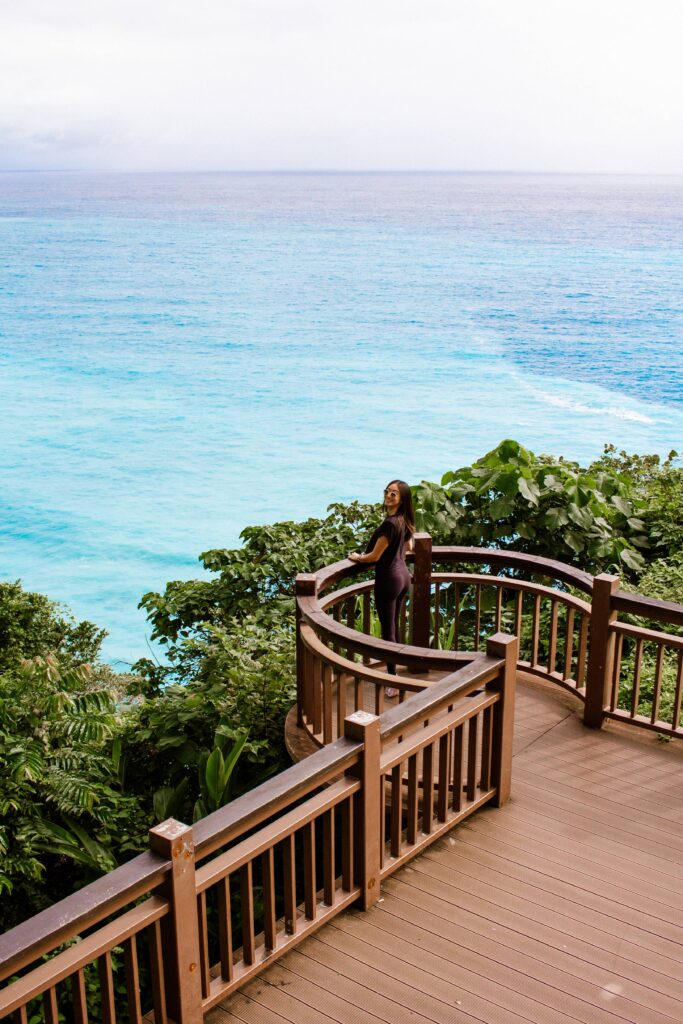
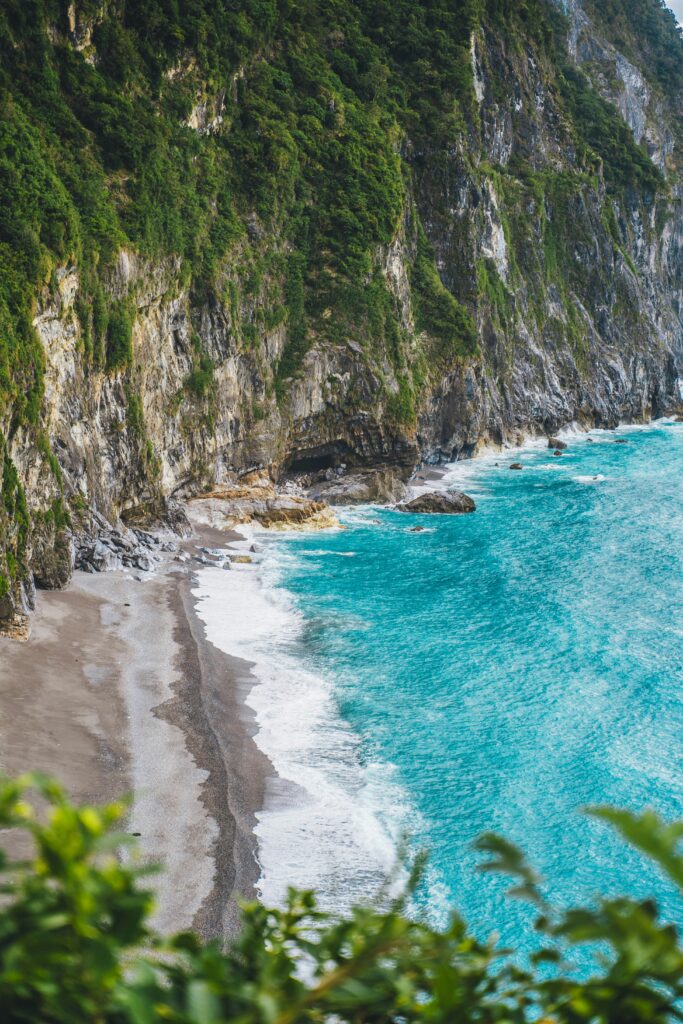
After 3 full days in Taipei, you’ll be ready to see what else is out there I promise. If you’ve rented a car, then it’s about a 2.5 hour drive from the city center to Hualien, or you can catch the train like I’ve done with my dad. Once we got to Hualien, we arranged a private driver who shuttled us around to all the beautiful viewpoints and inside Taroko Gorge National Park for the entire day for less than $100 USD.
I personally think Hualien is the prettiest part of Taiwan. (There’s also Kenting in the south but the water isn’t nearly as blue or clear as it is here).
In addition to Hualien, you’ll definitely want to visit Taroko Gorge National Park, one of the best places to visit in Taiwan and home to incredible marble cliffs, ancient temples, clear blue water and lush green forests. Make sure you’re wearing good walking shoes, and a decent level of fitness is a big plus here.
We arrived in the morning, and immediately put our bags down at Sweet Rainbow B&B. Now, this is not my normal type of accommodation but I was with my dad who paid for it so I didn’t really get to have an opinion on hotel but I was extremely impressed by the hospitality and cleanliness of Sweet Rainbow B&B.
Also, it’s not like Hualien has a ton of 5-star luxury hotels to choose from which is usually my vibe so I decided to just go with the flow as much as I could with my boomer frugal dad on this trip.
After that, we immediately headed to the park for a full day of walking, hiking, and sightseeing. Once you’re in the park, get ready to explore. The Shakadang Trail is one of the most popular and accessible hiking routes in the park, an 8 kilometer round trip that takes you along the turquoise Shakadang River. You will also want to pay a visit to the scenic Changchun Shrine. Dedicated to a group of workers who lost their lives building a nearby highway, the shrine perches above a cascading waterfall, and is easily accessed by a walking path.
You can see the power of the Liwu River at Swallow Grotto, where marble has been rubbed smooth by the force of the water. And finally, you can enjoy panoramic views of the surrounding scenery from the Buluowan suspension bridge, which is almost 200 meters long – don’t look down if you’re afraid of heights!
Since we got there so early, we left Taroko Gorge around ~3pm so we could catch the sunset on the beach in Hualien.
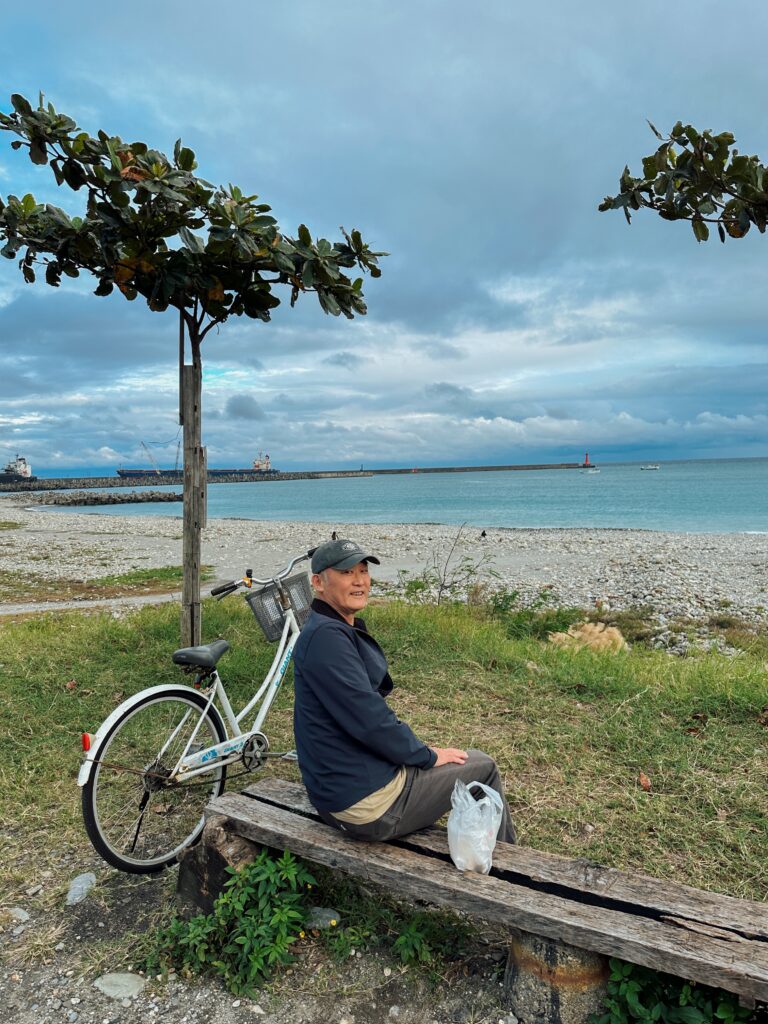
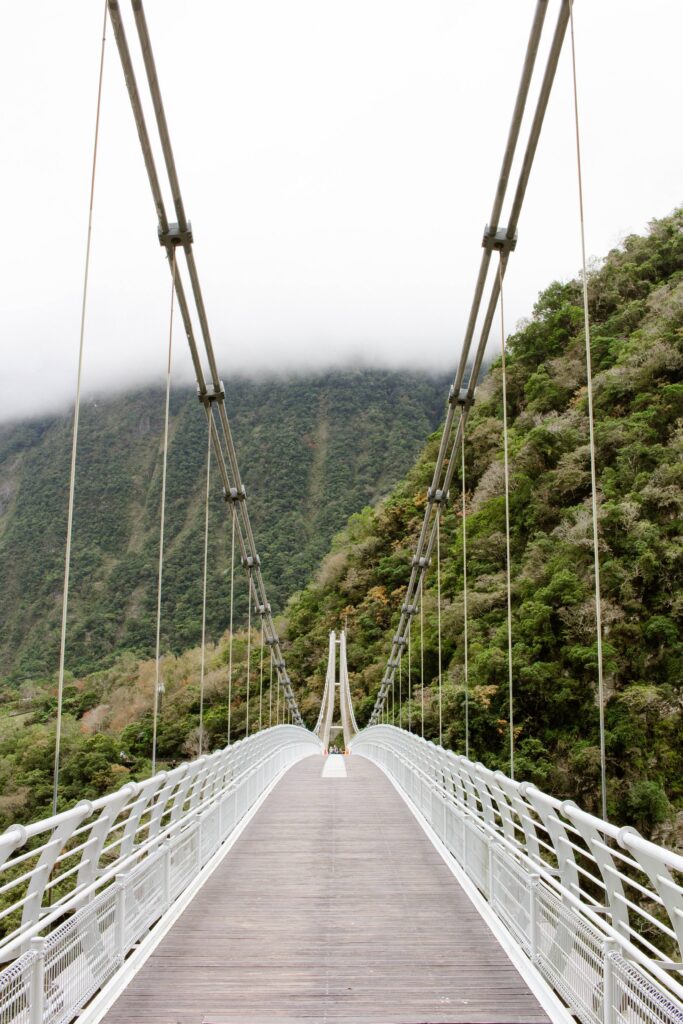
Back in Hualien, there’s also a few highlights to check out during your stay. We hopped on the complimentary bikes from Sweet Rainbow B&B and just biked along the water for a few miles before stopping to take some photos.
There’s also the Dongdamen Night Market which gives you another chance to indulge in Taiwan’s buzzing night market culture, and you may find it a little more authentic than some of the markets in Taipei. If you have the time, you can also wish to pay a visit to the Pine Garden.
This beautiful, tranquil garden hums with birdsong, but it is the history behind it that may be of interest. The 1940s concrete building in the heart of the park was once used by the Japanese military to wine and dine Kamikaze pilots before their suicide missions during the Second World War.
Where to Stay in Hualien
Okay I want to level-set expectations real quick about Hualien, Taiwan. You won’t find any 5-star luxury on the east side of the island. The lodging scene here is mostly B&Bs and budget-friendly hotels, and that’s kind of the whole charm. The beauty of Hualien is mostly in its scenery and taking in mother nature.
What you will get is clean, quiet, and genuinely pleasant. The rooms are simple but well kept, the hosts are usually lovely, and you’ll sleep great because there’s nothing happening outside your window except, you know, nature. For a coastal town this gorgeous, the prices are honestly a steal. So these are the top picks for hotels in Hualien, including the cutest little B&B that my dad and I stayed at.
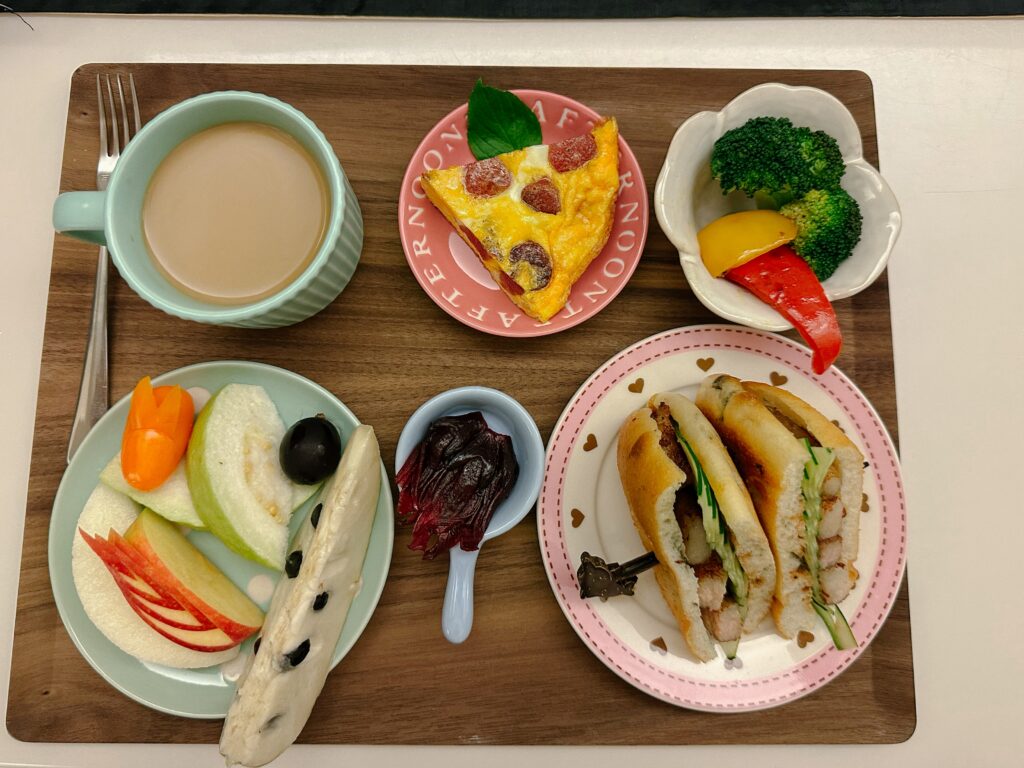
Sweet Rainbow B&B (Beibin Street / Waterfront) – A colorful little boutique B&B run by hosts who treat you like family, just a 3-minute walk from both Dongdamen Night Market and the beach. With cozy, homey rooms, a daily breakfast, free bike rentals, and a quiet garden, it’s perfect for travelers who want warm, personal hospitality over a big-hotel feel. The owner handmade us breakfast every morning (pictured above) and was seriously so kind. It felt like staying at a relative’s house. Can’t say enough good things about this B&B if you’re looking for a laidback no-frills accommodation.
Check prices via ExpediaCheck prices via Booking.com
Hi Inn (Beibin Street / Beachfront) – A laid-back, budget-friendly beachfront B&B with a rooftop terrace and the ocean just a 2-minute walk away. Simple, clean rooms plus free breakfast, WiFi, and parking make it a solid pick for travelers who want a great seaside location without spending much.
Check prices via ExpediaCheck prices via Booking.com
Kindness Hotel Hualien Main Station (Near Hualien Station) – A beloved Taiwanese chain famous for its over-the-top free perks: a generous breakfast, all-day tea and coffee, afternoon tea, late-night snacks, free laundry, and free bikes. Just a few minutes from the train station and known for genuinely attentive service, it’s unbeatable value and a great choice for families.
Check prices via ExpediaCheck prices via Booking.com
Hotel Les Champs Hualien (Dongdamen Night Market) – A French-style hotel with chic Parisian decor sitting right at the edge of Dongdamen Night Market, with attentive staff and big soaking tubs in the rooms. The rooms run small but are smartly designed, making this ideal if location and easy night-market access top your list.
Check prices via ExpediaCheck prices via Booking.com
Le Méridien Hualien Resort (Hualien City Centre) – Definitely the top (and only) luxury pick in Hualien. Marriott’s polished, European-inspired resort and the city’s first downtown hot spring hotel, blending French style with ocean and mountain views. With an outdoor pool, spa, hot springs, and a rooftop sky bar, plus a walkable location near Dongdamen Night Market, this is the splurge pick for travelers who want full luxury without leaving the heart of town.
Check prices via ExpediaCheck prices via Booking.com
Days 6 – 7: Soak Up the Sunshine of Kaohsiung
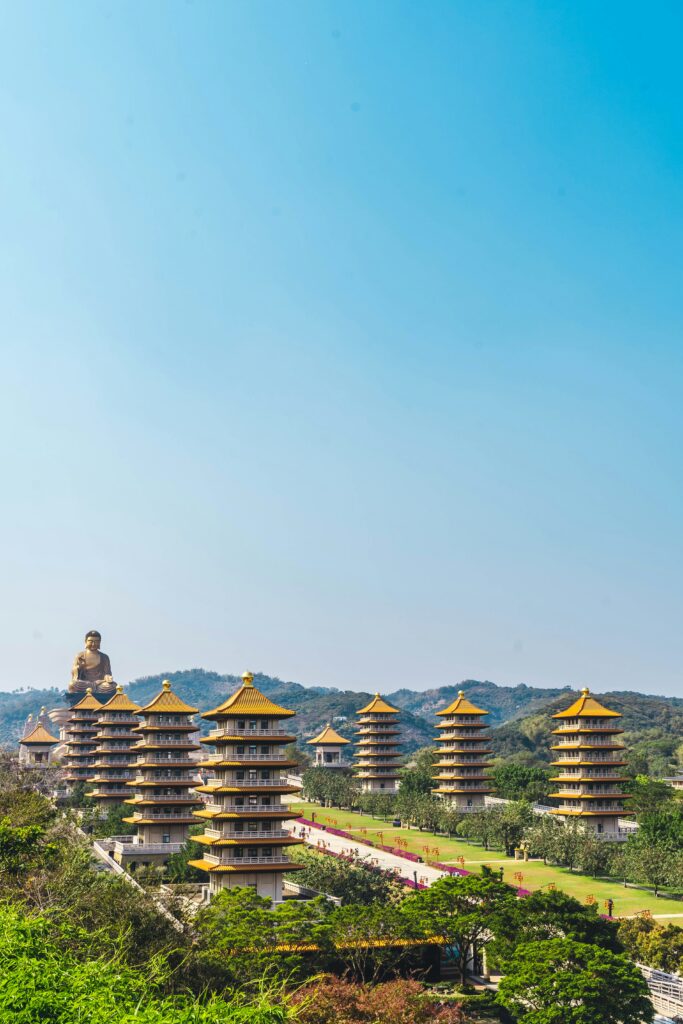
In my opinion, one night in Hualien is plenty. After spending the entire day at Taroko Gorge, there isn’t a ton left to do in the area so you’ll want to continue heading south on this tiny island towards Kaohsiung.
You’ve got two ways to get there. If you rented a car, you can make the drive in about ~5.5 hours but the train system in Taiwan is pretty decent. It’s the easiest, cheapest, most stress-free way to make the trip, and it’s exactly why you don’t technically need a car for this whole 7-day Taiwan itinerary.
You can easily train it from Hualien down to Kaohsiung, and from there you can either fly out directly or hop on the HSR back up to Taipei (more on that in the next section).
Kaohsiung is Taiwan’s second city and a totally viable alternative to Taipei, yet it constantly gets skipped by travelers, which is a shame because I personally think it’s worth at least two nights. I’ve been coming here annually since I was a kid since my grandparents live in Tainan, about 30 miles north of Kaohsiung.
We always end up visiting Kaohsiung anyway, so trust me when I say I know it well.
As for what to actually see, the biggest cultural drawcard is the Fo Guang Shan Buddha Museum, home to one of the largest Buddha statues in the world. It’s a massive complex of temples, shrines, teahouses, and manicured gardens, and it’s easy to reach by bus from the city center.
Over on the east side you’ve got the Lotus Pond, a man-made lake famous for the two beautiful pagodas sitting right at the water’s edge. Tradition says you enter through the dragon’s mouth and exit through the tiger’s for good luck (a sentence that’ll make a lot more sense the second you actually lay eyes on it).
And if you want a grittier, more modern side of the city, head to the Pier-2 Art Center, a former industrial warehouse turned street-art playground packed with murals, sculptures, and the kind of bougie cafes I’m always a sucker for.
Traveling with kids? Add E-DA Theme Park to your list. I used to go all the time growing up and it’s still such a fun, easy day out for families. I know it’s no Tokyo Disney, but it’s gotten like 100x better since I was a kid. They basically built this whole resort around the theme park so you really don’t even need to leave the area for rides, shops, restaurants, and more.
Where to Stay in Kaohsiung
Kaohsiung is bigger and more spread out than it looks, so where you stay matters less than how close you are to an MRT station (trust me, the metro makes this city ridiculously easy).
The area around Kaohsiung Main Station is unbeatable for transit and night-market access, Yancheng/Pier-2 brings the artsy revived-harbor energy, Central Park puts you in the middle of the shopping-and-nightlife buzz, and the Asia New Bay Area is where the shiny luxury towers live. All the picks below are central and well-connected, so just go with whatever vibe and price point speaks to you.
Kindness Hotel – Kaohsiung Main Station (Sinsing District) – The Kaohsiung flagship of the cult-favorite Taiwanese chain, sitting right across from the main train and MRT station with all the signature freebies: 24-hour ice cream with eight flavors, all-day snacks, craft beer, free laundry, and a generous breakfast buffet. Walking distance to Liuhe Night Market and unbeatable value, this is the easy budget pick for travelers who want convenience and friendly service.
Check prices via ExpediaCheck prices via Booking.com
Chateau de Chine Kaohsiung (Yancheng District) – A sleek 4-star boutique hotel with a glass-and-light façade designed by Japanese architect Tadashi Yamane, glowing like a beacon along the Love River at night. Set in the revived Yancheng harbor district, it’s a short walk from Pier-2 Art Center and just steps from MRT Yanchengpu Station, with a standout Cantonese restaurant and comfortable, spacious rooms. Great for travelers who want style and a walkable arts-and-harbor location at a mid-range price.
Check prices via ExpediaCheck prices via Booking.com
Hotel Indigo Kaohsiung Central Park by IHG (Xinxing District) – A playful, design-forward boutique hotel right across from Central Park and steps from the MRT, known for its buzzy rooftop bar (PIER NO.1) and colorful, neighborhood-inspired interiors. It’s pet-friendly and surrounded by the Shinkuchan shopping area and Liuhe Night Market, making it ideal for travelers who want personality, a great location, and a livelier social vibe without going full luxury.
Check prices via ExpediaCheck prices via Booking.com
Hotel Nikko Kaohsiung (Qianzhen District) – A polished Japanese-managed luxury hotel with thoughtfully designed, spacious rooms, an indoor pool, sauna, steam room, and a rooftop bar, plus multiple restaurants serving Japanese and Chinese cuisine. Near the Kaohsiung Exhibition Center and a quick walk to the MRT, this newer property is perfect for travelers who appreciate refined Japanese hospitality, calm, and modern comfort.
Check prices via ExpediaCheck prices via Booking.com
InterContinental Kaohsiung by IHG (Qianzhen District) – The brand’s first hotel in Taiwan, occupying the lower floors of the Farglory THE ONE skyscraper in the Asia New Bay Area, with Art Deco styling, sweeping city and harbor views, Byredo amenities, and Japanese washlets. With an indoor pool, multiple fine-dining restaurants, and a Club InterContinental lounge, this is the top-tier splurge for travelers who want five-star polish, big views, and a brand-new flagship feel.
Check prices via ExpediaCheck prices via Booking.com
Final Day in Taiwan: Two Options for Departing Taiwan

By the time you reach the end of your week, you’ve got two ways to wrap things up, and honestly you can’t go wrong with either.
Option 1: Hop on the HSR (high speed rail) back to Taipei
If you’re flying home out of Taipei (or just not ready to say goodbye to Taiwan yet), the High Speed Rail will whisk you from Kaohsiung back up north in under two hours.
And if you choose to drive, it’ll take about ~3 hours and 40 minutes. If you’re driving, then I’d recommend breaking up the trip with a quick stop in Taichung. You can also make a pit stop by train since Taichung sits right on the HSR line. Just depends on how quickly you’re trying to get back up north.
The main highlight in Taichung is the Rainbow Village, a former assisted-living community for military veterans that had actually been earmarked for demolition. It got saved when one of the residents, former soldier Huang Yung-Fu, started painting the houses in wildly colorful murals and turned the whole place into a vibrant attraction. He got to see the village protected as a designated cultural area before he passed away in January 2024 at the age of 100.
And if you somehow still haven’t gotten your boba fix, make sure to swing by Chun Shui Tang, the actual birthplace of boba, which has a Taichung location worth popping into before you settle in for the ride back to Taipei 🧋
Option 2: Fly direct out of Kaohsiung
Here’s the thing a lot of people don’t realize: you don’t actually have to backtrack to Taipei at all. Kaohsiung has its own international airport with tons of direct flights to other Asia destinations, which makes it the perfect launchpad if you want to keep the adventure going.
(It actually reminds me a lot of SF to LA trips. Before the high speed rail was built, there used to be a ton of nonstop flights between KHH – TPE. But now everyone just takes the train).
But seriously – flying out of KHH is so easy. The airport is super small, security is a breeze, and you can hop on a flight to other parts of Asia under a few hours. A few of my favorites that pair perfectly with Taiwan: my 2-day Singapore itinerary, my 3-day Hanoi itinerary, or if Japan’s calling your name, my 2-day Kyoto itinerary.
You’re already halfway there, so why not?
Want to Extend Your Trip? (Sun Moon Lake, Alishan, Penghu, Taitung)
Even though I poured a lot of effort into writing this guide, please don’t take this itinerary as gospel!
I’ve put together an idea for you here on how to explore as much of Taiwan as possible in 7 days, but I know there are definitely places that I’ve left out and some places I’ve included that you probably have no interest in going to at all. Some other destinations to consider as part of your itinerary are scenic Alishan, the beaches of the Penghu Islands, the rice paddies of Chishang and laid back Taitung, not to mention Taiwan’s original capital, the authentic and historic Tainan.
You may also wish to head inland to Sun Moon Lake, Taiwan’s largest body of water, in the middle of the island. Here you can ride the Sun Moon Lake Ropeway cable car, for panoramic views of the lake and its surroundings. You can also visit the Ita Thao pier, home to shops, restaurants, and a visitor center.
You could probably spend 2-3 days alone at Sun Moon Lake, which would eat up your itinerary, but it just goes to show that there’s SO MUCH to do on this small but mighty island.
What to Eat in Taiwan: The Best Specialty Dishes
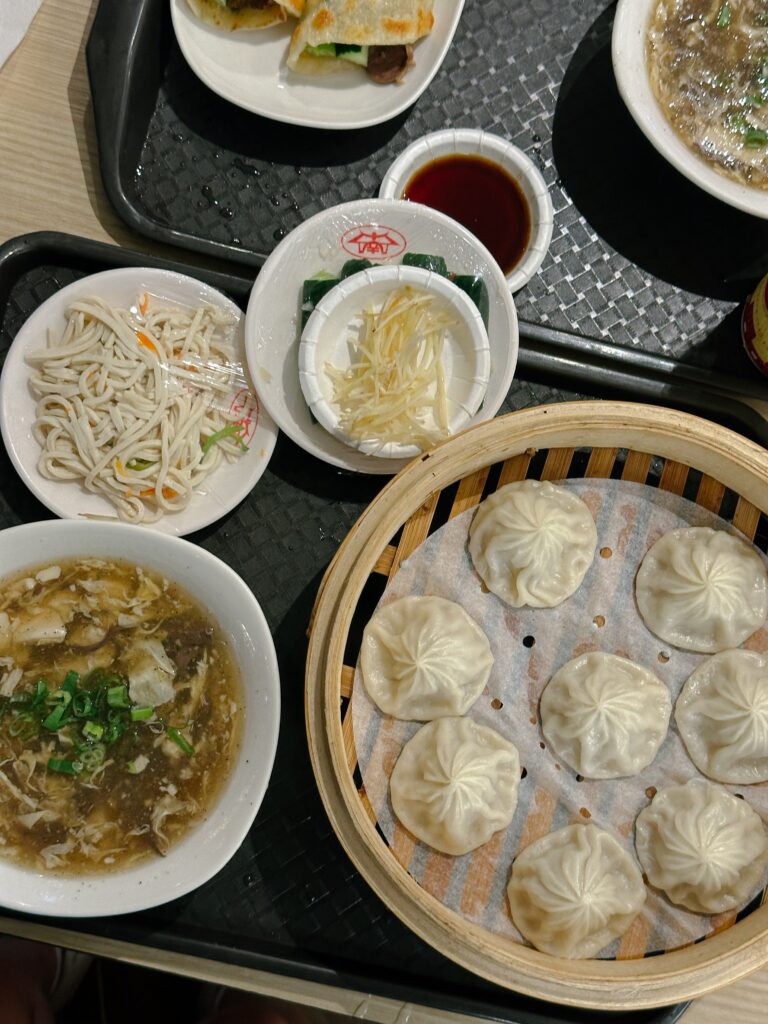
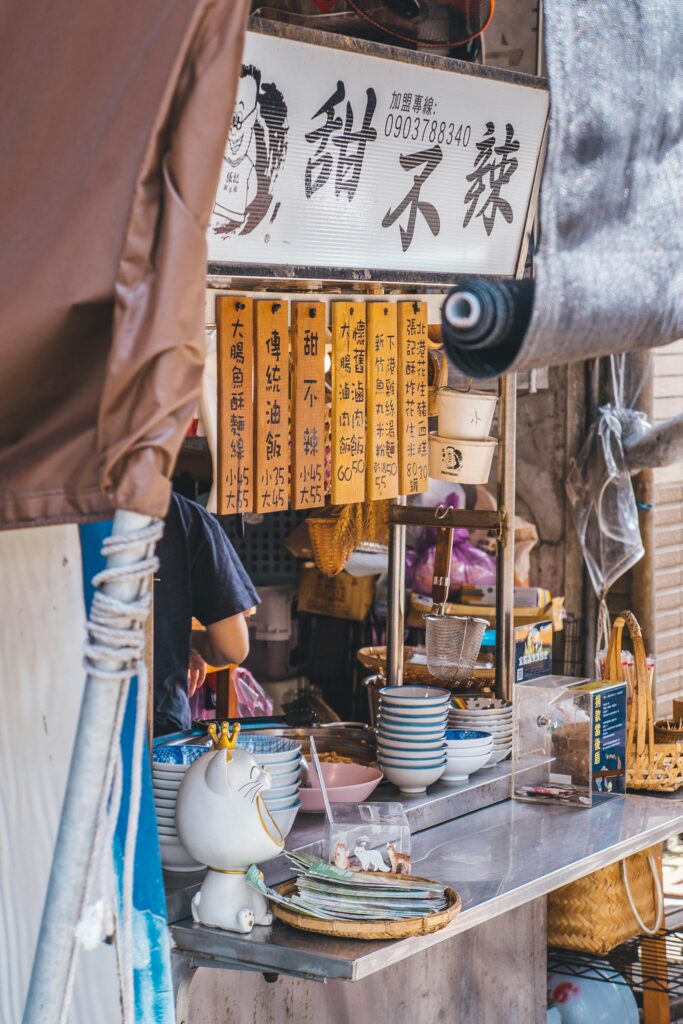
Food is a huuuuuge part of any trip to Taiwan (or anywhere in Asia really), and the island is known for its blend of Chinese, Japanese and Southeast Asian culinary influences. Make sure to check out at least one night market during your visit, and don’t be afraid to sample some of the territory’s street food – it’s cheap, fresh and delicious. Here are some of the must-try dishes for a trip to Taiwan.
Street food in Taiwan
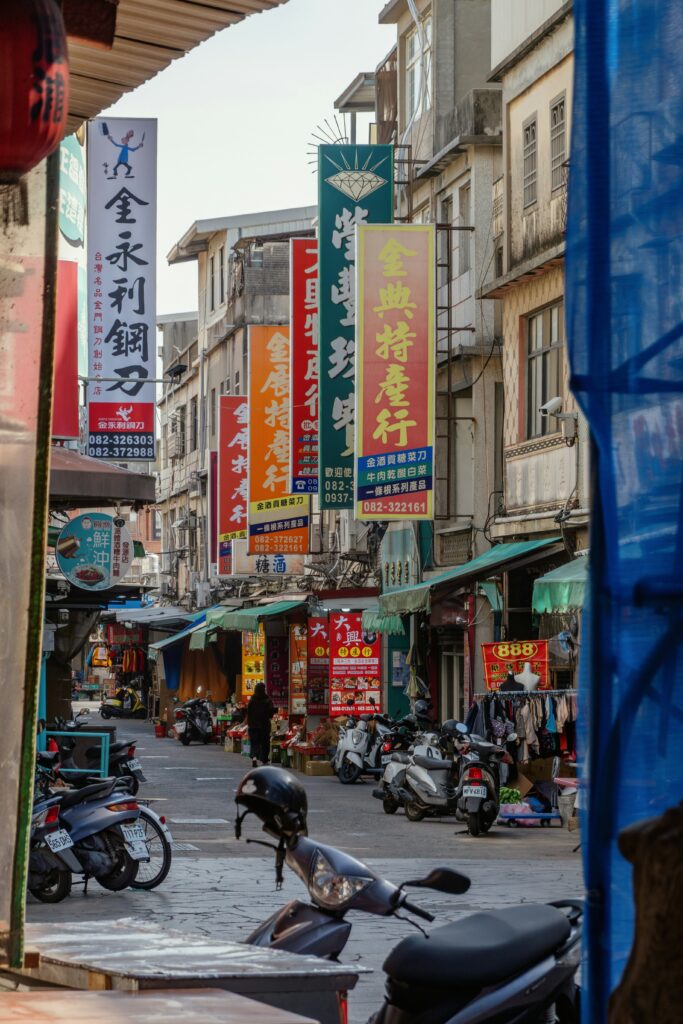
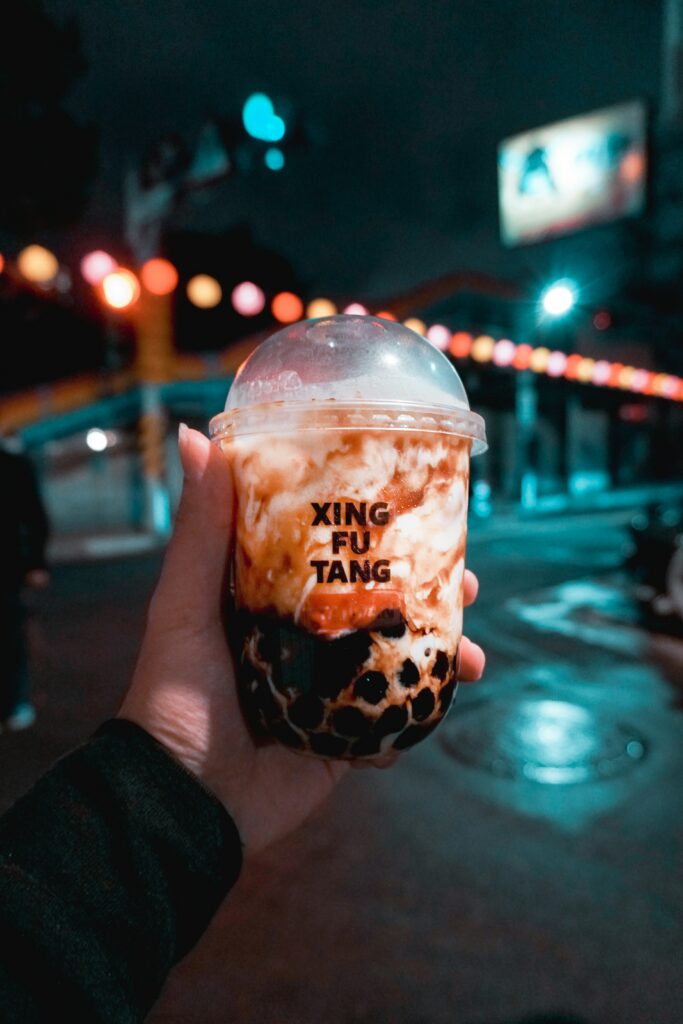
I’ve mentioned some of the best night markets in Taiwan already in this article, and all of the island’s main cities have at least one. You can munch your way across these markets, sampling small portions of all sorts of local dishes. Start with the iconic stinky tofu (don’t let the smell deter you because the taste is DELICIOUSSS), which gets its name from the pickled vegetables used in the dish. Oyster omelets are another great option to try, washed down with a traditional Taiwanese bubble milk tea. In the states, we’re pretty used to drinking milk teas but the Taiwanese actually prefer their tea without dairy as most of them are lactose intolerant.
Not me though! Fun fact – I drank so much bubble tea one summer in Taiwan as a kid that I had to get a root canal once I got home. Needless to say, my parents were not too pleased.
Savory dishes in Taiwan
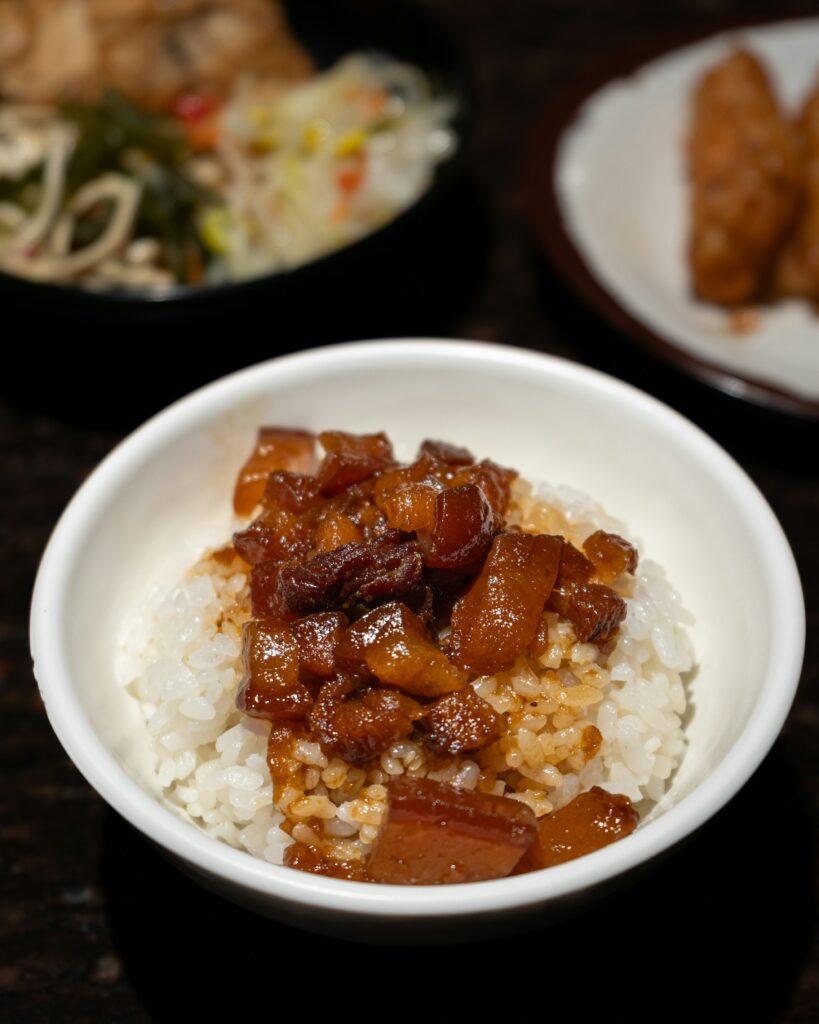
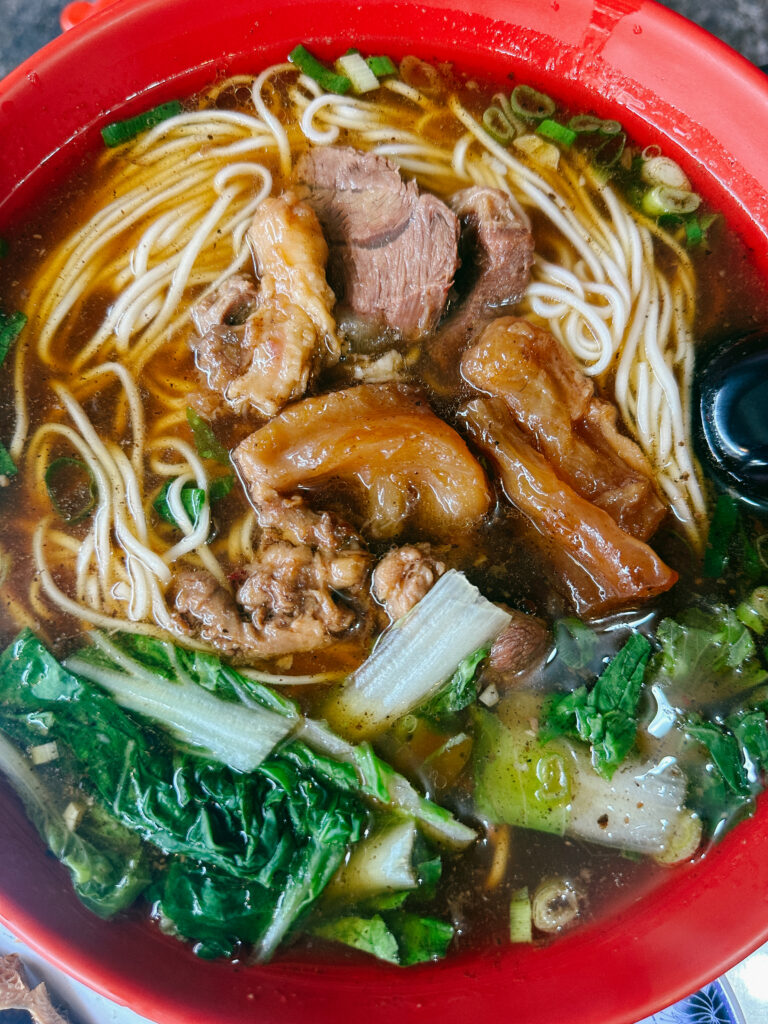
Beef noodle soup is the bread and butter of Taiwan, a national dish that consists of slow-cooked beef, tender noodles and a rich broth, a hearty favorite, especially during the colder months.
If you ever find yourself in the Taipei airport on a layover, make sure to get a bowl of beef noodle soup as well.
Xiao long bao is also a really popular dish from Taiwan. It’s the “Taiwanese take” on dumplings, an Asian favorite; these particular dumplings are filled with broth and meat. If you live in a major metropolitan city, you might already be familiar with Xiao Long Bao as they can be found at any Din Tai Fung or in Chinatown.
Finally there is lu rou fan, a delicious soy-braised minced pork topped with rice.
Sweet treats in Taiwan (are the best)
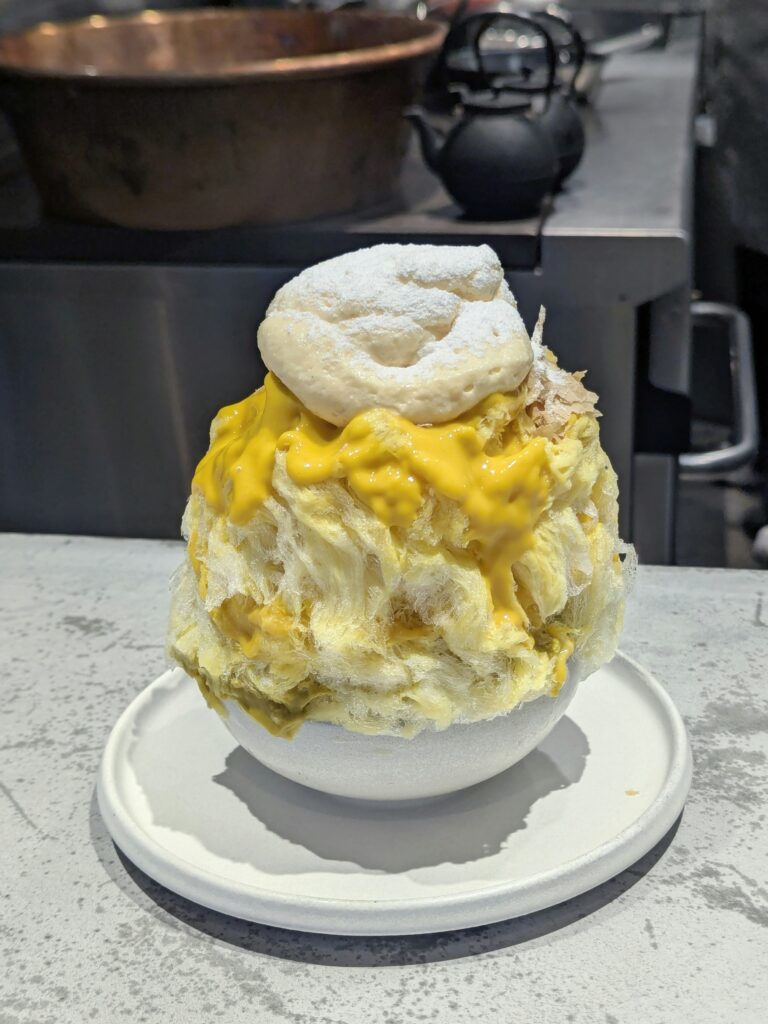
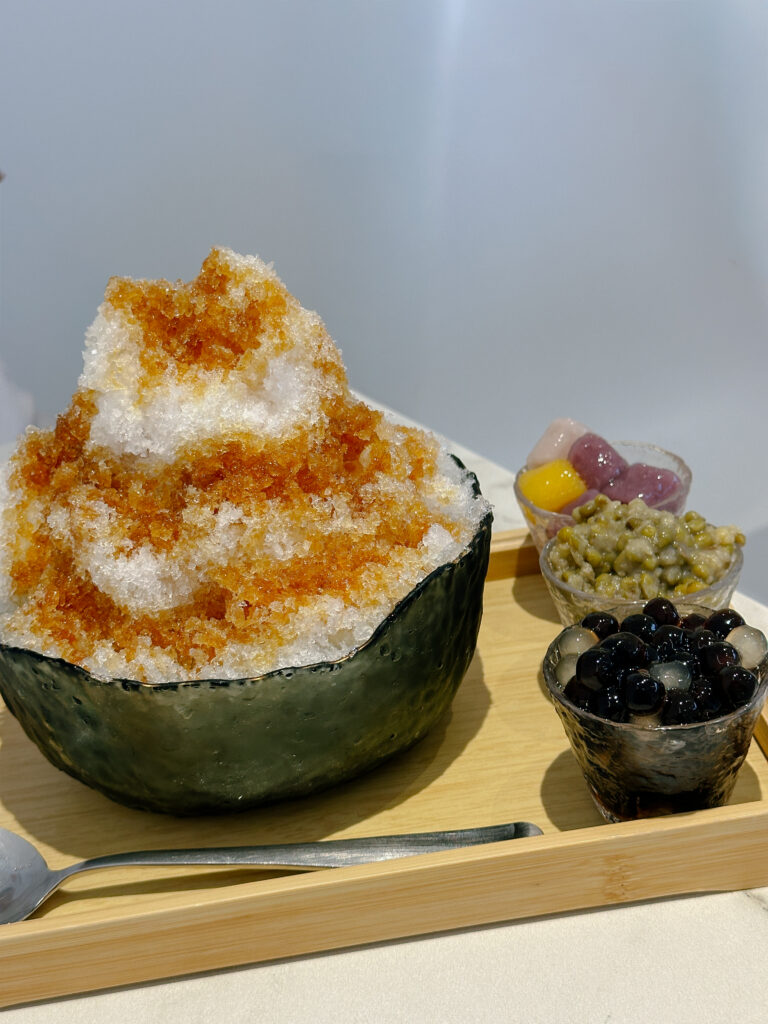
When it comes to dessert, mango shaved ice/Taiwanese shaved ice (Tsuah-ping) is the fan favorite, served absolutely everywhere during the warmer months. It also happens to be my favorite dessert in the entire world. If you follow me on Instagram, you’ll know that I have an INSATIABLE sweet tooth. Like, I would literally fly (and have actually flown) across the country just for this dessert.
Tsuah-ping is easy to find in Taiwan, especially during the sweltering summer when it is needed most. The dessert is made from shaved ice, and topped with sugar water, condensed milk and seasonal fruit including mango or strawberry. I also like to put tapioca balls and red bean on top but I know not everyone will want to eat it like that.
A more traditional sweet treat is pineapple cake, a buttery pastry filled with pineapple jam. Taiwan is one of the world’s largest exporters of pineapples, and this sweet treat is a popular souvenir for travelers to take back home. Yes, I’m usually that person at TPE airport stocking up on boxes of these (and paying a premium for it) because I’m lazy af and didn’t want to buy it beforehand.
Taiwan FAQ’s
To help you plan the best 7-day Taiwan itinerary, here are some commonly asked questions for first time visitors 🇹🇼

What language is spoken in Taiwan?
The most commonly spoken language in Taiwan is Mandarin Chinese, with Taiwanese Hokkien also spoken widely. English is not a widely-spoken language, especially outside of Taipei, so it can be useful to learn some important phrases in Mandarin before your trip, and to have Google Translate downloaded on your phone.
What currency is used in Taiwan?
The currency in Taiwan is the New Taiwan Dollar (NTD or TWD). The conversion rate is around USD $1 to TWD $30, though exchange rates do fluctuate.
What is the time zone in Taiwan?
Taiwan is in the Taipei Standard Time (TST) zone, which is UTC+8. Taiwan does not observe Daylight Saving Time which is helpful to know if you ever work remotely like I do and have to constantly worry about the time difference to ensure you don’t miss a meeting!
Can you drink the tap water in Taiwan?
The tap water in Taiwan is generally considered safe to drink, especially in built up areas like Taipei and in modern hotels. If staying in older buildings or buildings damaged by natural disasters such as earthquakes, consider that water pipes may have been damaged, contaminating supplies. Even though it’s safe in some places, I personally stick to bottled water when I travel to anywhere in Asia.
What plugs are used in Taiwan & what is the voltage?
The plug types used in Taiwan are Type A and Type B, which are the same as those used in the United States, and the electrical voltage is 110V, which is within the range of most US appliances. For this reason, most US devices should work in Taiwan without the need for adapters or voltage converters. However it is general best practice to always travel with a universal travel adapter!
One Week in Taiwan Itinerary: Final Thoughts

Taipei remains the main highlight of Taiwan, but if you have a week or more to explore the island, then you’re going to want to venture out of the capital, as there is so much more to discover. Hualien has some of the bluest waters you’ll ever see, Taroko Gorge National Park is a particular gem, while Kaohsiung is a less-visited but an equally vibrant (and more cost-effective) counterpart to Taipei.
A one week itinerary in Taiwan is the ideal length to take in everything that the island has to offer, much better than a 2-or-3 day Taipei stopover, which doesn’t allow travelers a deeper exploration of the island.
That said, if Taipei truly is your whole trip, make sure you’re squeezing the most out of it with a proper plan. My 4-day Taipei itinerary is a great starting point.
Did you get a chance to spend a week in Taiwan? Let me know in the comments below!
Heading to Taipei?
Check out this First Timer’s Guide to the best 4-day itinerary for Taipei.
Visiting Other Parts of Asia?
Check out my other travel guides on Asia here.
Looking for Travel Inspiration to Somewhere Else?
Last updated on June 7th, 2026 at 08:14 pm
Ever thought of Taiwan as nothing more than a glorified layover? I get it. But as a first generation Taiwanese American, I’m here to change your mind! Most travelers spend a few hours (a day or two if they’re feeling generous) wandering around Taipei while transiting through the Far East on their way to Europe, Australia, or Southeast Asia. But trust me, you need way more than a quick stopover to do this place justice, which is exactly why I put together this epic 7-day Taiwan itinerary. One week in Taiwan barely scratches the surface (it’s my parents’ homeland, so I’m a little biased), but I promise you there’s SO MUCH MORE to this incredible island than just the capital.
Because beyond Taipei’s temples, night markets, and top-notch street food scene, Taiwan is hiding some seriously dramatic nature: jaw-dropping gorges, misty mountain vistas, the shimmering Sun Moon Lake, and tea terraces so photogenic they look fake (but they’re not). And don’t even get me started on the rest of the island. Tainan, Hualien, Kaohsiung. All ripe for exploration and all completely ignored by people who think Taiwan is just one city with a tall building.
Personally, all of these places hold such a special place in my heart as my mom grew up in the south (near Tainan) and my dad spent most of his life playing in the waters of Hualien before settling down recently in Taipei.
In this article, I’ll explain why Taiwan deserves a dedicated spot in your travel plans. This one week in Taiwan itinerary gives you the perfect opportunity to spend a few days exploring Taipei, before venturing outside the capital to discover more of the island’s hidden gems.
I’ll guide you through the must-visit places both inside and outside Taipei, the best times to visit Taiwan, and share some of my favorite accommodations, food and drink recommendations, and other helpful tips for your Taiwan itinerary.
Now let’s get into this unforgettable 7-day Taiwan itinerary put together by yours truly, an ABT (American-born-Taiwanese)👇
Read more about Taiwan 🇹🇼
- A First-Timer’s Guide To The Best 4-Day Itinerary in Taipei, Taiwan
- 24 Hours in Taipei: How to Spend a Layover in the Capital of Taiwan
This site contains affiliate links, which means I may earn a small commission if you make a purchase through them (which will likely go towards overpriced airport wine or buying my dog more unnecessary toys). However, none of that impacts the integrity of my reviews. All thoughts and opinions are my own.
Spending 7 Days in Taiwan at a Glance
Your 7-Day Taiwan Itinerary 🇹🇼
Doing the whole island in a week? Here’s the cheat sheet with the big stuff I’d lock in before you fly, so you can just show up and enjoy it 👇
-
⏱️ How many days you need
7 full days · just enough to pair Taipei with the east coast (Hualien + Taroko) and the south (Kaohsiung) without feeling rushed
-
🗓️ Best time to visit
October–April · cooler & drier with way less of that brutal humidity. Fall (Oct–Nov) is my personal fave 🍂 and spring brings cherry blossoms 🌸. Skip typhoon-prone summer and triple-priced Lunar New Year.
-
🗺️ The route
Taipei (Days 1–3) → Hualien & Taroko Gorge (Days 4–5) → Kaohsiung (Days 6–7), looping back up to Taipei on the high-speed rail
-
🚆 How to get around
Train all the way is the easiest, cheapest, most stress-free way to do this whole itinerary (HSR + regional rail link every city). Prefer total freedom? Rent a car (you can drive the entire island in about 5 hours). You do not need a car to pull this off.
-
🛏 Where to stay (city by city)
TaipeiW TaipeiMy fave · luxe 5-star right by Taipei 101 with epic skyline viewsHualienSweet Rainbow B&BBudget pick · the cutest family-run B&B steps from the beach + night market (my dad picked it and I was obsessed)Le Méridien Hualien ResortTop pick · the one real luxury stay in town, with hot springs, ocean views & a rooftop sky barKaohsiungHotel Indigo Kaohsiung Central ParkThe sweet spot · design-forward boutique by Central Park with a buzzy rooftop bar, right on the MRT
-
🍜 Best food tour → Shida Night Market Food Tour
Under $60/person · the tastiest way to eat your way through Taipei’s Shida night market with a local (steps from the best beef noodle soup in the city)
-
🏞️ Don’t leave without → Taroko Gorge & Coastal Day Tour
A full day among Taroko’s marble cliffs and turquoise rivers plus Hualien’s scenic coast. The easiest way to see the prettiest part of Taiwan without renting a car.
-
🧳 Don’t want to handle logistics? → All-Inclusive Taiwan Tours
Check out these done-for-you tours where all your hotels and transportation are handled for you. Pick the 7-day option or the longer 9-day version, then just show up and enjoy the island.
Best Time to Visit For Your 7-Day Taiwan Itinerary
The best thing about Taipei is that it can be visited all year round! They experience relatively mild winters and summers that are hot, but bearable if it’s the only time you can go. (Most places have air conditioning but just be prepared for the humidity). It’s also worth knowing when some of the key festivals and events take place, as you might want to plan your visit around some of these things!
Visiting Taiwan in spring (March to May)
Spring in Taiwan sees mild temperatures of around 15°C to 25°C (59°F to 77°F), ideal for sightseeing and outdoor exploration. This is definitely a great time to visit as flights tend to be pretty cheap but the problem is that it can be hard to get work or school off during this time. Expect the odd rain shower and pack accordingly, and enjoy the blooming cherry blossom of Taipei and Yangmingshan National Park. Conditions are perfect for cycling among the flat, quiet terrain of the East Rift Valley.
Visiting Taiwan in summer (June to August)
Summer is likely the least popular time to visit Taiwan, especially for those planning a one week in Taiwan itinerary. It’s hot and humid, particularly in Taipei, with temperatures regularly climbing above 30°C (86°F). I used to visit every summer as a kid, and I’m still haunted by the island’s intense humidity. I seriously didn’t think there was anywhere in the world that had Taiwan summer weather until I eventually visited the east coast in July lol. Summer was the only time we could go because of school schedules, but flight prices also tend to soar during this time as many people travel home with their families.
If you’re visiting during summer, consider escaping the heat by heading to the mountains or to places like Jiufen. While the warm weather may make it ideal for a beach getaway at Kenting or Penghu, it’s likely too hot for city tours and sightseeing in a Taiwan itinerary. Additionally, it’s crucial to remember that July to September is typhoon season. While this doesn’t have to derail your travel plans, it’s important to keep an eye on the weather forecast and follow local authorities’ advice during any weather alerts.
Visiting Taiwan in fall (September to November)
Personally, I think fall is the best season for visiting Taiwan. The leaves on the trees turn a beautiful golden brown, temperatures come down to a far more manageable 20°C to 28°C (68°F to 82°F) and, most importantly of all, the drenching humidity of summer also reduces. Expect clear skies in Taipei, perfect for enjoying the view from Taipei 101 or hiking Elephant Mountain. The Mid-Autumn Festival is a wonderful annual event during the season, celebrating unity, gratitude and tradition across Taiwan.
Visiting Taiwan in winter (December to February)
Taiwan experiences a relatively mild winter, with average temperatures of 10°C to 18°C (50°F to 64°F) meaning sightseeing is still very much possible. It’s a bit wetter to the north of the island but a good time for relaxing in the hot springs of Beitou and Wulai. It’s much warmer and drier to the south, making this a good time for exploring other cities such as Kaohsiung and Tainan. Winter also offers perhaps the best weather for making the most of Taiwanese cuisine, as travelers can tuck into steaming hot broths and noodle dishes to warm up.
With that being said, you’ll want to avoid visiting during Christmas unless that’s truly the only time you can go as flight prices are usually TRIPLE during the holidays (again, there are a lot of families heading home to see relatives overseas).
How to Get Around Taiwan
The main point of entry and exit for Taiwan travel is the island’s Taoyuan International Airport. If staying in Taipei city for your Taiwan trip, then public transport should be sufficient to get you from A to B. The public transport system in Taipei is top-notch – it’s always clean, on-time, and all the station signs have English! (My dad always yells at me because I rely on the English names vs the Chinese ones but oh well)
However, for a longer 7 days Taiwan itinerary, you’ll want to consider renting a car. (I’ve made the trek before to Taroko Gorge and Hualien on the train and then we hired a private driver once we got there but I think having your own vehicle is still the best and most convenient way to get around).
Vehicles in Taiwan drive on the right side of the road, and you will of course need a valid driver’s license and International Driving Permit in order to rent a vehicle. If you cannot drive or don’t wish to, then regional high speed rail links in Taiwan are good, and you can use buses and taxis to complete your journey. (If you want to skip the middle of Taiwan, you can definitely take the high speed rail from Taipei to Kaohsiung and vise versa).
Exploring Taiwan: Best Places to Visit During Your 7 Day Itinerary
I’ve put together a suggested 7-day itinerary that takes you around the whole of Taiwan. Starting with 3 days in Taipei, with time for sightseeing and day trips to some nearby destinations including Jiufen and Keelung. From the capital, you’ll want to head east, along the coast, with an overnight stop in Hualien and Taroko Gorge.
Since you can basically drive the whole island in 5 hours…you’ll also want to spend a night or two in the southern capital of Kaohsiung before making your way back to Taipei. I’ve suggested returning up the west coast, with a brief stop in Taichung on your way back. In this itinerary, I’ve added some of the best things to do in Taiwan, but of course you can tweak this, and make it your own!
Days 1 – 3: Diving into the Capital of Taipei
For the most part, a lot of Taiwan trips will start (and end) in Taipei, the island’s capital and largest city, home to Taoyuan International Airport. (Ever since they built the high speed rail, they no longer operate flights from Taipei to Kaohsiung anymore so pretty much everyone flies into Taipei).
For a one week in Taiwan itinerary, I recommend spending three nights in the city initially. This gives you two days to explore the city itself, and one day for a day trip out of town. Taipei is also a nice place to recover from the jetlag because you can basically get food at any hour of the day and/or go out for a night on the town if you get bored.
If you want a really thorough breakdown of exactly how to fill those two days, my 4-day Taipei itinerary covers all the top spots in detail with tips from my dad who grew up there.
There are so many multi-level clubs and bars in Taipei it’s actually crazy. I’ll never forget when I was 18, I saw Steve Aoki for the first time with my super rich cousins at some random club on the 32nd floor of a high-rise. No clue how my parents let me do that but it was definitely memorable.
Once you’re in Taipei, there’s a lot to do and see. My first and most favorite recommendation for anyone visiting Taiwan is to get up early (you’ll be jetlagged AF anyway i promise) for a morning (sunset works too but is more crowded) hike to Elephant Mountain, which you can reach with ease on the metro.
It’s a steep climb up around 400 steps and will take around half an hour, but the reward is wonderful views over Taipei, including of Taipei 101. I’d recommend wearing some decent tennis shoes but honestly, I’ve hiked this before in ankle boots and was fine. I’m not saying you SHOULD do this but it’s not that strenuous of a hike for a fantastic reward.
Elephant Mountain is just one of the highlights I cover in my 4-day Taipei guide if you want the full rundown on how to spend your time in the city.
If you’re blessed with clear skies, then the next place to head is Taipei 101. Formerly the tallest building in the world, this 508-meter tower is home to an 89th floor observatory, the best place in Taipei to enjoy magical views over the city and beyond.
For a dash of culture, I strongly recommend a visit to Longshan Temple, the oldest and most visited temple in the city. It dates back to the 18th century and boasts incredible ancient architecture, carvings and Taoist shrines and statues.
During the evenings, you NEED to spend at least one (or two) nights eating your way through the famous Taipei night markets. Shilin is the big famous one, Raohe is a crowd pleaser, but Shida (the small, local one right by Yongkang Street) is my personal favorite.
It’s the smallest and most local of the bunch (it’s right by the university so it’s got that fun, young, student-y energy) and it’s steps from Yongkang Street, aka home to the best beef noodle soup and mango shaved ice in the entire city. If you don’t feel like decoding the Mandarin-only signs and the general yelling on your own, I’d 100% join a food tour with a local guide so you actually know what you’re shoving in your mouth.
I go way deeper on all three markets (and share some of my dad’s personal food picks) in my 4-day Taipei itinerary if you want the full lowdown before you go.
My dad usually acts as my personal guide (and food sign translator) at these night markets but my husband and I joined the Shida night market food tour last year when we were in Taiwan and had a great time! We had Skyler as a tour guide and she was fantastic and showed us all the stalls that we probably would’ve missed if we had just gone on our own.
Taipei day trip suggestions
Assuming you’re visiting from somewhere outside of Asia, I know spending only 7 days in Taiwan can seem short. And taking a day trip from Taipei isn’t for everyone. But if you have the energy and are itching to get outside of the city, there’s a lot of really great day trips to take that won’t leave you feeling too rushed before you head east on day 4.
One of the best things about Taipei is that you barely have to go anywhere to feel like you’ve left the city entirely. So if you’ve got a spare day (or two), here are the day trips I’d actually make room for.
And if you want more ideas for filling your in-city days before or after the day trips, my first-timer’s guide to 4 days in Taipei has you covered.
Day trip to Jiufen from Taipei
If you’re a Spirited Away fan (and even if you’re not), I definitely recommend taking a day trip to Jiufen. It’s only about 25 miles from Taipei (you can book a tour or make your own way by taxi or train), but those narrow, lantern-lit streets feel like an entirely different world.
The whole mountain village is constantly compared to the onsen town in Hayao Miyazaki’s 2001 anime, and the resemblance really is uncanny.
Give yourself 6 to 8 hours to wander Old Street, sip tea at the famous A-Mei Teahouse (drowning in red lanterns with views over Keelung Mountain and Taiwan’s northern shore), dig into the town’s gold-mining past at the Gold Museum, and shop for handcrafted trinkets you absolutely do not need but will somehow buy anyway, before heading back to Taipei in time for dinner.
I go way deeper on Jiufen in my 4-day Taipei itinerary if you want the full breakdown.
Day trip to Keelung from Taipei
Next up is Keelung, aka the “Port of Taipei,” a far-north coastal city that’s quietly become a favorite in recent years (and is super easy to reach by high-speed rail or bus).
Start at the Zhengbin Fishing Harbor, about 15 minutes by bus from the city center, where you can snap photos of the candy-colored waterfront buildings and traditional fishing boats. Then climb up to Zhongzheng Park for its towering Guan Yin statue and seriously good views over the city.
It’s a bit of a trek but worth it, especially since you’ll come back down right next to the Miaokou Night Market. Weekends glow with yellow lanterns, but honestly any night you can take your pick of crab soup, crispy pork, peanut ice, or whatever speaks to you before rolling back to Taipei in the late evening, very full and very happy.
Top-rated Taipei to Jiufen / Keelung day tours
-
Small-Group Tour: Jiufen, Yehliu Geopark & Shifen
⏱️ ~9 hoursIf you know me, you know I love a small-group tour, especially solo, when I get to meet people from all walks of life but still keep my alone time. This one’s a great (and seriously affordable) pick that’s totally worth the full day, with a stop at the charming old railway town of Shifen.
-
Private Tour to Jiufen, Yehliu Geopark & Pingxi
⏱️ ~8 hoursAnother excellent private option, this one adds Yehliu Geopark, a protected stretch of coastline famous for its otherworldly rock formations, fossils, and crashing waves.
-
Shared Taipei to Keelung Day Trip Photography Tour
⏱️ ~9 hoursA great pick if you love photography or just want a more relaxed, scenic day out. Keelung is a colorful port city on the northern coast, and this tour takes you to its most photogenic spots along the harbor and hillside. The GetYourGuide version also finishes up at a local night market, so you can grab dinner before heading back.
Where to Stay in Taipei
To save you sifting through other travel blogs and websites, I’ve pulled together some of my favorite hotels in Taipei, all excellent places to consider during your visit to Taiwan. Hotels are honestly my favorite part of trip planning, so if you’re hotel-shopping for other Asia stops too, I’ve got similar deep dives on the best boutique hotels in Kyoto and where to stay in Beijing.
And if you’re still figuring out the full Taipei plan itself, my 4-day Taipei itinerary breaks down exactly what to do and where to eat while you’re there.
W Taipei (Xinyi District) – One of my absolute favorite hotels in Taipei, with an unbeatable location next to Taipei 101, a buzzy atmosphere, and full-on luxury amenities from the pool to the gym. If you like modern energy, great views, and a hotel that feels like part of the city’s nightlife, this is it.
Check prices via ExpediaCheck prices via Booking.com
CitizenM Taipei North Gate (Zhongzheng District) – A design-driven budget stay that punches way above its price point, with comfy king beds, mood lighting, and a 24/7 bar overlooking the historic North Gate. If you like smart, efficient hotels and don’t need room variety, this one’s a no-brainer.
Check prices via ExpediaCheck prices via Booking.com
Kimpton Da An Hotel (Da’an District) – A stylish boutique hotel with a residential feel, known for its warm service, social vibe, and thoughtful details like complimentary evening wine hour. Ideal if you want something design-forward and relaxed that still feels upscale and very livable.
Check prices via ExpediaCheck prices via Booking.com
Capella Taipei (Zhongshan District) – Ultra-luxurious and serene, Capella Taipei is all about understated elegance, impeccable service, and refined design. This is the splurge stay for travelers who want a quiet, resort-like escape in the city and expect everything to feel flawless.
Check prices via ExpediaCheck prices via Booking.com
Days 4 – 5: Discover the Beauty of Hualien & Taroko Gorge
After 3 full days in Taipei, you’ll be ready to see what else is out there I promise. If you’ve rented a car, then it’s about a 2.5 hour drive from the city center to Hualien, or you can catch the train like I’ve done with my dad. Once we got to Hualien, we arranged a private driver who shuttled us around to all the beautiful viewpoints and inside Taroko Gorge National Park for the entire day for less than $100 USD.
I personally think Hualien is the prettiest part of Taiwan. (There’s also Kenting in the south but the water isn’t nearly as blue or clear as it is here).
In addition to Hualien, you’ll definitely want to visit Taroko Gorge National Park, one of the best places to visit in Taiwan and home to incredible marble cliffs, ancient temples, clear blue water and lush green forests. Make sure you’re wearing good walking shoes, and a decent level of fitness is a big plus here.
We arrived in the morning, and immediately put our bags down at Sweet Rainbow B&B. Now, this is not my normal type of accommodation but I was with my dad who paid for it so I didn’t really get to have an opinion on hotel but I was extremely impressed by the hospitality and cleanliness of Sweet Rainbow B&B.
Also, it’s not like Hualien has a ton of 5-star luxury hotels to choose from which is usually my vibe so I decided to just go with the flow as much as I could with my boomer frugal dad on this trip.
After that, we immediately headed to the park for a full day of walking, hiking, and sightseeing. Once you’re in the park, get ready to explore. The Shakadang Trail is one of the most popular and accessible hiking routes in the park, an 8 kilometer round trip that takes you along the turquoise Shakadang River. You will also want to pay a visit to the scenic Changchun Shrine. Dedicated to a group of workers who lost their lives building a nearby highway, the shrine perches above a cascading waterfall, and is easily accessed by a walking path.
You can see the power of the Liwu River at Swallow Grotto, where marble has been rubbed smooth by the force of the water. And finally, you can enjoy panoramic views of the surrounding scenery from the Buluowan suspension bridge, which is almost 200 meters long – don’t look down if you’re afraid of heights!
Since we got there so early, we left Taroko Gorge around ~3pm so we could catch the sunset on the beach in Hualien.
Back in Hualien, there’s also a few highlights to check out during your stay. We hopped on the complimentary bikes from Sweet Rainbow B&B and just biked along the water for a few miles before stopping to take some photos.
There’s also the Dongdamen Night Market which gives you another chance to indulge in Taiwan’s buzzing night market culture, and you may find it a little more authentic than some of the markets in Taipei. If you have the time, you can also wish to pay a visit to the Pine Garden.
This beautiful, tranquil garden hums with birdsong, but it is the history behind it that may be of interest. The 1940s concrete building in the heart of the park was once used by the Japanese military to wine and dine Kamikaze pilots before their suicide missions during the Second World War.
Where to Stay in Hualien
Okay I want to level-set expectations real quick about Hualien, Taiwan. You won’t find any 5-star luxury on the east side of the island. The lodging scene here is mostly B&Bs and budget-friendly hotels, and that’s kind of the whole charm. The beauty of Hualien is mostly in its scenery and taking in mother nature.
What you will get is clean, quiet, and genuinely pleasant. The rooms are simple but well kept, the hosts are usually lovely, and you’ll sleep great because there’s nothing happening outside your window except, you know, nature. For a coastal town this gorgeous, the prices are honestly a steal. So these are the top picks for hotels in Hualien, including the cutest little B&B that my dad and I stayed at.
Sweet Rainbow B&B (Beibin Street / Waterfront) – A colorful little boutique B&B run by hosts who treat you like family, just a 3-minute walk from both Dongdamen Night Market and the beach. With cozy, homey rooms, a daily breakfast, free bike rentals, and a quiet garden, it’s perfect for travelers who want warm, personal hospitality over a big-hotel feel. The owner handmade us breakfast every morning (pictured above) and was seriously so kind. It felt like staying at a relative’s house. Can’t say enough good things about this B&B if you’re looking for a laidback no-frills accommodation.
Check prices via ExpediaCheck prices via Booking.com
Hi Inn (Beibin Street / Beachfront) – A laid-back, budget-friendly beachfront B&B with a rooftop terrace and the ocean just a 2-minute walk away. Simple, clean rooms plus free breakfast, WiFi, and parking make it a solid pick for travelers who want a great seaside location without spending much.
Check prices via ExpediaCheck prices via Booking.com
Kindness Hotel Hualien Main Station (Near Hualien Station) – A beloved Taiwanese chain famous for its over-the-top free perks: a generous breakfast, all-day tea and coffee, afternoon tea, late-night snacks, free laundry, and free bikes. Just a few minutes from the train station and known for genuinely attentive service, it’s unbeatable value and a great choice for families.
Check prices via ExpediaCheck prices via Booking.com
Hotel Les Champs Hualien (Dongdamen Night Market) – A French-style hotel with chic Parisian decor sitting right at the edge of Dongdamen Night Market, with attentive staff and big soaking tubs in the rooms. The rooms run small but are smartly designed, making this ideal if location and easy night-market access top your list.
Check prices via ExpediaCheck prices via Booking.com
Le Méridien Hualien Resort (Hualien City Centre) – Definitely the top (and only) luxury pick in Hualien. Marriott’s polished, European-inspired resort and the city’s first downtown hot spring hotel, blending French style with ocean and mountain views. With an outdoor pool, spa, hot springs, and a rooftop sky bar, plus a walkable location near Dongdamen Night Market, this is the splurge pick for travelers who want full luxury without leaving the heart of town.
Check prices via ExpediaCheck prices via Booking.com
Days 6 – 7: Soak Up the Sunshine of Kaohsiung
In my opinion, one night in Hualien is plenty. After spending the entire day at Taroko Gorge, there isn’t a ton left to do in the area so you’ll want to continue heading south on this tiny island towards Kaohsiung.
You’ve got two ways to get there. If you rented a car, you can make the drive in about ~5.5 hours but the train system in Taiwan is pretty decent. It’s the easiest, cheapest, most stress-free way to make the trip, and it’s exactly why you don’t technically need a car for this whole 7-day Taiwan itinerary.
You can easily train it from Hualien down to Kaohsiung, and from there you can either fly out directly or hop on the HSR back up to Taipei (more on that in the next section).
Kaohsiung is Taiwan’s second city and a totally viable alternative to Taipei, yet it constantly gets skipped by travelers, which is a shame because I personally think it’s worth at least two nights. I’ve been coming here annually since I was a kid since my grandparents live in Tainan, about 30 miles north of Kaohsiung.
We always end up visiting Kaohsiung anyway, so trust me when I say I know it well.
As for what to actually see, the biggest cultural drawcard is the Fo Guang Shan Buddha Museum, home to one of the largest Buddha statues in the world. It’s a massive complex of temples, shrines, teahouses, and manicured gardens, and it’s easy to reach by bus from the city center.
Over on the east side you’ve got the Lotus Pond, a man-made lake famous for the two beautiful pagodas sitting right at the water’s edge. Tradition says you enter through the dragon’s mouth and exit through the tiger’s for good luck (a sentence that’ll make a lot more sense the second you actually lay eyes on it).
And if you want a grittier, more modern side of the city, head to the Pier-2 Art Center, a former industrial warehouse turned street-art playground packed with murals, sculptures, and the kind of bougie cafes I’m always a sucker for.
Traveling with kids? Add E-DA Theme Park to your list. I used to go all the time growing up and it’s still such a fun, easy day out for families. I know it’s no Tokyo Disney, but it’s gotten like 100x better since I was a kid. They basically built this whole resort around the theme park so you really don’t even need to leave the area for rides, shops, restaurants, and more.
Where to Stay in Kaohsiung
Kaohsiung is bigger and more spread out than it looks, so where you stay matters less than how close you are to an MRT station (trust me, the metro makes this city ridiculously easy).
The area around Kaohsiung Main Station is unbeatable for transit and night-market access, Yancheng/Pier-2 brings the artsy revived-harbor energy, Central Park puts you in the middle of the shopping-and-nightlife buzz, and the Asia New Bay Area is where the shiny luxury towers live. All the picks below are central and well-connected, so just go with whatever vibe and price point speaks to you.
Kindness Hotel – Kaohsiung Main Station (Sinsing District) – The Kaohsiung flagship of the cult-favorite Taiwanese chain, sitting right across from the main train and MRT station with all the signature freebies: 24-hour ice cream with eight flavors, all-day snacks, craft beer, free laundry, and a generous breakfast buffet. Walking distance to Liuhe Night Market and unbeatable value, this is the easy budget pick for travelers who want convenience and friendly service.
Check prices via ExpediaCheck prices via Booking.com
Chateau de Chine Kaohsiung (Yancheng District) – A sleek 4-star boutique hotel with a glass-and-light façade designed by Japanese architect Tadashi Yamane, glowing like a beacon along the Love River at night. Set in the revived Yancheng harbor district, it’s a short walk from Pier-2 Art Center and just steps from MRT Yanchengpu Station, with a standout Cantonese restaurant and comfortable, spacious rooms. Great for travelers who want style and a walkable arts-and-harbor location at a mid-range price.
Check prices via ExpediaCheck prices via Booking.com
Hotel Indigo Kaohsiung Central Park by IHG (Xinxing District) – A playful, design-forward boutique hotel right across from Central Park and steps from the MRT, known for its buzzy rooftop bar (PIER NO.1) and colorful, neighborhood-inspired interiors. It’s pet-friendly and surrounded by the Shinkuchan shopping area and Liuhe Night Market, making it ideal for travelers who want personality, a great location, and a livelier social vibe without going full luxury.
Check prices via ExpediaCheck prices via Booking.com
Hotel Nikko Kaohsiung (Qianzhen District) – A polished Japanese-managed luxury hotel with thoughtfully designed, spacious rooms, an indoor pool, sauna, steam room, and a rooftop bar, plus multiple restaurants serving Japanese and Chinese cuisine. Near the Kaohsiung Exhibition Center and a quick walk to the MRT, this newer property is perfect for travelers who appreciate refined Japanese hospitality, calm, and modern comfort.
Check prices via ExpediaCheck prices via Booking.com
InterContinental Kaohsiung by IHG (Qianzhen District) – The brand’s first hotel in Taiwan, occupying the lower floors of the Farglory THE ONE skyscraper in the Asia New Bay Area, with Art Deco styling, sweeping city and harbor views, Byredo amenities, and Japanese washlets. With an indoor pool, multiple fine-dining restaurants, and a Club InterContinental lounge, this is the top-tier splurge for travelers who want five-star polish, big views, and a brand-new flagship feel.
Check prices via ExpediaCheck prices via Booking.com
Final Day in Taiwan: Two Options for Departing Taiwan
By the time you reach the end of your week, you’ve got two ways to wrap things up, and honestly you can’t go wrong with either.
Option 1: Hop on the HSR (high speed rail) back to Taipei
If you’re flying home out of Taipei (or just not ready to say goodbye to Taiwan yet), the High Speed Rail will whisk you from Kaohsiung back up north in under two hours.
And if you choose to drive, it’ll take about ~3 hours and 40 minutes. If you’re driving, then I’d recommend breaking up the trip with a quick stop in Taichung. You can also make a pit stop by train since Taichung sits right on the HSR line. Just depends on how quickly you’re trying to get back up north.
The main highlight in Taichung is the Rainbow Village, a former assisted-living community for military veterans that had actually been earmarked for demolition. It got saved when one of the residents, former soldier Huang Yung-Fu, started painting the houses in wildly colorful murals and turned the whole place into a vibrant attraction. He got to see the village protected as a designated cultural area before he passed away in January 2024 at the age of 100.
And if you somehow still haven’t gotten your boba fix, make sure to swing by Chun Shui Tang, the actual birthplace of boba, which has a Taichung location worth popping into before you settle in for the ride back to Taipei 🧋
Option 2: Fly direct out of Kaohsiung
Here’s the thing a lot of people don’t realize: you don’t actually have to backtrack to Taipei at all. Kaohsiung has its own international airport with tons of direct flights to other Asia destinations, which makes it the perfect launchpad if you want to keep the adventure going.
(It actually reminds me a lot of SF to LA trips. Before the high speed rail was built, there used to be a ton of nonstop flights between KHH – TPE. But now everyone just takes the train).
But seriously – flying out of KHH is so easy. The airport is super small, security is a breeze, and you can hop on a flight to other parts of Asia under a few hours. A few of my favorites that pair perfectly with Taiwan: my 2-day Singapore itinerary, my 3-day Hanoi itinerary, or if Japan’s calling your name, my 2-day Kyoto itinerary.
You’re already halfway there, so why not?
Want to Extend Your Trip? (Sun Moon Lake, Alishan, Penghu, Taitung)
Even though I poured a lot of effort into writing this guide, please don’t take this itinerary as gospel!
I’ve put together an idea for you here on how to explore as much of Taiwan as possible in 7 days, but I know there are definitely places that I’ve left out and some places I’ve included that you probably have no interest in going to at all. Some other destinations to consider as part of your itinerary are scenic Alishan, the beaches of the Penghu Islands, the rice paddies of Chishang and laid back Taitung, not to mention Taiwan’s original capital, the authentic and historic Tainan.
You may also wish to head inland to Sun Moon Lake, Taiwan’s largest body of water, in the middle of the island. Here you can ride the Sun Moon Lake Ropeway cable car, for panoramic views of the lake and its surroundings. You can also visit the Ita Thao pier, home to shops, restaurants, and a visitor center.
You could probably spend 2-3 days alone at Sun Moon Lake, which would eat up your itinerary, but it just goes to show that there’s SO MUCH to do on this small but mighty island.
What to Eat in Taiwan: The Best Specialty Dishes
Food is a huuuuuge part of any trip to Taiwan (or anywhere in Asia really), and the island is known for its blend of Chinese, Japanese and Southeast Asian culinary influences. Make sure to check out at least one night market during your visit, and don’t be afraid to sample some of the territory’s street food – it’s cheap, fresh and delicious. Here are some of the must-try dishes for a trip to Taiwan.
Street food in Taiwan
I’ve mentioned some of the best night markets in Taiwan already in this article, and all of the island’s main cities have at least one. You can munch your way across these markets, sampling small portions of all sorts of local dishes. Start with the iconic stinky tofu (don’t let the smell deter you because the taste is DELICIOUSSS), which gets its name from the pickled vegetables used in the dish. Oyster omelets are another great option to try, washed down with a traditional Taiwanese bubble milk tea. In the states, we’re pretty used to drinking milk teas but the Taiwanese actually prefer their tea without dairy as most of them are lactose intolerant.
Not me though! Fun fact – I drank so much bubble tea one summer in Taiwan as a kid that I had to get a root canal once I got home. Needless to say, my parents were not too pleased.
Savory dishes in Taiwan
Beef noodle soup is the bread and butter of Taiwan, a national dish that consists of slow-cooked beef, tender noodles and a rich broth, a hearty favorite, especially during the colder months.
If you ever find yourself in the Taipei airport on a layover, make sure to get a bowl of beef noodle soup as well.
Xiao long bao is also a really popular dish from Taiwan. It’s the “Taiwanese take” on dumplings, an Asian favorite; these particular dumplings are filled with broth and meat. If you live in a major metropolitan city, you might already be familiar with Xiao Long Bao as they can be found at any Din Tai Fung or in Chinatown.
Finally there is lu rou fan, a delicious soy-braised minced pork topped with rice.
Sweet treats in Taiwan (are the best)
When it comes to dessert, mango shaved ice/Taiwanese shaved ice (Tsuah-ping) is the fan favorite, served absolutely everywhere during the warmer months. It also happens to be my favorite dessert in the entire world. If you follow me on Instagram, you’ll know that I have an INSATIABLE sweet tooth. Like, I would literally fly (and have actually flown) across the country just for this dessert.
Tsuah-ping is easy to find in Taiwan, especially during the sweltering summer when it is needed most. The dessert is made from shaved ice, and topped with sugar water, condensed milk and seasonal fruit including mango or strawberry. I also like to put tapioca balls and red bean on top but I know not everyone will want to eat it like that.
A more traditional sweet treat is pineapple cake, a buttery pastry filled with pineapple jam. Taiwan is one of the world’s largest exporters of pineapples, and this sweet treat is a popular souvenir for travelers to take back home. Yes, I’m usually that person at TPE airport stocking up on boxes of these (and paying a premium for it) because I’m lazy af and didn’t want to buy it beforehand.
Taiwan FAQ’s
To help you plan the best 7-day Taiwan itinerary, here are some commonly asked questions for first time visitors 🇹🇼
What language is spoken in Taiwan?
The most commonly spoken language in Taiwan is Mandarin Chinese, with Taiwanese Hokkien also spoken widely. English is not a widely-spoken language, especially outside of Taipei, so it can be useful to learn some important phrases in Mandarin before your trip, and to have Google Translate downloaded on your phone.
What currency is used in Taiwan?
The currency in Taiwan is the New Taiwan Dollar (NTD or TWD). The conversion rate is around USD $1 to TWD $30, though exchange rates do fluctuate.
What is the time zone in Taiwan?
Taiwan is in the Taipei Standard Time (TST) zone, which is UTC+8. Taiwan does not observe Daylight Saving Time which is helpful to know if you ever work remotely like I do and have to constantly worry about the time difference to ensure you don’t miss a meeting!
Can you drink the tap water in Taiwan?
The tap water in Taiwan is generally considered safe to drink, especially in built up areas like Taipei and in modern hotels. If staying in older buildings or buildings damaged by natural disasters such as earthquakes, consider that water pipes may have been damaged, contaminating supplies. Even though it’s safe in some places, I personally stick to bottled water when I travel to anywhere in Asia.
What plugs are used in Taiwan & what is the voltage?
The plug types used in Taiwan are Type A and Type B, which are the same as those used in the United States, and the electrical voltage is 110V, which is within the range of most US appliances. For this reason, most US devices should work in Taiwan without the need for adapters or voltage converters. However it is general best practice to always travel with a universal travel adapter!
One Week in Taiwan Itinerary: Final Thoughts
Taipei remains the main highlight of Taiwan, but if you have a week or more to explore the island, then you’re going to want to venture out of the capital, as there is so much more to discover. Hualien has some of the bluest waters you’ll ever see, Taroko Gorge National Park is a particular gem, while Kaohsiung is a less-visited but an equally vibrant (and more cost-effective) counterpart to Taipei.
A one week itinerary in Taiwan is the ideal length to take in everything that the island has to offer, much better than a 2-or-3 day Taipei stopover, which doesn’t allow travelers a deeper exploration of the island.
That said, if Taipei truly is your whole trip, make sure you’re squeezing the most out of it with a proper plan. My 4-day Taipei itinerary is a great starting point.
Did you get a chance to spend a week in Taiwan? Let me know in the comments below!
Heading to Taipei?
Check out this First Timer’s Guide to the best 4-day itinerary for Taipei.
Visiting Other Parts of Asia?
Check out my other travel guides on Asia here.
Looking for Travel Inspiration to Somewhere Else?